
Real Estate Technology Tools : PropTech & CRM Guide
Table of Contents
Introduction
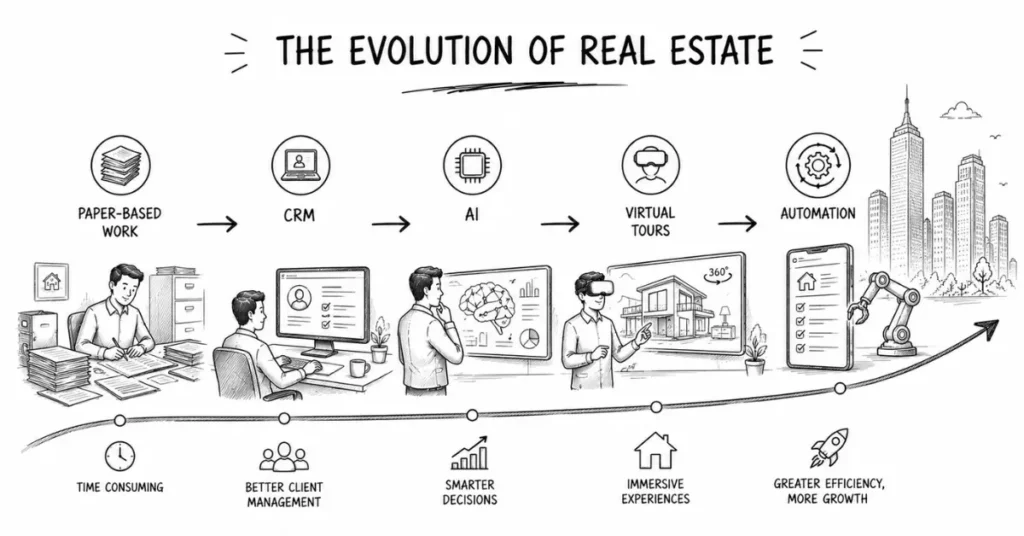
Technology has fundamentally transformed real estate practice in India, evolving from a relationship-driven, paper-intensive industry into a sophisticated, digitally-enabled profession where PropTech tools determine competitive advantage. Today’s successful real estate professionals leverage customer relationship management (CRM) systems, artificial intelligence-powered property recommendations, virtual and augmented reality tours, automated marketing platforms, blockchain-based verification, data analytics, and mobile applications that would have seemed like science fiction just a decade ago.
India’s real estate sector is projected to cross $1 trillion by 2030, driven significantly by PropTech adoption that streamlines operations, enhances customer experiences, and creates unprecedented efficiency. PropTech—property technology—involves integrating modern technology and tools to make real estate operations seamless, supported by AI (artificial intelligence), ML (machine learning), VR (virtual reality), AR (augmented reality), blockchain, and advanced data analytics. These innovations are making property dealings convenient and hassle-free for buyers, sellers, investors, and real estate professionals alike.
The technology imperative is clear: buyers now expect virtual property tours before physical visits, AI-powered property recommendations matching their preferences, instant responses through chatbots available 24/7, transparent pricing through data analytics, and streamlined documentation through digital platforms. Real estate professionals who fail to adopt these technologies risk losing clients to more digitally sophisticated competitors who deliver the modern experiences today’s consumers demand.
From digital property buying to AI-driven insights, PropTech in Indian real estate is driving faster decisions and smarter investments. Virtual site visits dramatically cut down decision-making time by allowing clients to shortlist properties virtually and only visit those truly matching their needs instead of spending weekends traveling across cities. AI-powered chatbots enable buyers to arrange site inspections, get real-time answers about properties, and access finance assistance anytime, ensuring no opportunity is lost due to time constraints.
This comprehensive guide explores the essential technology tools modern Indian real estate professionals must master to remain competitive in 2026 and beyond, covering CRM systems for lead and client management, PropTech platforms transforming property search and transactions, AI and automation enhancing productivity and personalization, virtual reality and 3D tours revolutionizing property visualization, marketing technology amplifying reach and effectiveness, transaction management software streamlining operations, and emerging technologies shaping the industry’s future. Whether you’re launching your career or modernizing established practices, understanding and implementing these tools is no longer optional—it’s essential for survival and success.
Customer Relationship Management (CRM) Systems
Why CRM is Non-Negotiable for Real Estate Success
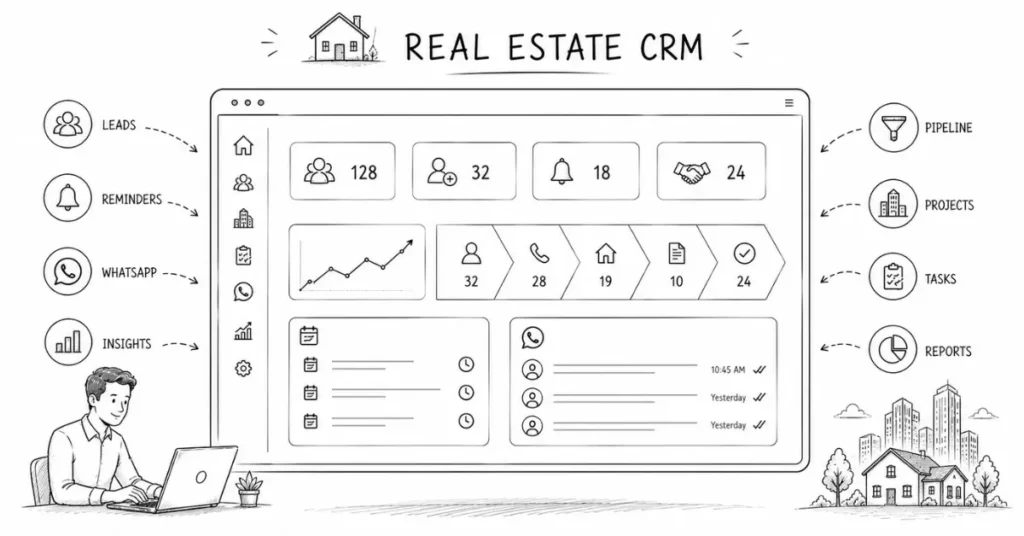
Real estate is fundamentally a relationship business built on trust, consistent communication, and long-term client connections. Modern CRM systems transform how agents manage these critical relationships by centralizing all client information, interactions, and transaction history in accessible databases, automating follow-ups and reminders ensuring no lead falls through cracks, tracking leads through entire sales pipelines from initial inquiry to closed transaction, providing analytics showing which marketing sources generate best clients, and enabling team collaboration when multiple agents serve shared clients.
Without CRM, agents rely on memory, scattered notes, spreadsheets, and email folders—inefficient systems that inevitably lose opportunities. With CRM, every interaction is documented, every follow-up scheduled, and every opportunity tracked systematically, dramatically increasing conversion rates and client satisfaction while reducing stress and administrative burden.
Top Real Estate CRM Software in India (2026)
- 99SalesCRM
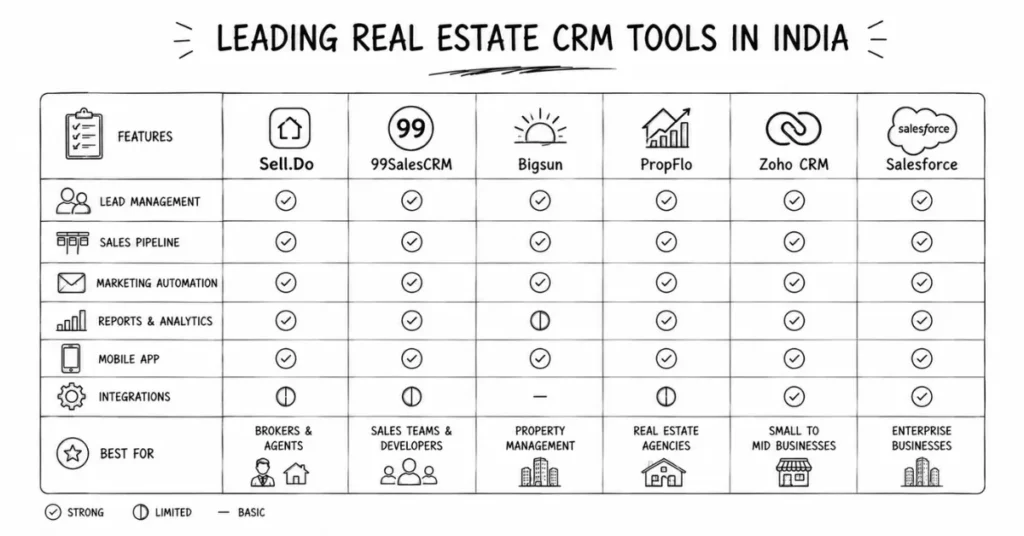
99SalesCRM stands out as one of the best real estate lead management software in India, offering seamless WhatsApp integration, AI-powered follow-up reminders, fully cloud-based accessibility, lead scoring and smart tagging for prioritization, and in-depth analytics and reporting.
Whether you’re a solo realtor or managing large sales teams, 99SalesCRM adapts beautifully to different business models. It’s regarded as one of the best lead tracking CRMs for real estate in India thanks to its intuitive design and automation capabilities. The WhatsApp integration is particularly valuable in the Indian market where WhatsApp is the dominant communication platform.
- Sell.do
Sell.do is built specifically for real estate developers and channel partners, offering strong campaign tracking, lead distribution across multiple agents or teams, project-based management for developers handling multiple properties, and integration with major property portals for automatic lead capture.
It’s a popular choice for firms handling large property portfolios, providing the organizational structure and lead distribution capabilities that growing real estate teams require. The platform excels at managing the complexity of developer-broker-buyer relationships common in Indian real estate.
- Bigsun
Bigsun is considered the best real estate CRM software in India for agencies, builders, and property consultants seeking simplicity with power. Key features include lead capture and intelligent follow-up systems, automated reminders for calls, meetings, and site visits, property and inventory tracking showing availability across portfolios, centralized client communication history, document and agreement management, and smart analytics with sales forecasting.
Since Bigsun has been built specifically for real estate operations, it addresses industry-specific needs that general-purpose CRMs might miss.
- RealE 360
RealE 360 is a sophisticated and customizable CRM for real estate agents in India, built on the Salesforce platform combining enterprise-grade technology with real estate-specific functionality. Features include automated lead nurturing workflows, integrated real estate CRM with automation, multi-channel communication management across email, SMS, WhatsApp, and calls, and task and goal tracking dashboards.
Highly scalable and ideal for large firms, RealE 360 is among the top CRM tools for real estate businesses looking for growth and enterprise-level automation.
- Zoho CRM
With flexible features and reasonable pricing, Zoho ranks among the top 10 CRM for real estate agents in India seeking balanced solutions. Key capabilities include real-time updates via mobile and desktop applications, WhatsApp and email integration for multichannel communication, automated pipeline tracking moving leads through stages, detailed customer interaction history, and extensive customization options.
It offers strong real estate CRM with automation in India, perfect for tech-savvy agents aiming to streamline sales processes without excessive complexity or cost.
- Propertybase
Built on Salesforce, Propertybase is an elite real estate CRM software solution delivering powerful tools for brokerages and real estate marketing. Features include centralized listing management across multiple properties and channels, cross-channel marketing campaign capabilities, transaction tracking and compliance support, and extensive CRM and MLS integrations.
Propertybase is more popular among high-end agencies looking for the best real estate CRM software in India that aligns with international standards, though it comes with corresponding premium pricing.
- PropFlo
PropFlo is an AI-based real estate CRM built specifically for developers and channel partners in India. Highlights include AI-assisted lead management and sales tracking, strong focus on developer-channel partner collaboration, and tools to manage the entire lifecycle from inquiry to possession.
It positions itself as a developer-first platform with AI features, making it a serious contender in the India real estate CRM space, particularly for developers who want AI-enabled CRM with strong channel partner integration.
- Salesforce Real Estate CRM
Salesforce is powerful and highly customizable, providing deep reporting and analytics, extensive automation capabilities, and variety of third-party integrations with virtually any business tool. Salesforce is preferred for large real estate companies needing advanced workflows, though it can be complex and costly for smaller teams requiring significant implementation and training investment.
Choosing the Right CRM
Consider these factors when selecting CRM:
Budget: CRM costs range from ₹1,000-5,000 per user monthly. Determine what investment makes sense for your business size and revenue.
Team size: Solo agents need simpler systems than teams requiring lead distribution, collaboration features, and management oversight capabilities.
Integration requirements: Ensure CRM connects with your property portals, email marketing platforms, website forms, and other essential tools.
Mobile accessibility: Field-based real estate work demands robust mobile apps providing full functionality on smartphones and tablets.
Learning curve: Balance powerful features against ease of adoption. Complex systems provide capabilities but risk underutilization if too difficult.
India-specific features: Prioritize CRMs understanding Indian market needs including WhatsApp integration, GST compliance, and local property portal connections.
PropTech Platforms Transforming Property Search
Leading PropTech Companies in India
MagicBricks
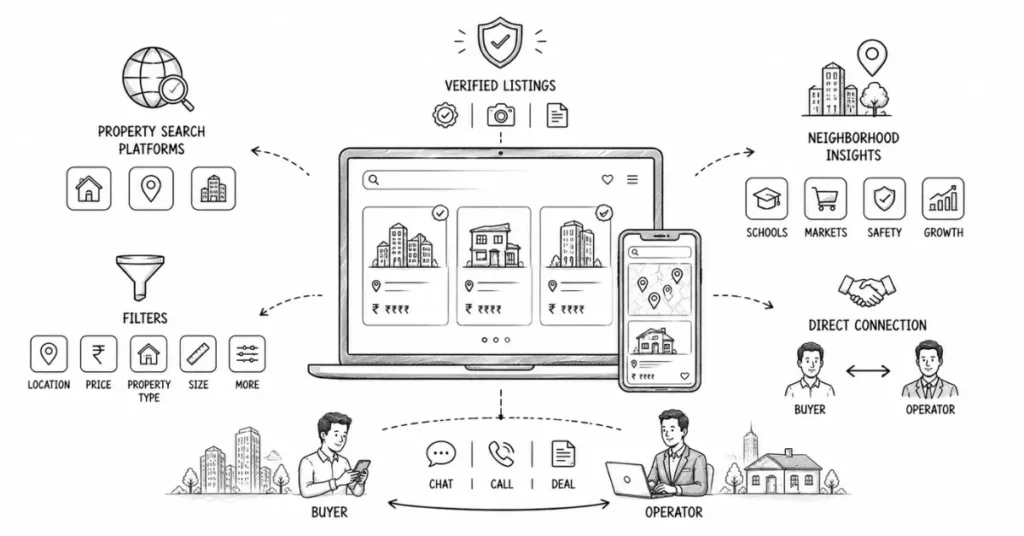
MagicBricks offers verified listings, price trends, neighborhood insights, AR/VR property content for personalized searches, and data analytics analyzing market inclination, pricing, economic factors, and statistics. It uses digital process automation services catering to changing customer needs, making it among India’s most trusted property platforms.
99acres
99acres provides optimized search results through automatic regional and project suggestions, real estate e-books guiding buyers through purchase processes, and Property Index tools providing detailed data on availability and pricing of residential properties. Beyond property searches and listings, the platform provides guidance on property-related matters and features property valuation and investment analysis tools.
Housing.com
Housing.com leverages advanced technology for comprehensive property searches, virtual tours enabling remote property viewing, AI-driven recommendations matching user preferences, and integrated services including legal assistance and home loans.
NoBroker
NoBroker eliminates brokerage fees connecting property owners directly with buyers and renters, offers verified property listings reducing fraud risks, provides additional services including packers-movers and home services, and uses technology to streamline traditionally broker-dependent processes.
Ghar.tv
Ghar.tv is one of the most innovative PropTech companies leveraging artificial intelligence to enhance property searches. Launched recently, it provides AI-driven recommendations personalizing users’ property searches, virtual tours through websites enabling informed decisions, cutting-edge PropTech features connecting homebuyers with dream residences, broker support and marketing solutions, and simplified home buying and listing solutions with engaging features.
While limited brand recognition as a new company presents challenges, Ghar.tv’s innovative AI integration and modern features position it strongly for growth.
Key PropTech Features to Look For
Top PropTech platforms typically offer verified property listings reducing fraud and misrepresentation, advanced search filters by location, price, amenities, property type, and specifications, virtual or 3D property tours enabling remote viewing, AI-driven recommendations based on preferences and behavior, direct owner-to-buyer communication reducing intermediary friction, secure payment and document management, tenant and rental management tools for landlords and property managers, and construction support for developers.
A user-friendly interface and strong customer support are also essential for seamless experiences.
Artificial Intelligence and Automation
AI-Powered Property Recommendations
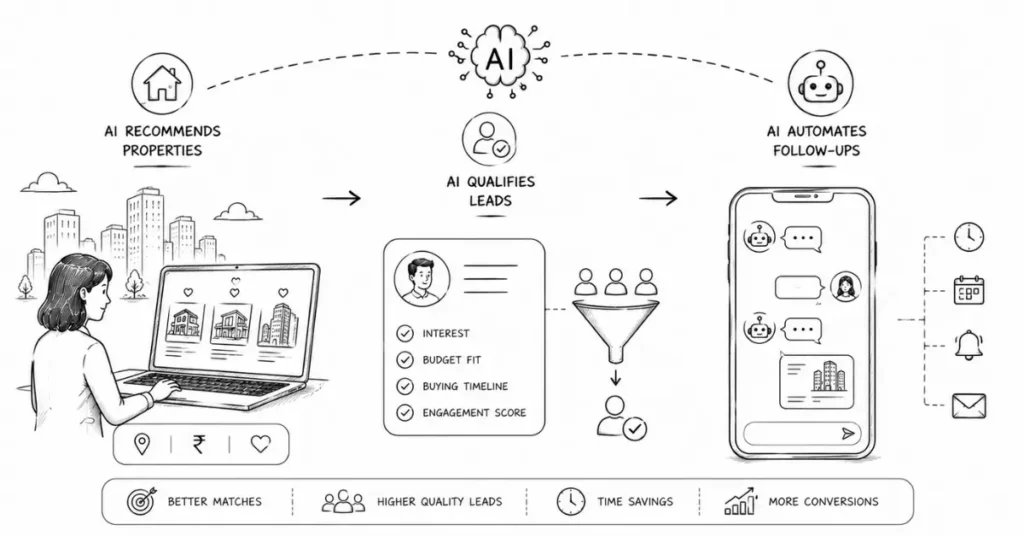
Modern buyers no longer rely on static criteria when searching properties. AI systems understand budget, location, facilities, and even lifestyle objectives, creating tailored suggestions based on user activity and preferences, helping clients find properties they might not have otherwise discovered.
For instance, if someone is investing in new flats in Whitefield or Indiranagar (Bangalore), AI analyzes vast market data forecasting pricing trends in specific neighborhoods, providing insights into price appreciation potential based on market movement, infrastructure growth, and demand.
AI Chatbots and Virtual Assistants
AI-powered chatbots enable buyers to arrange site inspections, get real-time answers about properties, access finance assistance 24/7, and receive instant responses eliminating delays from business hours limitations. These tools ensure no opportunity is lost due to time constraints, providing always-available customer service that human agents cannot match.
For real estate professionals, chatbots handle initial inquiries, qualify leads, schedule appointments, and answer frequently asked questions, freeing agents to focus on high-value activities like property showings, negotiations, and relationship building.
Predictive Analytics and Market Intelligence
AI analyzes historical data, current trends, and multiple variables to predict future market movements, helping investors identify optimal entry and exit points, assess neighborhood appreciation potential, evaluate rental yield projections, and make data-driven investment decisions rather than relying solely on intuition.
Real estate professionals leveraging predictive analytics provide clients with sophisticated insights differentiating them from competitors offering only opinions and experience-based guidance.
Automated Marketing and Lead Nurturing
AI-powered marketing automation enables personalized email campaigns adapting content to recipient interests and behaviors, social media scheduling and posting maintaining consistent presence, lead scoring identifying most promising prospects for prioritized follow-up, and automated drip campaigns nurturing leads over weeks or months until ready to transact.
These automation capabilities allow solo agents to execute marketing strategies previously requiring dedicated marketing teams, dramatically leveling the competitive playing field.
Virtual Reality and 3D Property Tours
The VR Revolution in Indian Real Estate
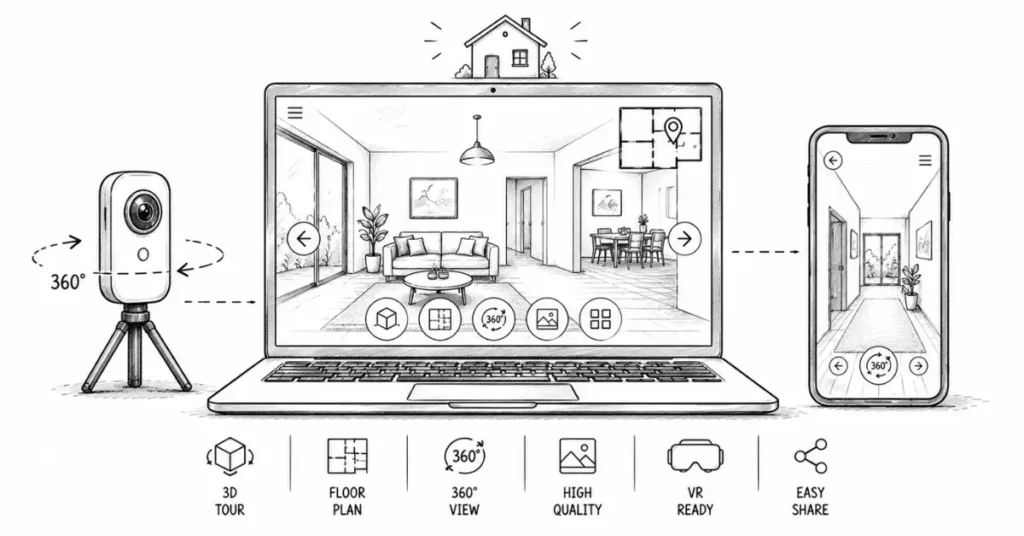
Virtual reality has brought paradigm shifts to real estate, particularly in cities like Bangalore where time and traffic constraints frequently prevent in-person site visits. VR technology allows prospective buyers to take immersive virtual tours from home comfort or even globally, eliminating geographic barriers.
Clients can virtually and interactively explore every property inch with VR, “walking” through rooms, examining finishing details, and gaining true spatial sense—all in high-definition—whether purchasing homes on city outskirts or luxury apartments in prime locations.
Benefits of Virtual Tours
Time efficiency: Instead of spending weekends traveling across cities, clients shortlist properties virtually and only visit those truly matching needs, drastically cutting decision-making time.
Geographic accessibility: International buyers, relocating professionals, and investors in other cities can evaluate properties thoroughly without physical travel, expanding your potential client base.
Enhanced visualization: 3D tours provide superior spatial understanding compared to photos and floor plans, reducing surprises during actual visits and increasing confidence in purchase decisions.
Competitive differentiation: Offering virtual tours signals technological sophistication and client-centricity, particularly valuable for luxury and high-value properties where clients expect premium service.
Marketing effectiveness: Virtual tours on websites and social media generate significantly higher engagement than static images, attracting more qualified leads.
Implementing Virtual Tour Technology
Professional 3D scanning services: Companies like Matterport provide professional 3D scanning creating high-quality virtual tours, though with associated costs of ₹5,000-15,000 per property.
360-degree cameras: Consumer 360-degree cameras (₹15,000-50,000) enable agents to create their own virtual tours with learning and editing time investment.
Smartphone-based solutions: Apps like Zillow 3D Home enable virtual tours using smartphones, though with quality limitations compared to professional solutions.
Drone footage integration: Aerial drone videos and photos (₹5,000-10,000 per property) provide comprehensive exterior and neighborhood views complementing interior tours.
For luxury properties, the investment in professional virtual tours pays substantial dividends through enhanced marketing appeal and reduced showing requirements, while moderate-priced properties may benefit from cost-effective smartphone-based solutions.
Digital Marketing Technology
Social Media Management Tools
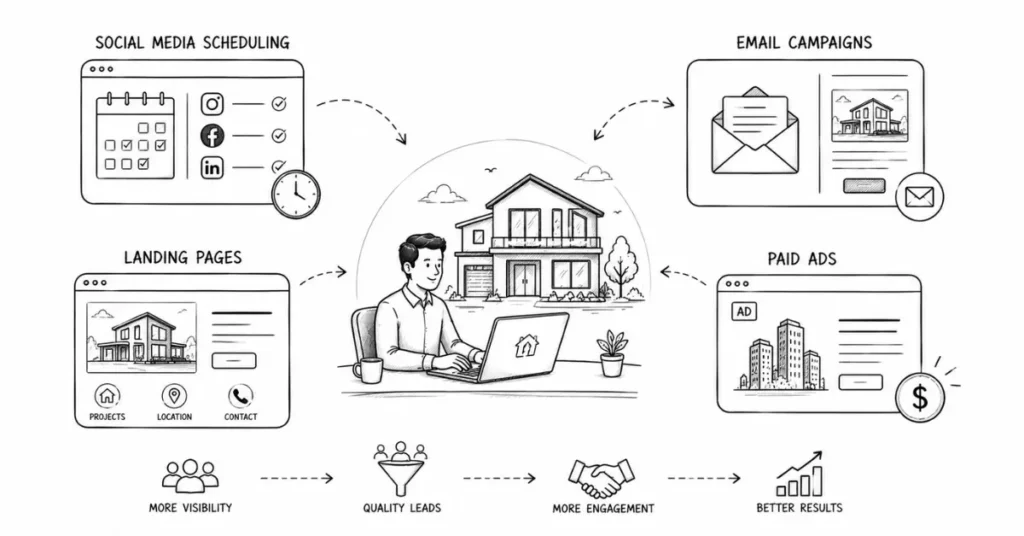
Effective social media presence requires consistent posting, engagement, and content creation—challenging for busy agents. Social media management platforms streamline these activities:
Hootsuite, Buffer, Later: Schedule posts across multiple platforms simultaneously, analyze performance metrics, engage with comments from centralized dashboards, and manage content calendars visually.
Canva: Create professional graphics, property flyers, social media posts, and presentations without graphic design expertise using templates and drag-and-drop interfaces.
InVideo, CapCut: Edit property videos, create reels, and produce engaging video content optimized for social platforms without professional video editing software.
Email Marketing Platforms
Mailchimp: Offers free plans for small lists with email automation, audience segmentation, performance analytics, and professional templates.
Constant Contact: Provides real estate-specific templates, event registration features, and survey capabilities useful for gathering client feedback.
HubSpot: Combines email marketing with CRM integration, lead scoring, landing pages, and comprehensive marketing automation for sophisticated campaigns.
Website and Landing Page Builders
WordPress with IDX integration: Create property-focused websites with MLS integration, property search functionality, and lead capture forms.
Wix, Squarespace: User-friendly website builders with templates, mobile optimization, and basic SEO capabilities requiring no coding knowledge.
Unbounce, Leadpages: Specialized landing page builders optimizing conversion rates for specific property campaigns, open houses, or lead magnets
Paid Advertising Platforms
Google Ads: Target buyers searching for properties in your market through search ads, display remarketing, and YouTube video advertising.
Facebook/Instagram Ads: Leverage sophisticated demographic and interest targeting reaching potential buyers and sellers with visual property content.
LinkedIn Ads: Effective for commercial real estate, luxury properties, and targeting corporate relocations and high-net-worth individuals.
Transaction Management and Documentation
Digital Transaction Platforms
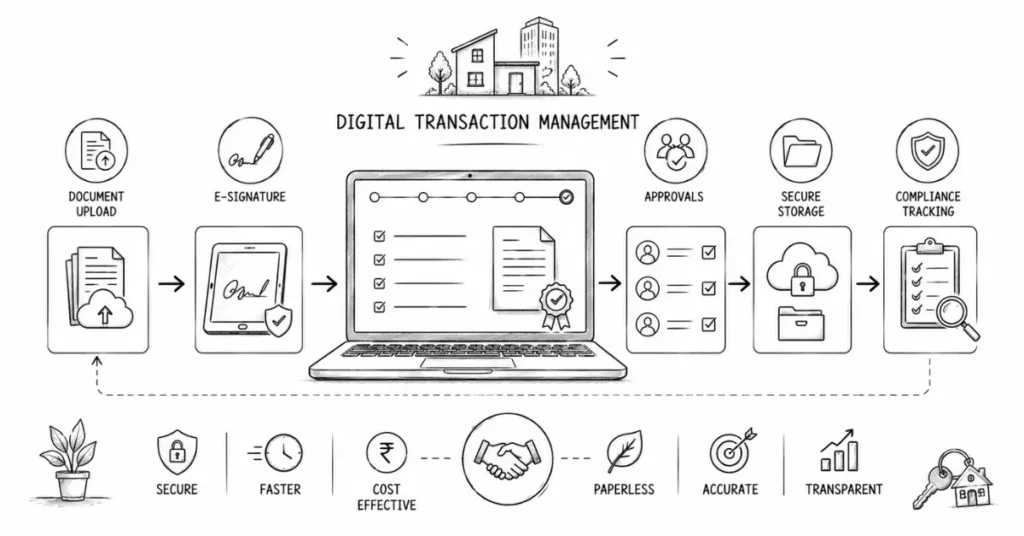
DocuSign, Adobe Sign: Enable electronic signatures on contracts, agreements, and closing documents, accelerating transaction timelines and enabling remote closings.
Dotloop, Skyslope: Comprehensive transaction management platforms tracking documents, deadlines, approvals, and communications throughout transactions.
Benefits of digital transaction management:
- Faster turnaround times eliminating printing, scanning, and physical delivery
- Better organization with all documents centrally stored and accessible
- Improved compliance with automated audit trails and document tracking
- Enhanced client experience through convenient remote signing
- Reduced environmental impact eliminating paper waste
Document Storage and Collaboration
Google Drive, Dropbox, OneDrive: Cloud storage enabling secure document sharing, collaboration, and access from any device, ensuring critical documents are never lost.
Organization best practices: Create consistent folder structures by client and property, implement clear naming conventions for easy retrieval, set sharing permissions appropriately protecting confidential information, and maintain backup systems preventing data loss.
Emerging PropTech Trends for 2026 and Beyond
Blockchain for Property Transactions
Blockchain technology promises to revolutionize property transactions through tamper-proof property records eliminating title disputes, smart contracts executing automatically when conditions are met, reduced fraud through transparent, verifiable ownership chains, and faster transactions eliminating multiple intermediaries.
While still emerging in India, blockchain-based property registrations are being piloted in several states, likely becoming mainstream within 3-5 years.
Internet of Things (IoT) and Smart Homes
Smart home technology is increasingly standard in premium properties, with buyers expecting IoT-enabled lighting, climate control, security systems, and appliances. Real estate professionals must understand smart home features, articulate benefits to buyers, and potentially partner with IoT solution providers offering value-added services.
Augmented Reality for Property Visualization
AR enables buyers to visualize properties with different furnishings, renovations, or finishes, seeing how spaces could look with modifications, measuring spaces accurately using smartphone cameras, and accessing property information by pointing phones at buildings.
As AR technology becomes more accessible through smartphones, adoption will accelerate, creating expectations for AR-enhanced property marketing.
AI Video Content for Property Marketing
AI-powered video creation tools enable production of infinitely scalable, hyper-personalized video content in 175+ languages from single 5-minute shoots. Virtual property tour AI in India offers dynamic experiences beyond static walkthroughs, featuring voice-navigated tours guiding users through spaces, simulating in-person visits.
For luxury properties, AI enables highly interactive cinematic virtual tours where AI narrators act as virtual concierges highlighting architectural details, material quality, and smart home features—all without physical visits. This level of detail and convenience proves essential for closing deals with high-net-worth individuals valuing their time.
Building Your PropTech Strategy
Assess Your Current Technology Stack
Audit your existing tools identifying gaps, redundancies, and opportunities for consolidation or upgrade. Rate current tools on ease of use, ROI, integration with other systems, and alignment with business needs.
Prioritize Technology Adoption
Don’t attempt implementing all technologies simultaneously. Prioritize based on immediate business impact, learning curve required, cost considerations, and client expectations.
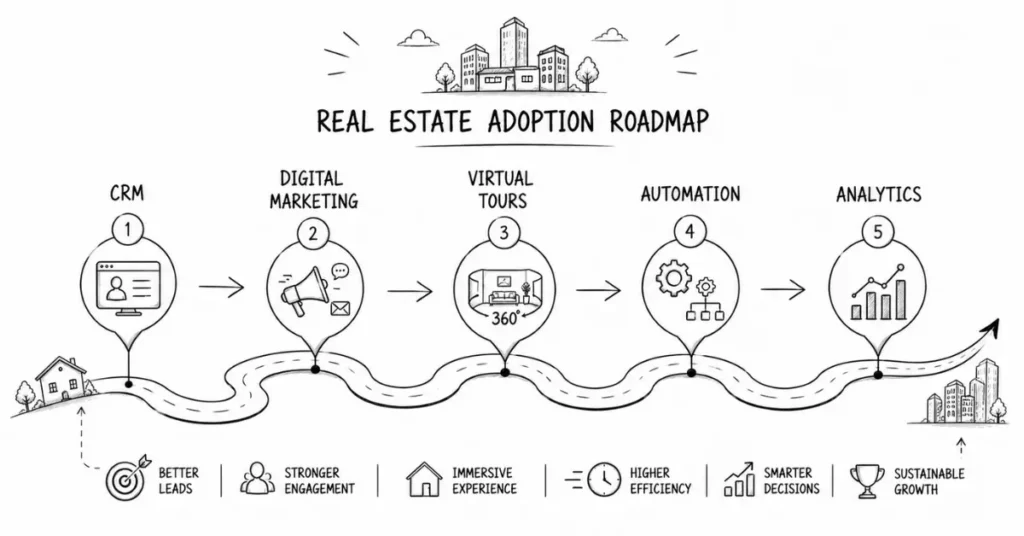
Suggested adoption sequence:
- CRM system (foundation for all client management)
- Basic digital marketing (social media presence, email)
- Virtual tours (competitive differentiation)
- Marketing automation (efficiency and scale)
- Advanced analytics and AI (optimization and insight)
Invest in Training and Support
Technology only delivers value when used effectively. Allocate time for proper training, engage vendor support resources, join user communities sharing best practices, and commit to regular system review and optimization.
Measure Technology ROI
Track metrics including lead conversion rates, average transaction times, client satisfaction scores, time saved on administrative tasks, marketing reach and engagement, and revenue growth, ensuring technology investments deliver measurable business results justifying their costs.
Frequently Asked Questions
Do I really need CRM software as a solo agent? Yes—CRM dramatically improves follow-up consistency, lead tracking, and client relationship management even for solo agents. Start with affordable or free options and upgrade as your business grows.
What’s the minimum technology investment for new agents? Plan ₹20,000-30,000 annually for basic CRM (₹1,000-2,000/month), smartphone with good camera (₹15,000-25,000), laptop or tablet, and essential software subscriptions. Higher investments enable more sophisticated marketing and efficiency.
Are virtual tours worth the investment for moderate-priced properties? Yes, but use cost-effective solutions like smartphone 360-degree apps rather than expensive professional scanning. Even basic virtual tours provide competitive advantages and convenience for buyers.
How can I learn these technologies without overwhelming myself? Adopt incrementally, mastering one tool before adding another. Utilize vendor training resources, YouTube tutorials, and peer learning through real estate associations and mastermind groups.
Will AI replace real estate agents? No—AI augments rather than replaces agents. Technology handles information delivery, initial screening, and administrative tasks, while agents provide judgment, negotiation, emotional support, and trusted advisory relationships that technology cannot replicate.
Which technology creates the biggest competitive advantage? CRM for lead management and follow-up consistency, combined with strong social media presence and digital marketing, creates the most immediate and sustainable competitive advantages for most agents.
Conclusion
Technology proficiency has become non-negotiable for real estate professional success in 2026 and beyond. PropTech tools including CRM systems, AI-powered platforms, virtual reality tours, marketing automation, and transaction management software dramatically enhance productivity, client experiences, and competitive positioning. Professionals embracing these technologies efficiently serve more clients, close more transactions, provide superior service, and build sustainable businesses, while those resisting technological adoption risk obsolescence in increasingly digital markets.
Your technology journey begins with assessing current capabilities, identifying highest-impact improvements, investing in foundational tools like CRM and digital marketing, committing to learning and skill development, and continuously evaluating and optimizing your technology stack as tools and markets evolve.
Success with PropTech isn’t about adopting every new platform—it’s about strategically implementing tools delivering genuine value, mastering their effective use, and leveraging technology enhancing rather than replacing your human expertise, judgment, and relationship-building capabilities that remain the foundation of real estate success.
Take action today—research CRM options for your business size and budget, create professional social media profiles, investigate virtual tour solutions for your market, or simply commit to learning one new technology monthly. Small consistent steps toward technology proficiency compound into transformative competitive advantages accelerating your real estate career in India’s rapidly digitalizing market.