
Real Estate Career Advancement : Skills & Growth Guide
Table of Contents
Introduction
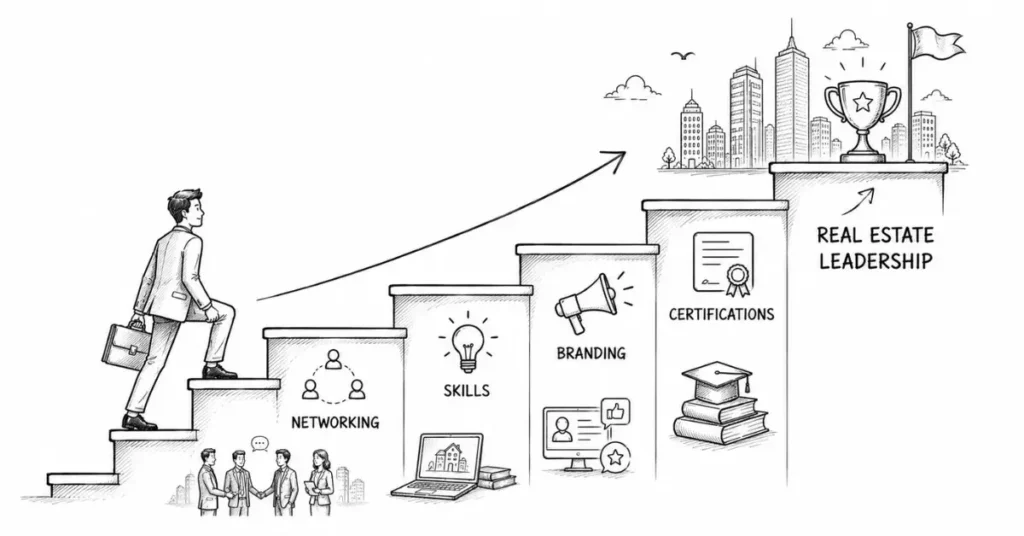
Entering the real estate profession is just the beginning—building a sustainable, financially rewarding, and professionally fulfilling career requires intentional advancement strategies, continuous skill development, strategic networking, and commitment to excellence that distinguishes you from competitors. In today’s competitive Indian real estate market, where RERA registration alone authorizes practice but doesn’t guarantee success, professional development separates those who merely survive from those who genuinely thrive.
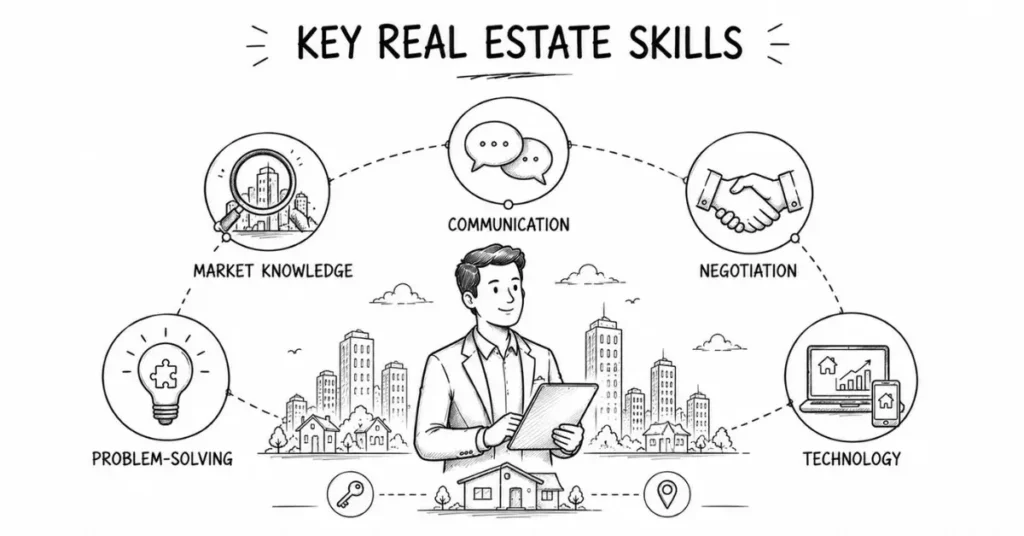
Career success in real estate often hinges not just on what you know, but on who you know. Networking is key to building relationships, generating leads, and expanding your influence within the industry. Whether you’re a seasoned professional or just starting, mastering the art of networking can significantly enhance your professional growth and propel your career forward. Research consistently shows that successful real estate agents cultivate multiple core competencies including adaptability, exceptional communication, deep market knowledge, unwavering integrity, strong networking abilities, creative problem-solving, technological proficiency, negotiation expertise, client-centric focus, and remarkable resilience.
The real estate industry in India is undergoing rapid transformation driven by technological advancement, changing consumer expectations, increasing professionalization, regulatory evolution through RERA implementation, and growing market sophistication. This dynamic environment creates both challenges requiring continuous adaptation and opportunities for forward-thinking professionals who invest in their ongoing development. Real estate education in India is expanding rapidly with the market, reflecting increasing professionalization and demand for highly skilled professionals across property development, asset management, investment analysis, and brokerage.
Technology has tremendous potential to reshape conventional practices within India’s real estate sector. Professionals who embrace PropTech tools including CRM platforms, digital marketing systems, MLS databases, AI analytics, and virtual tour technologies position themselves for sustained success in increasingly digital markets. Those who resist technological adoption risk obsolescence as clients increasingly expect digital sophistication from their real estate advisors.
This comprehensive guide explores proven strategies for accelerating your real estate career advancement in India, covering strategic networking approaches that build valuable professional relationships, essential skills requiring continuous development, personal branding strategies establishing market differentiation, technological proficiency creating competitive advantages, client relationship management driving referral business, professional certifications enhancing credibility, and long-term career planning ensuring sustained growth through changing market conditions. Whether you’re launching your career or seeking to break through career plateaus, these evidence-based strategies will accelerate your professional trajectory.
Strategic Networking: Building Your Professional Foundation
The Critical Importance of Real Estate Networking
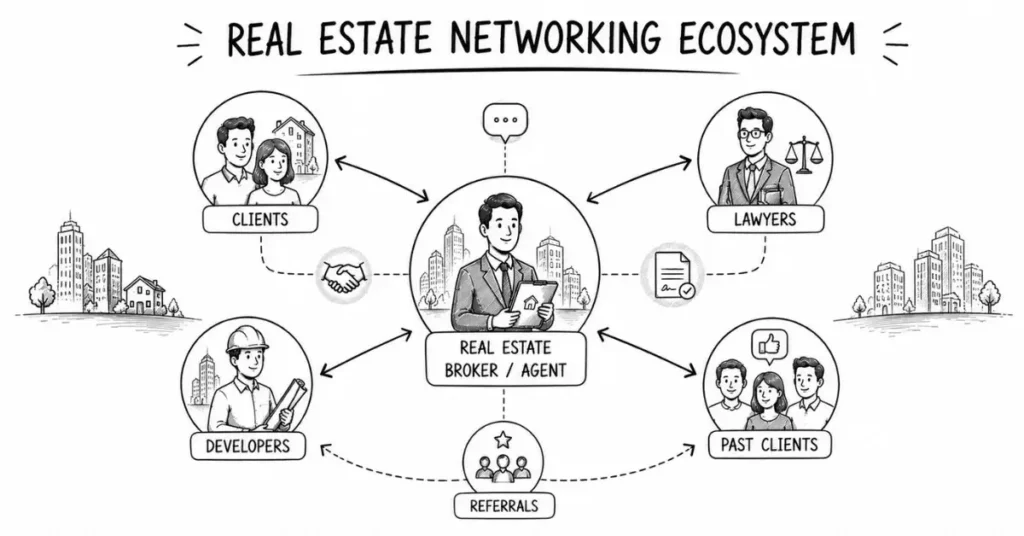
As a real estate agent, one of the most crucial things to focus on is building your professional network. Your career depends on you meeting new people and cultivating meaningful relationships that lead to trust and opportunities. Networking extends far beyond collecting business cards—it’s about creating genuine connections, demonstrating value, and becoming a trusted resource within your professional ecosystem.
In competitive real estate environments, success hinges on relationships with potential buyers and sellers seeking property transactions, other real estate professionals who can provide referrals, mortgage brokers and financial advisors who work with home buyers, attorneys handling real estate transactions, home inspectors, appraisers, and contractors, property developers and investors seeking representation, local business owners and community leaders, and past clients who provide referrals and repeat business.
Define Your Networking Objectives
Effective networking begins with clarity of purpose. Before attending events or reaching out to potential contacts, take time to define your networking goals. Are you looking to expand your client base, forge partnerships with other professionals, or establish yourself as a local market expert?. Setting objectives will guide your networking efforts and ensure they’re strategic and aligned with your long-term career aspirations.
Client acquisition focus: If your primary goal is generating buyer and seller leads, prioritize networking activities that connect you with potential clients rather than only other real estate professionals. Attend community events, join local organizations, volunteer for causes, and become visible in neighborhoods where you want to work.
Professional partnership focus: If you’re establishing complementary relationships with mortgage brokers, attorneys, contractors, or other service providers, focus networking efforts on industry events, professional associations, and referral groups where these professionals gather.
Market authority focus: If you’re positioning yourself as a local expert or thought leader, invest in content creation, speaking opportunities at industry events, media relationships, and visibility in professional forums where your expertise can be demonstrated.
Leverage Digital Networking Platforms
In today’s digital world, networking extends well beyond face-to-face interactions. Utilize professional networking platforms like LinkedIn to showcase your expertise, connect with industry peers, and engage in meaningful discussions.
Optimize your LinkedIn profile with a professional headshot conveying approachability and competence, a compelling summary highlighting your achievements and specialties, regular updates showcasing recent successes and market insights, recommendations from satisfied clients and professional partners, and strategic keywords ensuring discoverability when people search for real estate professionals in your market.
Actively participate in industry groups and forums to expand your digital network and stay ahead of industry trends. Share valuable content demonstrating your market knowledge rather than constantly promoting your listings. Comment thoughtfully on others’ posts building relationships through genuine engagement. Message new connections personally rather than sending generic connection requests.
Amplify your online presence through Instagram showcasing property photos, neighborhood highlights, and behind-the-scenes content using stories and reels. Facebook enables community engagement, local business connections, and targeted advertising. YouTube provides platforms for property tours, buyer education, and market update videos establishing authority. Twitter/X facilitates real-time market commentary and professional networking.
Post valuable real estate tips regularly, engage with local businesses and community influencers, use stories and reels to showcase expertise, and maintain consistent presence building familiarity and trust. Building your personal brand and staying top-of-mind requires regular, valuable content that serves your audience rather than purely self-promotional material.
Attend Industry Events and Networking Functions
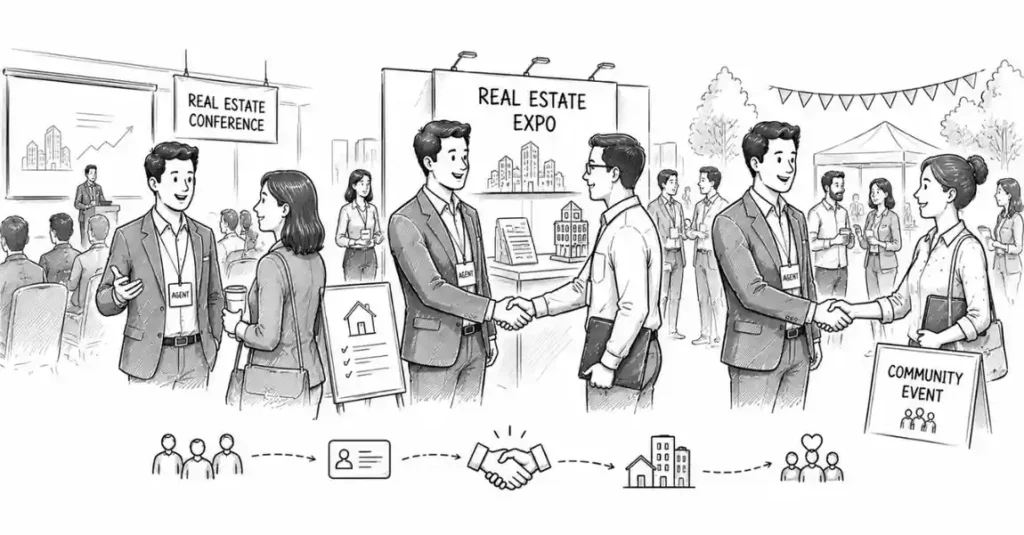
Industry conferences, seminars, and networking events provide invaluable opportunities to connect with potential clients, industry influencers, and fellow real estate professionals. Research upcoming events in your area and prioritize those that align with your niche market or target demographic.
Types of valuable networking events:
Real estate-specific conferences and seminars including CREDAI events, NAREDCO conferences, PropTech summit gatherings, and state RERA authority programs provide industry education while creating networking opportunities with peers and industry leaders.
Local chamber of commerce events connect you with business owners and community leaders who need commercial real estate services or personal residential assistance. Your local chamber of commerce or networking groups are great places to start networking your realty business.
Community events and volunteer opportunities including charity fundraisers, local festivals, school functions, and neighborhood associations help you connect with locals and show you’re invested in the area. Community events are a great way to connect with locals and demonstrate genuine community commitment beyond transactional relationships.
Property expos and real estate showcases like Times Property Expo help network with industry leaders, developers, and potential buyers while staying current on market offerings and competitive developments.
Complementary industry events including mortgage banking conferences, legal seminars on real estate law, home improvement shows, and architecture forums connect you with referral partners and demonstrate your commitment to comprehensive client service.
Approach events strategically:
Prepare an elevator pitch that succinctly communicates your expertise, unique selling propositions, and what sets you apart in the competitive real estate landscape. Your pitch should be conversational rather than rehearsed, focusing on how you help clients rather than merely listing credentials.
Treat conferences as opportunities to learn about new market information and innovations your colleagues are using. Share conference thoughts in real time on social media extending your network beyond physical attendees. Don’t just network within your industry—diversify. If you’ve been living and working in your area for a long time, you might already be buddies with other realtors—expand to adjacent industries.
Set realistic networking goals for each event, such as meeting 5-10 new contacts, having 2-3 meaningful conversations, or learning one new market insight. Follow up within 48 hours with personalized messages referencing your conversation, rather than waiting weeks when they’ve forgotten the interaction.
Build Complementary Business Relationships
Establishing connections with complementary businesses—real estate industry vendors with whom you don’t directly compete—is essential. These strategic partnerships create mutual referral relationships where both parties benefit without competing for the same transactions.
Key complementary relationships:
Mortgage brokers and loan officers who need trusted real estate professionals to whom they can refer pre-approved buyers. They can recommend you to clients before buyers even contact agents.
Real estate attorneys handling closings, title work, and legal issues who need agents bringing them business and whom you can confidently recommend to clients.
Home inspectors and appraisers providing essential transaction services who can refer buyers and sellers needing representation while you provide them steady business.
Contractors, painters, and handymen helping buyers prepare homes for sale or complete post-purchase improvements, creating natural referral relationships.
Interior designers and staging professionals collaborating on listing presentations and buyer consultations, demonstrating comprehensive service offerings.
Insurance agents serving homeowners needing property and casualty coverage, creating natural cross-referral opportunities.
Commercial property managers referring investors seeking acquisitions while you connect owner clients needing management services.
Build these relationships through regular communication, reciprocal referrals, joint marketing initiatives, co-hosted educational seminars, and consistent appreciation for their business. The strongest referral networks develop over years through proven mutual value and trust.
Creative Networking Strategies
Keep your eyes peeled for different real estate networking opportunities, even when you’re off the clock. Keep an open mind and, during each interaction, think about how you can help the other person.
Be willing to meet new people everywhere: Networking opportunities are all around you. Be willing to strike up conversations at the gym, shopping centers, coffee shops, local parks, school pickup, restaurants, sports leagues, and hobby groups. The best networking often happens in informal settings where genuine relationships form naturally.
Become a regular somewhere: Frequenting the same coffee shop, restaurant, gym, or community space creates familiarity with staff and other regulars, establishing you as a known community member. Over time, these casual acquaintances become referral sources.
Find a hobby or join activity groups: Participating in recreational sports leagues, book clubs, volunteer organizations, religious communities, or interest-based groups creates natural relationship-building opportunities around shared interests beyond real estate.
Put your pets to work: Dog parks create natural conversation opportunities as pet owners regularly interact. Your friendly dog becomes a networking assistant and conversation starter.
Say “yes” more often: Accept invitations to community events, social gatherings, volunteer opportunities, and professional functions even when not immediately convenient. Consistent presence builds familiarity and relationships.
Take a class or continuing education: Real estate licensing continuing education courses, industry training programs, or even unrelated personal interest classes create peer connections with motivated, growth-oriented individuals.
Essential Skills Requiring Continuous Development
Market Knowledge and Research Capabilities
Deep market knowledge distinguishes expert advisors from mere transaction facilitators. Successful agents maintain comprehensive understanding of local market conditions, pricing trends, inventory levels, absorption rates, neighborhood characteristics, school districts, development plans, zoning regulations, and economic factors affecting real estate demand.
Stay ahead of market trends through regular review of market data and reports, subscription to industry publications and research services, monitoring competitor pricing and marketing strategies, tracking new construction and development activity, following economic indicators affecting real estate, and networking with other professionals sharing market intelligence.
Verify RERA registration for all projects you represent. Check title deeds, encumbrance certificates, and occupancy permits before closing deals. This diligence protects clients while establishing your reputation for thoroughness and competence.
Build specialized neighborhood expertise: Rather than claiming expertise across entire metro areas, develop deep knowledge of specific neighborhoods, submarkets, or property types. Become the acknowledged expert on particular areas, enabling more confident pricing guidance, faster transaction timelines, and stronger client trust.
Communication and Relationship Skills
Exceptional communication distinguishes successful agents from average practitioners. Effective agents master both verbal communication including active listening, clear property explanations, persuasive presentations, and diplomatic negotiation, and written communication covering compelling property descriptions, professional correspondence, social media engagement, and client updates.
Communication extends beyond information transfer—it’s about building trust, understanding client needs, managing expectations, resolving conflicts, and creating positive experiences throughout transactions. Strong communicators adjust their style based on client preferences, demonstrating empathy during stressful situations and maintaining professionalism despite challenges.
Client-centric approach: Putting the needs and priorities of clients first is paramount for real estate success. Successful agents take personalized approaches to client service, taking time to understand unique goals, preferences, and concerns. They provide tailored advice and guidance, communicate proactively, and go above and beyond to exceed client expectations. By prioritizing client satisfaction and building lasting relationships, agents cultivate loyalty and generate referrals essential for sustaining long-term success.
Negotiation and Problem-Solving Abilities
Real estate transactions inevitably encounter obstacles requiring creative problem-solving and skillful negotiation. Properties have unexpected issues discovered during inspections. Financing complications threaten transaction completion. Multiple offer situations require strategic positioning. Buyers and sellers have unrealistic expectations requiring diplomatic adjustment.
Develop negotiation prowess through understanding both parties’ motivations and constraints, creating win-win solutions rather than zero-sum competitions, maintaining composure during contentious discussions, knowing when to compromise versus when to hold firm, and protecting clients’ interests while preserving relationships.
Strengthen problem-solving skills by anticipating potential issues before they emerge, developing contingency plans for common complications, maintaining extensive professional networks providing solutions, thinking creatively about alternative approaches, and remaining calm and solution-oriented during crises.
Technological Proficiency
Technology proficiency increasingly distinguishes successful agents from those struggling to adapt. Modern real estate practice requires competency with CRM platforms managing client relationships and communications, MLS systems searching properties and entering listings, digital marketing tools including social media management and email platforms, virtual tour and video production technologies, transaction management software, electronic signature and document platforms, data analytics tools tracking market trends, and AI-powered tools including chatbots, property valuation systems, and content creation.
Use AI analytics and virtual tours to enhance client experiences and marketing effectiveness. Adopt PropTech tools systematically rather than overwhelming yourself trying to learn everything simultaneously. Master one tool thoroughly before adding another. Many successful agents start with CRM and digital marketing, then progressively add advanced technologies as their practice grows.
Digital skills provide competitive advantages that translate directly into business results through more effective lead generation, enhanced client communication and satisfaction, professional marketing materials, efficient transaction management, and data-driven decision making.
Building Your Personal Brand
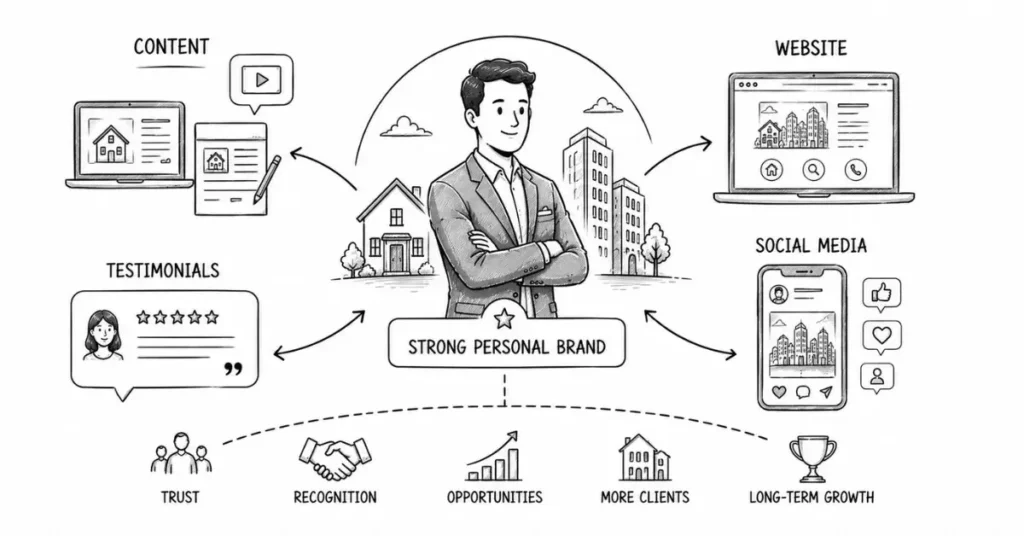
Define Your Unique Value Proposition
In crowded real estate markets, differentiation is essential for attracting clients. Define a niche such as luxury homes, first-time buyers, investment properties, commercial real estate, or specific neighborhoods, and align all branding accordingly. Your brand should clearly communicate who you serve, how you’re different, and why clients should choose you over competitors.
Consistent messaging across all platforms including website content, social media profiles, business cards, email signatures, property marketing materials, and verbal communications reinforces your positioning and builds recognition. Inconsistent messaging creates confusion and dilutes brand impact.
Showcase your unique strengths: Are you exceptionally responsive, providing 24-hour communication? Do you offer proprietary market analysis tools? Have you achieved exceptional results for specific client types? Are you bilingual serving multicultural communities? Do you have specialized knowledge like architecture, finance, or construction? Identify what genuinely distinguishes you and make it central to your brand identity.
Leverage Content Marketing and Thought Leadership
Establish yourself as a trusted market expert through consistent, valuable content creation. Start a blog covering market updates, neighborhood spotlights, home buying guidance, investment analysis, and property tips. Produce video content including market commentary, property tours, buyer/seller education, and community features. Share social media insights providing quick tips, market data, and behind-the-scenes glimpses of your work.
Content benefits include demonstrating expertise without overt sales pitches, improving search engine visibility for your name and services, creating shareable assets extending your reach, providing value that builds trust and reciprocity, and positioning you as the logical choice when people are ready to transact.
Collect and Showcase Testimonials
Social proof powerfully influences consumer decisions. Systematically request reviews from satisfied clients immediately after successful transactions when enthusiasm is highest. Showcase 5-star reviews on Google Business Profile, your website, social media platforms, property marketing materials, and NayaPurana.in or similar agent profile platforms.
Video testimonials carry exceptional credibility, showing genuine client satisfaction. Written testimonials highlighting specific benefits you provided—saved money, reduced stress, found perfect property, handled complications professionally—resonate more than generic praise. Make requesting reviews a standard part of your post-transaction process rather than occasional afterthought.
Post-Transaction Client Relationship Management
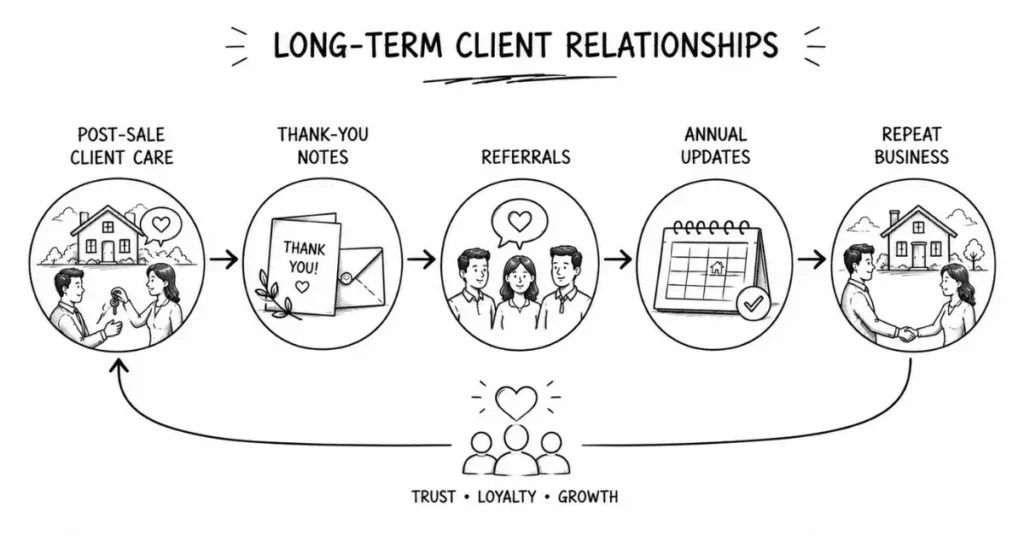
Focus on Long-Term Relationships
Most real estate agents focus disproportionately on acquiring new clients while neglecting past clients who could provide referrals and repeat business. This short-term thinking sacrifices long-term business development for immediate transaction focus.
Post-sale engagement strategies:
Send personalized thank-you notes within days of closing, expressing genuine appreciation for their business and trust. Provide annual market updates showing current neighborhood values, recent sales, and market trends keeping you top-of-mind when they or their friends need real estate services.
Offer move-in assistance including recommending interior designers, contractors, cleaning services, utility setup guidance, and neighborhood orientation. These valuable services beyond core real estate transactions demonstrate comprehensive care and build lasting goodwill.
Remember and acknowledge important dates including home purchase anniversaries, birthdays, and holidays with personal greetings maintaining warm relationships.
Provide ongoing value through market insights, community information, and helpful resources rather than only contacting clients when you need business.
Leverage referrals systematically: Ask satisfied clients for referrals explicitly rather than hoping they’ll think of you. Make referrals easy by providing business cards, shareable social media content, and clear descriptions of your ideal clients. When clients refer business, acknowledge their referral gratefully and keep them updated on outcomes, reinforcing the positive behavior.
Professional Certifications and Continuing Education
Pursue Relevant Credentials
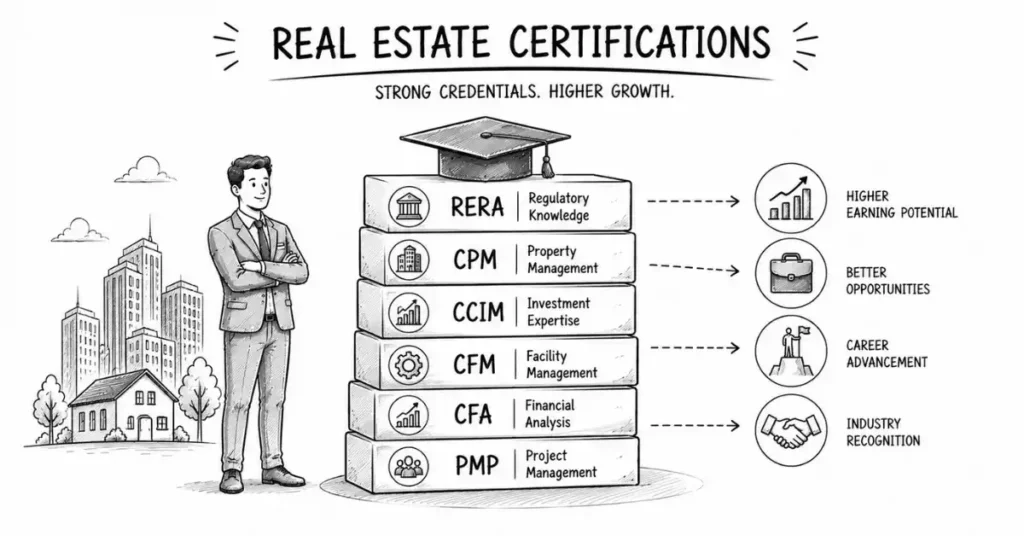
Professional certifications demonstrate commitment, expertise, and specialization that differentiate you from non-certified competitors:
RERA registration provides legal authorization but is baseline requirement rather than differentiation. Ensure yours remains current with timely renewal.
CPM (Certified Property Manager) for property management specialization demonstrates advanced capability managing residential, commercial, or mixed-use portfolios.
CCIM (Certified Commercial Investment Member) establishes credibility in commercial real estate investment, financial analysis, and sophisticated transactions commanding premium compensation.
CFM (Certified Facility Manager) through IFMA demonstrates comprehensive facility management competency, typically increasing earnings 25% over non-certified peers.
CFA (Chartered Financial Analyst) for real estate investment analysis roles provides rigorous financial training and global recognition.
PMP (Project Management Professional) for development project management demonstrates systematic project management methodology and professional commitment.
Digital marketing certifications including Google Ads, Facebook Blueprint, HubSpot Inbound Marketing, and Google Analytics demonstrate modern marketing proficiency increasingly essential for business development.
Commit to Continuous Learning
Real estate markets, regulations, technologies, and best practices continuously evolve. Professionals committed to ongoing education maintain competitive advantages and adapt successfully to changing conditions.
Formal education options include MBA programs with real estate specialization providing comprehensive business education and credibility for senior positions, master’s in real estate or property management offering specialized advanced training, certificate programs in specific areas like appraisal, facility management, or PropTech, and professional development courses through industry associations, brokerages, and online platforms.
Informal learning approaches include reading industry publications and market research, attending webinars and conference sessions, participating in mastermind groups and peer learning, listening to real estate podcasts, following industry thought leaders, and learning from mentors and successful colleagues.
Real estate education benefits from practical learning through case studies and internships gaining real-world experience. Programs include assignments like preparing contracts, creating property listings, analyzing property values, and using essential software tools including digital marketing systems, CRM platforms, and MLS databases.
Resilience and Long-Term Career Planning
Develop Mental Toughness
Real estate careers present inevitable challenges including rejected offers, lost clients to competitors, deals falling apart days before closing, difficult clients with unreasonable demands, market downturns reducing transaction volumes, and regulatory changes requiring adaptation.
Resilience—the ability to bounce back from setbacks and maintain motivation through difficulties—distinguishes successful long-term professionals from those who leave the industry after early struggles. Successful agents view rejection as learning opportunities rather than personal failures, maintain consistent effort despite discouraging results, adapt strategies when approaches aren’t working, seek support from mentors and peers, and maintain work-life balance preventing burnout.
Plan Your Career Trajectory
Rather than drifting reactively through your career, develop intentional plans with clear milestones:
Years 1-2: Build foundations through consistent prospecting and marketing, completing first 10-20 transactions, establishing systems and processes, joining professional associations, and pursuing basic certifications.
Years 3-5: Develop specialization in specific markets or property types, build referral network generating 50%+ of business, increase average transaction size and commission income, pursue advanced certifications like CCIM or CPM, and potentially hire administrative support.
Years 6-10: Establish market authority through thought leadership, potentially build small team multiplying production, achieve top producer status in your market segment, develop passive income through investments, and consider expanding into adjacent services or markets.
Years 10+: Build sustainable business with strong referral base requiring less active prospecting, mentor newer agents or provide training, potentially transition into management or consulting, diversify income through real estate investments, and plan eventual succession or exit strategy.
Regular career planning reviews annually or quarterly ensure you’re progressing toward goals rather than merely maintaining status quo.
Frequently Asked Questions
How important is networking really for real estate success? Extremely important. Research consistently shows the majority of real estate business comes from referrals and repeat clients rather than cold prospecting. Strong professional networks provide steady deal flow while reducing marketing costs and effort required to generate business.
What’s the single most valuable skill to develop? Communication skills arguably provide the highest return, affecting client relationships, negotiations, marketing effectiveness, problem-solving, and virtually every aspect of real estate practice. Strong communicators with moderate technical knowledge typically outperform technically expert poor communicators.
Should I specialize or remain a generalist? Specialization generally creates stronger market positions, enables deeper expertise, reduces competition, and supports premium positioning. However, some markets are too small for narrow specialization. Consider your market size and competition when deciding.
How much should I invest in continuing education? Successful agents typically invest 5-10% of gross commission income in education, marketing, and business development. This percentage should be higher in early career years when building foundations and lower once established systems generate consistent business.
How long before networking efforts generate business results? Relationship-building is a long-term investment. Expect 6-12 months before networking efforts generate meaningful business, with increasing returns over years as relationships deepen and your reputation strengthens. Don’t give up prematurely.
Is social media really necessary for real estate success? While not absolutely required, social media provides cost-effective marketing, brand building, and client communication capabilities that create significant competitive advantages. Younger buyers particularly expect digital presence and engagement from professional service providers.
Conclusion
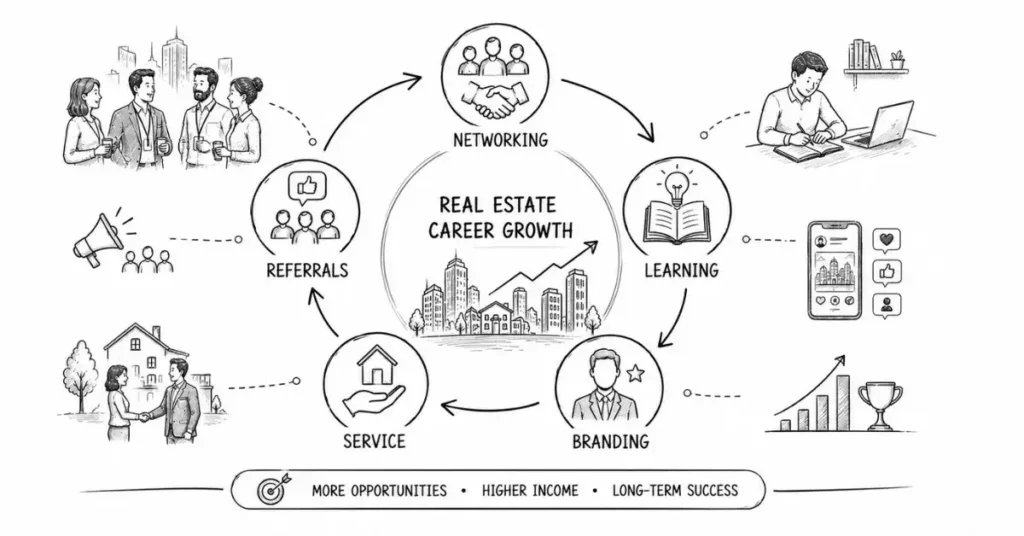
Real estate career advancement requires far more than obtaining RERA registration and hoping for success. Sustainable, rewarding careers are built through strategic networking that creates valuable professional relationships, continuous skill development maintaining competitive capabilities, strong personal branding differentiating you in crowded markets, technological proficiency meeting modern client expectations, client relationship management generating referrals and repeat business, professional certifications demonstrating commitment and expertise, and resilient mindset persevering through inevitable challenges.
Your career trajectory depends ultimately on your willingness to invest in your own development, to network consistently and genuinely, to deliver exceptional client service, to adapt to changing market conditions, and to maintain long-term perspective despite short-term setbacks.
Success in real estate isn’t accidental—it results from intentional strategies, consistent execution, genuine relationship-building, continuous learning, and unwavering commitment to excellence. By implementing the evidence-based approaches outlined in this guide, you’ll accelerate your professional growth and build the thriving, sustainable real estate career you envision.
Take action today—schedule your first networking event attendance, enroll in a professional development course, outline your personal brand positioning, implement a CRM system, or simply reach out to past clients with value-adding market updates. Small consistent actions compound into remarkable career results over time.