
Best Customer Success Certifications: Boost Your Career in 2026
Table of Contents
Introduction
“Should I get certified before applying for Customer Success jobs?”
I get asked this question at least twice a week by aspiring CS professionals across India. Last month, Prateek from Delhi spent ₹1.2 lakhs on a fancy certification, believing it would guarantee him a CS job. Three months later, he’s still unemployed, frustrated, and questioning his investment.
Meanwhile, Anjali from Pune invested ₹500 in a basic certification, combined it with practical skill development, and landed a Customer Success Associate role within six weeks at a salary of ₹5.5 lakhs.
What made the difference? Understanding which certifications actually matter, when to invest in them, and how to leverage them strategically.
Here’s the uncomfortable truth about Customer Success certifications: they help, but they’re not magic tickets to employment. Companies care more about practical skills, communication ability, and cultural fit than certificates. However, the right certifications at the right career stage can differentiate you from other candidates, fill knowledge gaps, formalize your expertise, and demonstrate commitment to the field.
This guide cuts through the marketing hype surrounding CS certifications. I’ll break down which certifications are actually recognized in the industry, which are worth your money, when to pursue them, and how to maximize their value in your career progression.
The Reality Check: Do You Actually Need Certifications?
Let me start with honesty that certification providers won’t tell you.
For Entry-Level Roles (0-2 years experience):
Certifications are nice-to-have, not must-have. Hiring managers prioritize:
- Communication skills (proven through interviews)
- Customer-facing experience (even from retail, hospitality, or support roles)
- Willingness to learn
- Cultural fit
- Basic technical comfort
A certification might give you slight edge over equivalent candidates, but it won’t overcome poor communication or lack of enthusiasm.
Reality: If you’re choosing between spending ₹50,000 on a certification or spending that time building practical skills (learning CRM tools, taking free courses, networking, applying to jobs), choose the latter.
For Mid-Career Professionals (2-5 years experience):
Certifications become more valuable. They help you:
- Formalize knowledge gained through experience
- Fill gaps in your understanding
- Signal seriousness about career growth
- Stand out when moving to senior roles
- Justify higher compensation
Reality: At this stage, recognized certifications from reputable organizations can genuinely boost your career trajectory and earning potential by 10-15%.
For Senior Professionals (5+ years experience):
Certifications are about specialization and leadership credibility:
- Advanced certifications in CS leadership
- Specialized certifications (technical CS, specific platforms)
- Training to lead teams effectively
- Industry-specific expertise
Reality: At senior levels, your track record matters more than certificates, but specialized credentials can open doors to consulting, speaking, and leadership opportunities.
Tier 1: Industry-Recognized Certifications (Worth the Investment)
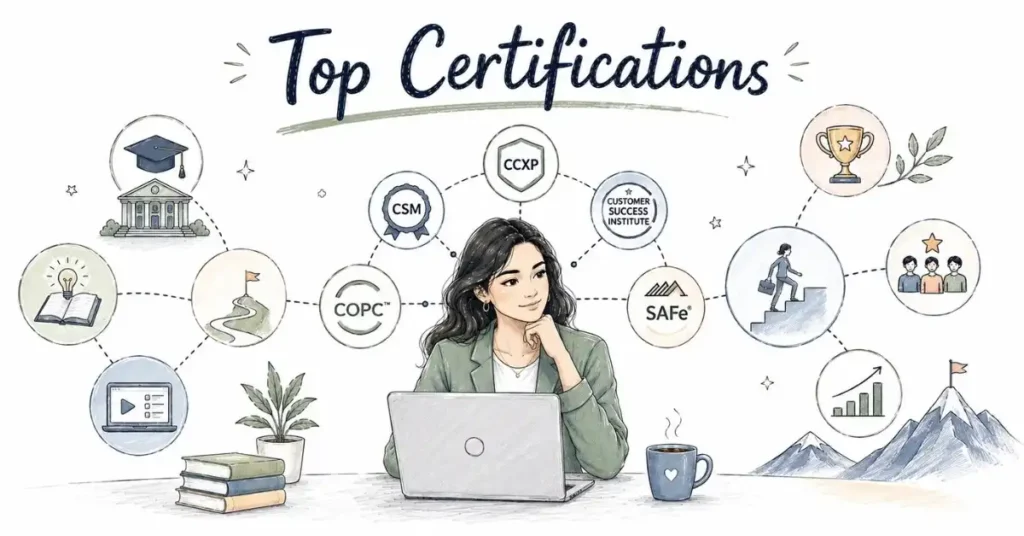
These certifications are widely recognized, respected by employers, and provide genuine value.
1. Certified Customer Success Manager (CCSM) by SuccessCOACHING / University of San Francisco
What It Is:
The most globally recognized CS certification, developed by SuccessCOACHING in partnership with the University of San Francisco’s School of Management.
What You Learn:
- Customer Success fundamentals and philosophy
- Customer journey mapping and lifecycle management
- Health scoring and predictive analytics
- Onboarding best practices
- Renewal and expansion strategies
- Building CS organizations
- CS metrics and KPIs
- Technology and tools overview
Format:
- Self-paced online learning (40-50 hours of content)
- Video lectures, case studies, and practical exercises
- Final exam (multiple choice)
- Valid for 2 years, then requires renewal
Cost:
- Approximately $1,500-2,000 (₹1.2-1.6 lakhs)
- Occasional discounts available for early-bird registration
Who Should Pursue This:
- Mid-career CSMs (2-5 years) wanting to formalize knowledge
- Professionals transitioning from related fields (support, sales, account management)
- Team leads preparing for management roles
- Anyone targeting international companies that value formal credentials
Pros:
- Most recognized certification globally
- Comprehensive curriculum covering all CS aspects
- University affiliation adds credibility
- Strong alumni network
- Looks impressive on LinkedIn and resumes
Cons:
- Expensive for entry-level professionals
- Primarily video-based learning (limited interaction)
- US-centric examples (though concepts are universal)
- Renewal requirement every 2 years
ROI Assessment:
If you’re earning ₹8-12 lakhs annually, this certification can justify a ₹1-2 lakh salary increase when changing jobs or negotiating promotions. For entry-level professionals earning ₹3-5 lakhs, the ROI is questionable.
Real Experience:
Kavita from Bangalore completed this certification after 3 years as a CSM. She mentioned it specifically during interviews for Senior CSM roles and received two offers with 25% salary increases. She attributes 10-15% of that increase to the certification signaling her seriousness and structured knowledge.
2. Practical CSM™ Certification Program
What It Is:
A structured, four-level certification program aligned with international standards (ISO/IEC 17024), offering progressive learning from foundation to mastery.
Certification Levels:
- Level 1 (Foundation): CS basics, customer lifecycle, fundamental skills
- Level 2 (Practitioner): Advanced techniques, data analysis, strategic planning
- Level 3 (Professional): CS leadership, team management, organizational design
- Level 4 (Master): Strategic CS transformation, executive leadership
What You Learn:
- Structured, progressive CS methodology
- Practical frameworks and templates
- International best practices
- Real-world case studies
- Team collaboration and leadership
Format:
- Self-paced online learning with live components
- Mix of video, reading materials, and practical assignments
- Progressive levels (must complete Level 1 before Level 2, etc.)
- Exams at each level
Cost:
- Level 1: Approximately $500 (₹40,000)
- Higher levels: $600-1,000 each
- Bundles available for multiple levels
Who Should Pursue This:
- Professionals wanting structured, progressive learning
- Teams pursuing certifications together (group discounts available)
- Those who prefer step-by-step advancement over one comprehensive certification
- International CS professionals (globally recognized)
Pros:
- Progressive structure allows budget-friendly incremental investment
- ISO/IEC alignment provides international credibility
- Practical, hands-on focus
- Can start with Level 1 and add levels as career progresses
- Good for teams certifying together
Cons:
- Less name recognition than CCSM in some markets
- Must complete levels sequentially (can’t skip to advanced)
- Time commitment across multiple certifications
- Less established alumni network in India specifically
ROI Assessment:
Starting with Level 1 provides good value at ₹40,000. You can assess ROI before investing in higher levels. Good option for gradual career investment.
3. Customer Success Management Specialization - Coursera (Multiple Universities)
What It Is:
Academic courses from recognized universities offered through Coursera platform, providing university-backed certification.
What You Learn:
- Varies by specific course, but typically covers:
- Customer relationship management theory
- Service design and delivery
- Customer analytics and metrics
- Business strategy alignment
- Change management
Format:
- Video lectures from university professors
- Graded assignments and quizzes
- Peer-reviewed projects
- Self-paced or cohort-based options
- Typically 4-6 courses in a specialization (3-6 months total)
Cost:
- Coursera subscription: ₹3,000-5,000/month
- Typically complete specialization in 3-4 months
- Total cost: ₹9,000-20,000
- Financial aid available for eligible students
Who Should Pursue This:
- Entry-level professionals wanting affordable, credible learning
- Recent graduates building foundational knowledge
- Those who value academic approach over practitioner focus
- Budget-conscious learners seeking university credentials
Pros:
- Significantly more affordable than premium certifications
- University backing provides academic credibility
- Flexible, self-paced learning
- Can audit courses for free (pay only for certificate)
- Includes graded assignments proving competency
Cons:
- Less industry recognition than practitioner-focused certifications
- More theoretical than practical
- Doesn’t include hands-on tool training
- Alumni network less active than specialized programs
ROI Assessment:
Excellent value for money at ₹10,000-20,000. Best for entry-level learning or supplementing practical experience with theoretical foundation.
Tier 2: Platform-Specific Certifications (Valuable for Tool Proficiency)

These certifications focus on specific Customer Success or CRM platforms. They’re valuable if you’re using or targeting roles with these specific tools.
4. Gainsight Customer Success Certifications
What It Is:
Certifications for Gainsight, the leading Customer Success platform used by major companies globally.
Certification Tracks:
- Gainsight Essentials: Platform navigation, basic configuration
- Gainsight Admin: Advanced configuration, data management, automation
- Gainsight Developer: Custom integrations, API usage
- Strategic CS with Gainsight: Using platform for CS strategy
Cost:
- Essentials: Free
- Advanced tracks: $200-500 (₹16,000-40,000)
Who Should Pursue This:
- Professionals at companies using Gainsight
- Those targeting roles at companies that use Gainsight (many large SaaS companies)
- CS Operations professionals
- Anyone wanting to add platform expertise to CS knowledge
Pros:
- Directly applicable to job requirements
- Makes you immediately productive if company uses Gainsight
- Free entry-level certification
- Gainsight is industry-standard tool
Cons:
- Only valuable if working with Gainsight specifically
- Doesn’t teach CS philosophy, only tool usage
- Requires access to Gainsight instance for practice (employers typically provide)
ROI Assessment:
If your current or target company uses Gainsight, this is extremely valuable. Otherwise, limited utility. Free tier makes it risk-free to explore.
5. Salesforce Administrator / Salesforce for Customer Success
What It Is:
Salesforce is the world’s leading CRM, used extensively in CS teams. Administrator certification proves platform proficiency.
What You Learn:
- Salesforce navigation and data management
- Creating reports and dashboards
- Automation using workflows and process builder
- User management and security
- Customization capabilities
Cost:
- Salesforce Trailhead (learning platform): Free
- Admin certification exam: $200 (₹16,000)
- Can retake if you fail (additional $100)
Who Should Pursue This:
- CS professionals at companies using Salesforce
- Those wanting versatile CRM skills applicable across industries
- CS Operations roles
- Anyone targeting enterprise companies (most use Salesforce)
Pros:
- Salesforce is used everywhere highly transferable skill
- Free learning through Trailhead
- Valuable across CS, sales, marketing, operations
- Strong job market for Salesforce-skilled professionals
- Can lead to specialized Salesforce career paths
Cons:
- Admin certification is challenging (requires serious study)
- Focused on tool, not CS strategy
- Requires maintaining certification through ongoing learning
ROI Assessment:
Excellent investment. Salesforce skills are valuable across multiple roles and industries. Can increase earning potential by ₹2-4 lakhs annually.
6. HubSpot Customer Service Certification
What It Is:
Free certification from HubSpot covering customer service and success fundamentals using HubSpot’s tools.
What You Learn:
- Customer service best practices
- Using HubSpot Service Hub
- Ticket management and automation
- Customer feedback and surveys
- Building help resources
- Service metrics and reporting
Cost:
- Completely free
Format:
- 6-7 video lessons (3-4 hours total)
- Final exam (multiple choice)
- Certificate upon passing
Who Should Pursue This:
- Everyone starting in Customer Success (seriously, it’s free)
- Those targeting companies using HubSpot
- Entry-level professionals building resumes
- Career switchers exploring Customer Success
Pros:
- Completely free
- Quick to complete (one day)
- From recognized company
- Covers practical, applicable skills
- Looks good on LinkedIn
- No prerequisites
Cons:
- Less comprehensive than paid certifications
- Limited depth
- Primarily HubSpot-tool focused
- Less prestigious than university-backed certifications
ROI Assessment:
Perfect ROI since it’s free. Every aspiring CS professional should complete this as a starting point. Takes minimal time, costs nothing, provides credential for resume.
Tier 3: Supplementary Certifications (Nice to Have)
These certifications complement Customer Success skills but aren’t CS-specific.
7. Certified Customer Experience Professional (CCXP)
What It Is:
Global certification from Customer Experience Professionals Association (CXPA) focusing on broader customer experience, not just Customer Success.
What You Learn:
- CX strategy and measurement
- CX design and improvement
- CX culture and organizational adoption
- Voice of Customer programs
- CX metrics and ROI
Cost:
- CXPA membership: $295/year
- Exam fee: $575 (members) / $775 (non-members)
- Total: Approximately ₹70,000-80,000
Who Should Pursue This:
- Senior CS professionals moving into CX leadership
- Those targeting Director/VP roles
- Professionals wanting to pivot from CS to broader CX roles
- Consultants and strategists
Pros:
- Globally recognized CX credential
- Demonstrates strategic thinking beyond operational CS
- Strong for leadership positions
- International network of CX professionals
Cons:
- Expensive
- Requires significant CX experience to qualify (3+ years)
- Broader than CS specifically
- More valuable in large enterprises than startups
ROI Assessment:
Valuable for senior professionals (Director+) in large organizations. Less relevant for early-mid career CS professionals focused on SaaS.
8. Google Analytics / Data Analytics Certifications
What It Is:
Various data analytics certifications teaching customer data analysis, behavior tracking, and insights generation.
Options:
- Google Analytics Individual Qualification (free)
- Google Data Analytics Professional Certificate (Coursera, ₹15,000-20,000)
- Various Excel/SQL certifications
Why Relevant for CS:
Customer Success increasingly requires data analysis skills. Understanding customer behavior patterns, usage analytics, and metrics drives modern CS.
ROI Assessment:
Excellent supplementary skills. Data analysis capabilities can increase your value significantly, especially for CS Operations and analytical roles.
9. Project Management Certifications (PMP, CAPM, Agile)
What It Is:
Project management certifications teaching organizational, planning, and execution skills.
Why Relevant for CS:
Customer Success involves managing multiple accounts, onboarding projects, and coordinating cross-functional initiatives. PM skills are directly applicable.
ROI Assessment:
Valuable if you’re managing complex implementations or targeting Customer Success Operations roles. Less critical for relationship-focused CS positions
Free Learning Resources (Start Here Before Paying)
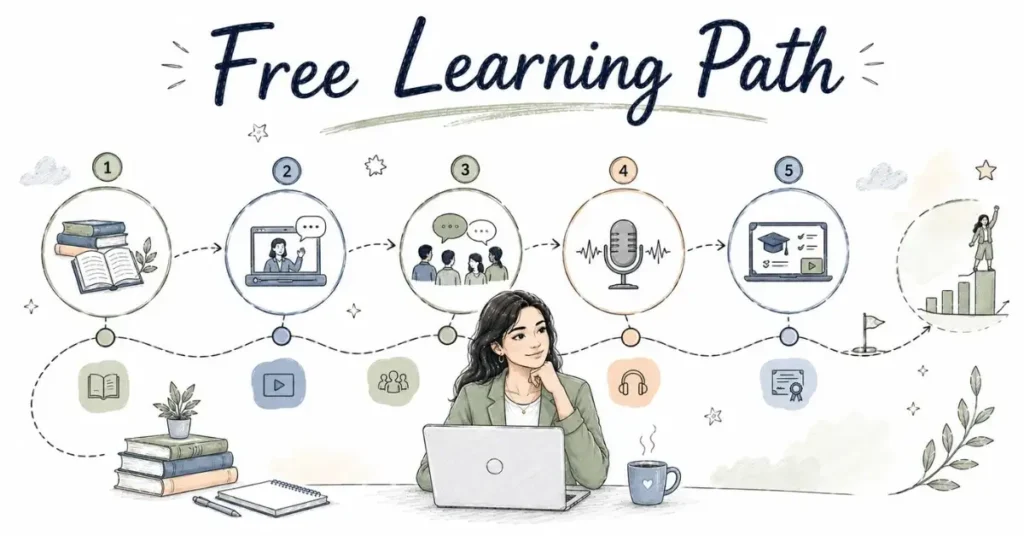
Before investing thousands in certifications, exhaust these free resources:
Free Courses and Content:
- HubSpot Academy – Multiple free courses on customer service, CRM, and success strategies
- Gainsight Pulse Community – Free resources, webinars, and community discussions from CS leaders
- Salesforce Trailhead – Gamified learning paths for Salesforce and CRM concepts (completely free)
- LinkedIn Learning – If you have LinkedIn Premium, access thousands of customer success and relationship management courses
- YouTube Channels:
- Practical CSM
- Gainsight
- ChurnZero
- Success Coaching
Free webinars, workshops, and discussions
- Practical CSM
- Podcasts:
- The Customer Success Podcast
- Gain Grow Retain
- The Startup Chat
Learn from practitioners sharing real experiences
- The Customer Success Podcast
- Books (₹300-800 each):
- “Customer Success” by Nick Mehta, Dan Steinman, Lincoln Murphy
- “The Startup’s Guide to Customer Success” by Jennifer Chiang
- “Farm Don’t Hunt” by Guy Nirpaz
Often more valuable than expensive certifications
- “Customer Success” by Nick Mehta, Dan Steinman, Lincoln Murphy
My Recommendation: Spend 3-6 months with free resources before investing in paid certifications. Build practical skills, apply for jobs, and get real experience. Once employed, pursue certifications strategically.
Certification Decision Framework: When to Invest
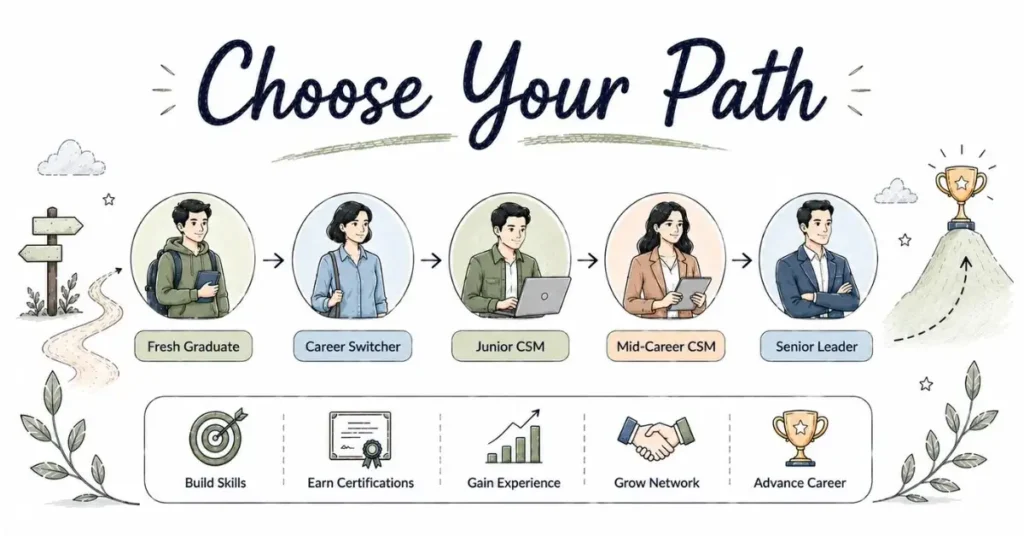
Use this framework to decide which certification (if any) makes sense for you:
Scenario 1: Fresh Graduate / Entry-Level (0-1 year experience)
Recommendation:
- Start with HubSpot Service Hub Certification (free)
- Complete Coursera Customer Success courses if budget allows (₹10,000-15,000)
- Focus majority of effort on practical skills and job applications
- Don’t invest in expensive certifications until you have first job
Scenario 2: Career Switcher (Experience in other fields, new to CS)
Recommendation:
- HubSpot Certifications (free – establish baseline)
- Coursera CS Specialization (₹15,000 – bridge knowledge gap)
- If budget allows and serious about switch: Practical CSM Level 1 (₹40,000)
- Avoid expensive certifications until you confirm CS is right career fit
Scenario 3: Junior CSM (1-3 years CS experience)
Recommendation:
- Focus on tool-specific certifications relevant to your company (Gainsight, Salesforce)
- Free and low-cost options to fill skill gaps (analytics, Excel, PM basics)
- Wait on expensive certifications until you’re ready for senior roles
- Prioritize on-the-job learning and performance
Scenario 4: Mid-Career CSM (3-5 years, targeting senior roles)
Recommendation:
- Now is the time for premium certification investment
- CCSM (₹1.2-1.6 lakhs) or Practical CSM full program
- Platform certifications if targeting specific companies
- Expect 10-20% salary increase with certification when changing roles
Scenario 5: Senior CSM / Manager (5-8 years, targeting director roles)
Recommendation:
- Advanced certifications (CCXP if targeting CX leadership)
- Specialized certifications matching your focus (technical, strategic, operations)
- Leadership and management training
- Consider certifications as career investment with clear ROI
Scenario 6: Director / VP (8+ years)
Recommendation:
- Certifications less critical at this level
- Focus on thought leadership (speaking, writing, networking)
- Specialized training for specific gaps (executive coaching, board presentations)
- Certifications mainly for personal development, not career advancement
Maximizing Certification ROI: Beyond Just Getting Certified
Simply completing a certification and adding it to LinkedIn isn’t enough. Here’s how to extract maximum value:
- Apply Learning Immediately:
For every concept learned, implement it in your current role (even if it’s not a CS role). Document results. This gives you interview stories demonstrating practical application. - Create Content:
Write LinkedIn posts sharing insights from your certification. This demonstrates knowledge publicly and builds your professional brand. - Network with Fellow Learners:
Join certification cohort groups, connect with other certified professionals, participate in alumni networks. These connections often lead to opportunities. - Update All Profiles:
Add certification prominently to LinkedIn, resume, email signatures. Make it visible. - Leverage in Negotiations:
When discussing promotions or new roles, explicitly mention certification as evidence of commitment and expanded capabilities. - Combine Certifications Strategically:
Pairing CS certification with tool-specific certification (CCSM + Salesforce Admin, for example) creates powerful combination differentiating you significantly. - Keep Learning:
Certifications are starting points, not finish lines. Continue learning through communities, reading, practice
Red Flags: Certifications to Avoid
Not all certifications are created equal. Watch out for:
Warning Signs:
- Unknown providers with no industry presence – If CS professionals haven’t heard of it, employers won’t value it
- Guaranteed job placement claims – No certification guarantees employment
- Pay-to-pass schemes – If everyone who pays passes, certification is meaningless
- Excessive cost with no clear curriculum – Research what you’re actually learning
- No exam or assessment – “Participation certificates” hold little value
- Very short duration with “expert” claims – CS expertise takes time, not 2-hour courses
Questions to Ask Before Investing:
- Is this certification mentioned in job descriptions?
- Do CS professionals I respect recognize it?
- What specific skills/knowledge will I gain?
- What’s the pass rate (if everyone passes, it’s not rigorous)?
- Can I find reviews from actual participants?
- What’s the total cost including renewals?
- Does the cost align with my career stage and potential ROI?
The Uncomfortable Truth About Certifications
Let me close with honesty that certification programs won’t tell you:
Certifications don’t make you good at Customer Success. Experience, practice, and genuine customer focus do.
The best Customer Success Manager I know has zero certifications. He’s just exceptional at building relationships, understanding customer needs, and driving value. He earns ₹35 lakhs annually.
Another person I know has three expensive certifications but struggles in CS roles because they lack empathy and communication skills. They’re currently unemployed.
Certifications are tools, not magic solutions. They structure learning, fill knowledge gaps, and signal commitment. But they don’t replace practical skills, emotional intelligence, and real-world experience.
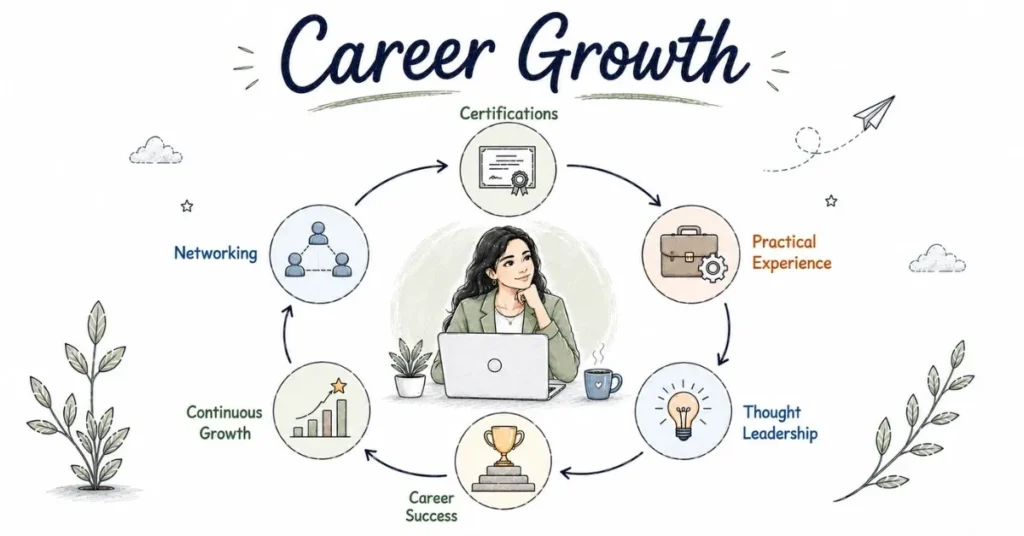
Your Action Plan
If you’re starting out:
Complete HubSpot Service Hub Certification this week (it’s free and takes 4 hours). Apply what you learn. Focus energy on building practical skills and landing your first role.
If you’re mid-career:
Assess your gaps. Missing strategic knowledge? Consider CCSM. Weak on tools? Pursue platform certifications. Make certification investment strategic, not emotional.
If you’re senior:
Certifications matter less than thought leadership and results. Invest selectively in specialized areas that truly advance your expertise.
Everyone:
Remember that the best investment is in yourself your skills, your network, your reputation. Certifications are one tool in that investment strategy, not the entire strategy.
Choose wisely. Invest strategically. Learn continuously. That’s how you build a thriving Customer Success career.