
Future of Supply Chain: Emerging Careers & Trends
Table of Contents
Introduction: The Supply Chain Revolution is Here
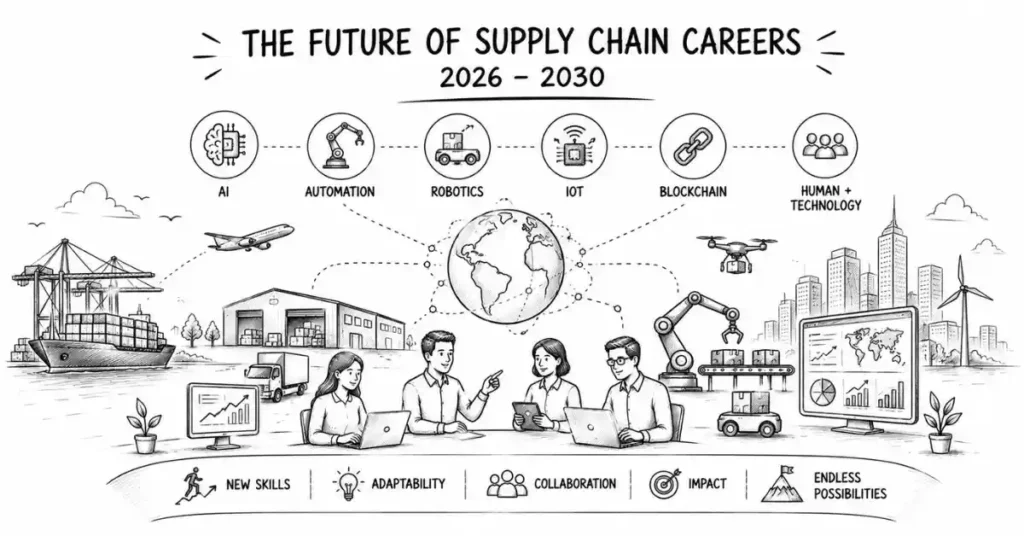
“Will AI take my supply chain job?”
This question haunts every supply chain professional today. You’ve heard the predictions: autonomous trucks eliminating drivers, AI forecasting replacing demand planners, robots running warehouses, blockchain making procurement transparent. The anxiety is real. The headlines are alarming.
But here’s what those sensational headlines miss: Technology doesn’t eliminate supply chain careers—it transforms them. The supply chain professional of 2030 won’t look like today’s professional, but there will be MORE opportunities, not fewer. Higher-value roles. Better-paid positions. More strategic work.
Think about what happened when Excel replaced paper ledgers. Accountants didn’t disappear—they evolved from manual calculators to financial analysts. When GPS replaced paper maps, logistics coordinators didn’t vanish—they became optimization specialists managing complex algorithms. Every technological revolution follows the same pattern: routine tasks automate, human roles elevate.
The supply chain transformation happening right now—driven by AI, automation, IoT, blockchain, and autonomous systems—is the biggest shift in 50 years. By 2030, supply chains will look radically different. Some roles will vanish. New roles will emerge. And professionals who adapt will thrive in ways today’s supply chain leaders cannot imagine.
This guide explores the future of supply chain careers through 2030. Not science fiction speculation, but realistic trends already underway. We’ll cover:
- Technologies reshaping supply chains and their career impact
- Roles that will decline or disappear
- Emerging roles with explosive growth potential
- Skills to future-proof your career
- How to position yourself for the supply chain of tomorrow
- Realistic timeline of changes (what happens when)
Whether you’re starting your supply chain career or 15 years in, understanding these shifts determines whether you ride the wave or get swept away by it.
Let’s look at your future. It’s more exciting than you think.
PART 1: TECHNOLOGY TRENDS RESHAPING SUPPLY CHAINS
1. Artificial Intelligence & Machine Learning
Current Reality (2026):
AI already deeply embedded in leading supply chains—Amazon’s forecasting, Walmart’s inventory optimization, logistics companies’ route planning. No longer experimental; it’s operational.
What AI Does in Supply Chains:
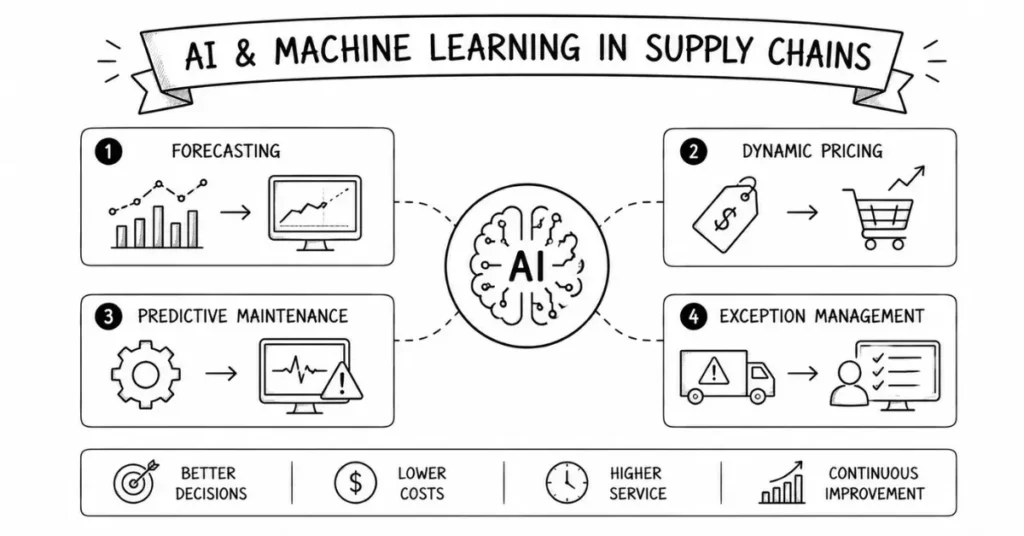
- Demand forecasting: Predicting demand with 85-95% accuracy (vs. 70-80% traditional methods)
- Dynamic pricing: Real-time pricing optimization based on demand, inventory, competition
- Predictive maintenance: Forecasting equipment failures before they happen
- Automated replenishment: Systems ordering inventory without human intervention
- Exception management: AI identifying problems and recommending solutions
- Natural language processing: Chatbots handling routine supplier/customer queries
Career Impact:
Declining Roles:
- Manual demand planners (entering forecasts into spreadsheets)
- Routine inventory coordinators (reorder point calculations)
- Basic customer service (order status queries)
- Transaction processing (purchase order creation, invoice matching)
Rising Roles:
- AI Training Specialists: Teaching AI systems domain knowledge
- Algorithm Auditors: Ensuring AI decisions align with business logic
- AI-Human Collaboration Managers: Optimizing how humans work with AI
- Data Scientists: Building and refining AI models
- Strategic Demand Planners: Interpreting AI outputs, handling exceptions, strategic planning
Reality: AI won’t replace planners—it replaces routine forecasting. Planners evolve to strategic roles interpreting AI insights, handling complex exceptions, making judgment calls AI can’t.
2. Warehouse Automation & Robotics
Current Reality:
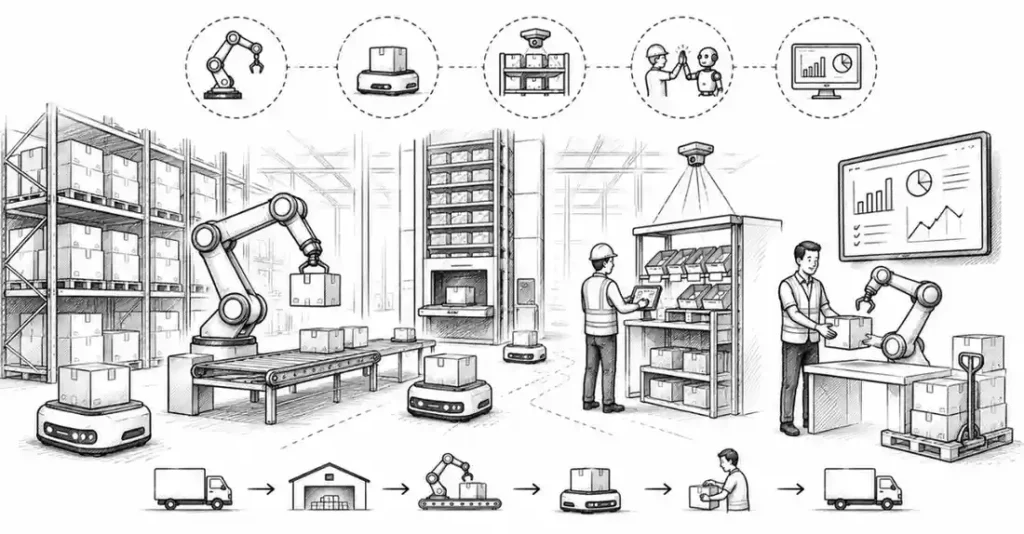
Amazon, Flipkart, Reliance already deploying robots in warehouses. Automated storage/retrieval systems (AS/RS), autonomous mobile robots (AMRs), robotic picking systems expanding rapidly.
Technologies:
- Goods-to-person systems: Robots bringing items to human pickers (3x productivity)
- Automated picking: Robotic arms with computer vision picking items
- Autonomous mobile robots (AMRs): Robots moving inventory around warehouses
- Drones: Warehouse inventory scanning and cycle counting
- Exoskeletons: Wearable robots helping workers lift heavy items
Career Impact:
Declining Roles:
- Manual order pickers (50-70% reduction over 10 years)
- Forklift operators (autonomous forklifts emerging)
- Manual cycle counters (drone-based inventory scanning)
- Basic warehouse supervisors (fewer people to manage)
Rising Roles:
- Robotics Fleet Managers: Managing hundreds of robots in warehouse
- Automation Engineers: Designing and implementing warehouse automation
- Human-Robot Collaboration Specialists: Optimizing workflows combining humans and robots
- Warehouse Technology Managers: Overseeing WMS, robotics, IoT integration
- Automation Project Managers: Leading warehouse transformation projects
Timeline:
- 2026-2028: Robots in 30-40% of large warehouses (currently ~15%)
- 2028-2030: Robots in 60-70% of large warehouses
- Full automation (no humans): Still 15-20 years away for most applications
Reality: Warehouses won’t be human-free. They’ll have fewer workers doing higher-skilled jobs—technology management, exception handling, quality control, maintenance.
3. Autonomous Vehicles & Drones
Current Reality:
Self-driving trucks being tested globally. Delivery drones operational in limited areas. Full deployment 5-15 years away but coming inevitably.
Applications:
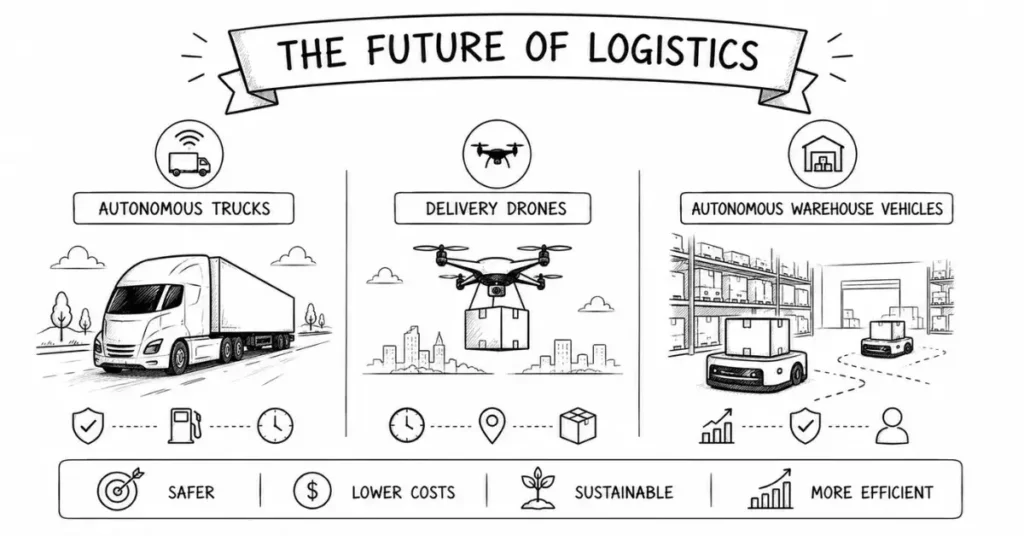
- Long-haul trucking: Autonomous trucks on highways (driver for first/last mile)
- Last-mile delivery: Autonomous delivery vehicles and sidewalk robots
- Drones: Package delivery in low-density areas
- Warehouse vehicles: Autonomous forklifts and yard trucks
Career Impact:
Declining Roles:
- Long-haul truck drivers (50-70% reduction by 2035-2040)
- Delivery drivers (gradual reduction, but 10-15 year timeline)
- Forklift operators in warehouses
Rising Roles:
- Fleet Automation Managers: Managing autonomous vehicle fleets
- Remote Vehicle Operators: Monitoring and intervening when autonomous systems need help
- First/Last Mile Specialists: Handling complex delivery scenarios autonomy can’t
- Drone Operations Coordinators: Managing delivery drone networks
- Autonomous Logistics Strategists: Designing logistics networks leveraging autonomy
Reality Check:
Full autonomous deployment slower than predicted. Regulation, infrastructure, edge cases (bad weather, complex urban environments) mean hybrid models dominate for next 10-15 years—autonomous for routine, humans for complex.
Jobs transform more than disappear: Truck drivers become fleet coordinators. Delivery personnel become exception handlers.
4. Internet of Things (IoT) & Real-Time Visibility
Current Reality:
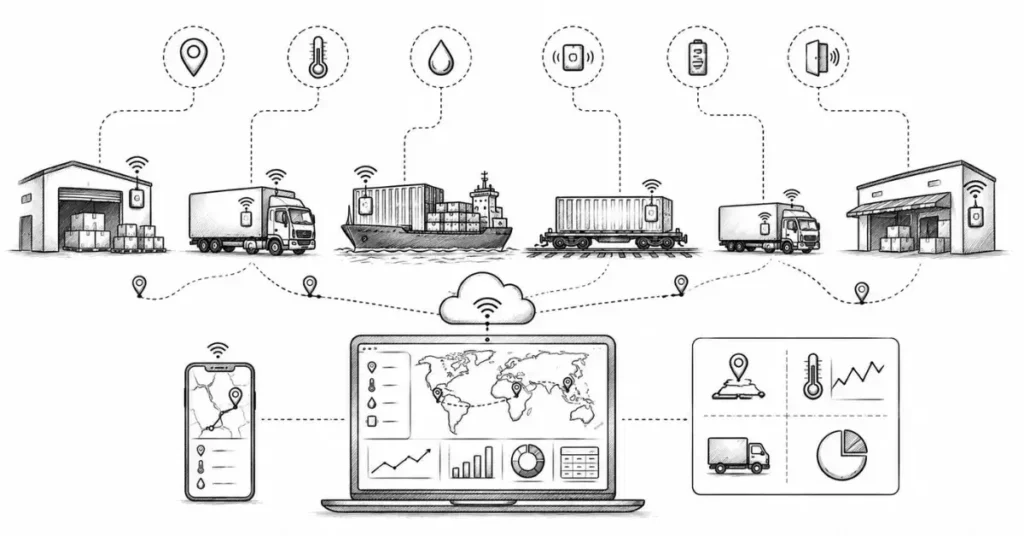
IoT sensors tracking shipments, monitoring warehouse conditions, predicting equipment failures already widespread.
Applications:
- Shipment tracking: Real-time location, temperature, shock/vibration monitoring
- Asset tracking: Finding equipment, pallets, containers instantly
- Condition monitoring: Temperature, humidity for sensitive products (pharma, food)
- Predictive maintenance: Sensors predicting equipment failures days/weeks in advance
- Smart warehouses: Environmental controls, energy optimization
- Fleet telematics: Vehicle health, driver behavior, route optimization
Career Impact:
Rising Roles:
- IoT Data Analysts: Interpreting massive sensor data streams
- Control Tower Operators: Managing real-time visibility systems
- Predictive Maintenance Specialists: Using IoT data to optimize maintenance
- Supply Chain Visibility Managers: Designing and managing end-to-end visibility platforms
- Cold Chain Specialists: Managing temperature-controlled supply chains with IoT
Skills Required:
- Data analysis and visualization
- IoT platform management
- Real-time decision making
- Exception management at scale
5. Blockchain & Supply Chain Transparency
Current Reality:
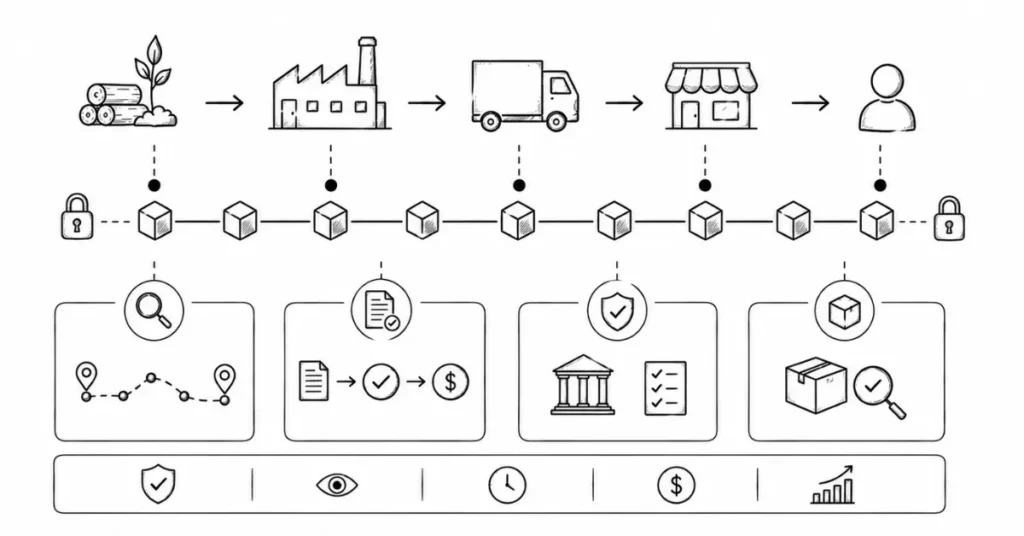
Pilot projects in pharmaceuticals (drug traceability), luxury goods (authenticity), food (farm-to-table tracking). Still early but gaining momentum.
Applications:
- Traceability: Complete product journey from origin to consumer
- Authenticity verification: Combating counterfeit products
- Smart contracts: Automated payment when conditions met
- Compliance documentation: Immutable records for audits
- Ethical sourcing verification: Proving no child labor, environmental compliance
Career Impact:
Rising Roles:
- Blockchain Supply Chain Architects: Designing blockchain-based supply chain systems
- Traceability Managers: Managing end-to-end product traceability programs
- Compliance & Verification Specialists: Using blockchain for regulatory compliance
- Smart Contract Developers: Creating automated supply chain contracts
Timeline:
- 2026-2028: Blockchain in 20-30% of enterprises (pilot/limited production)
- 2028-2030: 40-50% adoption for specific use cases (pharma, luxury, food)
- Still niche compared to other technologies
6. Digital Twins & Simulation
What It Is:
Virtual replica of physical supply chain enabling simulation and optimization without real-world experimentation.
Applications:
- Network design: Testing warehouse locations, distribution strategies virtually
- Scenario planning: Simulating disruptions (supplier failure, demand spikes)
- Process optimization: Testing operational changes before implementation
- Training: Virtual environments for employee training
- Real-time optimization: Digital twin mirrors real supply chain, optimizing continuously
Career Impact:
Rising Roles:
- Digital Twin Engineers: Building and maintaining virtual supply chain models
- Scenario Planners: Running simulations, analyzing results
- Supply Chain Simulation Specialists: Using digital twins for optimization
- Virtual Reality Trainers: Developing VR-based supply chain training
PART 2: ROLES DECLINING OR TRANSFORMING
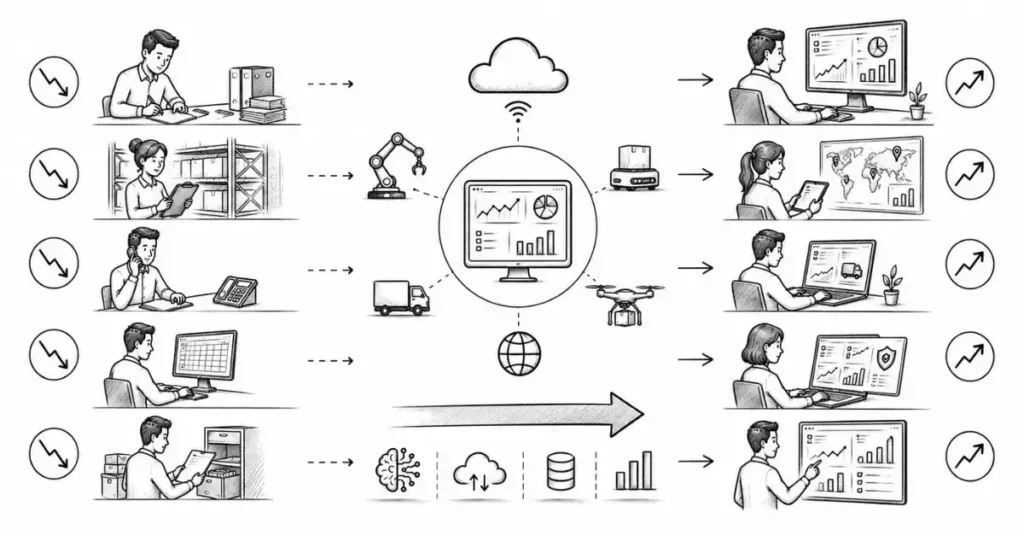
High Risk of Automation (50-70% Reduction by 2035)
- Manual Data Entry & Transaction Processing:
- Order entry clerks
- Invoice processing coordinators
- Basic inventory record keepers
- Why: Robotic Process Automation (RPA) and AI handle repetitive transactions
- Routine Forecasting:
- Basic demand planners using manual methods
- Simple inventory calculators
- Why: AI forecasting surpasses human accuracy for routine items
- Manual Warehouse Workers:
- Order pickers (without specialized skills)
- Basic packers
- Manual inventory counters
- Why: Robots, automated picking, drone inventory scanning
- Routine Reporting & Analysis:
- Analysts creating standard reports manually
- Dashboard builders (manual Excel/PowerPoint)
- Why: Automated dashboards, self-service BI tools
- Basic Transportation Coordination:
- Simple load planning (without complex constraints)
- Routine carrier dispatch
- Why: AI route optimization, automated load planning
Medium Risk - Roles Transforming (30-50% Reduction)
- Traditional Demand Planners:
- Won’t disappear but fewer needed
- Role elevates to strategic exception management
- Collaboration and judgment replace routine forecasting
- Procurement Coordinators:
- Routine purchasing automated (e-procurement, AI-driven)
- Focus shifts to strategic sourcing, supplier relationships
- Tactical buying reduces significantly
- Logistics Coordinators:
- Basic shipment coordination automated
- Roles evolve to exception management, carrier relationship, optimization
- Warehouse Supervisors:
- Fewer workers to supervise due to automation
- Roles shift to technology management, process improvement
PART 3: EMERGING HIGH-GROWTH ROLES
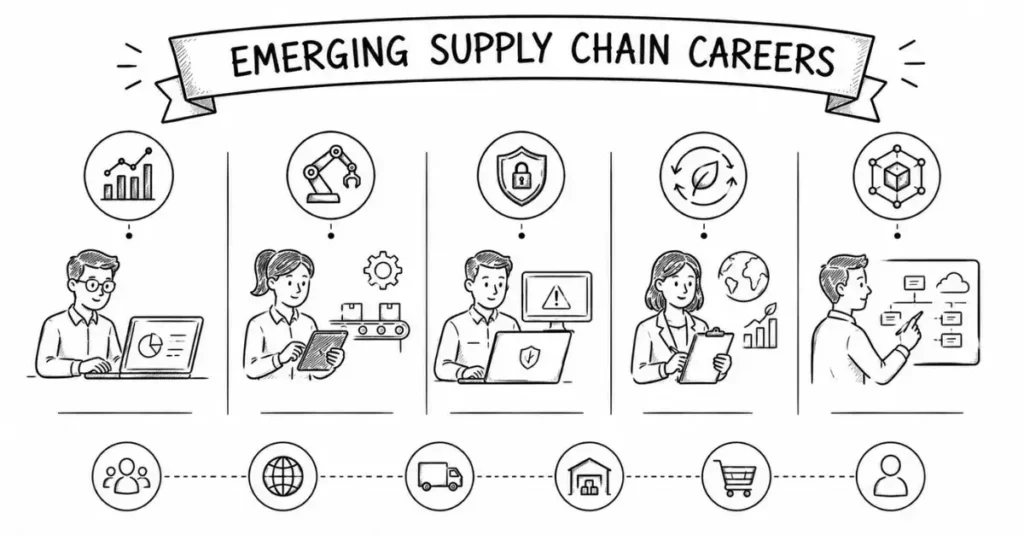
Roles That Didn't Exist 5 Years Ago (Explosive Growth 2026-2030)
- Supply Chain Data Scientist
- What they do: Build AI/ML models for forecasting, optimization, prediction
- Skills: Python, machine learning, supply chain domain knowledge
- Salary (2026): ₹15-30 lakhs (experienced: ₹25-45 lakhs)
- Growth: 300-400% increase in positions by 2030
- Why hot: Every company wants AI; few have supply chain + data science expertise
- Automation Implementation Manager
- What they do: Lead warehouse automation, robotics deployment, autonomous vehicle integration
- Skills: Project management, robotics understanding, change management, operations
- Salary: ₹18-35 lakhs
- Growth: 200-250% by 2030
- Why hot: Massive automation investment; need managers who understand both technology and operations
- Supply Chain Cybersecurity Specialist
- What they do: Protect supply chains from cyber threats, ransomware, data breaches
- Skills: Cybersecurity, supply chain systems (ERP, WMS, TMS), risk management
- Salary: ₹20-40 lakhs
- Growth: 250-300% by 2030
- Why hot: Supply chains increasingly digital; cyberattacks growing exponentially
- Sustainability & ESG Manager (Supply Chain)
- What they do: Carbon footprint reduction, circular economy, ethical sourcing, ESG reporting
- Skills: Sustainability frameworks, supply chain operations, carbon accounting
- Salary: ₹15-32 lakhs
- Growth: 200% by 2030
- Why hot: Regulatory requirements, investor pressure, consumer demand
- Control Tower Operator
- What they do: Monitor real-time supply chain visibility systems, manage exceptions, coordinate responses
- Skills: Real-time data analysis, decision-making under pressure, cross-functional coordination
- Salary: ₹12-22 lakhs
- Growth: 150-200% by 2030
- Why hot: Real-time visibility becoming standard; need 24/7 monitoring and response
- Digital Supply Chain Architect
- What they do: Design integrated digital supply chain systems (ERP, IoT, AI, blockchain)
- Skills: Enterprise architecture, supply chain systems, technology integration, strategy
- Salary: ₹25-50 lakhs
- Growth: 150% by 2030
- Why hot: Companies digitizing supply chains; need architects connecting technologies
- Human-AI Collaboration Manager
- What they do: Optimize how humans and AI systems work together in supply chain
- Skills: AI understanding, change management, process design, human factors
- Salary: ₹18-35 lakhs
- Growth: 200% by 2030 (brand new role type)
- Why hot: AI everywhere but human-AI interfaces poorly designed; need specialists optimizing collaboration
- Supply Chain Resilience Planner
- What they do: Design resilient supply chains, scenario planning, risk mitigation, business continuity
- Skills: Risk management, supply chain strategy, scenario modeling, crisis management
- Salary: ₹16-30 lakhs
- Growth: 150% by 2030
- Why hot: Post-COVID, resilience permanent priority
PART 4: SKILLS TO FUTURE-PROOF YOUR CAREER
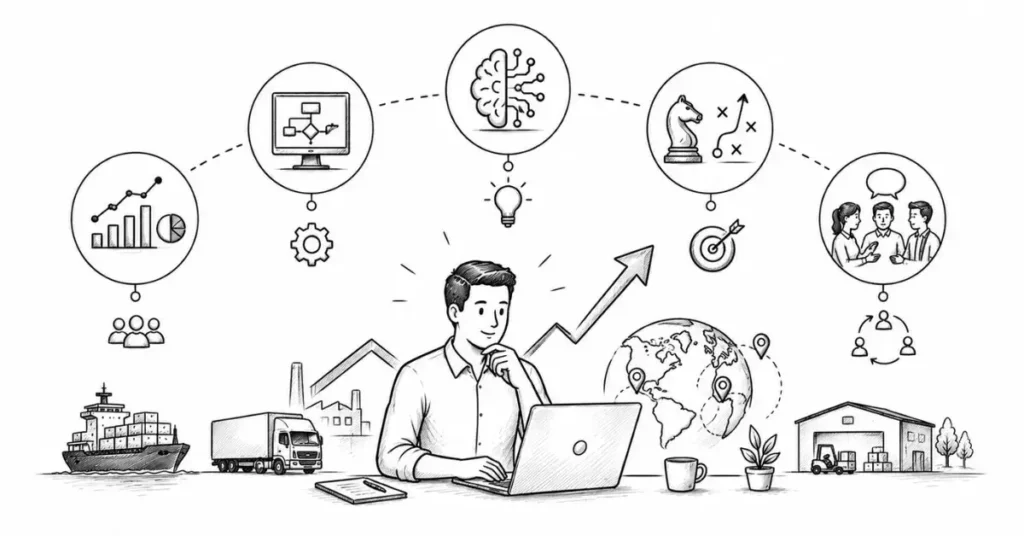
Technical Skills (Non-Negotiable by 2030)
Tier 1: Essential for Most Roles
- Data Analytics:
- Advanced Excel, SQL, Python/R basics
- Data visualization (Tableau, Power BI)
- Statistical thinking
- Why: Data-driven decision making universal
- Investment: 200-400 hours learning
- ROI: ₹3-7 lakhs salary premium
- Supply Chain Systems:
- ERP proficiency (SAP, Oracle)
- Planning systems understanding
- Digital platform literacy
- Why: All work happens through systems
- Investment: On-job + 100-200 hours focused learning
- ROI: ₹2-5 lakhs premium
- Basic AI/ML Understanding:
- Not coding AI but understanding capabilities, limitations
- When to apply AI vs. traditional methods
- Interpreting AI outputs
- Why: Working with AI systems increasingly common
- Investment: 50-100 hours (courses, reading)
- ROI: Credibility and career mobility
Tier 2: Valuable Differentiators
- Advanced Analytics/Data Science:
- Python for supply chain (pandas, scikit-learn)
- Machine learning model building
- Statistical forecasting
- Why: High-value specialized roles
- Investment: 500-1000 hours
- ROI: ₹8-15 lakhs premium in specialized roles
- Technology Integration:
- Understanding IoT, blockchain, digital twins
- Systems thinking and architecture
- API and integration concepts
- Why: Supply chains becoming integrated technology ecosystems
- Investment: 200-300 hours
- ROI: Positions for strategic roles
- Automation & Robotics Understanding:
- Not engineering robots but understanding applications, ROI, implementation
- Change management for automation
- Why: Automation projects everywhere
- Investment: 100-150 hours
- ROI: Project leadership opportunities
Human Skills (Increasingly Valuable as Routine Work Automates)
- Strategic Thinking:
- Seeing big picture, connecting dots
- Long-term planning beyond immediate problems
- Why: Routine tactical work automated; strategic thinking remains uniquely human
- Development: Experience + mentorship + business education
- Complex Problem Solving:
- Handling ambiguous, unstructured problems
- Creative solution generation
- Why: AI handles routine problems; humans needed for novel, complex issues
- Development: Exposure to diverse challenges, deliberate practice
- Stakeholder Management & Influence:
- Cross-functional collaboration
- Influencing without authority
- Relationship building
- Why: Technology coordinates transactions; humans coordinate people
- Development: Practice, feedback, leadership training
- Change Management:
- Leading transformation initiatives
- Managing resistance
- Communication and training
- Why: Supply chains in constant transformation; change management critical
- Development: Leading projects, change management training
- Judgment & Ethics:
- Making decisions with incomplete information
- Ethical decision-making (AI bias, sustainability tradeoffs)
- Balancing competing priorities
- Why: Algorithms optimize but humans decide what to optimize for
- Development: Experience, ethics training, mentorship
- Continuous Learning Mindset:
- Curiosity and adaptability
- Comfort with uncertainty
- Self-directed learning
- Why: Skills obsolete every 3-5 years; learning ability more valuable than specific knowledge
- Development: Attitude and habit building
PART 5: CAREER STRATEGIES FOR THE NEXT 5 YEARS
Strategy 1: The T-Shaped Professional
Concept: Deep expertise in one area (vertical of T) + broad knowledge across supply chain (horizontal of T) + technical literacy.
Example:
- Depth: Demand planning expert
- Breadth: Understanding procurement, logistics, operations
- Technical: Python, machine learning, planning systems
Why It Works: Deep expertise prevents commoditization while breadth enables strategic roles and collaboration.
How to Build:
- Specialize deliberately (choose your vertical)
- Rotate through functions or take cross-functional projects (build horizontal)
- Invest 10-15% time in adjacent learning
Strategy 2: The Technology + Domain Hybrid
Concept: Combine supply chain expertise with technology skills (data science, AI, automation).
Example Paths:
- Demand planner → Demand planning data scientist
- Logistics manager → Automation implementation manager
- Supply chain analyst → Control tower operator
Why It Works: Massive demand for professionals bridging supply chain and technology. Scarcity = premium compensation.
How to Build:
- Take online courses (Python, data science, ML)
- Volunteer for technology projects at work
- Build portfolio (side projects, Kaggle competitions)
- Transition to hybrid roles (2-3 year timeline realistic)
Strategy 3: The Strategic Generalist
Concept: End-to-end supply chain understanding + business acumen + leadership → senior strategic roles.
Example Career:
- Diverse functional experience (procurement, operations, planning, logistics)
- Cross-industry experience
- MBA or executive education
- Path to Director, VP, CSCO roles
Why It Works: Senior strategic roles require breadth, business thinking, leadership—less susceptible to automation.
How to Build:
- Seek rotations across functions
- Develop business and financial acumen
- Build leadership experience
- Focus on strategy and transformation projects
Strategy 4: The Specialist Expert
Concept: Become top 5% expert in niche domain (cold chain, blockchain, sustainability, autonomous logistics).
Why It Works: Deep specialists in emerging areas command premium and have consulting opportunities.
How to Build:
- Choose emerging specialization aligned with interests
- Become thought leader (write, speak, teach)
- Build unique expertise early (first-mover advantage)
- Consider consulting/advisory as path
PART 6: REALISTIC TIMELINE - WHAT HAPPENS WHEN
2026-2027: Current Reality
- AI forecasting in 40-50% of large companies
- Warehouse robotics in 15-20% of major facilities
- IoT tracking standard for high-value shipments
- Blockchain pilots in pharma, luxury goods
- Entry-level routine jobs starting to decline
Career Actions:
- Start building data analytics skills NOW
- Position for technology-related projects
- Consider certifications (APICS + data analytics)
2027-2028: Acceleration Phase
- AI adoption reaches 60-70% of enterprises
- Warehouse automation expands to 30-40% of facilities
- First autonomous truck routes operational (limited)
- Digital twins gaining traction
- Clear career bifurcation: technical vs. non-technical professionals
Career Actions:
- Specialize deliberately (choose your path)
- Demonstrate technology aptitude
- Build portfolio of technology projects
- Consider role transition if in high-automation-risk position
2028-2030: Current Reality
- AI standard across supply chain functions
- 50-60% of large warehouses significantly automated
- Autonomous vehicles in commercial operation (limited routes)
- Blockchain mainstream in certain verticals
- Supply chain roles unrecognizable vs. 2020
- Demand for hybrid professionals (supply chain + technology) peaks
Career Actions:
- Senior leadership roles require technology literacy
- Premium compensation for data science + supply chain
- Traditional roles without technology skills struggle
- Consulting opportunities for transformation expertise
CONCLUSION: Your Future is What You Make It
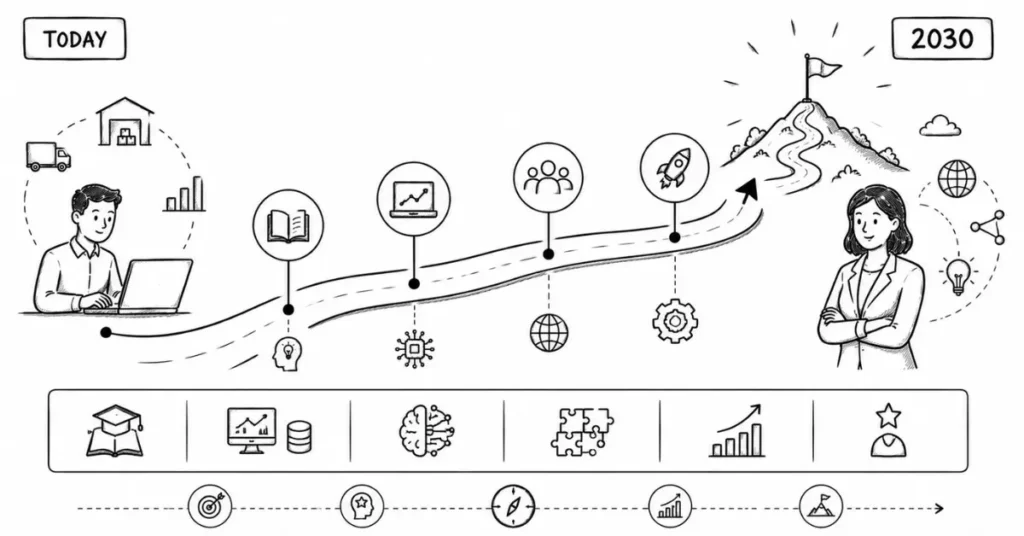
The future of supply chain careers isn’t predetermined. It’s not a binary “AI replaces humans” or “nothing changes.” It’s transformation.
The Uncomfortable Truth:
If you continue working exactly as you do today, relying on skills that got you here, you’ll struggle by 2030. Not because you’re incompetent—because the game changed and you didn’t adapt.
The Empowering Truth:
If you invest 10-15% of your time over the next 3-5 years building future-relevant skills—data analytics, AI understanding, automation, strategic thinking—you’ll not only survive but thrive. You’ll be among the most sought-after supply chain professionals, commanding premium compensation, choosing opportunities rather than scrambling for jobs.
Your Action Plan (Starting Today):
This Month:
- Assess your automation risk honestly (routine work = high risk)
- Identify one technical skill to develop (start with data analytics if unsure)
- Research online courses or certifications
- Talk to professionals in emerging roles
Next 6 Months:
- Complete foundational course (SQL or Python or Advanced Excel)
- Volunteer for technology project at work
- Read about emerging supply chain technologies
- Build basic portfolio or apply new skills in current role
Next 2 Years:
- Develop T-shaped profile (depth + breadth + technical)
- Transition to hybrid role or demonstrate technology aptitude in current role
- Build network in future-focused supply chain community
- Position for emerging opportunities
Next 5 Years:
- Established as technology-literate supply chain professional
- Premium compensation reflecting scarce skill combination
- Positioned for senior strategic roles OR specialized expert path
- Career-proof against automation
The Choice:
Passive waiting = Obsolescence
Active adaptation = Opportunity
The supply chain of 2030 needs YOU—but the evolved, future-ready version of you. Not the 2026 version doing 2020 work.
Start building that future version today. Your career—and income—will thank you.
The future of supply chain is bright. Make sure you’re part of it.