
Salary Guide: E-commerce & Retail Technology Roles
Table of Contents
Introduction: The Real Numbers Behind E-commerce Salaries
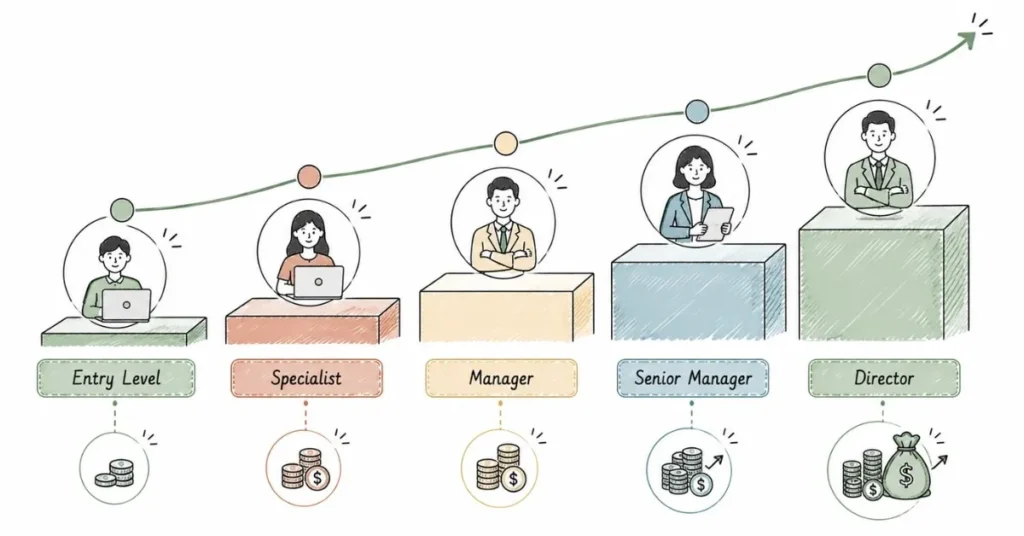
Let me tell you about two job offers I received in the same month in 2024:
Offer 1: Well-funded D2C startup in Bangalore
- Position: E-commerce Manager
- Salary: ₹18 LPA
- Breakdown: ₹15 LPA fixed + ₹3 LPA variable (performance-based)
- ESOP: 0.05% company equity (paper value)
- Benefits: Health insurance, laptop
Offer 2: Traditional FMCG company in Mumbai
- Position: E-commerce Manager (same role title)
- Salary: ₹13.5 LPA
- Breakdown: ₹13.5 LPA fixed, no variable
- ESOP: None
- Benefits: Health insurance, car allowance, housing assistance
Same role. 33% salary difference. Why?
This is the confusing reality of e-commerce salaries in India. Unlike traditional sectors where salary bands are predictable, e-commerce salaries vary wildly based on:
- Company stage (startup vs. established)
- City (Bangalore vs. Jaipur)
- Your background (IIM vs. tier-3 college)
- Your negotiation skills (seriously, this matters 20-30%)
- Market timing (2021 was crazy high, 2023 normalized)
- Role specifics (same title, different scope)
This guide gives you realistic, updated salary data for every major e-commerce role in India in 2026, factors affecting pay, and how to maximize your earning potential.
Understanding E-commerce Salary Structure
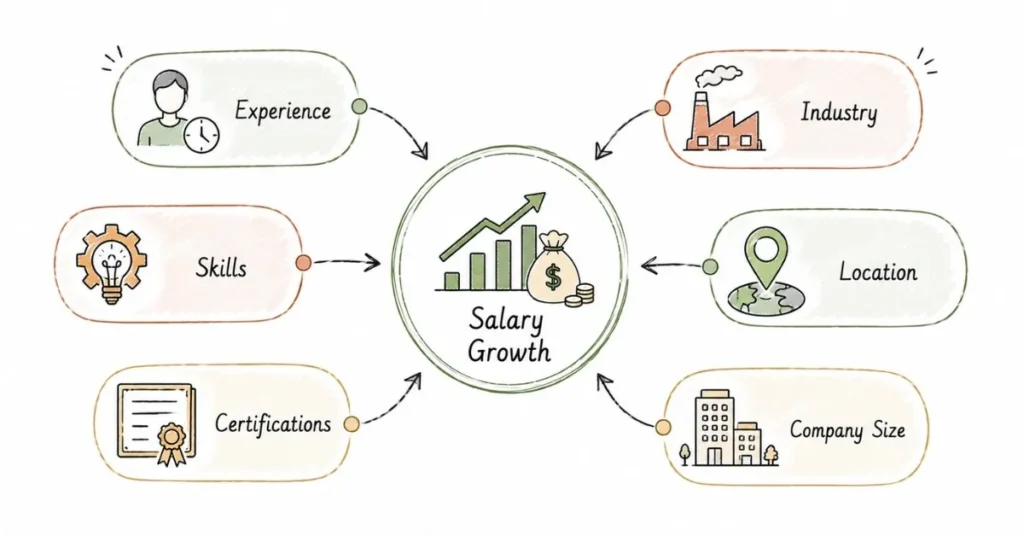
Components of compensation:
1.Fixed Salary (Base)
- Guaranteed monthly income
- Typically 70-100% of total CTC in most companies
2.Variable Pay / Performance Bonus
- Based on achieving targets
- Typically 0-30% of CTC
- Startups: Often aggressive (30%+ variable)
- Established companies: More conservative (10-15%)
Important: “₹15 LPA with 30% variable” means:
- Fixed: ₹10.5 LPA (guaranteed)
- Variable: ₹4.5 LPA (IF you hit targets)
- Risk: If you don’t hit targets, you earn ₹10.5 LPA, not ₹15 LPA
3.ESOP (Employee Stock Ownership Plan) / Equity
- Common in startups
- Paper value initially
- Actual value only if company goes public or gets acquired
- Highly risky but potentially very rewarding
Example: 0.05% equity in ₹1,000 crore valuation company = ₹50 lakhs on paper
But: 4-year vesting (you get 25% each year), company might not go public, valuation might drop
4.Benefits
Health insurance (₹5-10 lakhs coverage typically)
- Laptop/phone (or allowance)
- Food/meal coupons
- Education reimbursement
- Internet/work-from-home allowance (new in post-COVID era)
Always ask: “What’s the fixed component?” Don’t get excited by high CTC with 40% variable.
Salary by Role: The Comprehensive Breakdown
BUSINESS & MANAGEMENT ROLES
E-commerce Manager / Digital Manager
Entry Level (3-5 years total experience):
- Bangalore/Mumbai: ₹9-14 LPA
- Pune/Hyderabad/Chennai: ₹8-12 LPA
- Tier-2 cities: ₹6-10 LPA
Mid Level (6-8 years):
- Bangalore/Mumbai: ₹15-22 LPA
- Pune/Hyderabad/Chennai: ₹13-19 LPA
- Tier-2 cities: ₹11-16 LPA
Senior Level (9-12 years):
- Bangalore/Mumbai: ₹22-35 LPA
- Other metros: ₹18-28 LPA
Factors increasing salary:
- P&L responsibility (owning revenue numbers)
- Team size (managing 10 people vs. 2 people)
- Category size (managing ₹100 crore category vs. ₹10 crore)
- Company revenue (unicorn pays more than early startup)
Category Manager / Product Manager
Entry Level (2-4 years):
- ₹8-14 LPA (metros)
- ₹6-11 LPA (tier-2)
Mid Level (5-7 years):
- ₹15-26 LPA (metros)
- ₹12-20 LPA (tier-2)
Senior Level (8+ years):
- ₹28-45 LPA (metros)
These roles pay well because they own P&L and drive revenue directly.
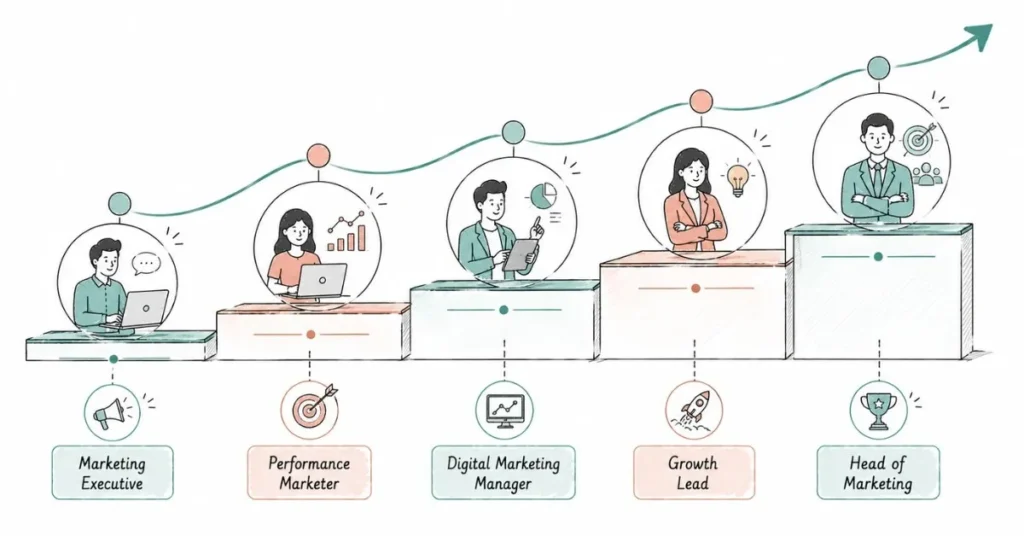
MARKETING & GROWTH ROLES
Performance Marketing Specialist
Entry Level (0-2 years):
- ₹3-6 LPA (executedlevel)
- ₹6-10 LPA (specialist with demonstrated ROI)
Mid Level (3-5 years):
- ₹10-18 LPA (manager level)
Senior Level (6+ years):
- ₹18-30 LPA (senior manager/head)
Note: Performance marketers who consistently deliver 4-5x ROAS command premium. Your portfolio matters more than years of experience here.
SEO Specialist
Entry Level (0-2 years):
- ₹2.5-5 LPA
Mid Level (3-5 years):
- ₹6-13 LPA
Senior Level (6+ years):
- ₹14-24 LPA
SEO is results-driven. “I ranked website from 0 to 50,000 organic monthly visitors” earns more than 10 years of mediocre SEO work.
Social Media Manager
Entry Level (1-3 years):
- ₹3-6 LPA
Mid Level (4-6 years):
- ₹7-14 LPA
Senior Level (7+ years):
- ₹15-26 LPA
Content Marketing Specialist
Entry Level (0-2 years):
- ₹2.5-5 LPA
Mid Level (3-5 years):
- ₹6-12 LPA
Senior Level (6+ years):
- ₹13-22 LPA
TECHNICAL ROLES
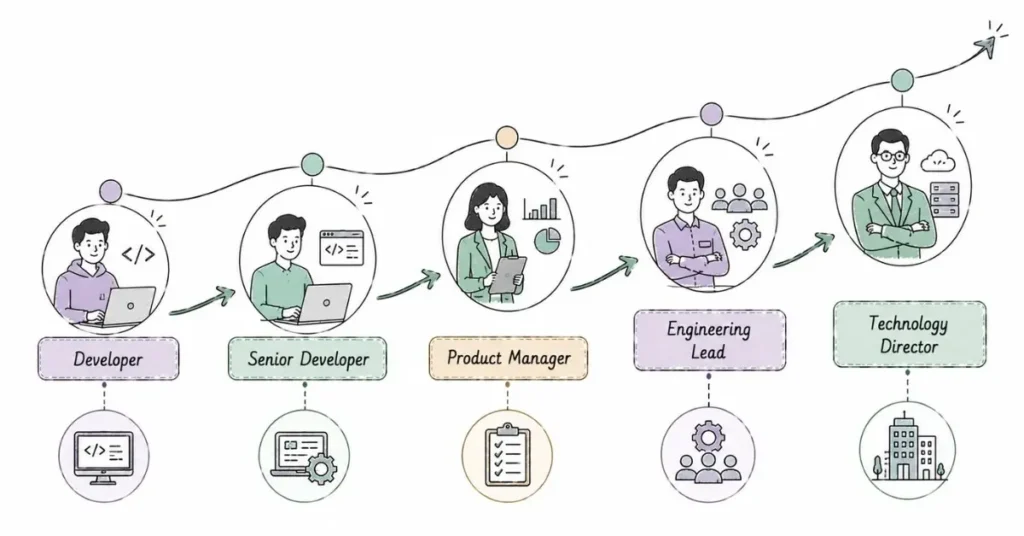
Software Developer (E-commerce focused)
Fresher (0-1 year):
- ₹4-8 LPA (tier-3 cities to metros)
Mid Level (2-4 years):
- ₹9-18 LPA
Senior (5-7 years):
- ₹18-32 LPA
Lead/Architect (8+ years):
- ₹32-55 LPA
Frontend vs. Backend: Roughly similar, slight premium for full-stack.
Mobile App Developer (iOS/Android)
Fresher (0-1 year):
- ₹5-9 LPA
Mid Level (2-4 years):
- ₹10-20 LPA
Senior (5+ years):
- ₹22-40 LPA
Mobile developers command premium because 80% of Indian e-commerce is mobile.
Machine Learning Engineer
Fresher (0-1 year with ML skills):
- ₹8-14 LPA
Mid Level (2-4 years):
- ₹15-30 LPA
Senior (5-7 years):
- ₹32-60 LPA
Principal/Lead (8+ years):
- ₹60 LPA – ₹1 Cr+
ML is highest-paid domain in tech. Demand far exceeds supply
DevOps Engineer
Entry Level (1-2 years):
- ₹6-11 LPA
Mid Level (3-5 years):
- ₹12-24 LPA
Senior (6+ years):
- ₹25-48 LPA
DevOps salaries skyrocketed post-COVID as companies moved to cloud.
ANALYTICS & DATA ROLES
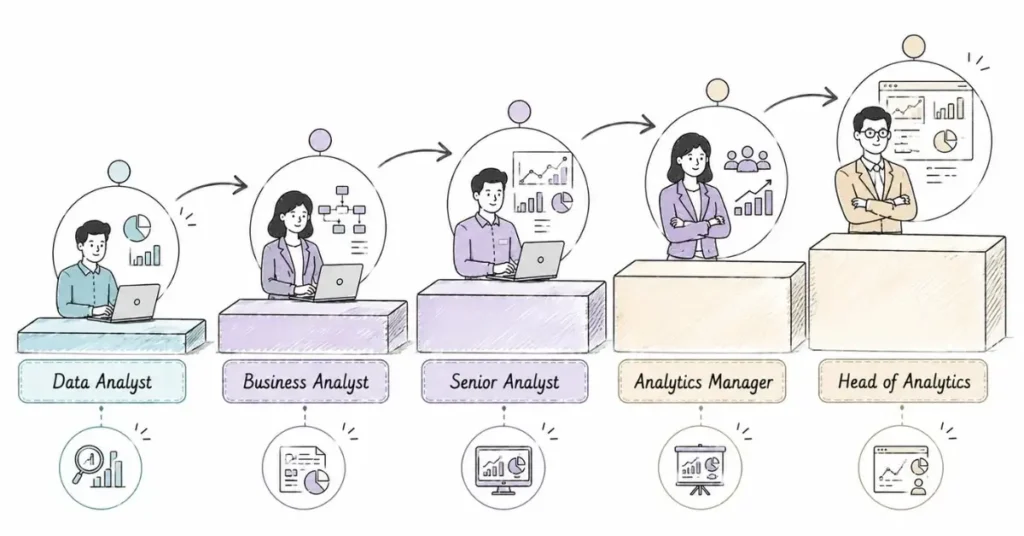
Data Analyst
Entry Level (0-2 years):
- ₹4-7 LPA
Mid Level (3-5 years):
- ₹8-16 LPA
Senior (6-9 years):
- ₹17-28 LPA
Data Scientist
Entry Level (0-2 years):
- ₹7-13 LPA
Mid Level (3-5 years):
- ₹14-28 LPA
Senior (6+ years):
- ₹30-55 LPA
Data science in e-commerce pays well because direct business impact is measurable.
OPERATIONS & SUPPLY CHAIN ROLES
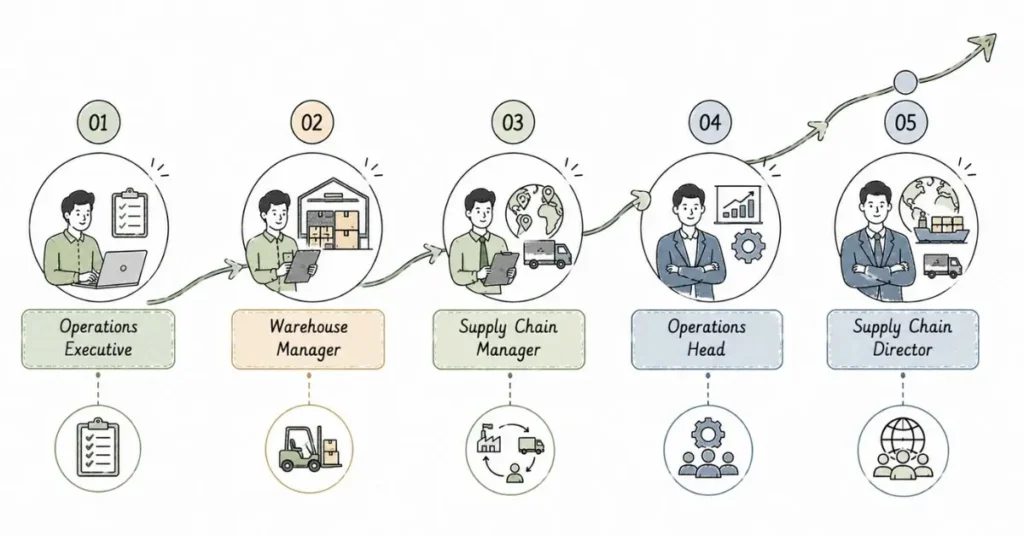
Operations Manager / Warehouse Manager
Entry Level (2-4 years):
- ₹5-10 LPA
Mid Level (5-7 years):
- ₹10-18 LPA
Senior (8+ years):
- ₹18-32 LPA
Supply Chain Manager
Entry Level (2-4 years):
- ₹6-11 LPA
Mid Level (5-7 years):
- ₹12-20 LPA
Senior (8+ years):
- ₹20-38 LPA
Logistics Manager
Entry Level (2-4 years):
- ₹5-10 LPA
Mid Level (5-7 years):
- ₹10-18 LPA
Senior (8+ years):
- ₹18-30 LPA
CYBERSECURITY & INFRASTRUCTURE
Information Security Analyst
Entry Level (0-2 years):
- ₹5-9 LPA
Mid Level (3-5 years):
- ₹10-19 LPA
Senior (6+ years):
- ₹20-38 LPA
Infrastructure Manager
Entry Level (2-4 years):
- ₹7-13 LPA
Mid Level (5-7 years):
- ₹14-26 LPA
Senior (8+ years):
- ₹28-50 LPA
Security and infrastructure command premiums because failures are catastrophic.
Factors That Impact Your Salary
1. City Location (20-30% variation)
Bangalore (Highest paying):
- Tech hub, highest cost of living, most competitive salaries
Mumbai:
- Slightly lower than Bangalore for tech, higher for business roles
Delhi NCR:
- Competitive, especially Gurgaon
Pune/Hyderabad/Chennai:
- 10-15% lower than Bangalore
Tier-2 cities (Jaipur, Indore, Bhubaneswar, Coimbatore):
- 20-30% lower than Bangalore
- But cost of living also 40-50% lower (net savings often similar)
Remote roles:
- Usually paid based on company location, not your location
- Bangalore company hiring remote from Jaipur typically pays Bangalore salary (win for you!)
2. Company Stage & Type (30-50% variation)
Early-stage startup (Pre-Series A):
- Lower cash (₹8-12 LPA for roles that pay ₹15 LPA elsewhere)
- Higher equity (0.1-0.5% ESOP)
- High risk, high potential reward
Growth-stage startup (Series A-C):
- Competitive cash (₹12-18 LPA)
- Moderate equity (0.05-0.2%)
- Good balance of stability and upside
Late-stage startup / Unicorn:
- High cash (₹18-25 LPA)
- Lower equity (0.01-0.05%)
- More stable, still some upside
Established companies (Amazon, Flipkart):
- Very competitive cash (₹20-30 LPA)
- Minimal/no equity
- Stable, good benefits
Traditional companies going digital:
- Moderate cash (₹10-16 LPA)
- No equity
- Excellent job security, benefits (housing, car)
3. Educational Background (10-25% premium)
Tier-1 college (IITs, BITS, Top IIMs, NIT Trichy/Warangal/Surathkal):
- 20-30% starting salary premium
- Faster progression in early career
- Premium reduces with experience (after 5-6 years, performance matters more)
Tier-2 college (Good state universities, Private colleges):
- Market-rate salaries
- Need to prove yourself through work
Tier-3 college / Non-premier:
- Slightly lower starting salaries
- But provable skills and results quickly override degree premium
MBA premium:
- Top IIMs: 50-100% premium over non-MBA at mid-level roles
- Tier-2/3 MBA: 0-20% premium (often not worth the cost)
My take: Education matters for first 3-4 years. Beyond that, track record matters more.
4. Switching vs. Internal Promotion (30-50% difference)
Harsh reality:
Internal promotion (staying at same company):
- Typical hike: 10-20% annually
- From ₹10 LPA → ₹12 LPA after 1 year → ₹14 LPA after 2 years
External switch (changing company):
- Typical hike: 30-60%
- From ₹10 LPA → ₹14 LPA after 1 year switch
Why?
Companies budget smaller for internal hikes than external hiring. It’s frustrating but reality.
Strategy:
- Stay 18-24 months per company (build skills, results)
- Switch for significant jumps (30%+)
- Don’t switch too frequently (less than 12 months looks bad)
Exception: Great companies with clear growth paths. If you’re learning fast and progressing, 15% annual hikes at excellent company beat 40% jump to mediocre company.
5. Negotiation Skills (10-30% difference)
Uncomfortable truth: Two candidates with same qualifications, one negotiates, one doesn’t.
Non-negotiator:
“We’re offering ₹12 LPA”
“Okay, thank you!”
Result: ₹12 LPA
Negotiator:
“Thank you for the offer. Based on my research and considering my skills in X, Y, Z, and my track record of A, B, C, I was expecting ₹15 LPA. Can we discuss this?”
Result: Often ₹13.5-14 LPA (10-15% more)
Negotiation tips:
Do your research:
- Know market rate for your role, city, experience
- Use Glassdoor, AmbitionBox, LinkedIn Salary
Have competing offers:
- “I have another offer at ₹14 LPA, but I prefer your company. Can you match?”
- Companies negotiate harder when you have alternatives
Negotiate total package, not just base:
- “Can we increase base? Okay, what about joining bonus? Okay, can we add ESOP?”
Be respectful but firm:
- Not demanding, but confident
- Show enthusiasm for role while negotiating
Timing:
- Negotiate AFTER offer, not during interviews
- But discuss range expectations early (don’t waste time if they can’t meet your range)
Salary Progression: Realistic Career Trajectories
Scenario 1: Typical Career Progression
Year 0 (Fresh grad, tier-2 college, E-commerce Executive, Pune):
- Salary: ₹4 LPA
Year 2 (Promoted to Senior Executive, same company):
- Salary: ₹5.5 LPA (10% + 15% hikes)
Year 3 (Switch to E-commerce Specialist, larger company, Bangalore):
- Salary: ₹8 LPA (45% jump)
Year 5 (Promoted to E-commerce Manager, same company):
- Salary: ₹11 LPA (15% + 20% hikes)
Year 7 (Switch to Senior Manager, unicorn startup):
- Salary: ₹18 LPA (64% jump)
Year 10 (Head of E-commerce, mid-size company):
- Salary: ₹30 LPA (20% + 25% + 15% hikes + final switch)
Total growth: 4 LPA → 30 LPA in 10 years (650% growth)
This is realistic for above-average performer with strategic switching.
Scenario 2: Aggressive Growth (Top 10% performer)
Year 0 (Tier-1 college, Management Trainee, top company):
- Salary: ₹8 LPA
Year 2 (Promoted to Manager):
- Salary: ₹14 LPA
Year 4 (Headhunted to senior role, unicorn):
- Salary: ₹24 LPA + ESOP
Year 7 (Director level):
- Salary: ₹45 LPA + significant ESOP
Year 10 (VP/C-suite or successful startup founder):
- Salary: ₹80 LPA – ₹2 Cr (including ESOP gains)
This is top 5-10% trajectory. Requires exceptional performance, strategic moves, some luck.
The ESOP Lottery: Understanding Startup Equity
Reality check on ESOPs:
Company gives you: 0.1% equity, current valuation ₹500 crore
Paper value: ₹50 lakhs
But:
- 4-year vesting (you get it over 4 years)
- 1-year cliff (nothing for first year, then 25% each year)
- Exercise price (you need to BUY your shares at discounted price, often ₹5-15 lakhs investment)
- Exit event needed (company must go public or get acquired for you to sell)
Outcome scenarios:
Best case (5% probability):
Company goes public, valuation 5x to ₹2,500 crore
Your 0.1% = ₹2.5 crore (minus exercise price)
After taxes: ~₹1.5 crore gain
Good case (15% probability):
Company acquired, valuation 2x to ₹1,000 crore
Your 0.1% = ₹1 crore (minus exercise price)
After taxes: ~₹60 lakhs gain
Base case (30% probability):
Company stable, no exit event for 8-10 years
Your ESOP: Paper value only, no liquidity
Actual value: ₹0
Bad case (50% probability):
Company struggles, valuation down or shut down
Your ESOP: Worth₹0
My take: Don’t join startup primarily for ESOP. Join for:
- Learning and growth
- Cash salary that meets your needs
- Team and culture
- Treat ESOP as lottery ticket (might pay off, probably won’t)
Salary Negotiation: The Conversation Framework
Scenario: You have offer of ₹12 LPA, you want ₹15 LPA
YOU: “Thank you so much for the offer! I’m really excited about the role and the team. I’d like to discuss the compensation if possible.”
THEM: “Sure, what are you thinking?”
YOU: “Based on my research of similar roles in Bangalore, and considering my 4 years of experience with demonstrated results in [specific achievements], I was expecting a range of ₹14-15 LPA. Is there flexibility in the offer?”
THEM (Options):
Option A – They increase:
“Let me check. We can do ₹13.5 LPA.”
YOU: “I appreciate that! Can we meet in the middle at ₹14.5 LPA, or if not possible on base, perhaps add joining bonus or additional ESOP?”
Option B – They can’t increase:
“₹12 LPA is our best offer.”
YOU: “I understand. Can you help me understand the growth path? What’s typical increment percentage, and when is first review?”
(Gathering information for holistic decision)
Option C – They ask for justification:
“Why do you think you’re worth ₹15 LPA?”
YOU: “At my current role, I’ve [specific achievement with numbers]. In this role, I’ll be bringing skills in X, Y, Z which will help achieve [team goals]. Based on my understanding of market rates [mention source – Glassdoor/AmbitionBox], this range seems fair.”
Key principles:
- Be respectful, not entitled
- Have data backing your ask
- Be willing to walk away (only negotiate if you mean it)
- Consider total package (base + variable + ESOP + benefits + growth)
Red Flags in Salary Discussions
Red Flag 1: Vague CTC with high variable
“₹20 LPA CTC (₹10 LPA base + ₹10 LPA variable)”
Translation: You’re getting ₹10 LPA, maybe more if you achieve (possibly unrealistic) targets.
Red Flag 2: “Unlocking potential”
“We’re offering ₹8 LPA now, but you can earn ₹15 LPA with commission.”
Translation: Base is low. Commission might be hard to achieve.
Red Flag 3: Delayed salary discussions
Multiple rounds, they never discuss salary band, then lowball at offer stage.
Solution: Ask expected range in round 1 or 2. Don’t waste time if they can’t meet your minimum.
Red Flag 4: Guilt-tripping negotiations
“We gave you an offer and now you’re negotiating? This shows lack of commitment.”
Translation: Toxic company culture. Run.
Tax Implications: Take-Home Reality
Gross salary vs. Take-home:
Example: ₹15 LPA CTC
Breakdown:
- Basic: ₹7.5 lakhs
- HRA: ₹3 lakhs
- Special Allowance: ₹3 lakhs
- PF (Employer): ₹0.9 lakhs
- Insurance: ₹0.6 lakhs
Deductions:
- PF (Employee): ₹0.9 lakhs
- Professional Tax: ₹2,400
- Income Tax (assuming ₹1.5 lakh 80C + ₹50K HRA): ~₹1.5 lakhs
Annual take-home: ~₹12.3 lakhs
Monthly take-home: ~₹1.02 lakhs
So ₹15 LPA CTC = ₹1 lakh monthly in hand (roughly 65-70% of CTC).
New tax regime vs. old regime – Calculate both, choose lower tax (usually old regime with deductions wins for ₹10+ LPA).
Industry-Wise Salary Comparison
Fashion & Beauty E-commerce: 100% (baseline)
Electronics & Gadgets: 110% (slightly higher due to technical knowledge needed)
Grocery & FMCG E-commerce: 95% (lower margins, conservative salaries)
Luxury E-commerce: 120% (premium brands, affluent customers, better margins)
Marketplaces (Amazon, Flipkart): 130% (large scale, complex, competitive)
B2B E-commerce: 115% (growing fast, good salaries)
Final Salary Maximization Strategy
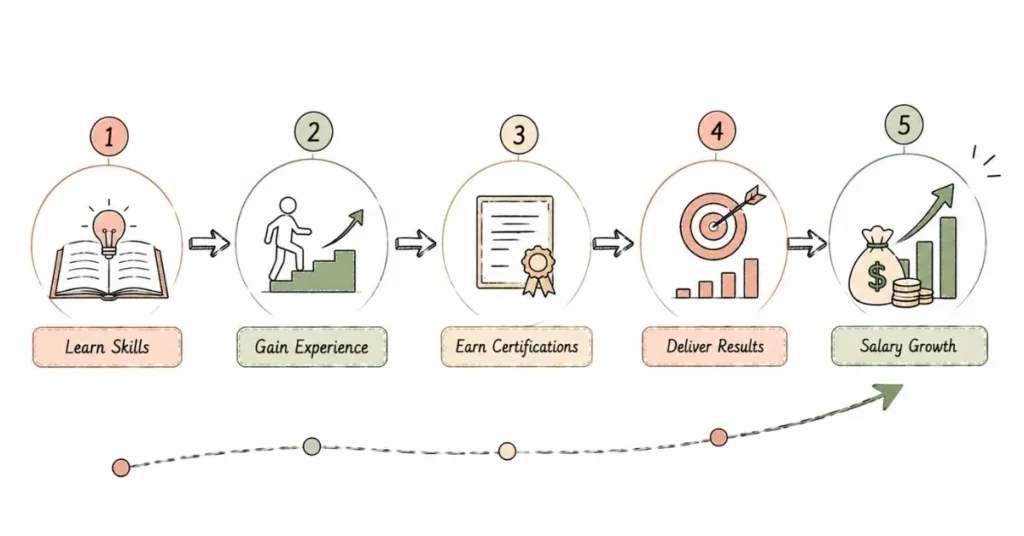
Years 0-3: Build skills & results
- Accept market rates (don’t expect premium without proof)
- Focus on learning, not salary
- Build demonstrable results portfolio
Years 4-7: Strategic switching
- Switch every 18-24 months for 30-50% jumps
- Build vertical expertise + cross-functional breadth
- Take calculated risks (startups with upside)
Years 8+: Negotiate from strength
- You have track record now
- Multiple companies want you
- Negotiate aggressively (30-40% jumps still possible)
- Consider freelancing/consulting (₹3-8 lakhs per client per month)
Alternative: Entrepreneurship
After 5-7 years of experience, some choose entrepreneurship. Risk is high, but no salary ceiling.
Conclusion: Salary is Journey, Not Destination
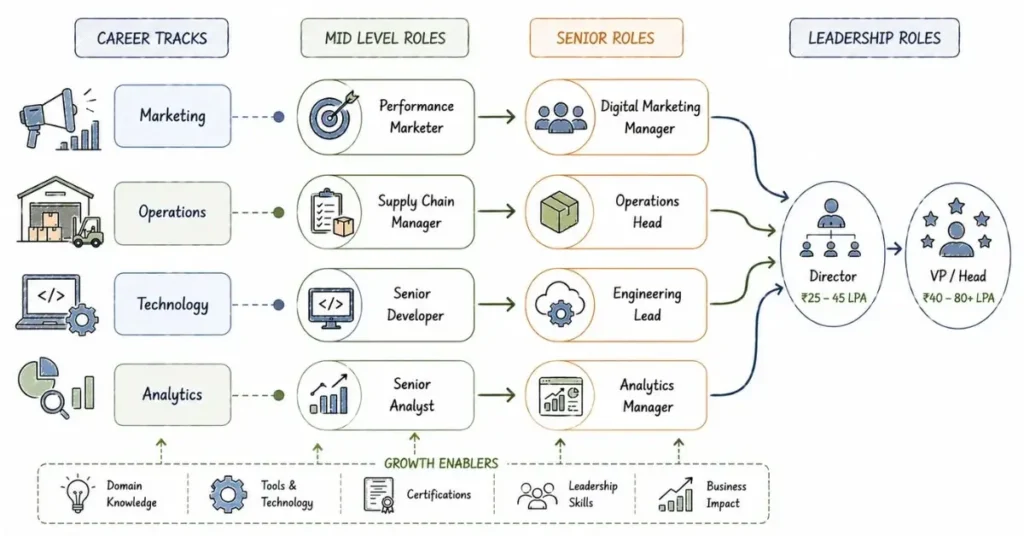
Starting at ₹3.5 LPA doesn’t mean you’re underpaid forever. Strategic career moves compound.
₹3.5 → ₹5 → ₹7 → ₹10 → ₹15 → ₹22 → ₹32 LPA in 10 years is realistic for above-average performer.
Top 10% reach ₹50+ LPA in 10 years.
Top 1% reach ₹1 Cr+ (but this requires exceptional performance, luck, or entrepreneurship).
Focus on:
- Building valuable skills
- Delivering measurable results
- Strategic career moves
- Learning negotiation
Salary follows value. Increase your value, salary increases.
Your e-commerce career is a marathon, not a sprint. Start wherever you start. Keep improving. Keep moving strategically.
The numbers will follow.