
AI & Machine Learning in Retail Careers
Table of Contents
Introduction: AI in E-commerce Isn't Science Fiction Anymore, It's Your Next Career
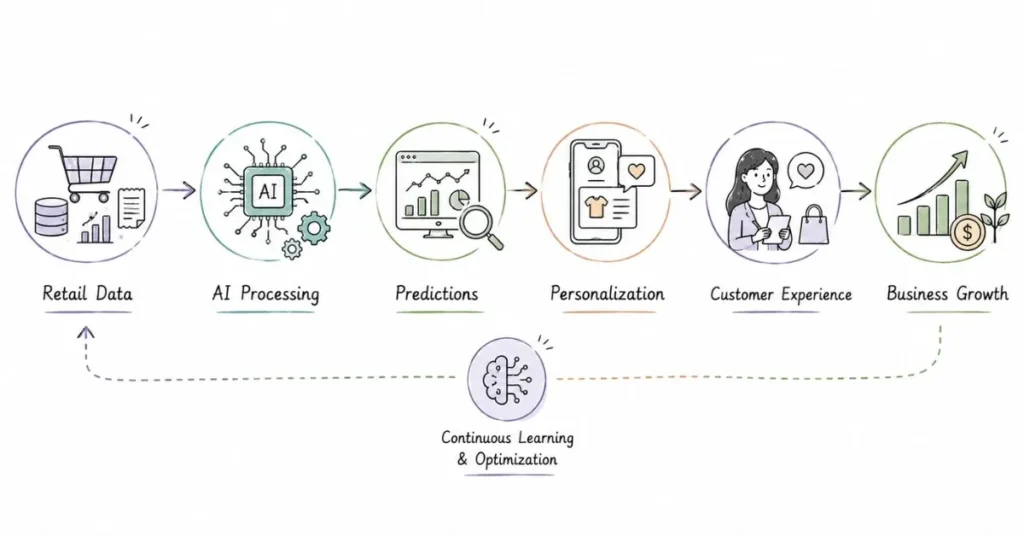
Three years ago, when I told people I work with AI in e-commerce, they imagined robots roaming warehouses. Today, AI is so embedded in e-commerce that we don’t even notice it.
Think about your last online shopping experience:
You opened the app: The homepage showed products you’d probably like (AI-powered personalization)
You searched for “red dress”: Autocomplete suggested “red dress for wedding” (AI-powered search)
You browsed products: “Customers who bought this also bought…” appeared (AI recommendation engine)
You had a question: Chatbot answered instantly, 24/7 (AI-powered customer service)
You completed purchase: System detected potential fraud and added security verification (AI fraud detection)
Next day: You received email with products you might like (AI-powered marketing automation)
All of this. AI.
And here’s the exciting part: Indian e-commerce companies are aggressively investing in AI. Every major player – Flipkart, Amazon India, Meesho, Nykaa, Myntra – has dedicated AI/ML teams. Smaller D2C brands are adopting AI tools.
This creates thousands of career opportunities. But here’s what most people misunderstand: You don’t need a PhD in AI to have an AI career in e-commerce.
There are multiple entry points, from non-technical AI roles to deeply technical ML engineering. This guide shows you all pathways.
Understanding the AI Landscape in E-commerce
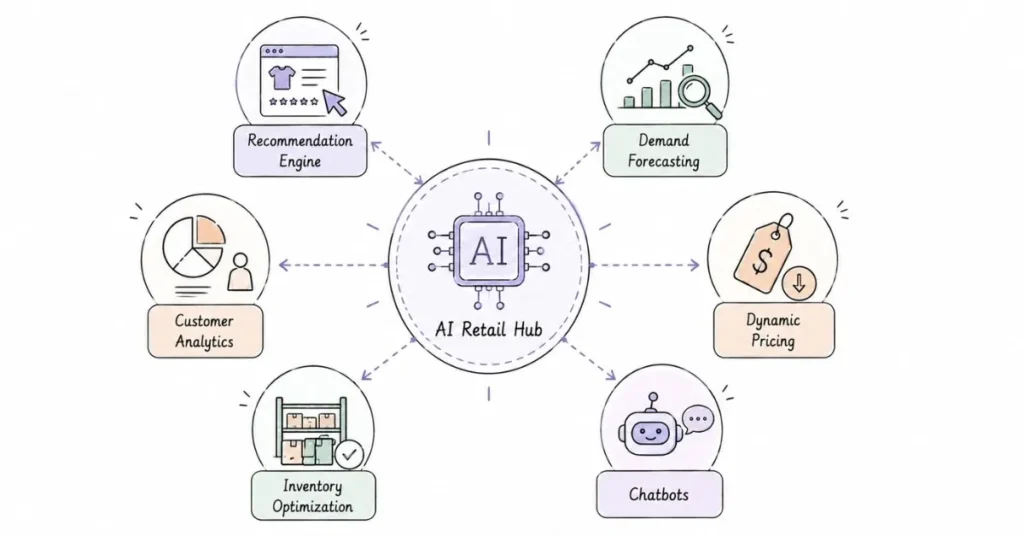
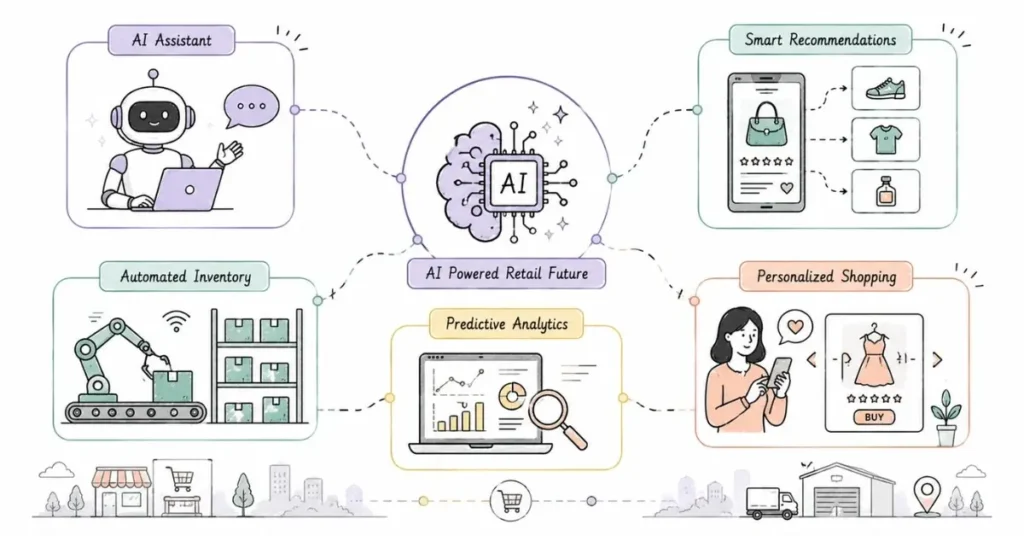
Where AI is used in Indian e-commerce:
- Personalization & Recommendations
- Product recommendations (“You might also like…”)
- Personalized homepages (different users see different products)
- Email personalization (sending relevant products to each customer)
- Search & Discovery
- Smart search (understanding user intent)
- Visual search (upload image, find similar products)
- Voice search (especially important for vernacular languages)
- Customer Service
- Chatbots handling common queries
- Email response automation
- Sentiment analysis (understanding if customer is angry/happy)
- Pricing & Promotions
- Dynamic pricing (adjusting prices based on demand, competition)
- Personalized discounts (different customers get different offers)
- Markdown optimization (when to discount slow moving products)
- Inventory & Supply Chain
- Demand forecasting (predicting how much to stock)
- Warehouse optimization
- Delivery route optimization
- Fraud Detection
- Identifying fraudulent transactions
- Detecting fake reviews
- Account takeover prevention
- Marketing
- Ad targeting and optimization
- Content generation (product descriptions)
- Image enhancement for products
- Visual AI
- Automatic background removal
- Image quality enhancement
- Virtual try on (AR/AI combination)
Career Roles: From Non-Technical to Deeply Technical
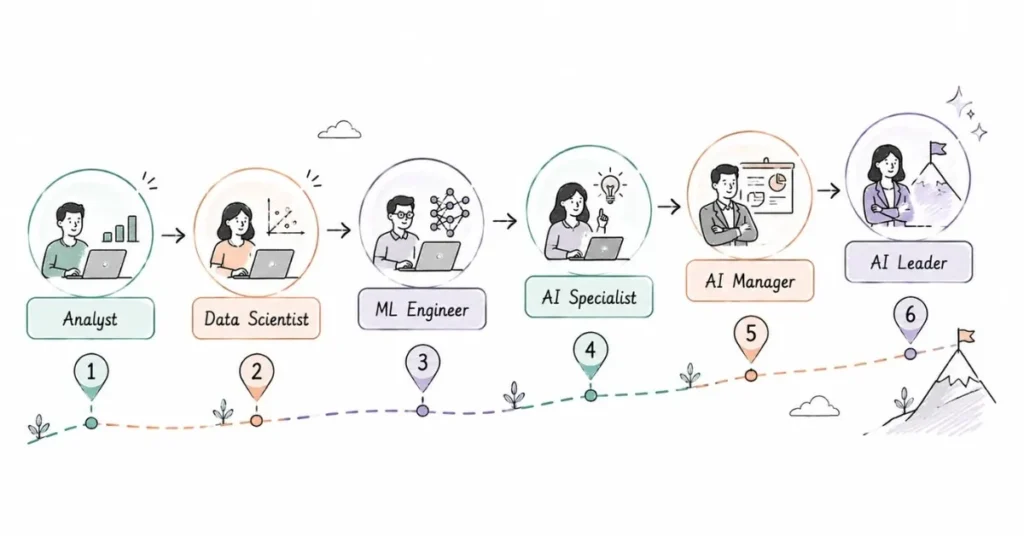
Level 1: AI Tools User (No coding required)
What you do:
Use AI tools to do your job better. You’re not building AI, you’re leveraging existing AI tools.
Examples:
AI-Powered Marketing Manager:
- Using Jasper.ai or Copy.ai for ad copy generation
- Using Canva’s AI features for image creation
- Using ChatGPT for content ideation and email writing
- Using AI ad optimization tools (Facebook’s algorithm optimization, Google’s Smart Bidding)
AI-Enhanced Customer Experience Manager:
- Implementing chatbot solutions (using platforms like Drift, Intercom)
- Using sentiment analysis tools to understand customer feedback
- Leveraging AI-powered CRM for customer segmentation
Skills needed:
- Understanding what AI can and cannot do
- Prompt engineering (asking AI tools the right questions)
- Evaluating AI outputs (knowing when AI is helpful vs. when human judgment needed)
- Basic data literacy
Salary range: ₹6-15 LPA (same as non-AI roles but with AI skills premium of 20-30%)
Learning path:
- 2-3 months learning various AI tools
- Applying them to your current work
- Building portfolio of AI-enhanced projects
Real story:
Neha, Content Manager in Mumbai:
Previously: Writing 10 product descriptions daily, taking 3-4 hours.
After learning AI tools: Using ChatGPT with refined prompts, she:
- Generates first drafts in minutes
- Edits and personalizes (AI writes, she perfects)
- Now writes 30 product descriptions daily in same time
- 3x productivity increase
Company noticed. Promoted to Senior Content Manager with 35% salary increase. Her edge: Combining human creativity with AI efficiency.
Level 2: AI Product Manager / AI Implementation Specialist (Minimal coding)
What you do:
You’re not building AI models, but you’re deciding which AI solutions to implement and managing their deployment.
Responsibilities:
Identifying AI opportunities:
- Analyzing business problems that AI can solve
- Example: “Our customer service receives 500 daily queries, 70% are repetitive (tracking orders, return policy). Let’s implement chatbot for these.”
Vendor evaluation:
- Researching AI solution providers
- Example: Evaluating 5 chatbot platforms (Drift, Intercom, Freshchat, etc.)
- Comparing features, pricing, integration ease
Implementation management:
- Working with tech team on integration
- Defining success metrics
- Testing and refinement
Performance monitoring:
- Is AI solution delivering value?
- Example: Chatbot handling 65% of queries successfully, 35% escalating to humans
- ROI calculation: Chatbot costs ₹50,000/month, saves 2 customer service executives (₹6 lakh annual savings)
Continuous improvement:
- Training AI systems with new data
- Refining based on user feedback
A typical week for Rahul, AI Product Manager at fashion e-commerce, Bangalore:
Monday:
- Weekly AI performance review
- Recommendation engine: 15% of revenue coming from “You might also like” section (up from 12% last month)
- Search AI: Handling Hindi queries better, but Telugu needs improvement
Tuesday:
- Vendor meeting for new visual search feature
- Evaluating 3 providers: Google Cloud Vision, Clarifai, custom solution
- Creating comparison matrix: Accuracy, cost, integration complexity, scalability
Wednesday:
- Working with data team on improving recommendation algorithm
- Current algorithm based on browsing history, we want to add purchase history and seasonal trends
- Defining requirements, reviewing data availability
Thursday:
- Chatbot training session
- Reviewing conversations from last week where chatbot failed
- Adding new intents and responses
- Training team on chatbot escalation protocols
Friday:
- Preparing business case for AI-powered dynamic pricing
- Estimating potential revenue increase (8-12% based on industry benchmarks)
- Cost analysis, implementation timeline
- Presenting to leadership next week
Skills needed:
- Understanding AI/ML concepts (not building, but knowing what’s possible)
- Product management skills
- Data analysis
- Business case building
- Project management
- Basic technical understanding (APIs, integrations)
Salary range: ₹12-28 LPA (depending on experience and company)
Learning path:
- 3-6 months learning AI concepts, tools, use cases
- Product management fundamentals
- Industry certifications (Google AI Product Manager, AI for Everyone by Andrew Ng)
- Hands-on projects implementing AI tools
Level 3: Machine Learning Engineer (Highly technical)
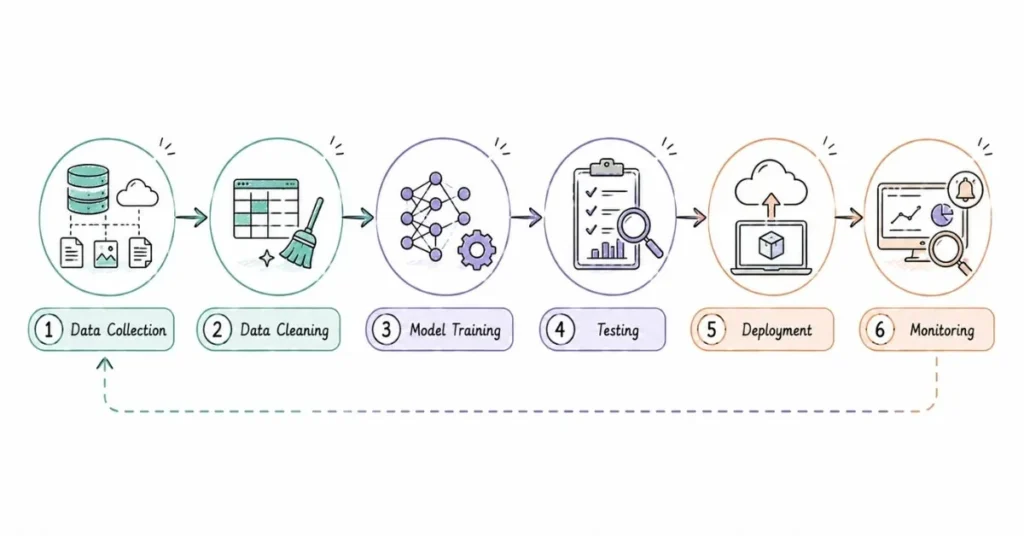
What you do:
You build, train, and deploy machine learning models that power e-commerce features.
Responsibilities:
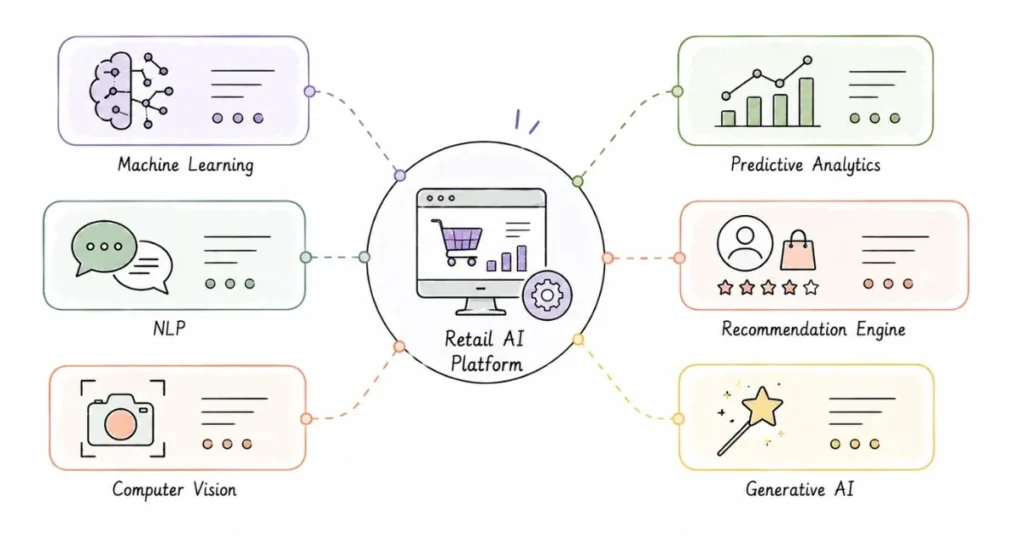
Building recommendation systems:
- Collaborative filtering (users who bought X also bought Y)
- Content based filtering (show products similar to what user liked)
- Hybrid approaches
- Cold start problem solving (new users with no history, what to recommend?)
Developing predictive models:
- Demand forecasting: Predicting sales for next month
- Churn prediction: Which customers likely to stop buying?
- Dynamic pricing models: Optimal price at each moment
- Fraud detection: Identifying suspicious transactions
NLP (Natural Language Processing) applications:
- Search query understanding
- Chatbot development (beyond simple rule based)
- Review sentiment analysis
- Automatic product categorization from descriptions
Computer Vision:
- Visual search
- Image quality assessment
- Automatic image tagging
- Virtual try on features
Model deployment:
- Taking model from development to production
- Ensuring low latency (recommendations must load instantly)
- Monitoring model performance
- A/B testing different models
A typical week for Priya, ML Engineer at marketplace, Hyderabad:
Monday:
- Analyzing weekend performance of new recommendation model
- Model v2 shows 8% improvement in click-through rate vs. v1
- But 3% slower response time (needs optimization)
- Planning optimization strategy
Tuesday-Wednesday:
- Feature engineering for demand forecasting model
- Adding new features: Google Trends data, weather data (ACs sell more in summer), festival calendar
- Training model with new features
- Validation: Mean Absolute Error reduced by 12% (significant improvement)
Thursday:
- Code review with team
- Reviewing junior engineer’s fraud detection model
- Identifying potential improvements (feature selection, model choice)
- Suggesting experiments
Friday:
- Model deployment preparation
- Writing documentation
- Creating monitoring dashboards
- Coordinating with DevOps on deployment
Skills needed:
Programming:
- Python (primary language for ML)
- Libraries: pandas, NumPy, scikit learn, TensorFlow/PyTorch
- SQL for data extraction
Mathematics & Statistics:
- Linear algebra, calculus basics
- Probability and statistics
- Understanding of ML algorithms (regression, classification, clustering, neural networks)
Machine Learning:
- Supervised learning (regression, classification)
- Unsupervised learning (clustering, dimensionality reduction)
- Deep learning basics
- Model evaluation and validation
E-commerce domain knowledge:
- Understanding business metrics
- Knowing what problems matter
- Translating business problems to ML problems
Tools:
- Jupyter notebooks
- Git (version control)
- Cloud platforms (AWS SageMaker, Google Cloud AI Platform)
- MLOps tools (MLflow, Kubeflow)
Salary range:
- Entry level (0-2 years): ₹8-14 LPA
- Mid level (3-5 years): ₹15-30 LPA
- Senior (6+ years): ₹30-60 LPA
- Lead/Principal: ₹60 LPA – 1 Cr+
ML Engineers are among highest paid tech professionals.
Level 4: Data Scientist (Analytics + ML)
What you do:
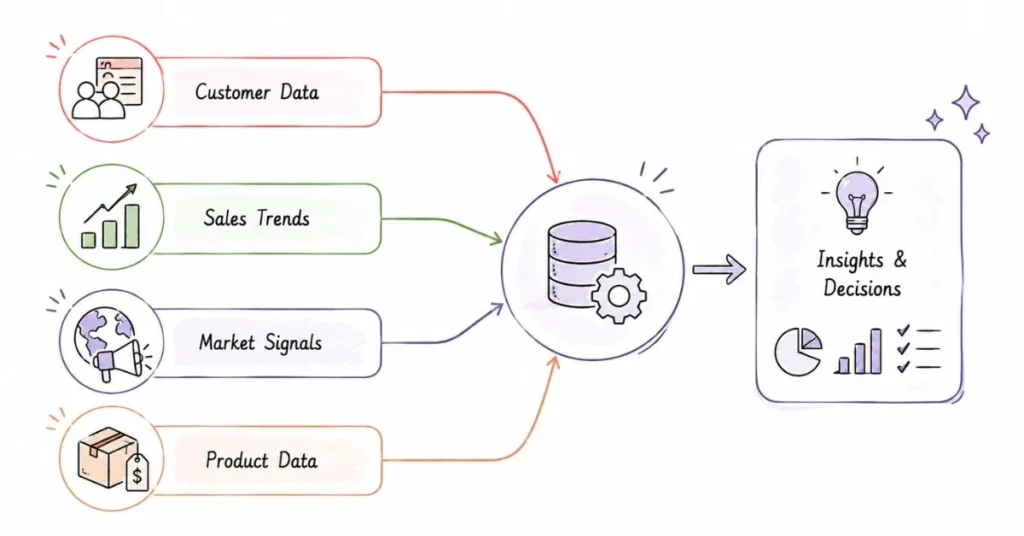
You’re analyzing data to find insights AND building ML models. It’s intersection of data analysis and machine learning.
How it differs from ML Engineer:
ML Engineer: Focus on building and deploying models (engineering focus)
Data Scientist: Focus on finding insights and solving business problems with data and ML (business + analytics focus)
Typical projects:
Customer segmentation:
- Using clustering algorithms to segment customers
- Identifying VIP customers, at risk customers, bargain hunters, etc.
- Creating personalized strategies for each segment
Marketing mix modeling:
- Understanding which marketing channels drive sales
- Attributing revenue to different touchpoints
- Optimizing marketing budget allocation
Product analytics:
- Why are users abandoning at checkout?
- Which features lead to higher engagement?
- What drives repeat purchases?
Experimentation & A/B testing:
- Designing experiments
- Statistical analysis of results
- Recommending decisions based on data
Skills needed:
- Similar to ML Engineer but with stronger focus on:
- Statistical analysis
- Data visualization (Tableau, Power BI)
- Business communication
- Exploratory data analysis
Salary range: ₹10-50 LPA (depending on experience)
Indian E-commerce AI Landscape: Opportunities & Challenges
Unique opportunities:
Vernacular AI:
Massive opportunity in building AI for Hindi, Tamil, Telugu, Bengali, etc.
- Voice search in regional languages
- Chatbots in vernacular languages
- Understanding code mixed queries (“red colour ki dress dikhao”)
Professionals with language + AI skills are rare and valuable.
Tier 2/3 focus:
AI helping expand to smaller cities:
- Predicting demand in new markets
- Local language content generation
- Understanding regional preferences
Affordable AI:
Building cost-effective solutions (cloud costs are high in India):
- Optimized models (smaller, faster, cheaper to run)
- Edge AI (running on device instead of cloud)
Challenges:
Data quality:
Indian e-commerce data often messy (inconsistent product catalogs, incomplete customer data)
Infrastructure:
Slower internet in many areas affects real time AI applications
Talent scarcity:
High demand, limited supply of AI talent drives salary competition
Learning Paths: From Zero to AI Career
Path 1: Non-Technical AI Career (3-6 months)
Month 1-2: AI literacy
- Free course: “AI For Everyone” by Andrew Ng on Coursera
- Understand AI concepts, capabilities, limitations
- Explore AI tools (ChatGPT, Midjourney, Jasper, etc.)
Month 3-4: Tool mastery
- Deep dive into AI tools relevant to your field
- Marketing: Jasper, Copy.ai, Canva AI
- Customer service: Chatbot platforms
- Create portfolio: 5-10 projects using AI
Month 5-6: Domain application
- Apply AI tools to real work (current job or practice projects)
- Document results (productivity gains, quality improvements)
- Build case studies
Outcome: AI-enhanced professional in your domain
Path 2: AI Product Manager (6-12 months)
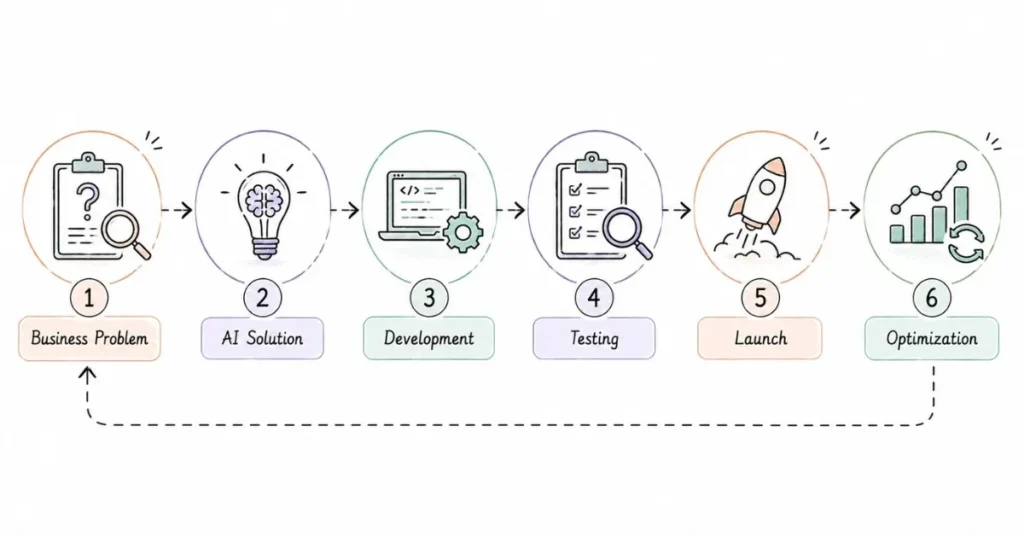
Month 1-3: AI fundamentals
- “AI For Everyone” (Coursera)
- “Machine Learning” by Andrew Ng (first 4 weeks, understand concepts without deep math)
- Explore AI products (how does Netflix recommendation work? Spotify? Amazon?)
Month 4-6: Product management + AI
- Product management fundamentals (if you don’t have PM background)
- AI-specific PM courses
- Study AI products in e-commerce
Month 7-9: Hands-on
- Implement AI tool in practice project
- Example: Set up chatbot for imaginary business, measure performance
- Create AI product roadmap documents
Month 10-12: Certifications & job prep
- Google Cloud AI Product Manager certification
- Build portfolio
- Network with AI product managers (LinkedIn, meetups)
Outcome: Ready for AI PM roles at ₹12-18 LPA
Path 3: Machine Learning Engineer (12-18 months intensive)
Months 1-3: Programming fundamentals
- Python programming (Codecademy, DataCamp, or Coursera)
- Practice: 100 coding problems on HackerRank/LeetCode
- SQL basics
Months 4-6: Math & statistics
- Linear algebra (Khan Academy)
- Statistics fundamentals (Khan Academy, StatQuest YouTube)
- Probability
- (Don’t need advanced math, but basic understanding essential)
Months 7-10: Machine Learning
- Andrew Ng’s Machine Learning course (Coursera) Complete version
- Hands-on: Kaggle competitions (start with beginner competitions)
- Build 3-4 ML projects from scratch
Months 11-14: Deep Learning & Specialization
- Deep Learning Specialization (Coursera)
- Specialize based on interest: Computer Vision, NLP, or Recommendation Systems
- Build 2-3 advanced projects
Months 15-18: Portfolio & Job Prep
- Polish 5-6 best projects for portfolio
- GitHub profile with clean, documented code
- Kaggle participation (aim for competitions ranking)
- Interview preparation (ML concepts, coding, system design)
Outcome: Ready for ML Engineer roles at ₹8-12 LPA (fresher) to ₹15-20 LPA (with strong portfolio)
Certifications Worth Getting
Non-Technical:
- AI For Everyone (Coursera – Free) – Highly recommended starting point
- Google Cloud AI Product Manager (₹10,000-15,000)
Technical:
- Machine Learning by Andrew Ng (Coursera – Free)
- Deep Learning Specialization (Coursera – ₹3,000-5,000)
- TensorFlow Developer Certificate (Google – $100 = ₹8,000)
- AWS Machine Learning Specialty (₹12,000 exam fee)
My honest take:
Certifications help but projects matter more. Better to have 5 solid projects than 10 certificates with no projects.E
Real Success Stories from India
Aditya's journey - From Commerce grad to ML Engineer:
- Background: B.Com from tier-3 college in Raipur, working in accounts (₹3.2 LPA)
- Self-studied programming and ML (12 months, 3-4 hours daily after work)
- Built portfolio: 6 ML projects including recommendation system
- Applied to 100+ jobs, got 5 interviews, 2 offers
- Joined e-commerce startup as Junior ML Engineer (₹7 LPA)
- Year 3: ML Engineer at Flipkart (₹18 LPA)
- His secret: Consistency + good portfolio + persistence
Meera's journey - Marketing Manager to AI Product Manager:
- Background: Marketing Manager at D2C brand (₹9 LPA)
- Noticed AI tools helping her work
- Spent 6 months learning AI concepts, tools, product management
- Positioned herself as “AI-savvy marketing leader”
- Moved to AI Product Manager role at larger company (₹16 LPA)
- Year 2: Senior AI Product Manager (₹24 LPA)
- Her advantage: Deep domain knowledge + AI skills (rare combination)
Common Myths About AI Careers
Myth 1: You need PhD to work in AI
Reality: PhD needed for AI research roles. Most AI jobs in e-commerce need practical skills, not academic research.
Myth 2: You need to be math genius
Reality: Understanding concepts matters more than solving complex equations. Tools handle heavy math.
Myth 3: AI will take all jobs
Reality: AI creates more jobs than it eliminates. It augments humans, doesn’t replace.
Myth 4: Too late to enter AI
Reality: AI in e-commerce is still early stage in India. Perfect time to enter.
Myth 5: Only IIT/tier-1 college students can succeed
Reality: Skills matter, not pedigree. Many successful AI professionals from tier-2/3 colleges.
Salary Potential: The AI Premium
AI skills add 30-50% salary premium across roles:
Regular Digital Marketing Manager: ₹10 LPA
AI-Enhanced Digital Marketing Manager: ₹13-15 LPA
Regular Product Manager: ₹16 LPA
AI Product Manager: ₹20-24 LPA
Regular Software Engineer: ₹12 LPA
ML Engineer: ₹18-25 LPA
The higher you go, bigger the premium:
Senior Engineer: ₹18 LPA
Senior ML Engineer: ₹30-40 LPA
Principal Engineer: ₹30 LPA
Principal ML Engineer: ₹60-80 LPA
Future of AI in Indian E-commerce
Trends shaping next 3-5 years:
Vernacular AI explosion:
- AI understanding and generating content in 10+ Indian languages
- Voice commerce in regional languages
- Huge opportunity for language + AI specialists
Personalization depth:
- Moving from “customers who bought X bought Y” to “understanding you individually”
- Every customer sees unique store tailored to them
Visual AI everywhere:
- Virtual try on becoming standard (not just luxury)
- Visual search dominating product discovery
- AI-generated product photography
Autonomous customer service:
- 80-90% of queries handled by AI
- Humans handling only complex, emotional situations
Predictive commerce:
- “We think you’ll need this next week, pre order now?”
- AI predicting your needs before you search
Edge AI:
- AI running on your phone (faster, cheaper, privacy preserving)
- Smaller, efficient models
Is AI Career Right for You?
You’ll love AI roles if:
- You’re fascinated by intelligent systems
- You enjoy continuous learning (AI evolves rapidly)
- You like solving complex problems
- You’re comfortable with ambiguity
- You want to be at cutting edge of technology
You might struggle if:
- You prefer stable, unchanging domains
- You want work life balance (AI roles can be demanding)
- You dislike math/technical concepts completely
- You prefer clear, established career paths
Your Starting Point Today
Today (1 hour):
- Sign up for “AI For Everyone” on Coursera
- Create ChatGPT account, experiment with prompts
- Watch one video on how Netflix recommendation works
This Week (5-7 hours):
- Complete Week 1 of AI For Everyone course
- Use AI tools in your current work (even small tasks)
- Join AI/ML communities on LinkedIn, Reddit
This Month (20-30 hours):
- Decide your path: Tool user, PM, or Engineer
- Complete relevant intro course
- Start building first portfolio piece
This Quarter:
- Deep dive into chosen path
- Build 2-3 projects
- Start networking with people in AI roles
Final Thoughts
AI in e-commerce is not future – it’s present. Companies are hiring NOW. Demand exceeds supply.
The barrier to entry is lower than you think. You don’t need genius-level intelligence. You need:
- Curiosity
- Willingness to learn
- Consistency (studying 1 hour daily for 6 months beats 8 hours once a week)
- Practical application (build things, don’t just watch videos)
Indian e-commerce AI journey is just beginning. You can be part of shaping it.
Your AI career starts with one question: “How can AI solve this problem?”
Ask that question. Explore answers. Build solutions.
Welcome to the future. Welcome to AI in e-commerce.