
E-commerce Operations & Logistics Careers
Table of Contents
Introduction: The Invisible Backbone of E-commerce
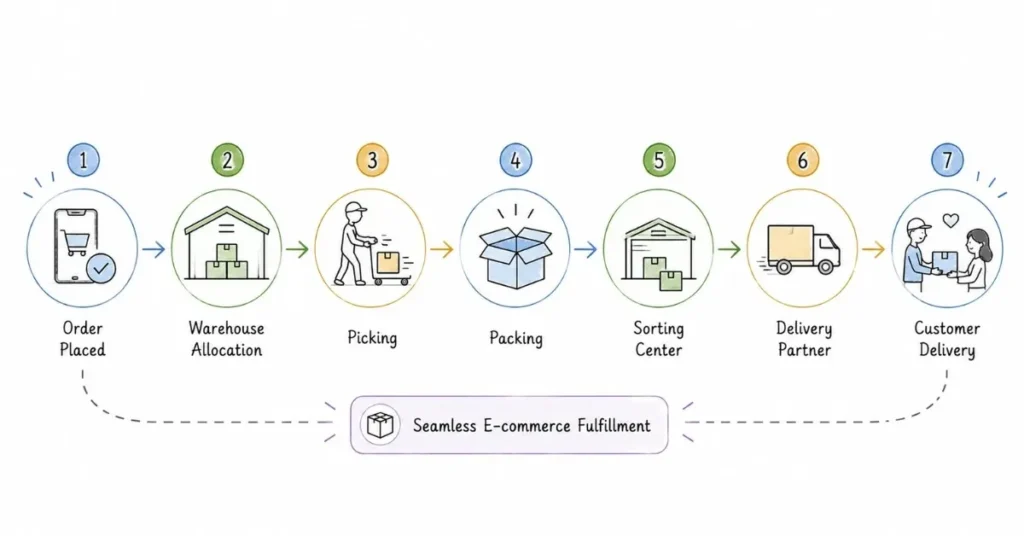
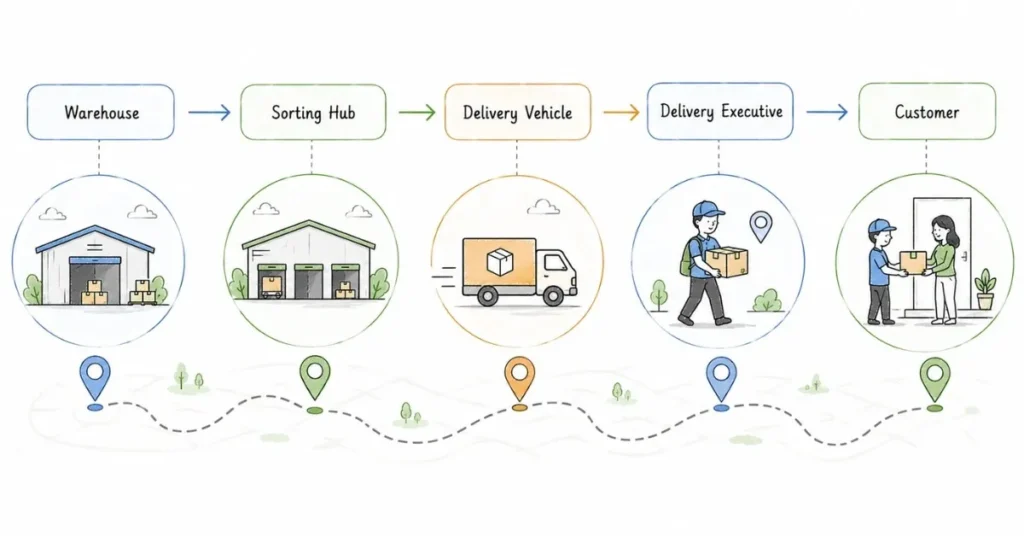
You click “Order Now” at 11 PM. By 10 AM next day, the product is at your doorstep. Have you ever wondered what happens in those 11 hours?
11:05 PM: Your order hits the warehouse management system. An algorithm decides which warehouse should fulfill it (closest to you with the item in stock).
11:15 PM: In a warehouse in Bhiwandi (Mumbai), a worker’s handheld scanner lights up with your order. They pick the product from aisle 7, shelf B3.
11:30 PM: Product reaches packing station. Gets bubble wrap, invoice, branded packaging.
11:45 PM: Packed order sorted by delivery zones. Yours goes to “South Delhi” batch.
12:30 AM: Delivery partner picks up 200 packages including yours.
2:00 AM: Packages reach local sorting center in Delhi.
6:00 AM: Out for delivery. Your package is in a delivery person’s bag with 40 others.
10:00 AM: Doorbell rings. You get your product.
This entire orchestration warehouse operations, inventory management, quality checks, packaging, logistics coordination, delivery management, returns processing that’s what operations and logistics professionals do. Without them, e-commerce doesn’t exist.
And here’s the kicker: India’s e-commerce logistics market is expected to reach $13 billion by 2027. This means thousands of jobs, from entry-level coordinators to senior supply chain directors. This guide shows you exactly how to build a career in this space.
Understanding the E-commerce Operations Ecosystem
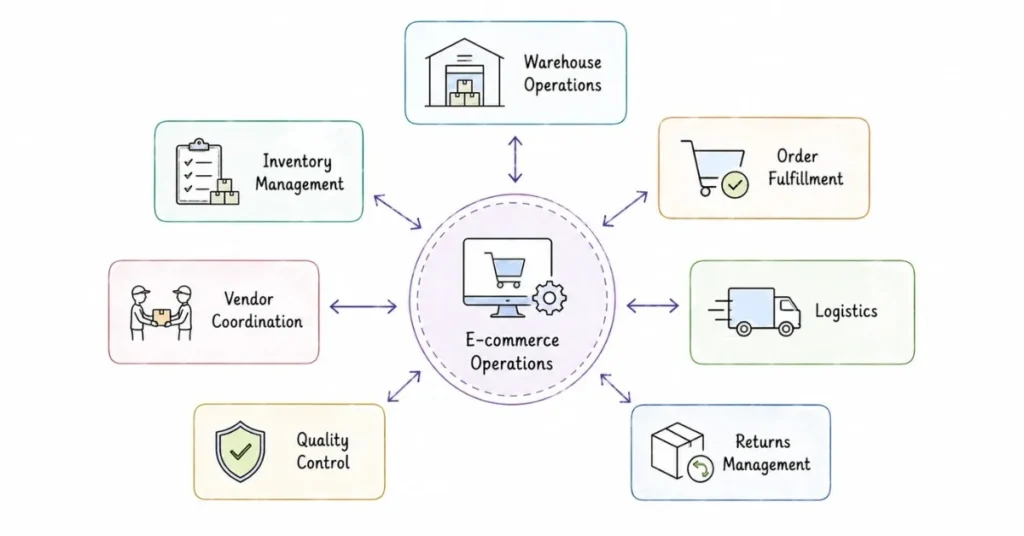
Operations and logistics in e-commerce span multiple functions:
Warehouse operations: Managing physical warehouses where products are stored.
Inventory management: Ensuring right products in right quantities at right locations.
Order fulfillment: Processing orders from placement to dispatch.
Logistics coordination: Managing delivery partners, shipping, tracking.
Returns management: Handling product returns, quality checks, refunds.
Vendor coordination: Working with suppliers, manufacturers, brand partners.
Quality control: Ensuring products meet standards before dispatch.
Let’s break down each career path:
Warehouse Operations Manager: The Efficiency Architect
What you actually do:
You manage a warehouse where thousands of products are stored and processed daily. Your job: Ensure orders are fulfilled accurately, quickly, and cost-effectively.
Key responsibilities:
Daily operations management:
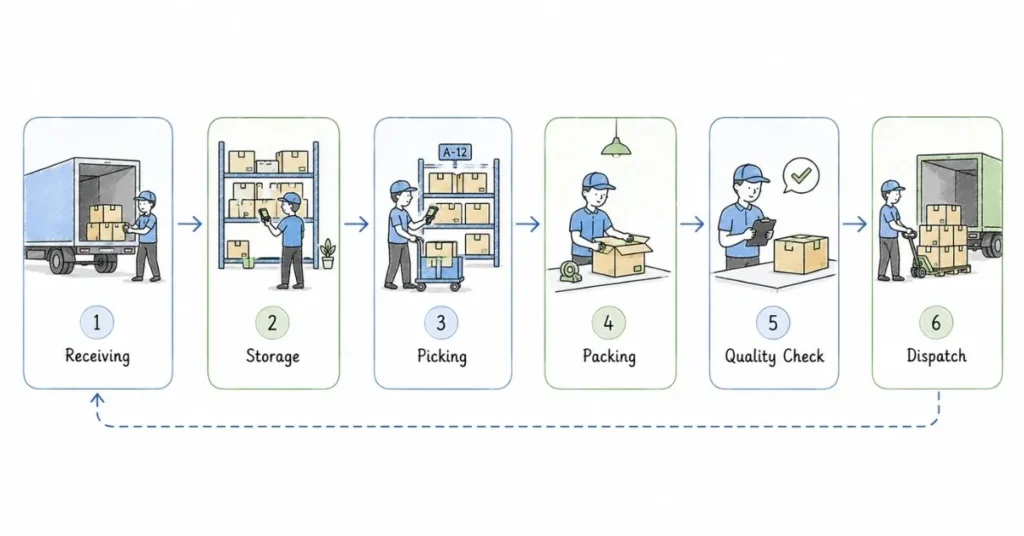
- Coordinating receiving (products coming in from suppliers)
- Managing picking (workers finding products for orders)
- Overseeing packing (products packaged properly)
- Ensuring dispatch (packed orders sent to delivery partners)
Workforce management:
- Managing 20-200 workers depending on warehouse size
- Shift planning and scheduling
- Training new workers
- Performance monitoring
- Safety compliance
Inventory accuracy:
- Ensuring physical inventory matches system inventory
- Conducting regular cycle counts (physically counting stock)
- Investigating discrepancies (if system shows 100 units but physically only 95 exist, where are the 5?)
Process optimization:
- Finding bottlenecks and fixing them
- Improving picking efficiency (can we reduce time to pick one order from 8 minutes to 6 minutes?)
- Layout optimization (placing fast-moving items closer to packing area)
Technology management:
- Using Warehouse Management System (WMS)
- Handheld scanners for workers
- Barcode/RFID systems
- Automation tools (conveyor belts, sorting machines in large warehouses)
A typical day for Rajesh, Warehouse Operations Manager at a fashion e-commerce company in Gurugram:
7:00 AM: Arrive at warehouse before first shift
- Review yesterday’s performance: 2,845 orders dispatched (target was 2,800 good!)
- Check inventory levels: Some bestsellers running low, coordination needed with procurement
8:00 AM: Morning team briefing
- 50 workers across receiving, picking, packing, quality check
- Today’s targets: 3,200 orders (weekend, higher volume expected)
- Special instruction: New product launch, handle with extra care
9:00 AM – 12:00 PM: Operations monitoring
- Walking the floor, observing processes
- Picking area is congested (too many workers in aisle 5)
- Reallocate some workers to less busy aisles
- Packing area running smoothly
- Quality check finding too many defects in Vendor X products escalate to vendor management team
12:30 PM: Problem-solving
- Delivery partner delayed in picking yesterday’s last batch
- 200 orders missed same-day dispatch commitment
- Coordinate with logistics team, arrange alternate partner
2:00 PM: Inventory planning meeting
- Diwali in 6 weeks, need to stock up
- Coordinate with demand planning team on quantities
- Plan warehouse space allocation (need to create temporary storage for festive inventory)
4:00 PM: Safety audit
- Monthly safety inspection with HSE (Health, Safety, Environment) team
- Check fire safety equipment, emergency exits, worker safety gear
- Address any issues found
5:30 PM: Performance review and planning for next day
Skills you need:
Operations management:
- Understanding warehouse processes deeply
- Workflow optimization
- Resource allocation (workers, space, equipment)
People management:
- Leading teams (often blue-collar workers with language diversity)
- Conflict resolution
- Training and development
- Performance management
Data analysis:
- Analyzing operational metrics (orders per hour, accuracy rate, cost per order)
- Using Excel for reporting
- Understanding WMS data
Problem-solving:
- Quick decision-making under pressure
- Root cause analysis
- Process improvement mindset
Technology comfort:
- Using Warehouse Management Systems (WMS like Manhattan Associates, Blue Yonder)
- Understanding automation possibilities
- Basic understanding of barcode/RFID technology
Physical stamina:
- Being on feet for hours
- Walking 10-15 km daily in large warehouses
- Working in non-AC environments (most warehouses aren’t air-conditioned)
Indian market specific challenges:
Festival season management:
Normal day: 2,000 orders. Diwali week: 10,000 orders daily. Managing 5x volume spike requires:
- Temporary workers (hiring, training quickly)
- Extended shifts
- Additional space management
- Maintaining accuracy despite pressure
Multi-brand inventory:
Unlike Amazon’s single-brand model, many Indian e-commerce companies store multiple brands. Keeping everything organized is complex.
COD complications:
Cash on Delivery orders that get rejected (customer refuses at doorstep) return to warehouse. Processing returns adds operational load unique to India.
Infrastructure challenges:
Power cuts, water shortages, extreme heat in summers Indian warehouse managers deal with challenges that Western counterparts don’t face.
Salary expectations:
Entry level – Warehouse Executive/Supervisor (0-2 years): ₹3-5 LPA
Mid level – Warehouse Manager (3-5 years): ₹6-12 LPA
Senior – Senior Warehouse Manager (6-9 years): ₹12-20 LPA
Leadership – Head of Operations (10+ years): ₹20-35 LPA
How to break in:
Path 1: Start at warehouse
- Many companies hire fresh graduates as Warehouse Executives
- You learn from ground up (most valuable learning)
- Promotion to Supervisor within 1-2 years, Manager within 3-4 years
Path 2: Supply chain degree to management trainee
- Companies like Flipkart, Amazon, Delhivery hire management trainees
- Faster track to management roles
- But might miss ground-level understanding
Path 3: Internal transfer
- Working in another department? Express interest in operations
- Shadow operations team, learn, transfer internally
Educational background:
- Engineering (any branch), Supply Chain Management, Commerce, Management degrees
- But honestly, operational excellence matters more than degree
- Many successful warehouse managers are diploma holders who grew through experience
Inventory & Demand Planning Specialist: The Stock Oracle
What you actually do:
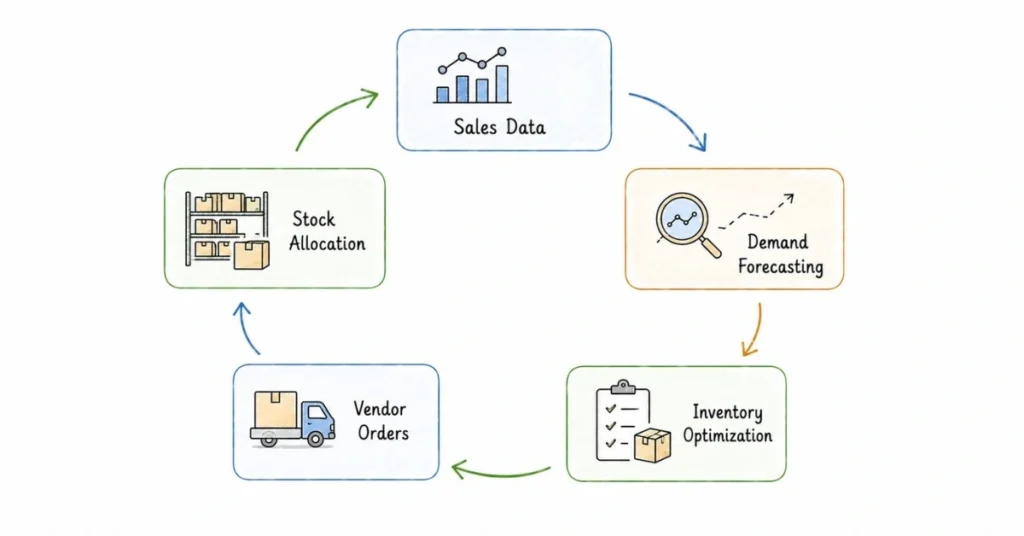
You’re the person ensuring products are available when customers want them, without overstocking (which locks up money) or understocking (which loses sales).
Key responsibilities:
Demand forecasting:
Predicting how many units of each product will sell:
- Historical data analysis (what sold last Diwali?)
- Trend analysis (is this product category growing or declining?)
- Seasonality understanding (AC sales spike in summer)
- External factors (economic conditions, competitor actions, trends)
Inventory optimization:
Deciding optimal inventory levels:
- Safety stock (buffer inventory for unexpected demand spikes)
- Reorder points (when to order more?)
- Economic order quantity (what’s the optimal order size balancing ordering costs and holding costs?)
Vendor coordination:
- Placing purchase orders with suppliers
- Following up on deliveries
- Managing lead times (time from order placement to delivery)
- Negotiating terms
Stock allocation:
Deciding inventory distribution:
- Which warehouse should stock which products?
- How much inventory in each location?
- Should fast-moving items be distributed across all warehouses or centralized?
Clearance management:
- Identifying slow-moving/dead stock
- Planning liquidation sales
- Minimizing obsolete inventory
A typical day for Priya, Inventory Planner at an electronics e-commerce company in Bangalore:
9:00 AM: Check yesterday’s sales and current inventory levels
- Smartphone model X sold 120 units (average is 80) trending up, need to order more
- Laptop model Y sold only 8 units (average is 30) investigate why
10:30 AM: Demand forecasting for next month
- Analyzing last 12 months data
- Factoring upcoming sale (Republic Day sale)
- Creating demand forecast for 500 SKUs (Stock Keeping Units)
12:00 PM: Vendor communication
- Place purchase order for 5,000 units of earphones (forecasted demand)
- Follow up with vendor on delayed delivery of smartwatches
- Negotiate better terms with new vendor
2:00 PM: Inventory review meeting with category manager
- Category manager wants to launch 10 new products
- Discuss: Initial order quantity for each, expected demand, margin analysis
- Decision: Conservative initial order (500 units each), scale up if they sell
4:00 PM: Clearance planning
- 200 units of old phone model sitting for 4 months
- Option 1: Deep discount sale (sell at 30% loss)
- Option 2: Bundle with newer model
- Option 3: Return to vendor (if agreement allows)
- Analyze and decide
5:00 PM: Dashboard updates and next day planning
Skills you need:
Analytical skills:
- Excel mastery (pivot tables, VLOOKUPs, forecasting functions)
- Statistical understanding (moving averages, regression analysis)
- Data interpretation
Forecasting abilities:
- Understanding demand patterns
- Factoring multiple variables
- Balancing art (intuition) and science (data)
Business acumen:
- Understanding profitability (inventory ties up capital, has holding costs)
- Balancing customer satisfaction (availability) with financial efficiency
- Strategic thinking
Communication:
- Negotiating with vendors
- Collaborating with category managers, warehouse teams, finance
- Presenting recommendations to management
Technology:
- Inventory management software (Zoho Inventory, TradeGecko, NetSuite)
- ERP systems (SAP, Oracle)
- Advanced Excel and sometimes SQL
E-commerce specific considerations:
Long tail inventory:
E-commerce sells thousands of SKUs. A physical store might stock 500 items; an e-commerce company stocks 50,000. Managing this complexity requires different approaches.
Rapid obsolescence:
Electronics, fashion product lifecycles are short. iPhone 14 is hot today, outdated when iPhone 15 launches. Your inventory planning must account for this.
Regional demand variation:
Air coolers sell in Rajasthan and Gujarat, not in Kerala. You need location-specific planning.
Salary expectations:
Entry level – Inventory Analyst (0-2 years): ₹4-6 LPA
Mid level – Inventory Planner (3-5 years): ₹7-14 LPA
Senior – Demand Planning Manager (6-9 years): ₹15-25 LPA
Leadership – Head of Supply Planning (10+ years): ₹25-40 LPA
How to break in:
- Start as Inventory Analyst or Operations Executive
- Strong Excel skills are your entry ticket
- Consider supply chain certifications (APICS CPIM, CSCP)
- Understanding of statistics helps significantly
Logistics & Last-Mile Delivery Manager: The Speed Specialist
What you actually do:
You manage the journey of products from warehouse to customer doorstep. In India, where infrastructure is challenging and customer expectations are high (“I want it tomorrow!”), this role is crucial and complex.
Key responsibilities:
Delivery partner management:
- Coordinating with multiple logistics partners (Delhivery, Blue Dart, Shadowfax, Dunzo, etc.)
- Performance monitoring (on-time delivery %, damage rate, customer feedback)
- SLA management (Service Level Agreements)
- Cost negotiation
Route optimization:
- Planning delivery routes for efficiency
- Clubbing orders in same area for same delivery person
- Reducing delivery costs while maintaining speed
Last-mile innovation:
- Exploring hyperlocal delivery (10-30 minute delivery for urgent needs)
- Same-day delivery feasibility and execution
- Pick-up point solutions (customers picking from nearby stores)
Delivery exceptions handling:
- Address not found
- Customer not home
- Delivery person couldn’t reach location
- Product damaged in transit
- Customer refusing order (especially for COD)
Returns logistics (Reverse logistics):
- Arranging pickup for returns
- Getting returned products back to warehouse
- Quality check of returned items
- Refund/exchange processing
A typical week for Amit, Logistics Manager at a grocery quick commerce company in Delhi:
Monday:
- Review weekend delivery performance
- On-time delivery: 92% (target is 95% need improvement)
- Investigate: Delays in Noida and Faridabad zones
- Root cause: Traffic due to Republic Day preparations
Tuesday:
- Meeting with delivery partners
- Negotiate rates for next quarter
- Partner A offering ₹42 per delivery, Partner B offering ₹45 but better quality
- Decision making based on cost vs. quality trade-off
Wednesday:
- Launch planning for new delivery zone (Ghaziabad)
- Partner selection, route planning
- Estimating delivery volumes
- Dark store location planning (micro-warehouses for quick delivery)
Thursday:
- Exception handling day
- 150 delivery failures yesterday (customer not home, address issues, etc.)
- Coordinating re-delivery attempts
- Customer communication
Friday:
- Technology review meeting
- Evaluating new delivery management software
- Route optimization algorithm testing
- Integration with existing systems
Skills you need:
Logistics expertise:
- Understanding Indian geography and infrastructure
- Knowledge of regulatory requirements (transport permits, interstate movement)
- Shipping methods and costs
Vendor management:
- Negotiating with logistics partners
- Managing multiple vendors simultaneously
- Performance measurement and accountability
Technology proficiency:
- Delivery management systems
- Route optimization tools (Google Maps API, specialized route planning software)
- Tracking systems
Problem-solving:
- Real-time issue resolution
- Quick decision-making
- Crisis management (delivery partner suddenly unavailable, you need backup immediately)
Data analysis:
- Analyzing delivery metrics
- Identifying patterns in failures
- Cost analysis
Indian market challenges:
Address ambiguity:
“Blue house near Hanuman temple, Laxmi Nagar” Indian addresses are often vague. Your delivery person needs to be detective sometimes.
Tier 2/3 city logistics:
Delivering to Patna or Ranchi is easier than delivering to Guwahati or Port Blair. Infrastructure, partner availability, costs vary drastically.
COD fraud:
Some customers order expensive items COD with no intention to buy, just to see the product. When delivery person reaches, they refuse. This wastes money and time.
Festival season surge:
Normal day: 1,000 deliveries. Diwali week: 5,000 deliveries. Scaling delivery capacity 5x temporarily is massive operational challenge.
Indian market challenges
Address ambiguity:
“Blue house near Hanuman temple, Laxmi Nagar” Indian addresses are often vague. Your delivery person needs to be detective sometimes.
Tier 2/3 city logistics:
Delivering to Patna or Ranchi is easier than delivering to Guwahati or Port Blair. Infrastructure, partner availability, costs vary drastically.
COD fraud:
Some customers order expensive items COD with no intention to buy, just to see the product. When delivery person reaches, they refuse. This wastes money and time.
Festival season surge:
Normal day: 1,000 deliveries. Diwali week: 5,000 deliveries. Scaling delivery capacity 5x temporarily is massive operational challenge.
Salary expectations:
Entry level – Logistics Coordinator (0-2 years): ₹3-5.5 LPA
Mid level – Logistics Manager (3-5 years): ₹6-13 LPA
Senior – Senior Logistics Manager (6-9 years): ₹14-24 LPA
Leadership – Head of Logistics (10+ years): ₹25-45 LPA
How to break in:
- Start as Logistics Coordinator or Operations Executive
- Understanding of geography and logistics fundamentals helps
- Consider certifications in supply chain/logistics
- Many successful logistics managers started as delivery personnel (they understand ground reality best)
Quality Control & Returns Manager: The Standards Guardian
What you actually do:
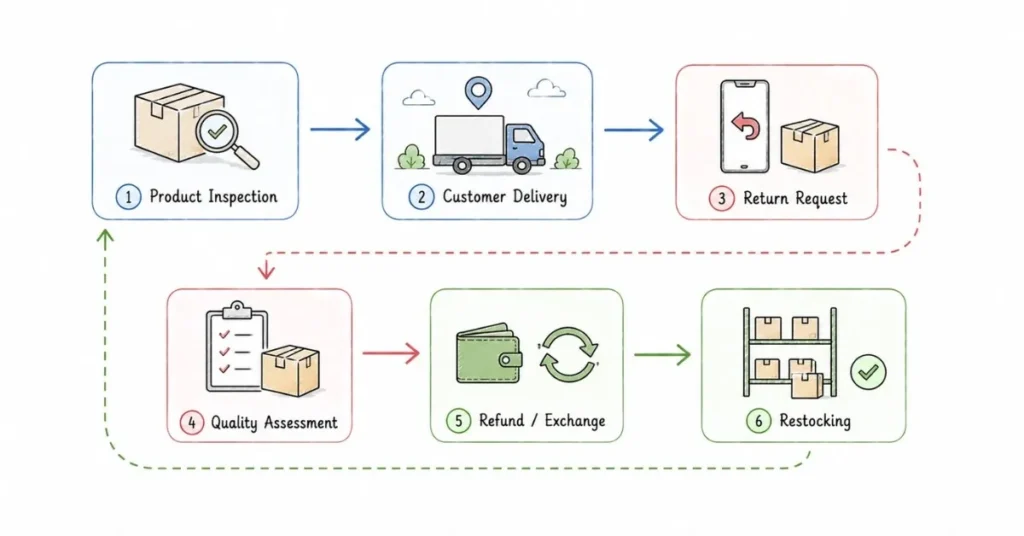
Ensuring products meet quality standards before reaching customers, and efficiently handling returns when customers aren’t satisfied.
Key responsibilities:
Inward quality check:
- When products arrive from vendors, checking quality
- Identifying defective pieces before they go to inventory
- Vendor accountability for quality issues
Outward quality check:
- Before dispatch, ensuring products are as described
- Checking for damages
- Verifying correct products are being sent
Returns processing:
- Customer returns product, you verify return eligibility
- Quality check of returned product (is it unused? Damaged? Defective?)
- Decision: Refund, exchange, or reject return
- Returned products disposition (can it be resold? Needs repair? Write-off?)
Return rate reduction:
- Analyzing why products are being returned
- Common reasons: Size mismatch, color different from photo, defective, customer changed mind
- Working with relevant teams to reduce returns (better product photos, accurate size charts, quality improvement)
A typical day for Sneha, Quality & Returns Manager at a fashion e-commerce company in Mumbai:
9:30 AM: Review yesterday’s return requests
- 145 return requests (2.8% of orders within target of 3%)
- Common reason: Size issues in Brand X jeans (20% of Brand X returns)
- Action: Escalate to category team, size chart might be inaccurate
11:00 AM: Quality audit of incoming inventory
- New shipment: 5,000 t-shirts from vendor
- Random sample check (checking 100 out of 5,000)
- Found 8 defective pieces (stitching issues)
- Defect rate: 8% (unacceptable, threshold is 2%)
- Reject entire batch, vendor needs to replace
1:00 PM: Returns processing monitoring
- Team processing returned products
- Checking if returned products are resaleable
- 60% can be resold, 30% need minor repairs, 10% write-off
3:00 PM: Data analysis
- Monthly report on return patterns
- Electronics: 4% return rate (industry average)
- Fashion: 8% return rate (slightly high, industry average is 6-7%)
- Deep dive: Why is fashion return rate high?
4:30 PM: Vendor meeting
- Discussing quality issues with problematic vendor
- Showing data on defect rates
- Negotiating: Improve quality or risk losing business
Skills you need:
Attention to detail:
- Spotting quality issues
- Thorough inspection capabilities
Process orientation:
- Creating and following standardized checking procedures
- Documentation of quality issues
Data analysis:
- Identifying patterns in returns
- Root cause analysis
Communication:
- Dealing with vendors on quality issues
- Coordinating with category managers, warehouse teams
- Customer communication about returns
Problem-solving:
- Reducing return rates
- Improving quality without increasing costs
Salary expectations:
Entry level – QC Executive (0-2 years): ₹2.5-4.5 LPA
Mid level – QC/Returns Manager (3-5 years): ₹5-10 LPA
Senior – Senior QC Manager (6+ years): ₹11-18 LPA
Technology in E-commerce Operations
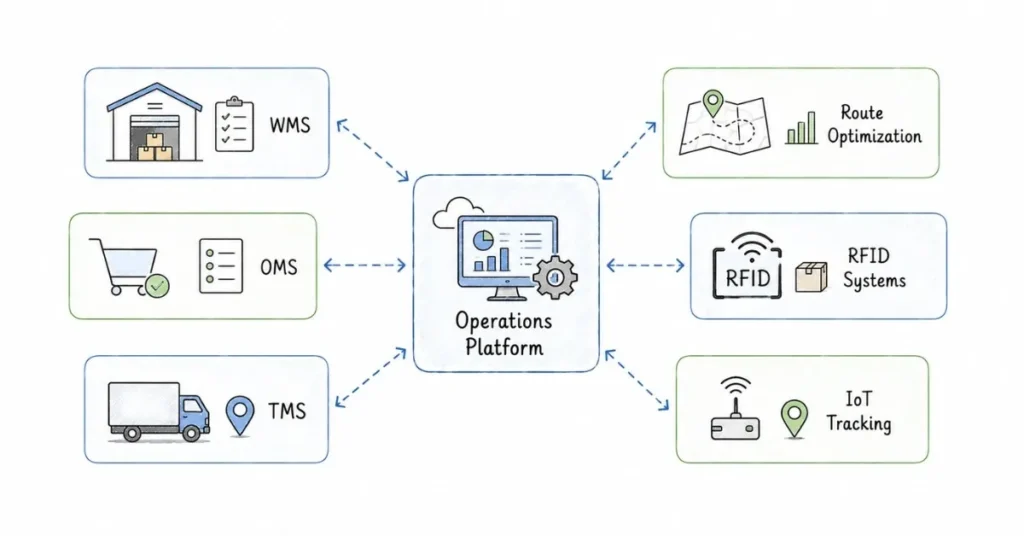
Understanding these technologies makes you more valuable:
WMS (Warehouse Management System):
Software managing warehouse operations. Examples: Manhattan Associates, Blue Yonder, Oracle WMS.
TMS (Transportation Management System):
Software managing shipments and logistics. Examples: Oracle TMS, SAP TMS.
OMS (Order Management System):
Central system managing all orders. Examples: Unicommerce, Vinculum, Zoho.
Route Optimization Software:
Optimizes delivery routes using algorithms. Examples: Locus, LogiNext, FarEye.
RFID & Barcode Systems:
Tracking inventory using radio frequency identification or barcodes.
IoT in logistics:
GPS tracking on delivery vehicles, temperature monitoring for perishables, real-time location updates.
You don’t need to code these, but understanding capabilities and limitations helps you use them effectively and communicate with tech teams.
Career Growth Path in Operations & Logistics
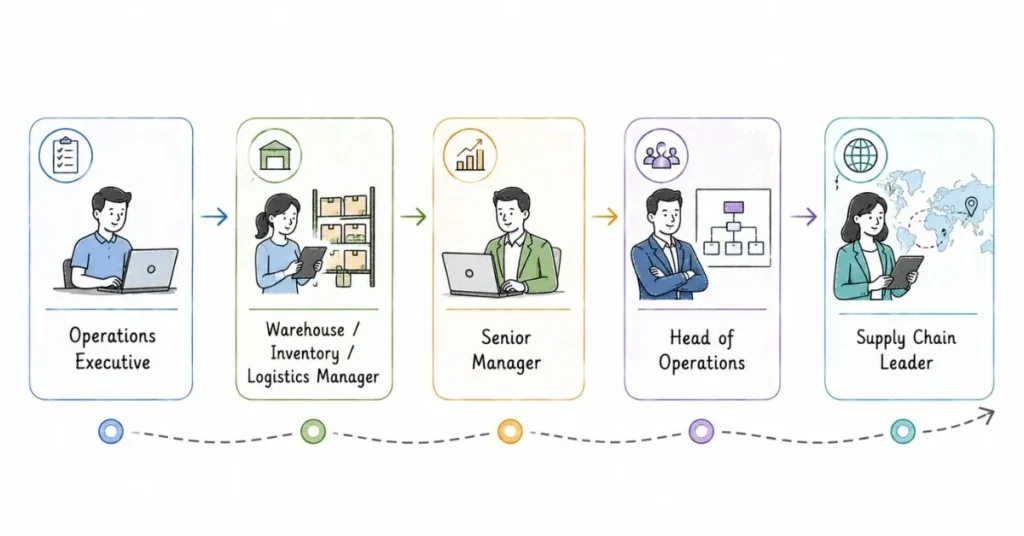
Years 0-2: Learning the ropes
- Operations Executive, Logistics Coordinator, Warehouse Supervisor roles
- Learning processes, understanding ground reality
- Building operational foundation
- Salary: ₹3-5 LPA
Years 3-5: Taking ownership
- Manager roles (Warehouse Manager, Logistics Manager, Inventory Manager)
- Managing teams, owning metrics
- Problem-solving and optimization
- Salary: ₹6-14 LPA
Years 6-9: Strategic leadership
- Senior Manager, Associate Director roles
- Multi-site operations or pan-India logistics
- Building strategies, not just executing
- Salary: ₹15-25 LPA
Years 10+: Executive leadership
- Head of Operations, VP Supply Chain, Chief Operating Officer
- Setting organizational direction
- Board-level presentations
- Salary: ₹25-60 LPA
Alternative path: Consulting
After 5-7 years operations experience, many move to consulting firms (McKinsey, BCG, Bain, Deloitte) as operations consultants. Salary: ₹20-40 LPA.
Skills to Build for Operations Careers
Hard skills:
- Excel (advanced this is non-negotiable)
- SQL basics (for data extraction and analysis)
- PowerPoint (for presentations)
- Understanding of WMS, TMS, OMS systems
- Supply chain fundamentals
Soft skills:
- Problem-solving under pressure
- People management (often managing large teams)
- Communication across diverse audiences
- Resilience (operations is high-pressure, especially during festivals/sales)
- Attention to detail while maintaining speed
Certifications worth considering:
- Six Sigma (Green Belt, Black Belt) process improvement methodology
- APICS CPIM (Certified in Production and Inventory Management)
- APICS CSCP (Certified Supply Chain Professional)
- Lean Management certifications
Do you need these certifications to get a job? No. Will they help you grow faster? Yes.
Real Success Stories
Karthik's journey:
- Started as Warehouse Supervisor in Flipkart at ₹4.5 LPA
- Ground-level learning in Bangalore warehouse
- Promoted to Warehouse Manager after 2 years (₹8 LPA)
- Moved to operations consulting at Deloitte after 5 years (₹18 LPA)
- Year 8: Operations Manager at a unicorn startup (₹25 LPA)
- His advantage: Deep operational understanding from ground up
Anjali's inventory planning career:
- Commerce graduate, no technical background
- Started as Inventory Analyst at ₹4.2 LPA
- Mastered Excel, learned SQL on her own
- Her forecasting accuracy was consistently high
- Year 3: Inventory Planning Manager (₹9 LPA)
- Year 6: Demand Planning Head (₹18 LPA)
- Her secret: Data-driven mindset + business understanding
Is Operations & Logistics Career Right for You?
You’ll thrive if:
- You enjoy solving practical, tangible problems
- You’re comfortable with pressure and fast pace
- You like seeing immediate impact of your work
- You don’t mind getting your hands dirty (literally, in warehouse roles)
- You enjoy optimization and efficiency challenges
You might struggle if:
- You prefer creative work over process-oriented work
- You need predictable 9-5 hours (operations often needs weekend/night work during peak times)
- You dislike dealing with ambiguity and chaos
- You prefer working alone (operations is highly collaborative)
Your Starting Point
For fresh graduates:
Apply for Operations Executive, Management Trainee roles at:
- E-commerce companies (Amazon, Flipkart, Meesho)
- D2C brands (Mamaearth, Boat, Lenskart)
- Logistics companies (Delhivery, Ecom Express, Blue Dart)
- Quick commerce (Swiggy Instamart, Zepto, Blinkit)
For career switchers:
Leverage any operations, coordination, or process management experience. Operations skills are transferable.
Immediate actions:
- Learn Excel deeply (YouTube has free courses)
- Understand supply chain basics (read “The Goal” by Eliyahu Goldratt)
- Follow operations leaders on LinkedIn
- Apply for entry-level roles or internships
Final Thoughts
E-commerce operations and logistics is where theory meets reality. It’s not glamorous like marketing or cutting-edge like tech development, but it’s the foundation everything else stands on.
The best part? Clear career progression, skills that are always in demand, and salaries that grow significantly with experience.
Every time you order something online and it reaches you on time, undamaged, correctly packaged that’s operations excellence. You could be the person making that happen for millions of customers.
Your operations career starts with one simple question: “How can this process be better?”
Ask that question relentlessly, and you’ll build a successful operations career.