
Mid Level Supply Chain Careers: Manager Roles Guide
Table of Contents
Introduction: The Critical Career Transition

You’ve spent 3-4 years in supply chain—mastering Excel, learning ERP systems, understanding how logistics actually works. You’re no longer the nervous fresher asking basic questions. You’ve proven yourself. Now you’re ready for the next level: mid-level management positions where you’ll lead teams, manage budgets, and make strategic decisions.
This transition from individual contributor to manager is one of the most significant career jumps you’ll make. It’s also where compensation really starts to accelerate—mid-level supply chain professionals in India earn between ₹8-15 lakhs annually, with top performers exceeding ₹18 lakhs. More importantly, these roles give you the strategic exposure and leadership experience necessary for senior management later.
But here’s what many people don’t realize: moving into mid-level roles isn’t automatic. You need specific skills, the right timing, and strategic career moves. This guide will show you exactly which mid-level positions to target, how to position yourself for promotion, and what to expect once you get there.
Understanding the Mid-Level Landscape
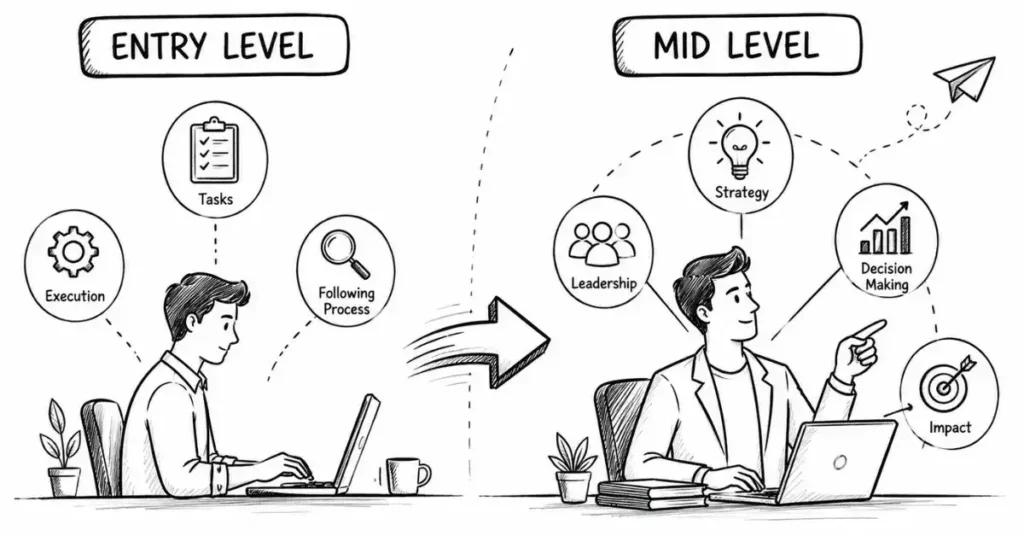
Mid-level supply chain roles typically require 3-7 years of experience and represent a fundamental shift in responsibilities:
Entry-Level Focus:
- Executing tasks assigned by others
- Learning processes and systems
- Supporting team projects
- Limited decision-making authority
Mid-Level Focus:
- Managing teams and projects
- Making operational decisions
- Optimizing processes and reducing costs
- Cross-functional collaboration
- Strategic planning within your domain
The transition requires developing both technical depth (becoming an expert in your specialization) and leadership breadth (managing people and projects effectively).
Top Mid-Level Supply Chain Positions
Let me break down the most common mid-level roles, their responsibilities, and compensation packages.
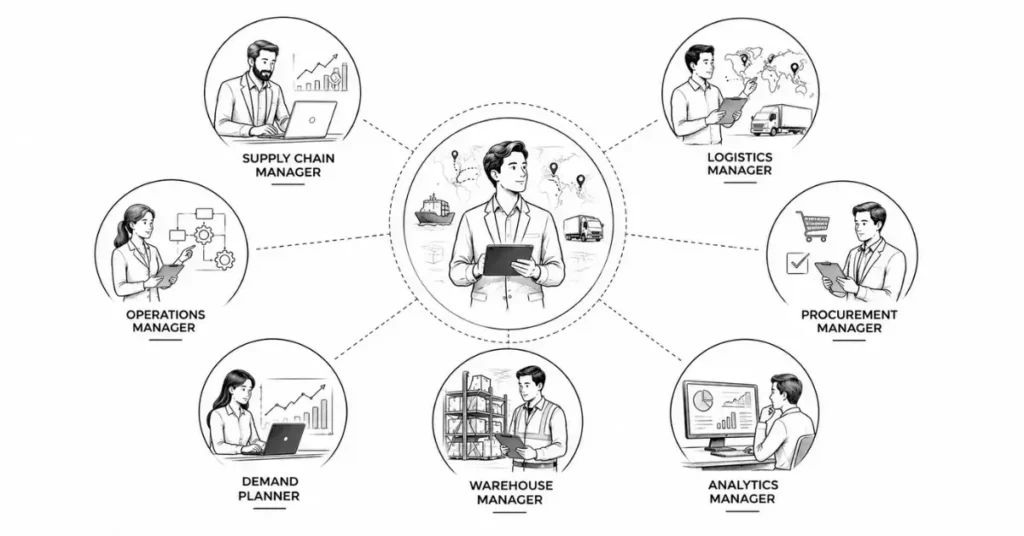
1. Supply Chain Manager | Average Salary: ₹14.5 lakhs/year
This is the quintessential mid-level role—managing end-to-end supply chain operations for a product line, business unit, or geographic region.
Your Core Responsibilities:
Operational Management:
- Oversee daily supply chain operations across planning, procurement, logistics
- Ensure on-time delivery and inventory availability
- Manage relationships with suppliers, logistics providers, and internal stakeholders
- Monitor and improve KPIs like order fulfillment rate, inventory turnover, on-time delivery
Team Leadership:
- Lead a team of 5-15 coordinators, analysts, and specialists
- Set individual goals and conduct performance reviews
- Mentor junior team members and facilitate skill development
- Manage team workflows and resource allocation
Strategic Planning:
- Develop supply chain strategies aligned with business objectives
- Identify cost reduction opportunities
- Drive continuous improvement initiatives
- Implement new technologies or processes
Financial Management:
- Manage budgets ranging from ₹50 lakhs to ₹5 crores depending on company size
- Track and control supply chain costs
- Justify investments in new systems or processes
Real-world scenario: As Supply Chain Manager for a personal care brand’s North India operations, you’ll coordinate production planning with the manufacturing team, manage relationships with 20+ raw material suppliers, oversee distribution to 5 regional warehouses, lead a team of 8 people, and ensure your region meets its ₹100 crore revenue targets while keeping supply chain costs under 12% of sales.
Career progression:
Supply Chain Coordinator/Analyst (2-3 years) → Senior Analyst/Assistant Manager (2 years) → Supply Chain Manager (current level) → Senior Supply Chain Manager (3-4 years) → Associate Director
Best for: Well-rounded professionals who enjoy balancing operational excellence with strategic thinking, and who are ready for people management responsibilities.
Companies hiring: FMCG companies (HUL, ITC, Marico), e-commerce (Amazon, Flipkart), manufacturing, pharmaceuticals
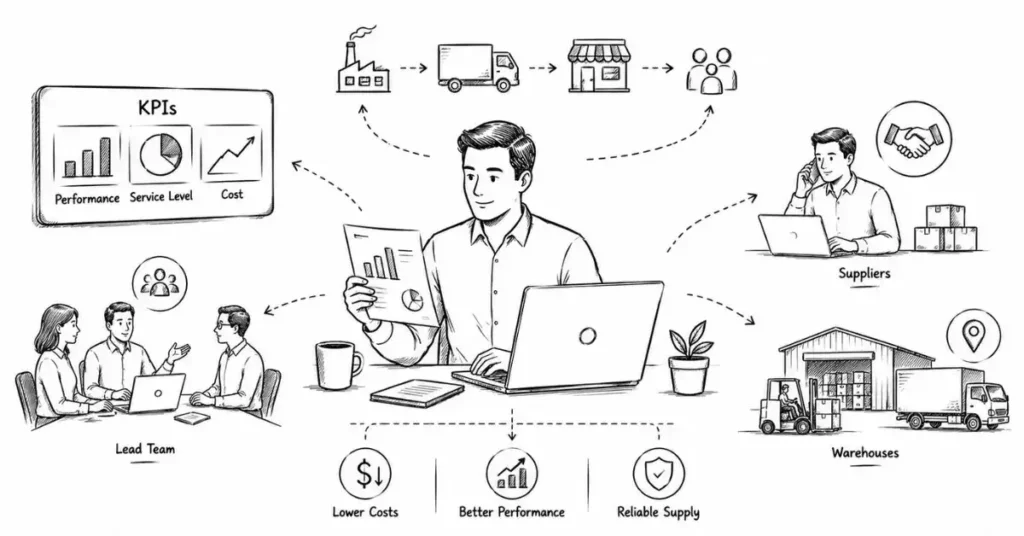
2. Logistics Manager | Average Salary: ₹10 lakhs/year
Specializing in transportation and distribution networks, logistics managers optimize the movement of goods while controlling costs.
Your Core Responsibilities:
Transportation Management:
- Design and optimize delivery routes and networks
- Negotiate contracts with trucking companies, 3PLs, courier services
- Manage freight costs and transportation budgets
- Implement tracking systems for real-time shipment visibility
Distribution Strategy:
- Determine optimal warehouse locations and distribution networks
- Balance speed versus cost in delivery operations
- Manage inbound and outbound logistics
- Coordinate across multiple distribution centers
Vendor Management:
- Build relationships with logistics service providers
- Conduct regular performance reviews of transport partners
- Negotiate rates and service level agreements
- Identify backup vendors for risk mitigation
Team Leadership:
- Lead logistics coordinators, transportation planners, and warehouse staff
- Ensure safety compliance and training
- Manage shift schedules in 24/7 operations
Technology Implementation:
- Deploy Transportation Management Systems (TMS)
- Integrate GPS tracking and route optimization tools
- Leverage data analytics for continuous improvement
Real-world scenario: Managing logistics for an e-commerce company’s Western region, you’ll oversee delivery operations covering Maharashtra, Gujarat, and Goa. You’ll manage contracts with 15 logistics partners, optimize routes to reduce per-delivery costs from ₹45 to ₹38, lead a team of 12 logistics coordinators, and ensure 95%+ on-time delivery rates while handling 50,000 deliveries monthly.
Key metrics you’ll own:
- On-time delivery percentage
- Cost per shipment
- Damage rates during transit
- Vehicle utilization rates
- Customer satisfaction scores
Best for: Detail-oriented problem-solvers who enjoy operational optimization, working with external partners, and measurable performance improvements.[upgrad]
Salary variation: Tier-1 cities (₹10-13 lakhs), Tier-2 cities (₹8-10 lakhs). E-commerce and 3PL companies often pay 15-20% premiums.

3. Operations Manager | Average Salary: ₹10.9 lakhs/year
Operations managers ensure smooth daily operations—whether in manufacturing plants, warehouses, or distribution centers.
Your Core Responsibilities:
Daily Operations:
- Oversee production planning or warehouse operations
- Ensure efficient resource utilization
- Manage quality standards and safety compliance
- Troubleshoot operational disruptions quickly
Process Improvement:
- Identify bottlenecks and inefficiencies
- Implement Lean or Six Sigma methodologies
- Reduce waste and optimize workflows
- Drive productivity improvements
People Management:
- Lead teams of 20-50 operational staff
- Manage schedules, attendance, performance
- Handle training and capability building
- Resolve employee issues and conflicts
Capacity Planning:
- Balance workload against available resources
- Plan for seasonal demand fluctuations
- Make equipment and staffing recommendations
- Coordinate maintenance schedules
Cross-Functional Collaboration:
- Work closely with procurement, quality, sales teams
- Coordinate with engineering on equipment issues
- Align operations with business priorities
Real-world scenario: As Operations Manager at an automobile parts manufacturing plant, you’ll oversee three production lines running 24/7 with 45 workers per shift. You’ll ensure daily production targets are met (5,000 units), maintain quality standards (less than 0.5% defect rate), manage equipment maintenance schedules, coordinate with procurement on material availability, and implement process improvements that increase efficiency by 8% annually.
Critical challenges:
- Balancing speed versus quality
- Managing union relationships (in some industries)
- Maintaining safety while meeting production targets
- Keeping operations running during equipment breakdowns
Best for: Hands-on leaders who thrive in dynamic environments, enjoy solving immediate problems, and can motivate large teams toward common goals.[upgrad]
Industry variation: Manufacturing typically offers ₹9-12 lakhs, e-commerce warehouses ₹8-11 lakhs, logistics companies ₹7-10 lakhs.
4. Procurement Manager | Average Salary: ₹12 lakhs/year
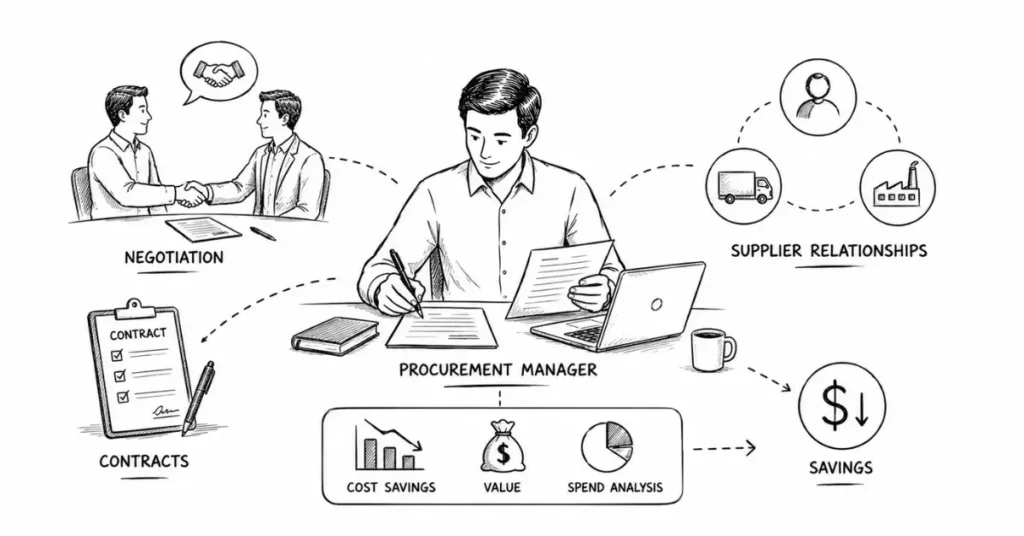
Procurement managers lead strategic sourcing initiatives, manage supplier relationships, and drive significant cost savings.
Your Core Responsibilities:
Strategic Sourcing:
- Develop category-specific procurement strategies
- Conduct make-or-buy analyses
- Identify global sourcing opportunities
- Implement vendor consolidation initiatives
Supplier Management:
- Build and maintain relationships with key suppliers
- Conduct supplier audits and performance reviews
- Develop backup suppliers for critical materials
- Negotiate long-term contracts and framework agreements
Cost Management:
- Drive cost reduction targets (typically 3-5% annually)
- Analyze total cost of ownership, not just price
- Leverage economies of scale
- Implement price benchmarking processes
Risk Management:
- Assess and mitigate supply risks
- Ensure business continuity planning
- Monitor geopolitical and economic factors affecting supply
- Maintain safety stock for critical items
Team Leadership:
- Lead procurement executives and sourcing specialists
- Set team goals and measure performance
- Develop negotiation skills within the team
- Allocate category responsibilities
Real-world scenario: As Procurement Manager for a pharmaceutical company, you’ll manage purchasing of ₹150 crore worth of active pharmaceutical ingredients, packaging materials, and lab equipment annually. You’ll lead a team of 6 procurement executives, maintain relationships with 100+ suppliers across India, China, and Europe, negotiate contracts saving ₹8 crores annually, and ensure zero production stoppages due to material unavailability.
Key success metrics:
- Cost savings achieved versus target
- Supplier on-time delivery rates
- Purchase order processing time
- Supplier quality performance
- Contract compliance rates
Best for: Strategic thinkers with strong negotiation skills, business acumen, and the ability to build win-win relationships with suppliers.
Earning potential: Top performers achieving significant cost savings can earn ₹15-18 lakhs. Consumer goods and manufacturing companies typically pay highest.
5. Demand Planner | Average Salary: ₹11 lakhs/year
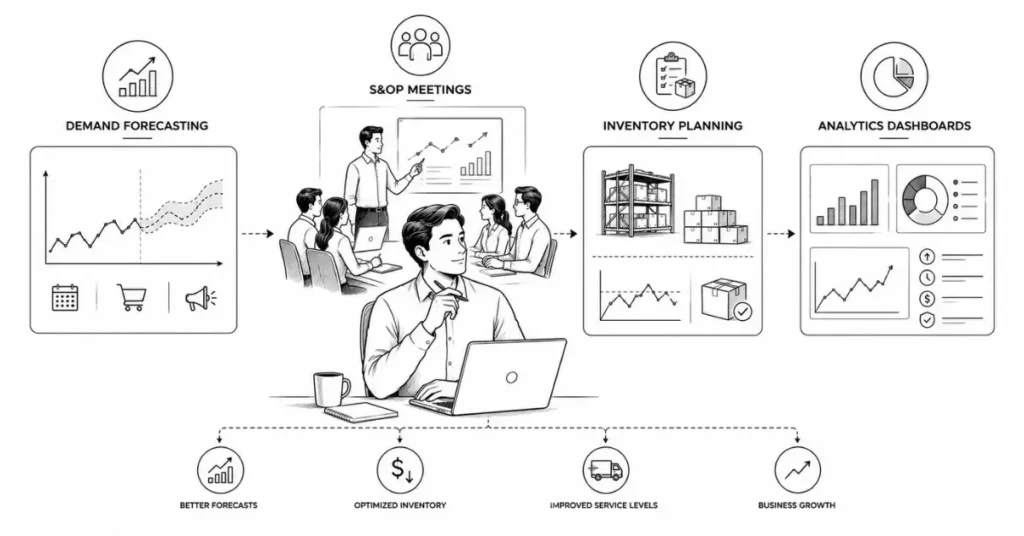
One of the most analytically demanding mid-level roles, demand planners forecast future demand and align supply accordingly.
Your Core Responsibilities:
Demand Forecasting:
- Analyze historical sales data and identify trends
- Incorporate market intelligence and promotional impacts
- Use statistical models for prediction
- Continuously improve forecast accuracy
Sales & Operations Planning (S&OP):
- Facilitate monthly S&OP meetings
- Align sales forecasts with operational capacity
- Resolve gaps between demand and supply
- Communicate plans across functions
Collaboration:
- Work closely with sales teams on pipeline visibility
- Coordinate with marketing on promotional plans
- Align with supply planning on production schedules
- Partner with finance on inventory targets
Inventory Optimization:
- Determine optimal inventory levels across the network
- Balance service levels versus inventory costs
- Calculate safety stock requirements
- Identify slow-moving and obsolete inventory
Technology Utilization:
- Leverage demand planning software
- Implement advanced analytics and AI tools
- Create dashboards for forecast performance monitoring
- Develop scenario planning capabilities
Real-world scenario: As Demand Planner for an FMCG company’s beverage portfolio, you’ll forecast demand for 50 SKUs across India. You’ll analyze 3 years of historical data, factor in seasonality (summer spikes, festival peaks), incorporate marketing’s promotional calendar, achieve 85% forecast accuracy, coordinate monthly S&OP meetings with sales and operations, and ensure optimal inventory levels that maintain 98% product availability while keeping inventory costs at 45 days of sales.
Technical skills required:
- Advanced Excel (statistical functions, scenario modeling)
- Demand planning software (SAP IBP, Kinaxis, o9 Solutions)
- Statistical forecasting methods
- Data visualization tools (Tableau, Power BI)
Best for: Analytical minds who enjoy working with numbers, solving puzzles, and seeing how accurate predictions drive business success.
Growth trajectory: This role is increasingly critical as companies adopt data-driven decision-making. Excellent demand planners are in high demand and command premium salaries.
6. Warehouse Manager | Average Salary: ₹6.4 lakhs/year
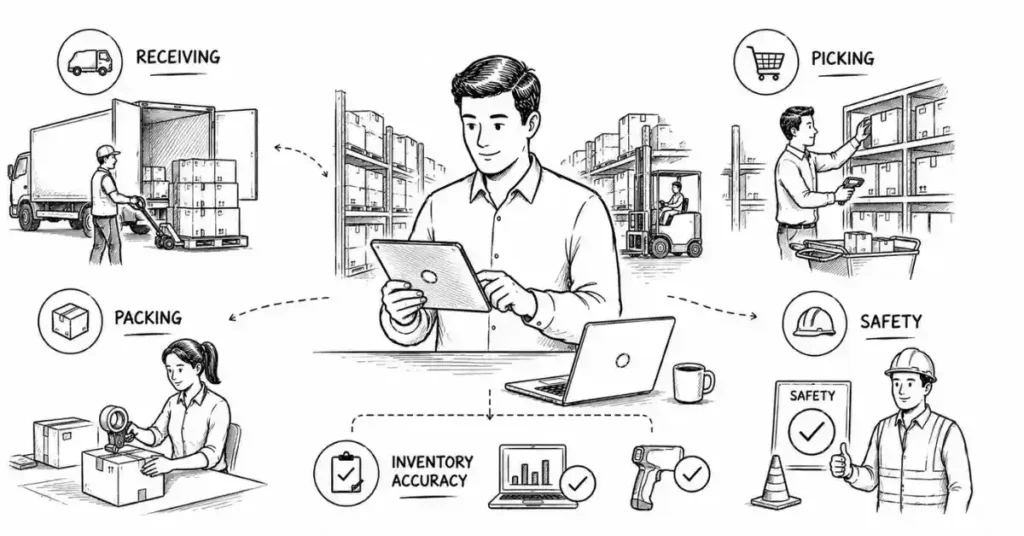
Despite lower average salaries, warehouse managers in large e-commerce or FMCG operations can earn ₹8-12 lakhs depending on facility size and complexity.
Your Core Responsibilities:
Facility Operations:
- Manage daily warehouse operations (receiving, putaway, picking, packing, shipping)
- Ensure inventory accuracy above 99.5%
- Optimize space utilization and storage layouts
- Maintain equipment and infrastructure
Team Management:
- Lead warehouse staff (can range from 30 to 300+ people)
- Manage multiple shifts in 24/7 operations
- Handle hiring, training, and performance management
- Ensure safety compliance and training
Process Optimization:
- Reduce order fulfillment time
- Improve picking accuracy
- Implement automation where beneficial
- Drive continuous improvement initiatives
Technology Management:
- Deploy Warehouse Management Systems (WMS)
- Integrate barcode scanning and RFID systems
- Leverage data for productivity improvements
- Coordinate with IT on system enhancements
Safety & Compliance:
- Maintain workplace safety standards
- Ensure regulatory compliance
- Conduct safety training and audits
- Manage incident investigations
Real-world scenario: Managing a 200,000 sq ft e-commerce fulfillment center, you’ll oversee receiving of 10,000 units daily, storage of 500,000+ SKUs, picking and packing of 15,000 orders daily, and shipping operations. You’ll lead 120 warehouse associates across three shifts, maintain 99.7% inventory accuracy, achieve 99.5% order accuracy, ensure all orders ship within committed timelines, and implement process improvements that increase picking productivity by 12% annually.
Physical demands: Unlike most supply chain management roles, this position requires significant time on the warehouse floor, walking 10,000+ steps daily, and being comfortable in non-air-conditioned environments.
Best for: Hands-on leaders who enjoy operational environments, working closely with frontline teams, and seeing immediate results of their improvements.
Advancement: Warehouse Manager → Regional Operations Manager → Director of Fulfillment Operations
7. Supply Chain Analytics Manager | Average Salary: ₹13-16 lakhs/year
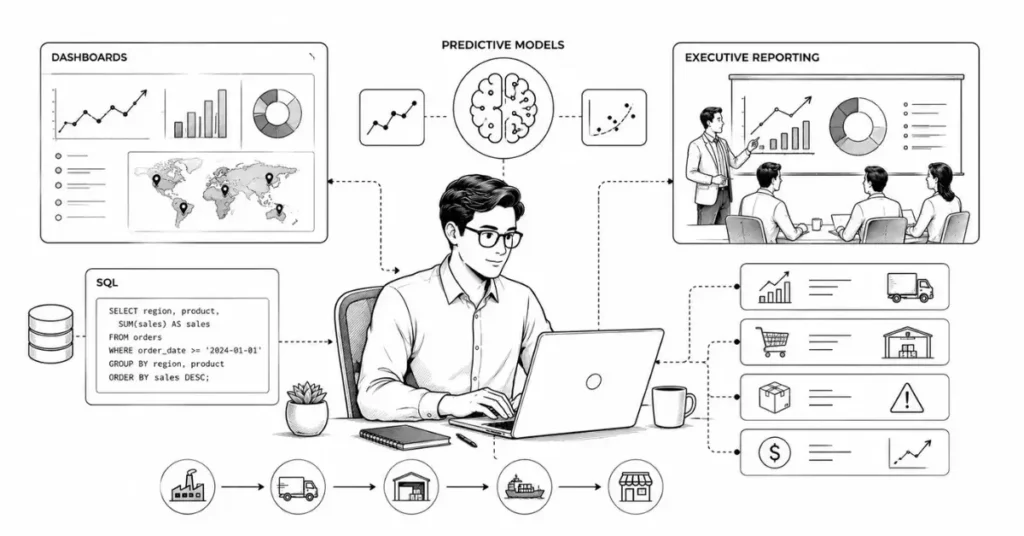
An emerging and high-value specialization, analytics managers drive data-driven decision-making across supply chain functions.
Your Core Responsibilities:
Advanced Analytics:
- Build predictive models for demand, costs, risks
- Conduct scenario analyses for strategic decisions
- Implement machine learning algorithms
- Develop optimization models for network design or inventory
Reporting & Insights:
- Create executive dashboards and KPI tracking systems
- Perform deep-dive analyses on supply chain performance
- Identify root causes of issues through data
- Present insights to senior leadership
Tool Implementation:
- Deploy advanced analytics platforms
- Integrate data from multiple systems
- Build self-service reporting capabilities
- Train business users on analytics tools
Team Leadership:
- Lead supply chain analysts and data scientists
- Develop analytical capabilities within the organization
- Partner with IT on data infrastructure
- Prioritize analytics projects based on business impact
Real-world scenario: Leading analytics for a retail chain’s supply chain, you’ll build predictive models that improve demand forecast accuracy from 75% to 88%, create an executive dashboard tracking 20+ supply chain KPIs in real-time, conduct network optimization analysis that recommends closing 2 inefficient warehouses and opening one strategically located facility (saving ₹3 crores annually), implement price optimization algorithms for procurement, and present monthly analytics reviews to the VP of Supply Chain.
Technical skills required:
- Python or R for statistical analysis
- SQL for database queries
- Tableau or Power BI for visualization
- Understanding of machine learning concepts
- Strong business acumen to translate analytics into actions
Best for: Technically strong professionals who enjoy solving complex problems with data, who can communicate insights clearly to non-technical audiences, and who want to be at the cutting edge of supply chain innovation.
Market demand: This is one of the fastest-growing specializations. Companies increasingly recognize that data-driven supply chains outperform competitors.
Salary Deep-Dive: What Really Determines Your Compensation
Mid-level supply chain salaries vary significantly based on several factors:
Industry Impact:
Industry | Manager Salary Range |
Consumer Goods/FMCG | ₹14-20 lakhs |
Manufacturing | ₹12-18 lakhs |
E-commerce | ₹10-16 lakhs |
Pharmaceuticals | ₹12-17 lakhs |
Logistics/3PL | ₹9-14 lakhs |
Retail | ₹10-15 lakhs |
Company Size Impact:
- Large MNCs (Unilever, P&G, Marico): Premium of 20-30% over market average
- Mid-sized companies: Around market average
- Startups: Highly variable; might offer lower base but stock options
Location Impact:
- Mumbai/Bangalore/Pune: Highest (base for ranges above)
- Delhi NCR/Hyderabad: 5-10% lower
- Chennai/Ahmedabad: 10-15% lower
- Tier-2 cities: 20-25% lower
Skills Premium:
- SAP expertise: +₹1-2 lakhs
- Advanced analytics (Python/R): +₹2-3 lakhs
- APICS certifications: +₹1.5-2 lakhs
- Six Sigma Black Belt: +₹1-1.5 lakhs
Negotiation reality: When switching jobs at mid-level, expect 20-30% salary increases with strategic moves. Internal promotions typically offer 10-15% increases.
Skills That Separate Average from Exceptional Mid-Level Professionals
Technical skills got you to mid-level, but these competencies determine whether you’ll advance further:
Leadership Skills
Team Management:
You’re no longer just managing your own work—you’re responsible for team output. This requires:
- Setting clear expectations and goals
- Providing constructive feedback
- Motivating diverse personalities
- Delegating effectively without micromanaging
- Developing team members’ skills
Conflict Resolution:
Mid-level managers handle disagreements between team members, resolve vendor disputes, and navigate cross-functional tensions. This requires emotional intelligence and diplomacy.
Change Management:
You’ll often implement new processes or technologies. Success requires bringing people along, addressing concerns, and managing resistance.
Strategic Thinking
Business Acumen:
Understanding P&L statements, contribution margins, ROI calculations, and how supply chain decisions impact overall business performance is critical.
Long-term Planning:
Moving beyond daily firefighting to proactive planning—anticipating future challenges and positioning your operations accordingly.
Cross-functional Collaboration:
Supply chain doesn’t operate in isolation. You’ll constantly work with sales, finance, manufacturing, quality, and IT teams. Understanding their priorities and finding win-win solutions is essential.
Advanced Technical Skills
Data Analysis:
Beyond basic Excel, you need comfort with statistical analysis, data visualization, and increasingly, basic coding for automation.
ERP Mastery:
Deep knowledge of SAP, Oracle, or Microsoft Dynamics—not just using them but understanding how to optimize configurations and leverage advanced features.
Process Improvement:
Understanding Lean, Six Sigma, and other methodologies to systematically identify and eliminate inefficiencies.
Technology Awareness:
Staying current on AI, IoT, automation, and other emerging technologies transforming supply chains.
Commercial Skills
Negotiation:
Particularly for procurement and logistics roles, advanced negotiation skills directly impact your value. This includes understanding negotiation psychology, identifying leverage, and creating value beyond price.
Vendor Management:
Building productive long-term relationships while maintaining performance accountability requires balancing firmness with fairness.
Financial Management:
Managing budgets, justifying investments, and demonstrating ROI on initiatives becomes increasingly important at mid-level.
How to Position Yourself for Mid-Level Promotions
Moving from entry-level to mid-level isn’t automatic. Here’s how to accelerate your progression:
Performance Excellence in Current Role
Deliver Consistently:
Meet or exceed your targets consistently. Reliability is foundational—managers promote people they can count on.
Expand Your Scope:
Volunteer for additional projects, especially cross-functional initiatives that increase your visibility.
Measure Your Impact:
Quantify your contributions: “Improved forecast accuracy from 78% to 85%,” “Reduced freight costs by ₹12 lakhs annually,” “Decreased order processing time by 30%.”
Develop Leadership Capabilities
Mentor Junior Team Members:
Helping new hires or junior colleagues demonstrates leadership readiness even before you have direct reports.
Lead Projects:
Volunteer to lead improvement projects or initiatives. Successfully delivering projects shows management capability.
Improve Communication:
Practice presenting to groups, writing clear emails and reports, and articulating ideas persuasively.
Gain Strategic Exposure
Understand the Business:
Go beyond your narrow function. Learn about company strategy, competitive dynamics, financial performance, and how supply chain enables business goals.
Build Cross-Functional Relationships:
Network with colleagues in sales, finance, marketing. Understanding their worlds makes you more effective and increases promotion chances.
Think Like Your Manager:
Understand their priorities and challenges. Proactively address issues before being asked.
Invest in Certifications
APICS CSCP or CPIM:
These globally recognized certifications demonstrate commitment and expertise, often accelerating promotions.
Six Sigma Green/Black Belt:
Valuable for roles focused on process improvement and quality.
PMP (Project Management Professional):
Useful for roles involving significant project management responsibilities
Strategic Job Changes
Internal Mobility:
Sometimes moving to a different business unit or function within your company accelerates growth.
External Opportunities:
Strategic job changes every 3-4 years (not too frequent) can accelerate both compensation and title progression. Moving from a coordinator role in one company directly to a manager role in another is possible with strong performance and interviewing skills.
Common Mid-Level Career Challenges
Understanding these challenges helps you navigate them successfully:
Challenge 1: The Management Transition
Moving from doing the work yourself to getting work done through others is difficult. New managers often struggle with delegation and micromanagement.
Solution: Focus on developing your team rather than doing everything yourself. Your success now depends on their success.
Challenge 2: Balancing Strategy and Operations
You’re expected to think strategically while still handling operational issues.
Solution: Block time for strategic thinking. Develop your team to handle routine operations independently, freeing you for higher-value work.
Challenge 3: Managing Former Peers
Getting promoted means sometimes managing former colleagues, which creates awkward dynamics.
Solution: Have honest conversations early, set clear expectations, and be consistent in how you treat everyone.
Challenge 4: Pressure from Multiple Directions
You face pressure from senior management above, team members below, and peer functions around you.
Solution: Develop stress management techniques, communicate clearly about constraints and trade-offs, and learn to say no diplomatically when necessary.
Challenge 5: Skill Obsolescence
Technology and methodologies evolve rapidly. What you learned five years ago might be outdated.
Solution: Commit to continuous learning—online courses, professional certifications, industry conferences, and reading current supply chain publications.
Day in the Life: What Mid-Level Managers Actually Do
To give you realistic expectations, here’s a typical day for a Supply Chain Manager:
8:00 AM – Morning Review:
Check overnight emails, review dashboard showing yesterday’s shipment performance, note any issues requiring attention.
8:30 AM – Stand-up Meeting:
15-minute daily sync with your team—what shipped yesterday, today’s priorities, any blockers.
9:00 AM – Supplier Issue Resolution:
Conference call with a key supplier whose delivery is delayed, impacting production. Negotiate expedited shipping, assess impact, communicate with affected stakeholders.
10:00 AM – S&OP Meeting:
Monthly Sales & Operations Planning meeting with sales, finance, and operations to align demand forecast with supply plans for next quarter.
11:30 AM – Data Analysis:
Review inventory levels across network, identify slow-moving items, prepare recommendations for clearance or markdown.
1:00 PM – Lunch & Informal Networking:
Lunch with procurement manager to discuss potential supplier consolidation opportunities.
2:00 PM – Team Development:
One-on-one meeting with a demand planner on your team—reviewing their quarterly goals, providing feedback on recent forecasting work, discussing their career aspirations.
3:00 PM – Budget Review:
Review supply chain costs for the month, investigate variances from budget, prepare explanations for finance review meeting.
4:00 PM – Process Improvement Project:
Working session with your team on implementing a new inventory optimization tool—reviewing vendor proposals, discussing requirements.
5:00 PM – Cross-functional Coordination:
Email exchanges and quick calls with sales team about upcoming promotional campaign logistics, with quality team about supplier audit findings, with IT about system enhancement requests.
6:00 PM – Strategic Planning:
Quiet time to work on your quarterly strategic plan—network optimization analysis to determine whether opening a new distribution center makes economic sense.
7:00 PM – Wrap-up:
Final email check, set priorities for tomorrow, head home.
Reality: Some days are more operational (handling crises), others more strategic (planning and analysis). The mix varies, but expect 50-60 hour weeks during busy periods, 45-50 hours typically.
Your Career Roadmap: Next Steps
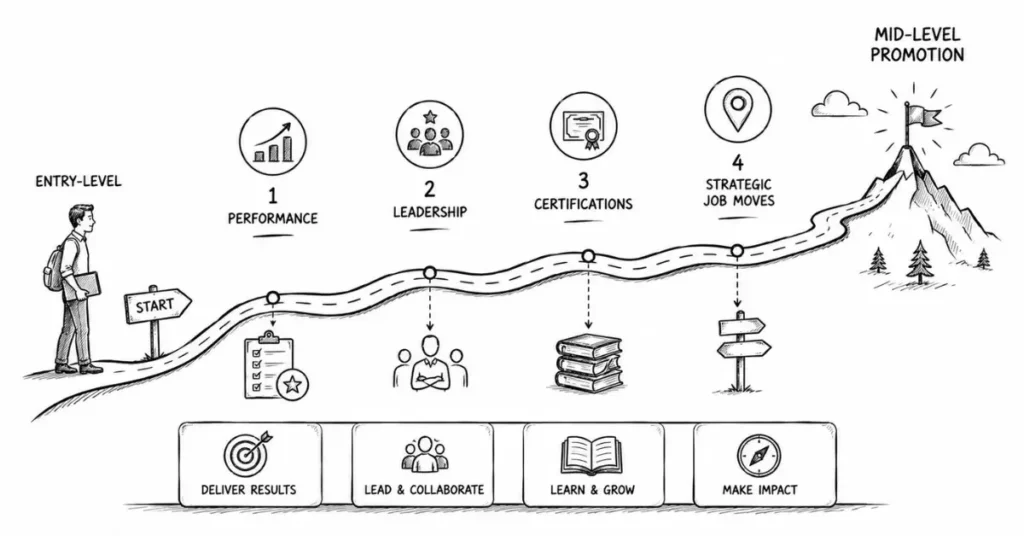
If you’re aspiring to reach mid-level positions:
If you’re currently entry-level (0-2 years experience):
- Excel in your current role and expand your responsibilities
- Develop one deep specialization (analytics, procurement, logistics, etc.)
- Start building leadership skills by mentoring interns or new hires
- Target 3-4 years in entry-level roles before pushing for promotion
If you’re in experienced individual contributor roles (3-4 years):
- Actively seek leadership opportunities and project management roles
- Consider pursuing APICS certification
- Network with mid-level managers to understand their roles
- Have career development conversations with your manager
- Update your resume highlighting leadership experiences and measurable impacts
If you’re ready to make the jump:
- Assess whether internal promotion or external opportunity makes sense
- Prepare for behavioral interview questions about leadership scenarios
- Quantify your achievements compellingly
- Research market salary ranges to negotiate effectively
- Consider working with a mentor or career coach
Mid-level supply chain roles offer the perfect blend of strategic impact and hands-on execution, competitive compensation, and clear advancement opportunities. With India’s supply chain sector growing rapidly, demand for capable mid-level managers continues to outpace supply, creating excellent opportunities for those who prepare strategically.
Ready to continue advancing? Explore our guides on senior leadership positions, specialized career paths, and essential skills to plan your journey to the top of the supply chain profession.