
Digital Marketing Roles in E-commerce
Table of Contents
Introduction: Why E-commerce Marketing is Different (and More Exciting)
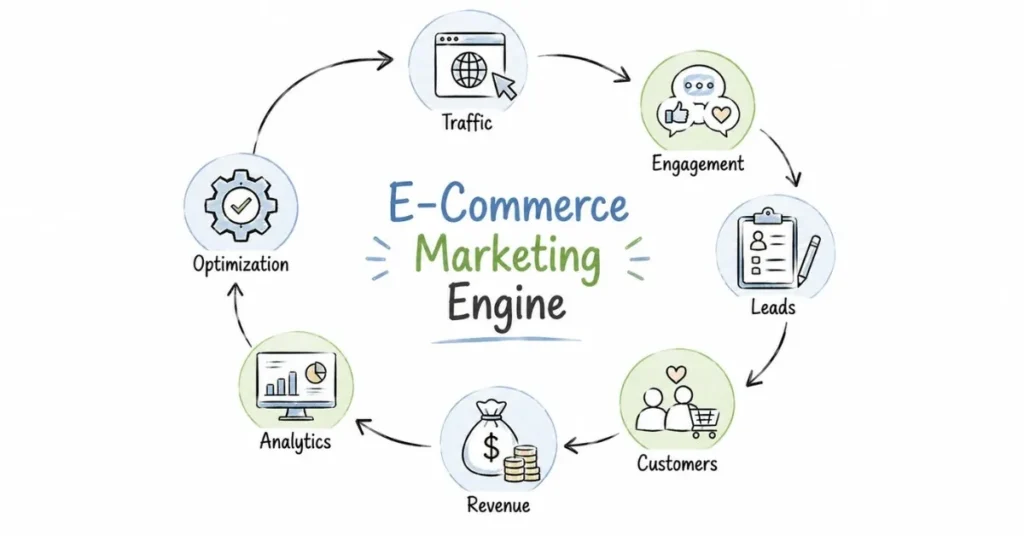
Let me tell you why marketing for e-commerce is fundamentally different from traditional marketing. In traditional marketing, you create a TV ad, run it for months, and hope it works. You can’t really track who saw it and then bought your product. In e-commerce marketing, you know everything.
You run an Instagram ad at 10 AM. By 10:15 AM, you know exactly:
- How many people saw it
- How many clicked
- How many added to cart
- How many bought
- How much you spent vs. earned
This immediate feedback loop makes e-commerce marketing incredibly data-driven, fast-paced, and honestly, addictive. Every day you’re experimenting, learning, and optimizing.
For someone starting their career in India today, e-commerce marketing offers something rare: you can demonstrate your value with numbers. “I increased sales by 40% while reducing ad costs by 20%” is a much stronger statement than “I managed social media accounts.”
This guide breaks down every major digital marketing role in e-commerce, what you actually do day-to-day, skills you need, realistic salaries, and how to break in even without prior experience.
Performance Marketing Specialist: The ROI Obsessed Marketer
What you actually do:
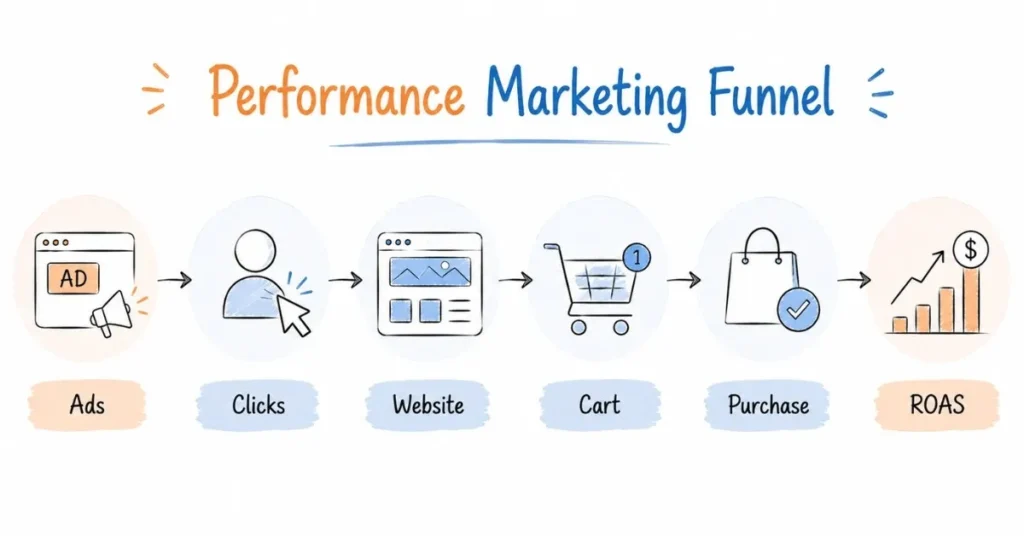
You’re the person running paid ads across platforms Facebook, Instagram, Google, YouTube with one primary goal: generate sales profitably. Every rupee you spend should bring back 3-4 rupees (or more) in revenue.
A typical day for Priya, Performance Marketing Specialist at a fashion D2C brand in Delhi:
9:00 AM: Check yesterday’s performance across all campaigns
- Facebook Ads spent: ₹45,000, Revenue: ₹1.8 lakhs (4x ROAS – good!)
- Google Ads spent: ₹30,000, Revenue: ₹75,000 (2.5x ROAS – needs improvement)
- Instagram Story ads performing well, Feed ads not so much
10:30 AM: Pause underperforming ads, increase budget on winners
12:00 PM: Create new ad variations for A/B testing
- Testing different headlines: “50% Off Flash Sale” vs “Limited Stock – Shop Now”
- Testing product imagery: Model photos vs. Flat lay photography
2:00 PM: Analyze audience segments
- Women 25-34 in metros converting well
- Women 35-44 in tier-2 cities have high add-to-cart but low purchase (maybe hesitant about online payment? Let’s test COD emphasis in ads)
4:00 PM: Plan upcoming festive campaign (Holi is coming)
- Budget allocation
- Creative brief for design team
- Landing page requirements
6:00 PM: Prepare daily performance report for manager
Skills you need:
Technical skills:
- Facebook Ads Manager: Deep understanding of campaign structure, audience targeting, pixel tracking, conversion optimization
- Google Ads: Search campaigns, Shopping ads, Display ads, YouTube ads
- Analytics: Google Analytics for tracking user behavior, understanding conversion funnels
- Excel/Google Sheets: Creating reports, analyzing data, finding patterns
- Basic design sense: Not creating ads yourself, but understanding what works visually
Strategic skills:
- Customer psychology: Understanding what makes people click, what makes them buy
- Testing mindset: Always experimenting (different audiences, creatives, copy)
- Budget management: Allocating limited budgets for maximum return
- Funnel thinking: Understanding the journey from ad impression to purchase
Indian market specific skills:
- Regional targeting: Campaigns for South India vs. North India often need different approaches
- Festival marketing: Diwali, Durga Puja, Onam, Pongal each requires culturally relevant campaigns
- COD consideration: Many Indian customers prefer Cash on Delivery; ads emphasizing COD option often convert better in tier 2/3 cities
- Regional language ads: Running campaigns in Hindi, Tamil, Telugu, Bengali increases conversion in regional markets
Salary expectations:
- Entry level (0-2 years): ₹3-6 LPA
- Mid level (3-5 years): ₹7-14 LPA
- Senior level (6+ years): ₹15-25 LPA
- Freelance rates: ₹30,000-2 lakhs per month per client
Real success story:
Aditya, 26, from Jaipur, started as a Digital Marketing Intern at ₹12,000/month in 2021. He obsessively learned Facebook Ads, ran campaigns for his company, and documented his learnings on LinkedIn. Within 2 years, he became Performance Marketing Manager at ₹10 LPA. By year 4, he was consulting for 3 brands simultaneously at ₹1.5 lakhs monthly retainer each. Today, he runs a 5-person performance marketing agency.
His secret? “I treated the company’s ad budget like my own money. Every rupee wasted hurt me personally. That mindset made me obsessively optimize.”
How to break in without experience:
- Take Facebook Blueprint certification (free from Facebook)
- Offer free services initially: Find a small business, offer to run ads for ₹5,000-10,000 budget, charge nothing for your time. You get experience, they get marketing. Win-win.
- Document your results: Screenshots, metrics, learnings. Build a portfolio.
- Start small freelancing: Charge ₹10,000-15,000 monthly for managing small business ads. Build testimonials.
- Apply for junior roles: With portfolio and freelance experience, you’re now hirable.
Tools to master:
- Facebook Business Manager & Ads Manager
- Google Ads platform
- Google Analytics
- Google Tag Manager (for tracking)
- Canva (for quick creative edits)
- Hotjar or Microsoft Clarity (for understanding user behavior)
SEO Specialist: The Organic Traffic Magician
What you actually do:
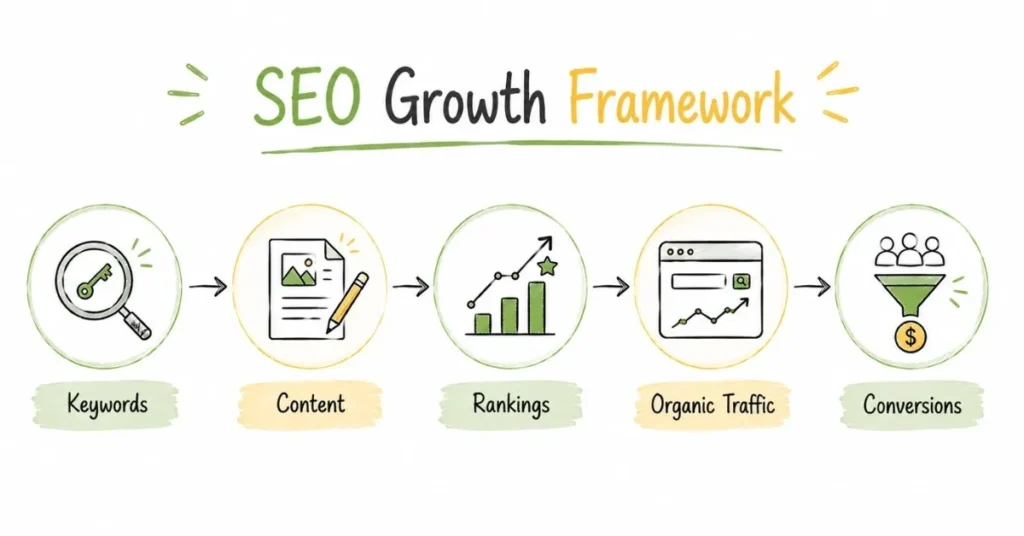
While performance marketers spend money on ads, SEO specialists get “free” traffic from Google. When someone searches “best running shoes under 3000,” you want your e-commerce site appearing on page 1. That’s SEO (Search Engine Optimization).
The beauty of SEO for e-commerce:
Unlike blog SEO which takes 6-12 months to show results, e-commerce SEO can deliver faster. Optimize a product page correctly, and it can start ranking in weeks because Google loves pages that help people make purchasing decisions.
A typical day for Rohan, SEO Specialist at an electronics e-commerce site in Bangalore:
9:30 AM: Check yesterday’s organic traffic and rankings
- 5,200 organic visitors (up 8% from last week)
- “Bluetooth speakers under 2000” we moved from position 5 to 3 (great!)
- “Gaming laptops” dropped from position 12 to 18 (need to investigate)
11:00 AM: Keyword research for new product categories
- Company is launching smartwatches. What are people searching?
- “Best smartwatches under 5000” 12,000 monthly searches
- “Smartwatch with calling feature” 8,000 monthly searches
- Create list of 50 target keywords for product pages and category pages
1:00 PM: Optimize product pages
- Rewrite product titles to include target keywords naturally
- Improve product descriptions (currently too short, adding detailed specifications)
- Optimize image alt tags (helps Google understand images)
- Add FAQ sections to product pages (answers common questions, helps ranking)
3:00 PM: Technical SEO audit
- Check site speed (slow pages hurt rankings)
- Find and fix broken links
- Ensure mobile-friendliness (80% of our traffic is mobile)
- Check if all pages are being indexed by Google
5:00 PM: Link building outreach
- Reach out to tech bloggers for product reviews
- Guest posting on relevant websites
- Get backlinks (other websites linking to ours improves our authority)
Skills you need:
Technical skills:
- Keyword research: Using tools like Google Keyword Planner, Ubersuggest, Ahrefs, SEMrush
- On-page SEO: Optimizing titles, meta descriptions, headers, content, images
- Technical SEO: Site speed, mobile optimization, structured data, indexing
- Link building: Getting quality backlinks from reputable websites
- Analytics: Google Analytics, Google Search Console for tracking performance
- Basic HTML/CSS: Understanding page structure helps with optimization
Content skills:
- Writing: Creating product descriptions that are SEO-friendly and persuasive
- Content planning: Planning blog content that supports product sales
- Understanding user intent: What is someone really looking for when they search “budget laptop for students”?
E-commerce specific SEO knowledge:
- Product page optimization: Different from blog posts
- Category page optimization: Balancing SEO with user experience
- Handling duplicate content: Multiple products with similar descriptions
- Seasonal optimization: Optimizing for “Diwali gifts,” “Summer sale,” etc.
- Local SEO: For businesses with physical stores too
Local SEO: For businesses with physical stores too Indian market considerations:
Regional language SEO:
Many Indians search in Hindi, Tamil, Telugu, etc. Optimizing for “स्मार्टफोन” (smartphone in Hindi) or “மொபைல் போன்” (mobile phone in Tamil) taps into huge markets competitors ignore.
Voice search optimization:
Indians increasingly use Google Assistant in their native languages. “Ok Google, best phone under 15000” optimizing for conversational queries matters.
Mobile-first approach:
Unlike the West where desktop still matters, India is overwhelmingly mobile. Your SEO strategy must prioritize mobile user experience.
Salary expectations:
- Entry level (0-2 years): ₹2.5-5 LPA
- Mid level (3-5 years): ₹6-12 LPA
- Senior level (6+ years): ₹13-22 LPA
- Freelance SEO consultant: ₹25,000-1.5 lakhs per month per client
Real success story:
Meera from Coimbatore learned SEO through free online resources (Moz, Ahrefs blog, Neil Patel’s content). She started by optimizing her uncle’s small e-commerce site selling traditional sarees. Within 6 months, organic traffic increased 300%. She documented the case study on LinkedIn.
This caught attention. She got hired as SEO Executive at ₹4 LPA. Within 3 years, she was Senior SEO Manager at ₹11 LPA. She now also freelances on weekends, earning additional ₹40,000-60,000 monthly.
Her advice? “SEO is like planting trees. You plant today, you get fruits months later. Most people give up too soon. Those who persist win.”
How to break in:
- Learn fundamentals: Free resources Moz Beginner’s Guide, Google’s SEO Starter Guide, Ahrefs YouTube channel
- Practice on your own site: Start a simple blog or website, apply SEO, track results
- Offer free SEO audits: Reach out to small businesses, offer free website SEO audit, showcase your knowledge
- Certifications: Google Analytics, SEMrush certification (free), HubSpot SEO certification
- Create case studies: Even if it’s your own practice site, document results with screenshots and metrics
Tools to master:
- Google Search Console (free, essential)
- Google Analytics (free, essential)
- Ubersuggest (free tier available)
- Ahrefs or SEMrush (expensive but industry standard, learn through trials or at a job)
- Screaming Frog (technical SEO audits)
- PageSpeed Insights (site speed testing)
Social Media Marketing Manager: Building Brands & Communities
What you actually do:
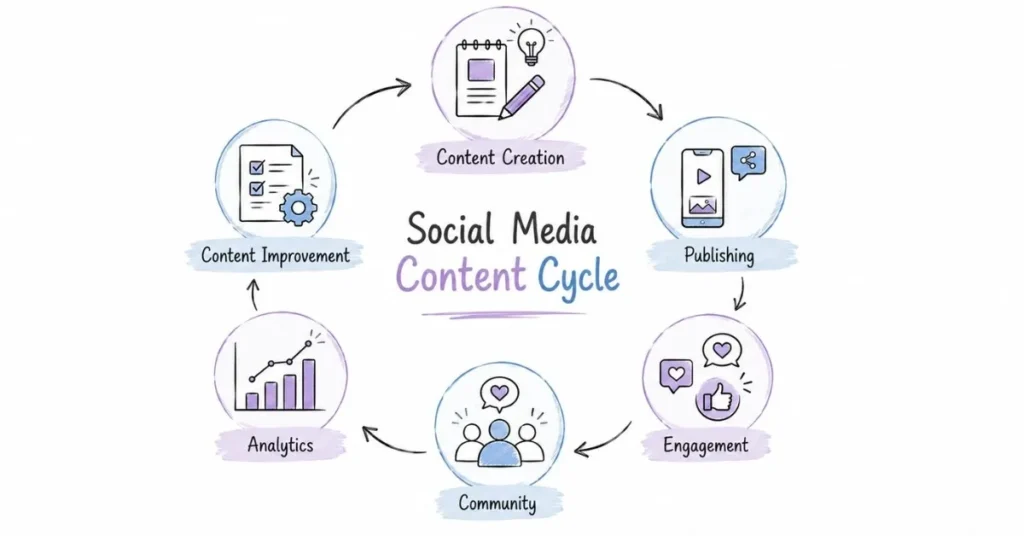
You’re not just posting pretty pictures on Instagram. You’re building a brand, engaging communities, creating content that stops people from scrolling, and ultimately driving sales.
The misconception vs. reality:
People think: “Social media manager just posts photos and replies to comments. Easy job.”
Reality: You’re a content strategist, copywriter, customer service rep, community manager, trend analyst, and influencer coordinator all rolled into one.
A typical day for Kavya, Social Media Manager at a beauty D2C brand in Mumbai:
A typical day for Kavya, Social Media Manager at a beauty D2C brand in Mumbai:
9:00 AM: Check all platforms and respond to overnight comments/DMs
- Instagram: 45 comments, 28 DMs
- Facebook: 22 comments
- Twitter: 12 mentions
- Some are questions (“Is this suitable for oily skin?”), some are complaints (delivery delay), some are praise
10:30 AM: Content planning meeting with team
- Planning next week’s content calendar
- Brainstorming Holi campaign ideas
- Discussing influencer collaboration for new product launch
12:00 PM: Create content
- Write captions for upcoming posts (Instagram post, carousel, reel, story)
- Coordinate with graphic designer for visuals
- Script for Instagram Reel featuring product tutorial
2:30 PM: Schedule posts using Later/Buffer tool for optimal times
3:30 PM: Influencer outreach and coordination
- Reach out to micro-influencers (10K-50K followers) for collaborations
- Send product samples
- Review content created by influencers, provide feedback
5:00 PM: Analyze performance
- Which posts got highest engagement?
- What content led to website clicks?
- Are our Instagram Stories converting?
- Prepare weekly analytics report
6:30 PM: Community engagement
- Respond to comments, create conversations
- Share user-generated content (customers posting about our products)
- Engage with relevant hashtags and communities
Skills you need:
Creative skills:
- Copywriting: Writing engaging captions that make people stop scrolling
- Visual sense: Understanding what makes content visually appealing (even if you’re not the designer)
- Video editing basics: Creating Instagram Reels, YouTube Shorts (using apps like CapCut, InShot)
- Storytelling: Weaving brand narrative through content
Strategic skills:
- Platform understanding: Instagram vs. Facebook vs. Twitter vs. LinkedIn each platform has different audiences and content styles
- Trend awareness: Staying updated with viral trends, memes, audio tracks
- Analytics: Understanding metrics (engagement rate, reach, impressions, click-through rate)
- Community building: Not just broadcasting, but creating two-way conversations
Technical skills:
- Social media management tools: Hootsuite, Buffer, Later for scheduling
- Basic design tools: Canva for quick graphics
- Instagram/Facebook Business Manager: Understanding insights, running paid promotions
- Hashtag research: Finding relevant, trending hashtags
Indian market nuances:
Regional festivals are content goldmines:
- Diwali, Eid, Christmas (pan-India festivals)
- Regional festivals: Onam, Pongal, Baisakhi, Durga Puja, Ganesh Chaturthi
- Creating culturally relevant content for each increases engagement
Language matters:
Mixing English with Hindi (Hinglish) often gets better engagement than pure English. “This lipstick shade is literally 🔥 Ekdum perfect for weddings!” resonates with young Indian audience.
WhatsApp Status marketing:
Unique to India many brands maintain WhatsApp broadcast lists and share updates via WhatsApp Status. Understanding this channel is valuable.
Meme culture:
Indian meme culture is huge. Brands that participate authentically (not forced) build stronger connections with Gen Z audience.
Salary expectations:
- Entry level – Social Media Executive (0-2 years): ₹2.5-5 LPA
- Mid level – Social Media Manager (3-5 years): ₹6-12 LPA
- Senior level – Head of Social Media (6+ years): ₹13-25 LPA
- Freelance social media manager: ₹20,000-1 lakh per month per brand
Real success story:
Arjun from Lucknow was working a boring data entry job at ₹2.5 LPA. He was active on Instagram, creating memes and funny content as a hobby. His personal account grew to 25K followers.
He reached out to 50 small D2C brands offering social media management services at ₹15,000/month. Got 3 clients initially. Within a year, he quit his job, was managing 8 brands at ₹30,000-50,000/month each, earning ₹3 lakhs monthly.
His key? “I understood meme culture and trends better than most brands. I made their social media feel human, not corporate.”
How to break in:
- Build your own personal brand: Grow your own Instagram/LinkedIn. This proves you understand social media.
- Offer free work initially: Manage social media for a small local business for 1-2 months free. Build portfolio.
- Create mock campaigns: Choose existing brands, create sample content calendars, show what you’d do differently.
- Stay updated: Follow brands doing social media well (Zomato, Swiggy, Duolingo, Notion). Understand why their content works.
- Learn the tools: Canva, Later/Buffer, basic video editing apps.
Content types for e-commerce social media:
- Product showcasing: Beautiful product photography, lifestyle shots
- Educational content: “How to use,” “Benefits of,” tutorials
- User-generated content: Customers posting about your products
- Behind-the-scenes: Making of products, team culture, office life
- Testimonials and reviews: Social proof builds trust
- Interactive content: Polls, quizzes, “This or That,” Q&A sessions
- Memes and trending content: Participating in viral trends
- Sales and offers: Announcement of discounts, flash sales
Email Marketing Specialist: The Underrated Revenue Driver
What you actually do:
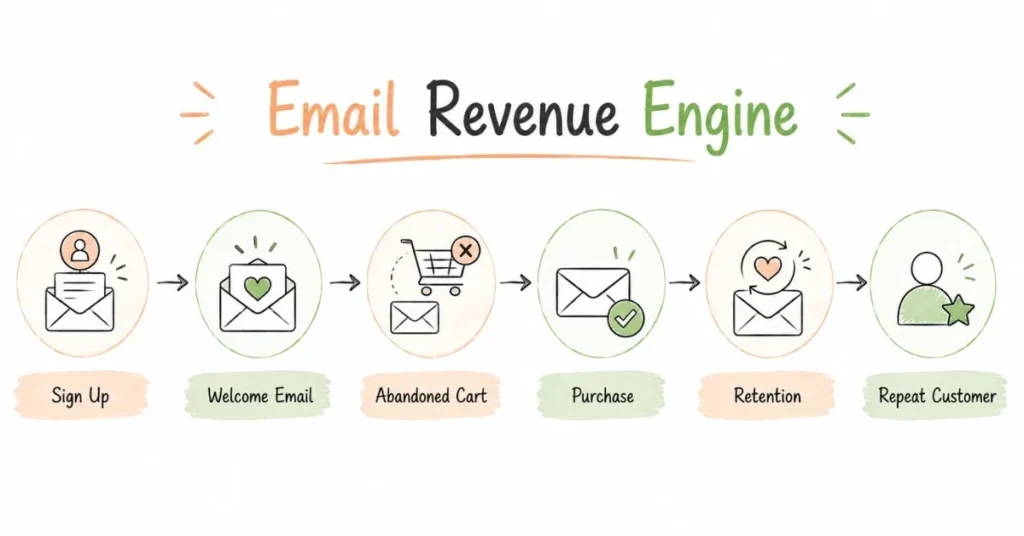
Email marketing might sound old-school in the age of Instagram, but here’s a secret: email consistently delivers the highest ROI among all digital marketing channels. For every ₹1 spent, email marketing returns ₹30-40 on average.
You’re sending the right message to the right person at the right time automated, personalized, and conversion-focused.
The email marketing ecosystem in e-commerce:
Welcome series:
Someone signs up on your website. They immediately receive:
- Email 1 (Immediate): Welcome email with 10% discount code
- Email 2 (Day 2): Brand story, what makes you different
- Email 3 (Day 5): Best-selling products, social proof
Abandoned cart recovery:
Someone adds products to cart but doesn’t buy. You send:
- Email 1 (1 hour later): “You forgot something in your cart!”
- Email 2 (24 hours later): “Still thinking? Here’s 10% off to help you decide”
- Email 3 (48 hours later): “Last chance! Items in your cart are selling fast”
This single sequence can recover 10-15% of abandoned carts, directly adding to revenue.
Post-purchase nurturing:
- Order confirmation
- Shipping updates
- Delivery confirmation
- Review request (5 days after delivery)
- Replenishment reminder (for products that run out like skincare, supplements)
- Cross-sell/upsell suggestions based on purchase
Segmentation and personalization:
Not everyone gets the same emails. You segment:
- New customers vs. loyal customers
- High spenders vs. budget shoppers
- Interested in Category A vs. Category B
- Active in last 30 days vs. inactive for 60+ days
A typical day for Anjali, Email Marketing Specialist at a supplements brand in Pune:
9:30 AM: Check yesterday’s campaign performance
- Welcome series: 45% open rate, 12% click rate (good!)
- Promotional email: 22% open rate, 3% click rate (subject line wasn’t compelling enough)
- Cart abandonment: Recovered 8 orders totaling ₹42,000 (excellent ROI)
11:00 AM: A/B testing setup
Testing two subject lines for upcoming sale announcement:
- Version A: “48-Hour Flash Sale: Up to 50% Off 🎉”
- Version B: “Priya, Your Exclusive Sale Access Starts Now”
(Personalized subject lines often perform better)
1:00 PM: Build new automated flow
Creating post-purchase flow for first-time customers:
- Day 1: Thank you + How to use product
- Day 7: “How’s your experience?” + FAQ link
- Day 14: Request review
- Day 30: Suggest complementary products
3:00 PM: List cleaning and management
- Remove inactive subscribers (not opened in 180 days)
- Re-engagement campaign for those inactive 90-180 days
- Segment new list based on recent purchase behavior
4:30 PM: Content creation
- Write copy for next week’s promotional campaign
- Work with designer on email template design
- Ensure mobile responsiveness (70% opens happen on mobile)
Skills you need:
Technical skills:
- ESP (Email Service Providers): Mailchimp, Klaviyo, SendinBlue, HubSpot
- Automation workflows: Setting up triggered email sequences
- Segmentation logic: Creating customer segments based on behavior
- A/B testing: Testing different elements to improve performance
- Analytics: Understanding open rates, click rates, conversion rates, deliverability
Creative skills:
- Copywriting: Subject lines that get opens, body copy that gets clicks
- Design sense: Email layout and visual hierarchy
- Personalization strategy: Making emails feel individual, not mass-broadcast
Strategic skills:
- Customer journey mapping: Understanding touchpoints where email adds value
- List growth strategies: Growing subscriber list organically
- Deliverability management: Ensuring emails land in inbox, not spam
ROI thinking: Every email should drive a business objective
Indian market considerations:
Mobile-first design:
Indian users overwhelmingly check emails on phones. Your email must look good on small screens first.
Festival calendar awareness:
Email campaigns around Diwali, Raksha Bandhan, Valentine’s Day, etc. need to be planned months in advance.
COD emphasis in emails:
For tier 2/3 city audience, mentioning Cash on Delivery availability in emails increases conversion.
Regional language experiments:
Some brands send emails in Hindi, Tamil, etc. to regional audiences with significantly better results.
Salary expectations:
- Entry level (0-2 years): ₹3-5 LPA
- Mid level (3-5 years): ₹6-13 LPA
- Senior level (6+ years): ₹14-22 LPA
- Freelance email marketing specialist: ₹25,000-1 lakh per month per brand
Real success story:
Divya was a content writer at ₹4 LPA. She noticed her company’s email marketing was weak generic, irregular, no automation. She volunteered to help the marketing team with emails.
She set up proper automation flows using Mailchimp, improved copy, implemented A/B testing. Email revenue contribution went from 8% to 28% of total sales in 6 months.
She leveraged this success to get a role as Email Marketing Specialist at ₹7 LPA at a bigger D2C brand. Today, 4 years later, she leads email and retention marketing at ₹16 LPA.
Her lesson? “Email is unsexy. Everyone wants to do Instagram. That’s exactly why becoming email expert made me valuable less competition.”
How to break in:
- Learn a platform: Mailchimp has a free tier. Create account, build sample campaigns, learn automation.
- Certifications: HubSpot Email Marketing Certification (free), Mailchimp Academy
- Analyze competitors: Subscribe to 10 e-commerce brands’ emails. Study their strategies what works, what doesn’t.
- Create portfolio: Build sample email campaigns for imaginary or real brands, showcase your copywriting and strategy
- Offer services: Many small businesses don’t do email marketing. Offer to set it up for ₹10,000-15,000 monthly.
Tools to master:
- Mailchimp or Klaviyo (industry standards)
- Canva (for email design)
- Google Analytics (tracking email traffic)
- A/B testing frameworks
- List cleaning tools
Key metrics to understand:
- Open rate: % of people who open your email (industry average: 15-25%)
- Click-through rate: % of people who click links (industry average: 2-5%)
- Conversion rate: % of people who take desired action (buy, sign up, etc.)
- Bounce rate: % of emails that don’t get delivered (should be <2%)
- Unsubscribe rate: % of people who opt out (should be <0.5%)
- Revenue per email: Total revenue generated / emails sent
Content Marketing Specialist: The Storytelling Strategist
What you actually do:
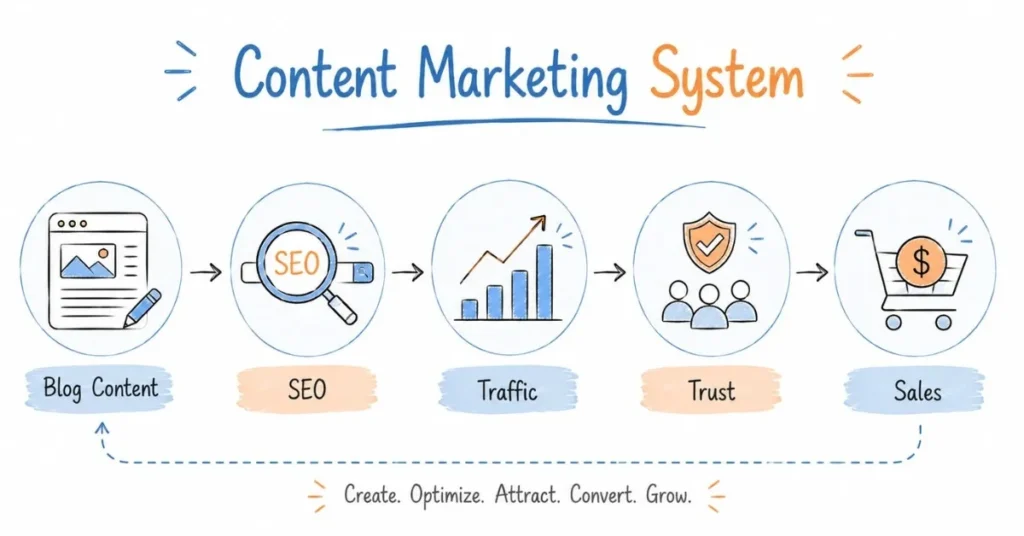
You’re not just writing blog posts. You’re creating content that educates, engages, and eventually converts visitors into customers. Content marketing is the long-term strategy that builds organic traffic, establishes brand authority, and creates loyal communities.
Content marketing in e-commerce context:
Unlike B2B where content marketing is about whitepapers and case studies, e-commerce content marketing focuses on:
Educational content that supports purchasing decisions:
- Buying guides (“How to choose the right running shoes for your foot type”)
- Comparison articles (“Memory foam vs. Latex mattresses: Complete guide”)
- Use case content (“10 ways to style a white shirt for different occasions”)
SEO-driven content:
Content that ranks on Google and brings organic traffic that converts.
Lifestyle and aspirational content:
Content that makes customers want the lifestyle your products enable, not just the products.
A typical week for Siddharth, Content Marketing Specialist at a home decor e-commerce brand in Hyderabad:
Monday:
- Content planning meeting: Upcoming quarter content calendar
- Keyword research: What are people searching related to home decor?
- “Small bedroom design ideas” 18,000 monthly searches
- “Wall decoration ideas for living room” 12,000 monthly searches
- Plan 8-10 blog posts around these themes
Tuesday-Thursday:
- Writing content: 2-3 blog posts per week (1,500-2,500 words each)
- Working with product team to understand new launches
- Coordinating with designers for blog images
- Creating content briefs for freelance writers
- Editing and optimizing content
Friday:
- Performance analysis: Which blog posts are driving traffic and sales?
- “Balcony Garden Ideas for Indian Homes” is ranking #3 on Google, driving 800 visitors/month, converting at 2% = 16 customers monthly from one blog post
- Update and refresh old content that’s losing rankings
- Plan next week’s content
Skills you need:
Writing skills:
- SEO writing: Writing naturally while incorporating keywords
- Persuasive writing: Subtly guiding readers toward purchasing decisions
- Clarity: Explaining complex things simply (Indians prefer layman language)
- Tone management: Matching brand voice consistently
Strategic skills:
- Keyword research: Finding topics people search for
- Content planning: Creating editorial calendars aligned with business goals
- Conversion optimization: How to guide readers from blog to product pages
- Analytics: Understanding which content drives traffic and sales
Technical skills:
- WordPress or CMS platforms: Publishing and optimizing content
- Basic SEO: On-page optimization, internal linking, meta descriptions
- Google Analytics & Search Console: Tracking content performance
- Basic HTML: Helps with formatting and troubleshooting
E-commerce specific content strategy:
Product-led content:
Your content naturally leads to your products. If you sell fitness equipment and write “Home Workout Routines for Beginners,” you naturally mention and link to dumbbells, yoga mats, resistance bands you sell.
Bottom-of-funnel content:
People searching “best protein powder for muscle gain” are ready to buy. Content targeting these terms converts higher.
Top-of-funnel content:
People searching “how to lose weight at home” aren’t ready to buy yet, but you’re introducing them to your brand early.
Indian market considerations:
Regional content needs:
“South Indian home design ideas” vs. “North Indian home design ideas” same product category, different aesthetics. Creating region-specific content resonates better.
Festival-specific content:
Content around “Diwali decoration ideas,” “Raksha Bandhan gifts,” etc. gets massive seasonal traffic.
Budget-conscious angle:
Indians are value-conscious. Content with angles like “affordable,” “budget-friendly,” “best value for money” performs well.
Hinglish and bilingual content:
Some brands are experimenting with Hindi content or Hinglish (Hindi-English mix) for tier 2/3 audience.
Salary expectations:
- Entry level – Content Writer (0-2 years): ₹2.5-5 LPA
- Mid level – Content Marketing Specialist (3-5 years): ₹6-12 LPA
- Senior level – Content Marketing Manager (6+ years): ₹13-22 LPA
Freelance content writer: ₹1-5 per word, or ₹5,000-25,000 per article depending on complexity
Real success story:
Radhika from Chennai was an English literature graduate struggling to find direction. She started a personal blog about sustainable living, wrote consistently for a year. Her blog got decent traffic (5,000 visitors/month).
She applied to a sustainable products e-commerce company, showing her blog as portfolio. Got hired as Content Writer at ₹3.8 LPA. Within 3 years, she grew the company’s blog from 0 to 50,000 monthly visitors, directly contributing to 15% of overall sales.
Today she’s Content Marketing Manager at ₹11 LPA and freelances on weekends, earning additional ₹30,000-40,000 monthly.
Her advice? “Content marketing is a long game. Most people expect results in 2 months and quit. Those who persist for 12-18 months see compounding returns.”
How to break in:
- Start your own blog: Best way to learn content marketing is doing it. Write 20-30 blog posts, apply SEO, track traffic.
- Guest posting: Write for established websites, build byline and credibility
- Content samples: Create 3-5 stellar sample pieces targeting different content types (buying guide, how-to, comparison)
- Learn SEO basics: Content marketing without SEO is like fishing without bait
- Understand analytics: Learn Google Analytics and Search Console to show data literacy
Content types for e-commerce:
- Buying guides: Comprehensive guides helping purchase decisions
- How-to tutorials: Teaching customers to use products effectively
- Comparison articles: Product A vs. Product B
- Listicles: “10 Best Yoga Mats for Beginners”
- Trend articles: “Top Home Decor Trends for 2026”
- User stories/case studies: Real customers and their experiences
- FAQ content: Answering common questions
Tools to master:
- WordPress or similar CMS
- Grammarly (writing assistant)
- Hemingway Editor (readability)
- Google Keyword Planner, Ubersuggest (keyword research)
- Google Analytics & Search Console
- Canva (for creating blog images)
- Surfer SEO or Clearscope (content optimization tools)
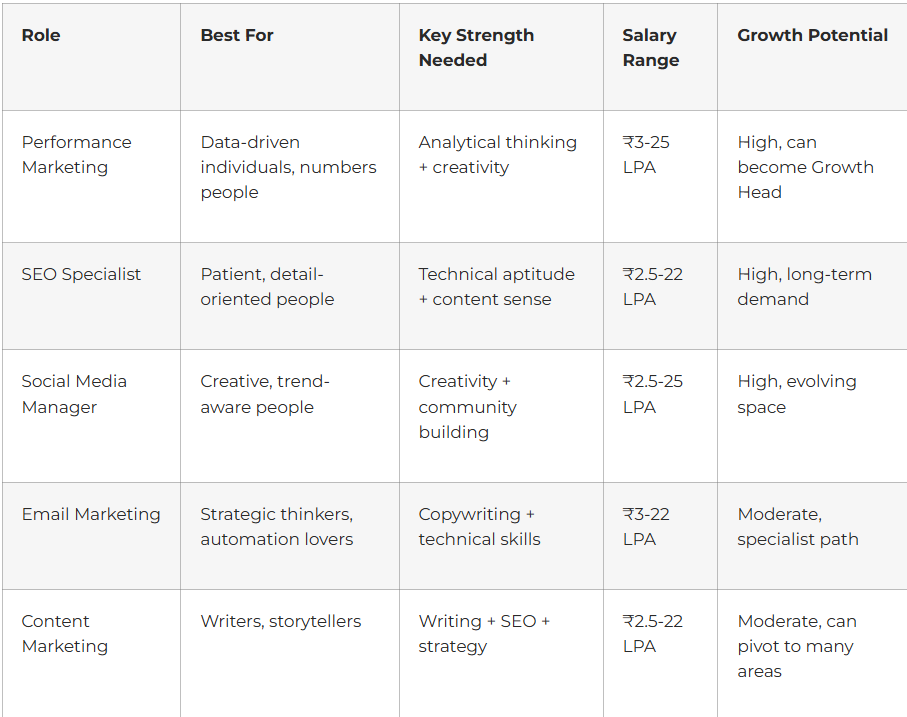
Marketing Roles Comparison: Which Path is Right for You?
Can you do multiple roles?
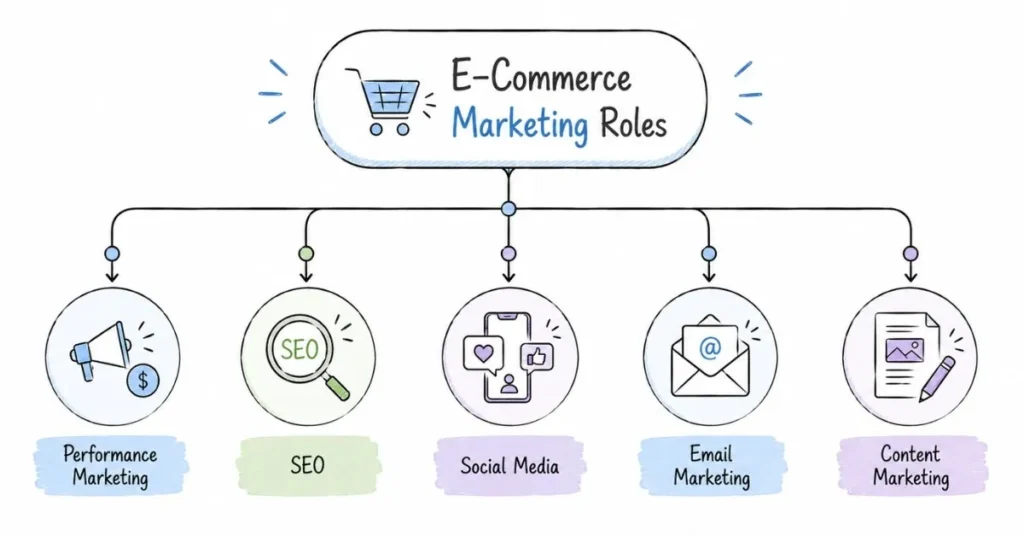
Early career: Many companies (especially startups) need “Digital Marketing Generalist” who handles multiple areas. You might do some SEO, some content, some social media.
Mid career: Specialization becomes valuable. Pick 1-2 areas to go deep.
Senior career: You oversee everything but have specialists reporting to you.
The T-Shaped Marketer: Best Career Strategy
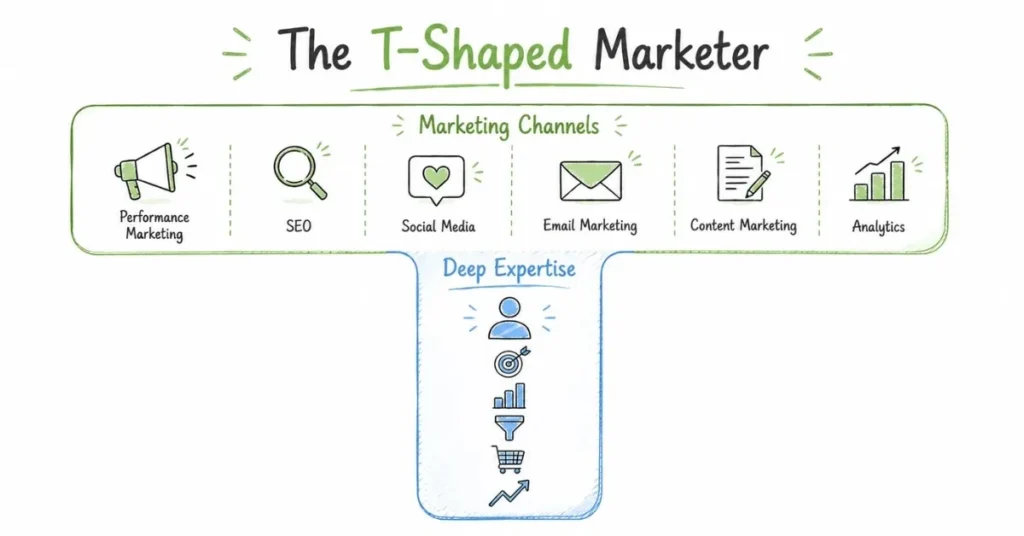
The “T” concept:
- Horizontal bar (top of T): Broad understanding of all marketing channels
- Vertical bar (stem of T): Deep expertise in 1-2 specific channels
Example:
You’re expert in Performance Marketing (deep expertise), but you also understand SEO, social media, email, content (broad understanding). This makes you incredibly valuable because you can:
- Have intelligent conversations with specialists in other areas
- Understand how different channels support each other
- Make strategic decisions about channel mix and budget allocation
Building your T:
Years 1-2: Be a generalist. Try everything. Discover what you enjoy and what you’re naturally good at.
Years 3-5: Specialize. Go deep in 1-2 areas. Become known for that expertise.
Years 6+: Broaden again. Take on leadership roles where you manage multiple channels.
Final Thoughts: The Marketing Career You Can Build
Digital marketing in e-commerce offers something rare in careers: quick feedback on your work. You’ll know within days or weeks if your strategies are working. This accelerates learning faster than most careers.
The barrier to entry is low you don’t need fancy degrees or expensive courses. You need curiosity, willingness to learn, comfort with data, and persistence.
Indian e-commerce is growing at 25-30% annually. Every growing brand needs marketers. The opportunities are massive and will continue for the next decade at least.
Pick one area from this guide. Spend the next 90 days going deep. Document your learnings. Build a portfolio. Start applying. Six months from now, you could have a digital marketing career that didn’t exist six months ago.
The best time to start? Right now.