
Art Director Career Guide: Creative Leadership in India
Table of Contents
Introduction: From Designer to Decision-Maker
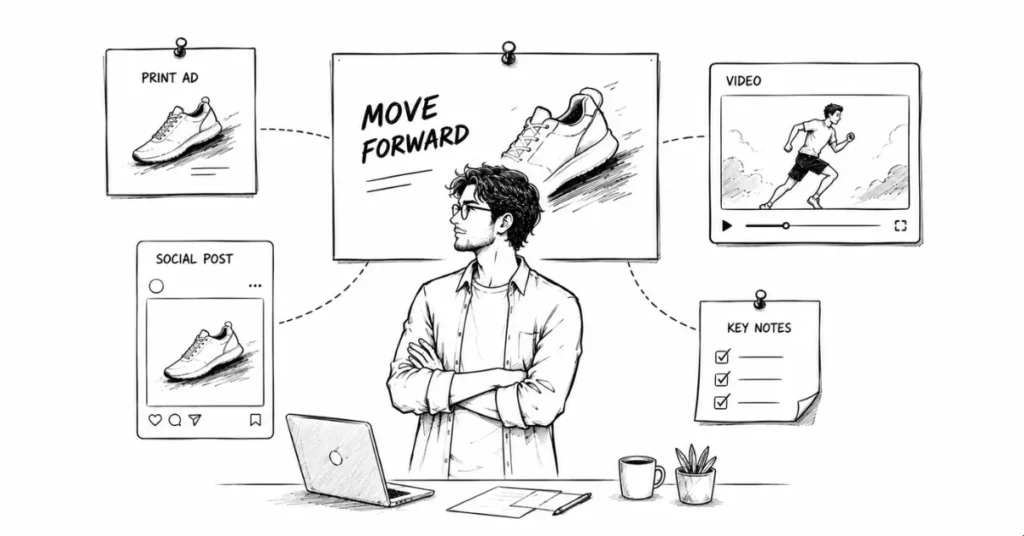
Art direction is the stage where you stop just “making designs” and start shaping the entire visual vision of brands, campaigns, and products. Instead of only handling one poster or one screen, you decide how the full campaign, series, or brand should look and feel across all platforms.
If you’ve already been designing for a few years and feel excited by big-picture thinking, mentoring juniors, and presenting ideas to clients or management, art direction and creative leadership might be your natural next step.
In India, this path can lead to roles like Art Director, Senior Art Director, Associate Creative Director, and Creative Director, especially in advertising agencies, design studios, product companies, and media houses. Typical total compensation for experienced art directors and creative directors often sits in the mid-to-high teens in lakhs annually, with senior creative leadership averaging around the high-teens to low-twenties and going higher in top agencies and large brands.
What Does an Art Director Actually Do?
Art direction roles vary slightly by industry (ads vs product vs media), but core responsibilities are similar.
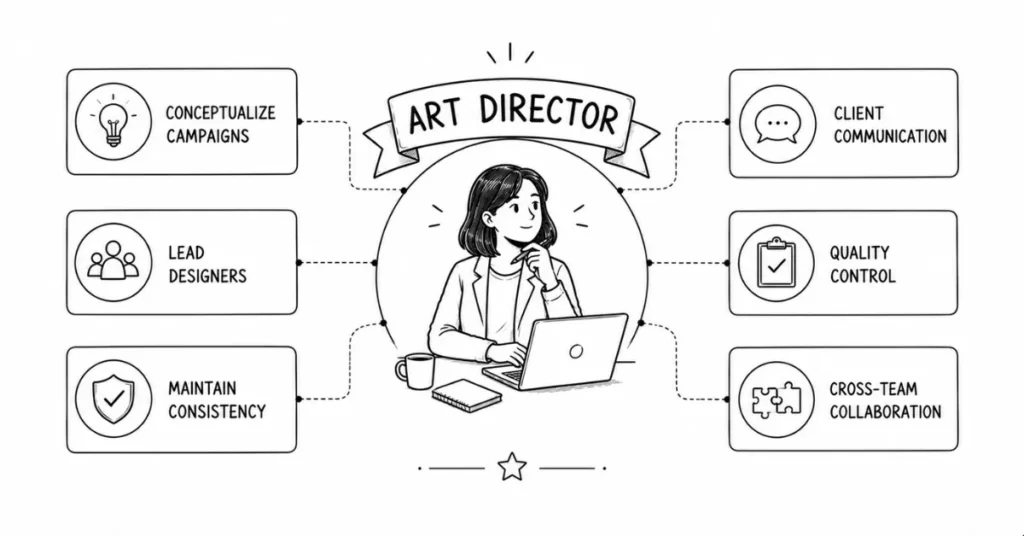
Key Responsibilities
- Conceptualizing Campaigns and Visual Directions
You translate business and marketing goals into strong visual ideas for campaigns, brands, and products. You decide the overall style, tone, and visual language. - Leading and Guiding Designers
You supervise graphic designers, illustrators, motion artists, photographers, and video teams. You brief them, give feedback, and help them align with the concept. - Maintaining Visual Consistency
You ensure all outputs—social media, print, OOH, web, app, video—look like they belong to the same brand and tell the same story. - Client and Stakeholder Communication
You present concepts, defend creative choices, handle feedback, and translate “client language” into clear creative action points. - Quality Control Under Deadlines
You review work before it goes out, catch mistakes, and make sure it meets both creative and brand standards—often under tight timelines. - Collaboration with Other Teams
You work with copywriters, marketing teams, product managers, developers, and sales to ensure creative is not just beautiful but effective.
Typical Work Environments
- Advertising agencies and creative agencies
- Digital marketing agencies
- In-house brand creative teams (startups, D2C brands, tech companies)
- Media, OTT, and entertainment houses
- Design and branding studios
Art Director vs Creative Director vs Senior Designer
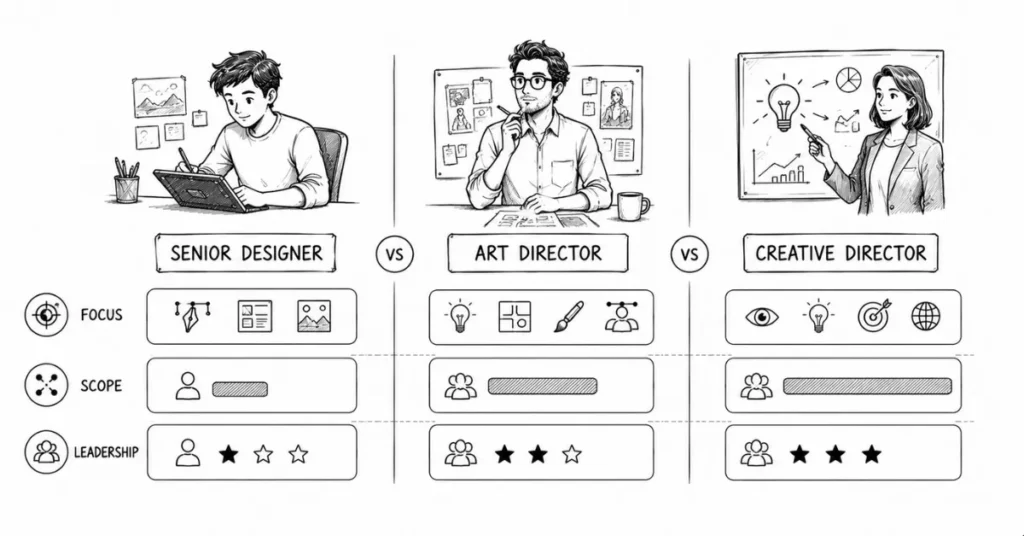
Senior Designer
- Focus: Execution at a high level
- Owns important individual projects
- Suggests ideas and design improvements
- May mentor juniors informally
- Still spends most time designing hands-on
Art Director
- Focus: Visual direction of campaigns/projects
- Leads a small-to-mid sized design team
- Turns strategy into visual approaches and concepts
- Balances hands-on design with supervision
- Acts as quality gatekeeper for design outputs
Creative Director
- Focus: Overall creative vision (visual + copy + concept)
- Oversees art directors, copywriters, content, motion, and more
- Focuses more on ideas, strategy, pitches, and leadership
- Has a strong say in brand positioning and long-term creative direction
- Often part of senior leadership, working with CXOs
You typically move from Designer → Senior Designer → Art Director → Associate Creative Director → Creative Director over several years of experience and consistent performance.
Core Skills Needed for Art Direction and Creative Leadership
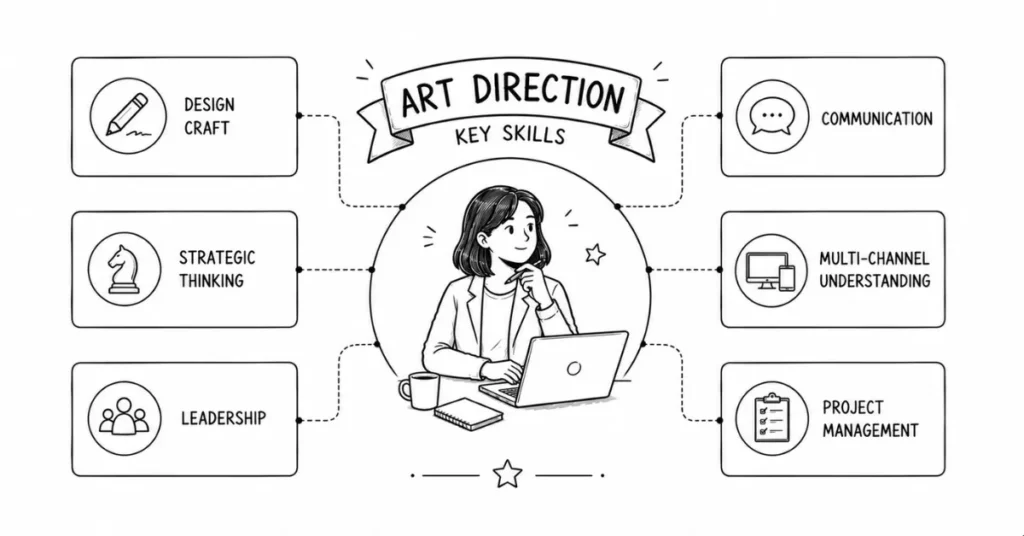
1. Deep Design Craft (Your Foundation)
You can’t lead what you don’t understand. Strong art directors have:
- Solid command of typography, color, layout, and composition
- Understanding of branding, campaign thinking, and user-centric design
- Exposure to multiple mediums: print, digital, social, video, sometimes UI/UX
- Ability to spot both subtle mistakes and big conceptual gaps quickly
You don’t have to be the “best designer” in every tool, but your taste, judgement, and standards must be very strong.
2. Conceptual and Strategic Thinking
Art direction is not just about “making things look nice.”
You must be able to answer:
- What’s the main message here?
- Who exactly are we talking to, and what do they care about?
- What’s the single-minded idea behind this campaign or visual?
- How do we differentiate this brand from its competitors visually?
You’re expected to connect business goals (more signups, higher sales, better recall) to creative decisions (this style, this color, this layout, this medium).
3. Leadership and People Skills
You’re no longer just responsible for your own output. You must:
- Brief clearly: Explain expectations, references, and constraints to your team.
- Give constructive feedback: Not just “this is bad/good” but “this doesn’t fit the idea because… let’s try…”.
- Mentor juniors: Help them grow, share resources, and guide their career path.
- Resolve conflicts: Smoothly handle disagreements within creative team or with non-creative stakeholders.
Good art directors create a safe but high-standard environment where designers feel challenged yet supported.
4. Communication and Presentation Skills
You spend more time talking than you might expect:
- Presenting ideas to clients, marketing teams, founders, and senior management
- Explaining why a concept works in simple, non-jargon language
- Defending good creative ideas against unnecessary changes
- Translating vague feedback (“make it pop”) into specific, actionable instructions
You are effectively a bridge between the creative world and the business world.
5. Multi-Channel Understanding
Modern art direction must work across:
- Print (posters, brochures, OOH)
- Digital (websites, apps, banners)
- Social media (static + video)
- Motion graphics and video content
- Sometimes, environmental and experiential design
You don’t need to produce everything yourself, but you should understand the possibilities and limitations of each medium well enough to guide specialists.
6. Time, Scope, and Budget Management
In Indian agencies and startup environments, you’ll often juggle:
- Multiple campaigns, clients, and product releases
- Tight timelines and last-minute changes
- Limited budgets and resources
You must prioritize effectively, allocate work smartly, and decide where to push for excellence vs where “good and on time” is better than “perfect and late.”
Typical Career Path and Experience Timeline
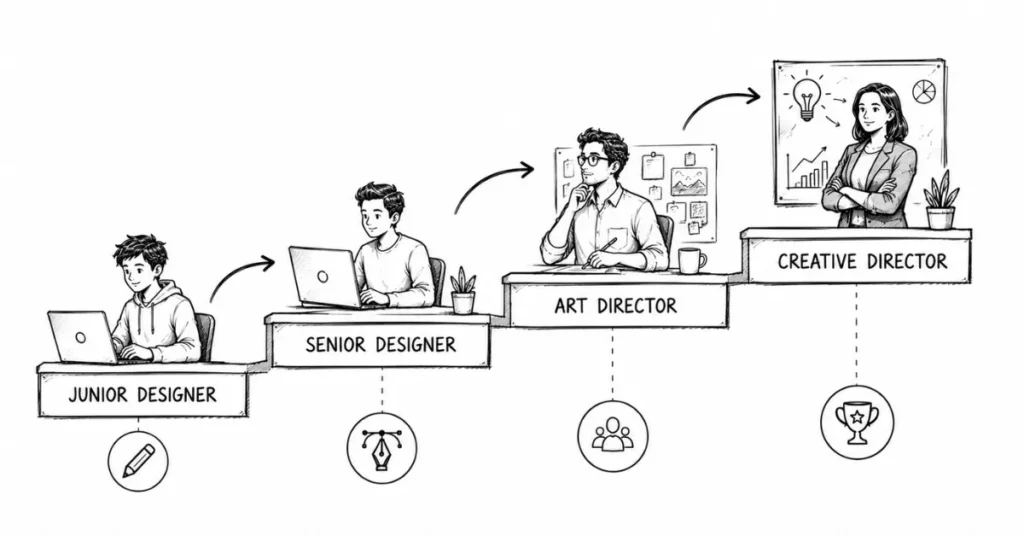
This varies by person and company, but a rough pattern:
- 0–2 years: Junior Designer
- 2–5 years: Designer / Senior Designer
- 5–8 years: Art Director / Senior Art Director
- 8–12+ years: Associate Creative Director / Creative Director / Head of Design
Actual progression depends on:
- Portfolio strength and variety
- Ability to handle responsibility and client-facing roles
- Leadership and team impact
- Business results from your campaigns or design work
Responsibilities of an Art Director in Different Contexts
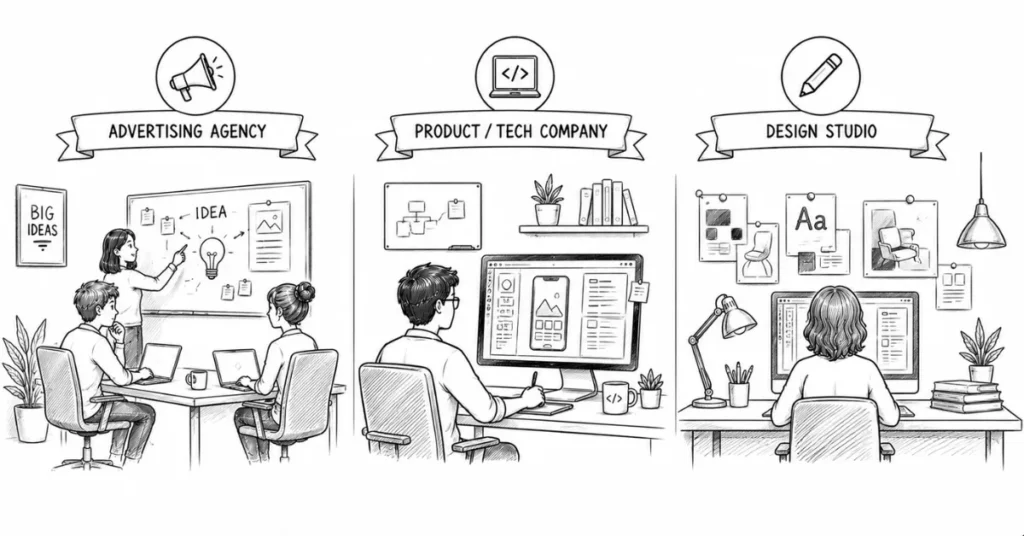
In an Advertising Agency
- Leading visual direction for ad campaigns (print, digital, OOH, TVC storyboards)
- Collaborating closely with copywriters (art + copy teams)
- Working on pitches, brand campaigns, and seasonal promotions
- Overseeing photography, illustration, and video shoots creatively
- Presenting ideas to clients and managing their expectations
In a Product/Tech Company
- Setting visual direction for product UI, website, and marketing campaigns
- Ensuring design consistency across app, website, email, and ads
- Leading UI/UX designers, brand designers, and content design teams
- Working with product managers and growth teams to align visuals with metrics
- Influencing roadmap for design improvements and experimentation
In a Design/Branding Studio
- Leading brand identity projects (logos, visual systems, guidelines)
- Shaping creative strategy for multiple brands
- Giving direction to illustrators, motion designers, and web designers
- Ensuring each brand has a distinct and consistent visual voice
- Pitching and presenting to new and existing clients
Salary Expectations for Art Directors and Creative Leaders in India
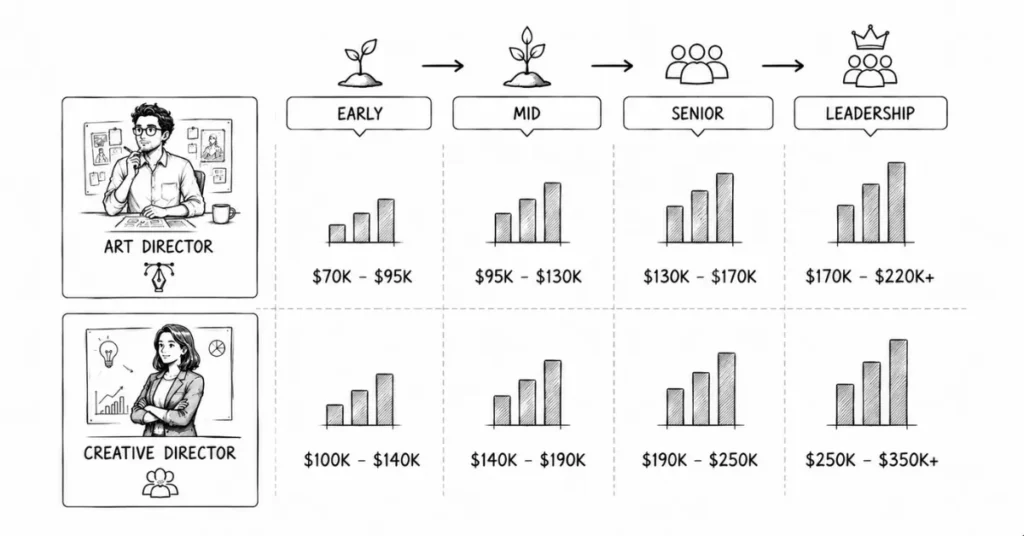
(Actual numbers vary by city, company size, and your portfolio strength; these are broad ranges.)
Art Director (Mid-Level Leadership)
- Average range: roughly ₹10–18 LPA in larger cities and established companies
- Smaller agencies or startups may offer ₹7–12 LPA with growth potential
- Freelance/consulting art directors can earn significantly more per project, depending on client base and reputation
Creative Director / Head of Creative
- Average ranges usually end up noticeably higher than art directors, often in the mid-teens to low-twenties in lakhs annually in established organizations
- In top agencies, product companies, or large consumer brands, total compensation can be significantly higher, especially with bonuses and incentives
- Freelance creative directors and design consultants may charge premium retainers or per-project fees in the high five- to six-figure range per project.
How to Move from Designer to Art Director
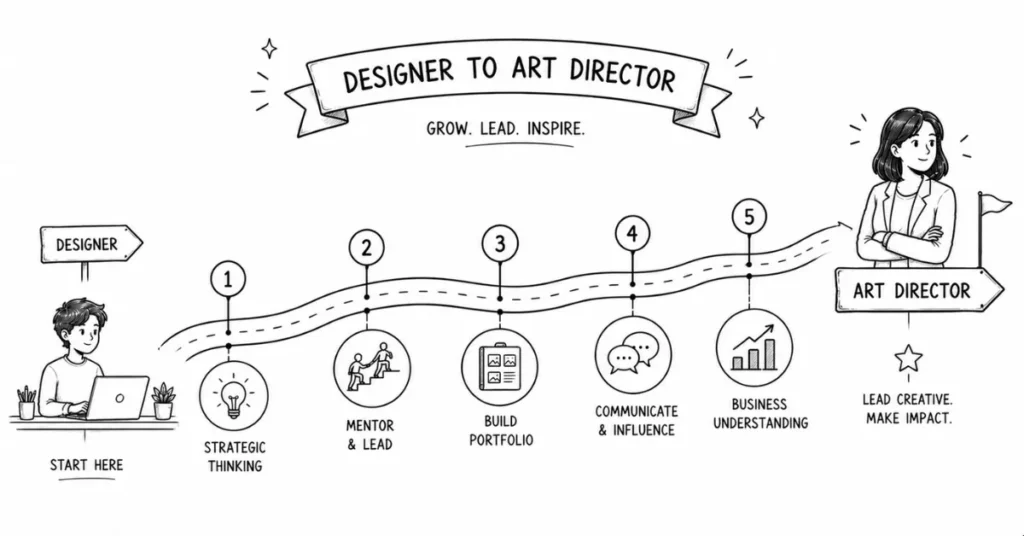
1. Start Thinking Beyond Your Task
Instead of just asking, “What should I design?” start asking:
- Why are we doing this campaign?
- What is the big idea behind all these assets?
- How do all the pieces fit together into one story?
- What impact should this have on the audience or metrics?
Show your seniors or managers that you understand the bigger picture and can think strategically—not only execute.
2. Take Initiative in Guiding Others
Even before you have the title:
- Offer to help juniors with feedback and guidance.
- Share inspiration decks or competitor research with the team.
- Propose improvements in visual systems, templates, or processes.
- Volunteer to organize internal critiques or design review sessions.
- Leadership is often recognized before it’s formalized in your designation.
3. Build a “Director-Level” Portfolio
A strong art director portfolio should show:
- Campaigns, not just individual pieces
- Before-and-after or large-scale redesign work
- Multi-channel consistency (print, digital, social, motion)
- Evidence of your role: what YOU decided, led, or changed
- Simple explanations of strategy, concept, and results
Think of each case study as: Problem → Concept → Execution → Impact.
4. Improve Communication and Presentation Skills
Practice:
- Presenting your work to non-designers (explain concepts simply)
- Writing concise but clear rationales for design decisions
- Handling critical feedback without defensiveness
- Negotiating changes (knowing when to push back vs when to adapt)
You can be the most talented designer in the room, but if you can’t communicate and lead, you’ll struggle to move into art direction.
5. Learn Basic Business and Marketing
You don’t need an MBA, but you should understand:
- Brand positioning and differentiation
- Target audience segmentation
- Basic marketing funnels (awareness, consideration, conversion, retention)
- Key metrics that matter (CTR, conversions, brand lift, etc.)
When you speak the same language as marketing and business teams, your seat at the table becomes stronger.
Common Challenges in Art Direction (Especially in India)
1. Managing Tight Deadlines and High Volume
Agencies and fast-growing startups often have:
- Frequent campaigns
- Multiple clients or internal stakeholders
- Limited time for each project
You must balance quality with speed and be realistic about where to push “great” vs where “good and on time” is enough.
2. Handling Client Feedback and “Taste”
You’ll often face:
- Vague feedback (“make it more attractive”)
- Conflicting opinions between stakeholders
- Requests that weaken the concept
Your job is to:
- Ask clarifying questions
- Translate vague feedback into specific actions
- Defend the core idea with logic and examples
- Offer options that respect both creative vision and client comfort
3. Switching Between Multiple Styles
In India, you might handle:
- A bold youth brand,
- A serious BFSI brand,
- A traditional FMCG brand,
- And an ed-tech platform all in the same week.
You must adapt visually while still keeping your own judgement and standards.
4. Preventing Burnout
Creative leadership can be demanding:
- Long hours during campaign crunch time
- Responsibility for team performance
- Handling both upper management and your team’s needs
You need self-management: boundaries, delegation, prioritization, and regular recharge routines.
Practical Steps to Grow into Art Direction
If You’re a Junior Designer (0–2 Years)
- Focus on becoming excellent at craft (one or two core areas: branding, digital, UI, etc.).
- Observe how seniors and managers make decisions and present work.
- Ask for small leadership responsibilities (owning a small project end-to-end).
If You’re a Mid-Level Designer (2–5 Years)
- Proactively take ownership of small campaigns or brand lines.
- Start mentoring interns or juniors.
- Request to join client calls and presentations.
- Build at least 3–5 case studies showing campaign-level thinking.
If You’re Already a Senior Designer (5+ Years)
- Have a conversation with your manager about moving into art direction.
- Highlight leadership behaviors you’re already practicing.
- Create a plan: what responsibilities you can gradually take over.
- Update your portfolio to showcase strategic and leadership impact.
Example: Turning a Project into an Art Director-Level Case Study
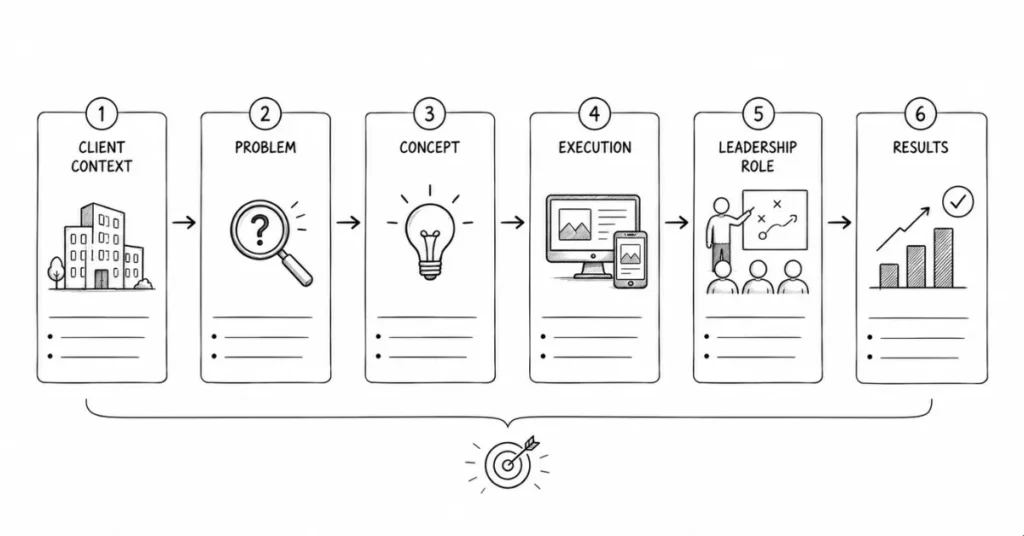
Instead of just showing 5 Instagram posts you designed, build a story:
- Client & Context: “D2C skincare brand targeting women 20–35 in urban India, wanting to launch a new vitamin C range.”
- Problem: “Low brand awareness and confusion between existing and new range.”
- Concept: “Glow with confidence – a bright, clean visual direction focusing on before/after clarity and trusted ingredients.”
- Execution:
- Updated color system and product photography direction.
- Designed social, website banners, and performance ad templates.
- Briefed motion designer for short video creatives.
- Updated color system and product photography direction.
- Leadership Role:
- “Led two designers and one motion artist, created master guidelines and templates, managed weekly reviews.”
- Results:
- If possible, add outcomes like “Improved CTR by X% on ads” or “Campaign extended beyond initial planned duration based on performance.”
- If possible, add outcomes like “Improved CTR by X% on ads” or “Campaign extended beyond initial planned duration based on performance.”
This shows art direction, not just production.
Action Plan: Moving Towards Art Direction
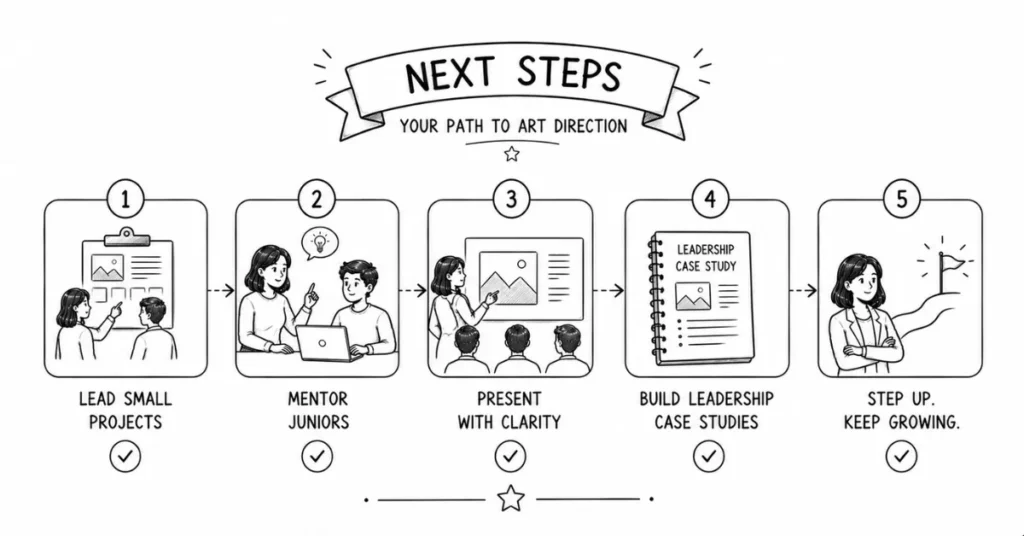
This Week
- Identify 2–3 projects in your past work where you already played a mini art director role (concept, guidance, multi-channel consistency).
- Start rewriting them as leadership-oriented case studies.
- Observe how your current leads or managers present work and handle feedback; note what works.
This Month
- Take responsibility for at least one small project from concept to execution (even internally).
- Offer structured feedback sessions for junior designers in your team.
- Read or watch material on creative leadership, not just design craft.
In the Next 6–12 Months
- Build a portfolio that clearly showcases: campaigns, systems, multi-channel work, and your role in leading them.
- Proactively ask for more ownership in projects and for opportunities to present to clients or stakeholders.
- Begin positioning yourself (internally and externally) as someone who can lead visual direction, not just execute tasks.
Final Thoughts
Art direction and creative leadership are natural growth paths for strong designers who love both creativity and collaboration. Instead of just designing the pieces, you design the whole puzzle: how it looks, how it works, and how people feel when they see it.
If you already enjoy mentoring, presenting, and thinking about the “why” behind visuals, you’re closer to this path than you think. Start aligning your portfolio, behavior, and communication to reflect leadership, and opportunities for titles like Art Director and Creative Director will follow.