
Social Media Content Strategy: Planning, Calendar & Campaign Execution
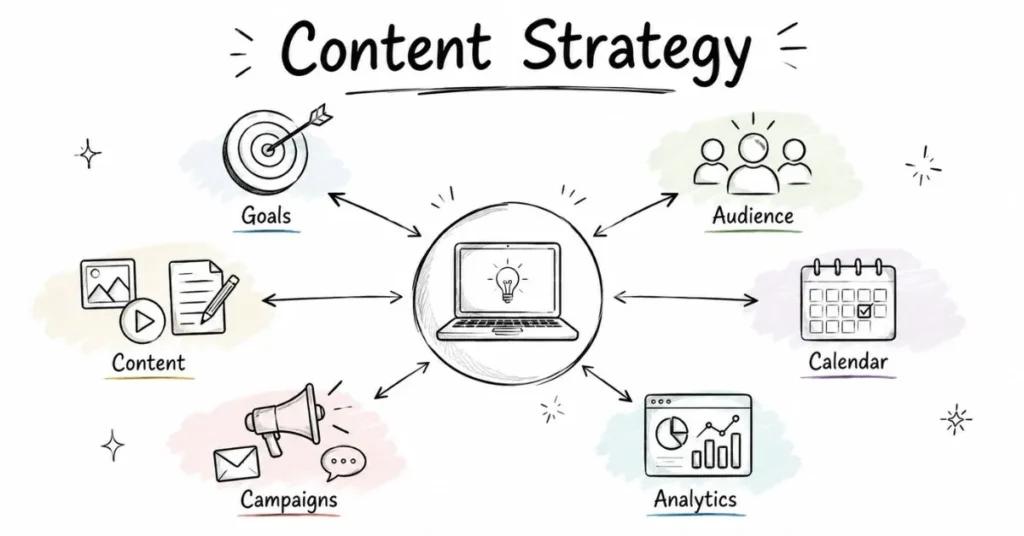
Table of Contents
Introduction: Why Strategy Separates Success from Struggle
Scroll through social media and you’ll notice something interesting some accounts with modest follower counts generate incredible engagement and business results, while others with large audiences struggle to maintain attention. The difference rarely comes down to luck, resources, or even content quality alone. More often, it’s strategic thinking that separates thriving accounts from struggling ones.
Content strategy is the foundational framework guiding what you create, when you publish, how everything connects to business objectives, and why audiences should care. Without strategy, social media management becomes an exhausting hamster wheel constantly creating content without clear direction, wondering why results remain inconsistent despite tremendous effort.
Professional social media managers, successful content creators, and effective marketing teams all operate from documented content strategies providing clarity, consistency, and measurable progress toward specific goals. Whether you’re managing your personal brand, running social media for a business, or building a content creator career, developing strategic thinking about content transforms your results.
This comprehensive guide walks through the complete content strategy process from defining objectives and understanding audiences, to developing content pillars and themes, creating practical editorial calendars, executing campaigns effectively, and measuring what’s working. You’ll learn proven frameworks Indian professionals use to build engaged communities, drive business results, and maintain consistency without burning out.
Foundation: Starting With Clear Objectives
Effective content strategy begins not with creative ideas but with crystal-clear objectives answering the fundamental question: What do we want to achieve through social media?
Vague vs. Specific Objectives:
Many accounts operate with vague aspirations like “increase brand awareness” or “grow our audience.” While directionally correct, these don’t provide enough specificity to guide day-to-day decisions or measure success. Instead, define SMART objectives Specific, Measurable, Achievable, Relevant, and Time-bound.
Examples of Strategic Objectives:
For businesses: Generate 200 qualified leads per month through social media content by Q2 2026. Increase website traffic from social channels by 150% over six months. Improve customer retention by 25% through community engagement on Instagram. Launch new product reaching 50,000 target audience members with 10% click-through rate.
For content creators: Reach 10,000 Instagram followers by June 2026 while maintaining 4%+ engagement rate. Generate ₹50,000 monthly income from content by December 2026. Publish 100 YouTube videos by year-end building to 100,000 subscribers. Establish thought leadership speaking at three industry conferences by Q4.
For social media professionals: Grow client’s LinkedIn following from 5,000 to 15,000 engaged professionals in finance industry within four months. Increase average engagement rate across all platforms from 2% to 5%. Achieve 500,000 monthly impressions for client’s brand across all social channels.
Notice how each objective includes specific numbers, clear timeframes, and measurable outcomes. This specificity guides content decisions when evaluating whether to create a particular post, you can ask “Does this advance our specific objectives?”
Aligning Social Objectives With Business Goals: For brands and agencies, social media objectives should connect directly to broader business goals. If the company needs to drive sales, social objectives should focus on traffic, leads, and conversions, not just vanity metrics like followers. If the business prioritizes customer retention, community building and customer engagement become paramount. If launching new products, awareness and education content takes priority.
This alignment ensures social media is viewed as a strategic business function rather than just “posting stuff online.”
Understanding Your Audience Deeply
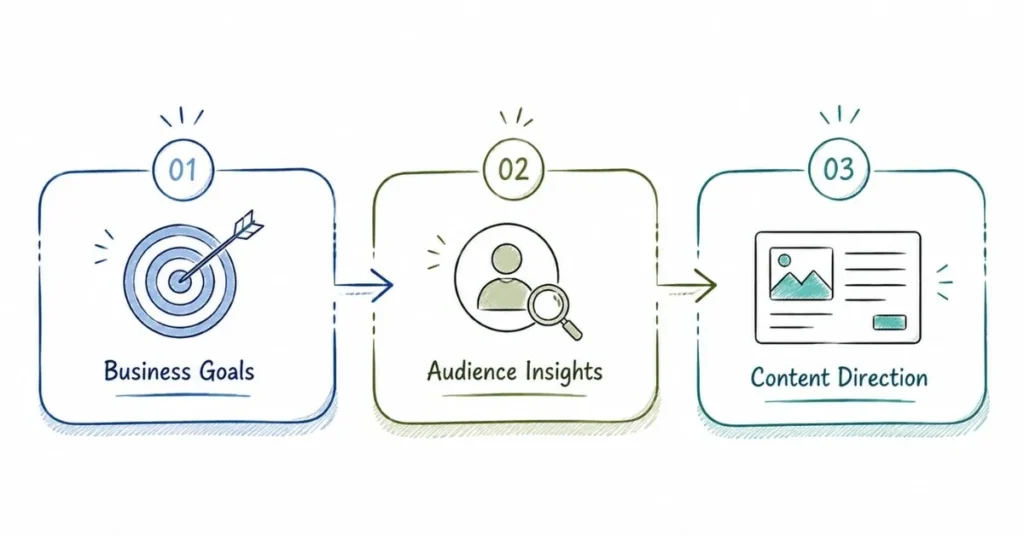
Content strategy without audience understanding is like throwing darts blindfolded you might occasionally hit something, but it’s mostly luck. Professional strategists invest significant effort understanding exactly who they’re creating for.
Creating Audience Personas:
Develop detailed profiles of your ideal audience members including demographic information (age, location, gender, income, education), psychographic details (values, interests, lifestyle, challenges), social media behaviors (platforms used, content preferences, activity patterns), pain points and problems your content can address, aspirations and goals they’re working toward, and objections or skepticism you need to overcome.
Example Persona: “Priya, 28, works in digital marketing at a Bangalore startup earning ₹8 lakh annually. Spends 90 minutes daily on Instagram and LinkedIn during commute and evenings. Interested in career advancement and side income opportunities. Struggles with work-life balance and imposter syndrome. Aspires to become a marketing manager within two years or start a consulting business. Skeptical of get-rich-quick schemes, values authentic, practical advice from people slightly ahead in similar journeys.”
Creating 2-3 detailed personas like this clarifies exactly who you’re speaking to, informing content topics, tone, and format decisions.
Audience Research Methods:
Don’t just guess at your audience actively research them through social media analytics showing follower demographics and behaviors, surveys and polls directly asking your audience about their interests and challenges, comment analysis revealing what questions and topics generate response, competitor analysis studying who engages with similar accounts, and direct conversations with community members providing qualitative insights data can’t capture.
The best audience understanding combines quantitative data (analytics) with qualitative insights (conversations and observation).
Where Your Audience Lives: Different audience segments inhabit different platforms with distinct expectations. Young Indians (18-25) primarily use Instagram and YouTube, spending hours daily on short-form video content. Working professionals (25-40) increasingly engage on LinkedIn while still maintaining Instagram presence. Business owners and entrepreneurs consume content across LinkedIn, YouTube, and Instagram depending on format. Regional language audiences concentrate on YouTube, WhatsApp, and increasingly Instagram Reels.
Understanding your specific audience’s platform preferences prevents wasting effort creating content for platforms where your target audience doesn’t exist.
Developing Content Pillars and Themes
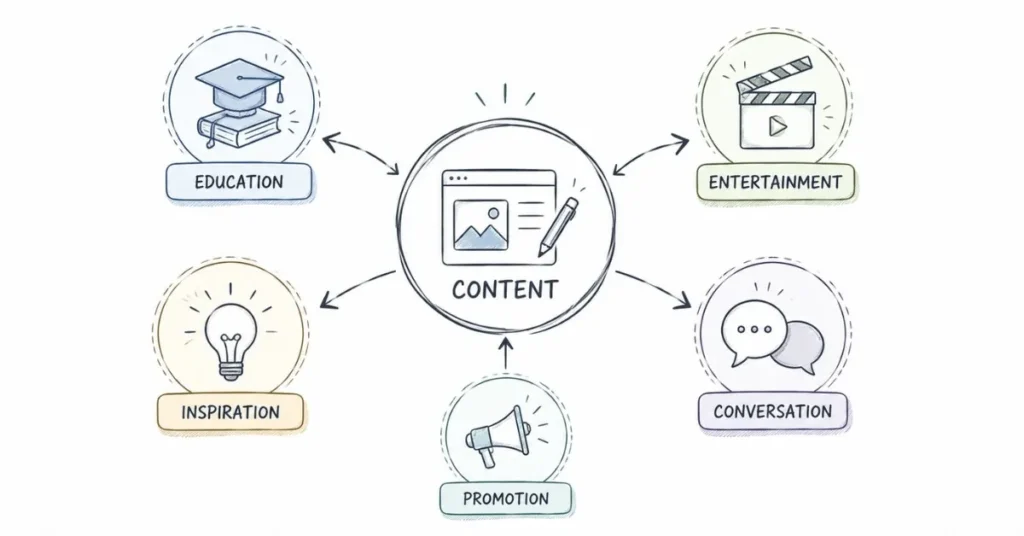
Content pillars are 3-5 broad themes that organize all your content, ensuring strategic variety while maintaining focus.
What Are Content Pillars
Think of content pillars as the main categories or topics your account consistently covers. They provide structure preventing random, unfocused content while ensuring you address different aspects of your audience’s interests.
Example Content Pillars:
For a fitness creator:
- Workout tutorials and exercise form
- Nutrition and healthy recipes
- Motivation and mindset
- Fitness industry myths and facts
- Personal journey and behind-the-scenes
For a B2B SaaS company:
- Product features and use cases
- Industry trends and insights
- Customer success stories
- Tips and best practices
- Company culture and team
For a career coach:
- Interview preparation strategies
- Resume and LinkedIn optimization
- Career transition stories
- Skill development and learning
- Work-life balance and mental health
For a regional food creator:
- Traditional recipes and techniques
- Quick meals for busy professionals
- Festival and celebration foods
- Ingredient deep-dives and substitutions
Food stories and cultural context
Determining Your Content Pillars:
Identify pillars based on your expertise and unique value, audience needs and interests discovered through research, business objectives and how content supports them, competitive differentiation showing what makes you distinct, and sustainable topics you can create about consistently for years.
Ideally, pillars span educational content (teaching useful skills or information), entertaining content (enjoyable to consume even without immediate utility), inspirational content (motivating and uplifting), and promotional content (introducing your products, services, or opportunities).
The 80/20 Content Rule:
Professional social media strategists typically follow the 80/20 rule 80% of content provides value to audiences (educational, entertaining, inspirational) while only 20% is promotional (directly selling or pitching). This ratio builds trust and engagement rather than treating your audience as perpetual sales targets.
Many unsuccessful accounts reverse this ratio, constantly promoting while rarely providing value audiences quickly tune out this approach.
Content Formats and Mix
Within your content pillars, vary formats keeping content fresh and engaging different audience preferences.
Format Categories:
Educational content includes how-to tutorials and step-by-step guides, tips and hacks solving specific problems, myth-busting and fact-checking, deep-dives explaining complex topics, and case studies showing real examples.
Entertaining content encompasses humorous takes on industry situations, relatable memes and trending formats, behind-the-scenes glimpses, day-in-the-life content, and interactive polls, quizzes, or challenges.
Inspirational content features success stories and transformations, motivational messages and quotes (with original commentary), overcoming obstacles narratives, industry predictions and future-gazing, and celebration of community wins.
Conversational content includes questions prompting audience responses, controversial opinions generating discussion (thoughtfully approached), current event commentary (when relevant), AMA (Ask Me Anything) sessions, and responding to audience questions and feedback.
Platform-Specific Formats: Adapt formats to platform strengths. Instagram excels at carousel posts (educational), Reels (entertaining/educational), Stories (conversational/behind-scenes), and single images (inspirational). YouTube prioritizes tutorials (educational), vlogs (entertaining/conversational), deep-dives (educational), and interviews (educational/inspirational). LinkedIn favors text posts with insights (educational/conversational), document posts with tips (educational), articles (educational deep-dives), and professional stories (inspirational).
Creating Your Editorial Calendar
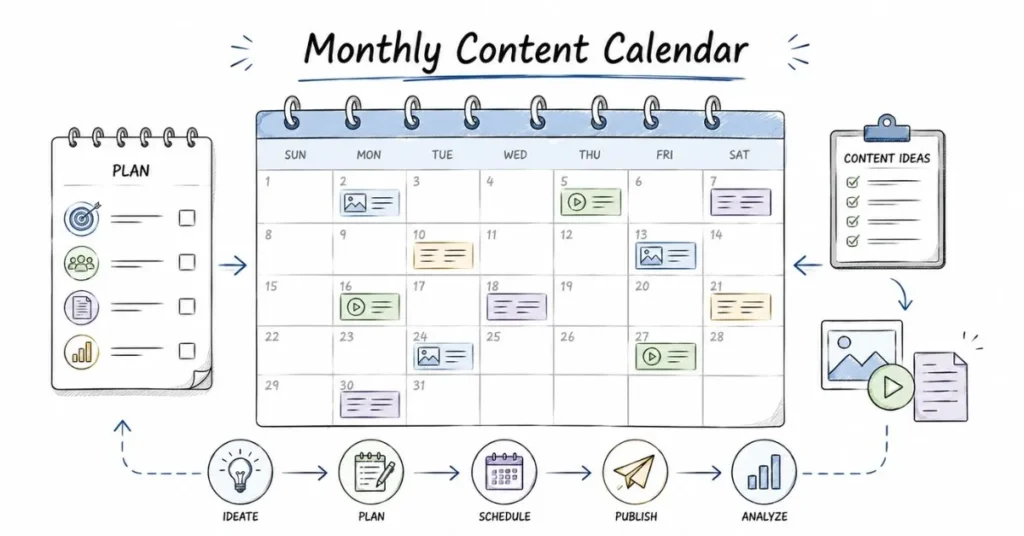
Editorial calendars transform strategy from abstract concepts into concrete publishing plans.
Calendar Components:
Effective editorial calendars include publication dates and times, content topics or working titles, format and platform specifications, content pillar categorization, responsible team member assignments, production status tracking, and performance notes after publication.
Calendar Tools:
Use whatever works for your situation. Google Sheets provides free, collaborative, customizable calendars accessible anywhere. Notion offers beautiful, flexible content databases with multiple views. Trello provides Kanban-style visual content pipelines. Specialized tools like ContentCal, CoSchedule, or Airtable offer advanced features. Even simple paper planners work for solo creators preferring analog systems.
Choose based on your team size, collaboration needs, and personal preferences the best calendar is the one you’ll actually use consistently.
Planning Timeframe:
Most professional teams plan content 2-4 weeks ahead, creating detailed calendars for the upcoming month while maintaining broader outlines for 2-3 months forward. This provides enough structure for consistent execution while preserving flexibility for timely content around unexpected events or trending topics.
Avoid planning too far ahead (6+ months) in social media’s fast-moving environment where trends and circumstances change rapidly.
Balancing Structure and Flexibility:
While calendars provide structure, maintain flexibility reserving 20-30% of your content slots for timely, reactive content responding to trends, news, or audience conversations. This balance prevents calendars from becoming rigid constraints that miss valuable opportunities.
Content Batching:
Many successful creators batch content production dedicating specific time blocks to creating multiple pieces simultaneously. For example, shoot five Instagram Reels in one session rather than creating one daily, write captions for the entire week in one sitting, or design a month’s graphics in one afternoon.
Batching increases efficiency through focused workflow, ensures you’re never scrambling for daily content, and maintains quality through consistent creative sessions rather than rushed daily production.
Campaign Planning and Execution
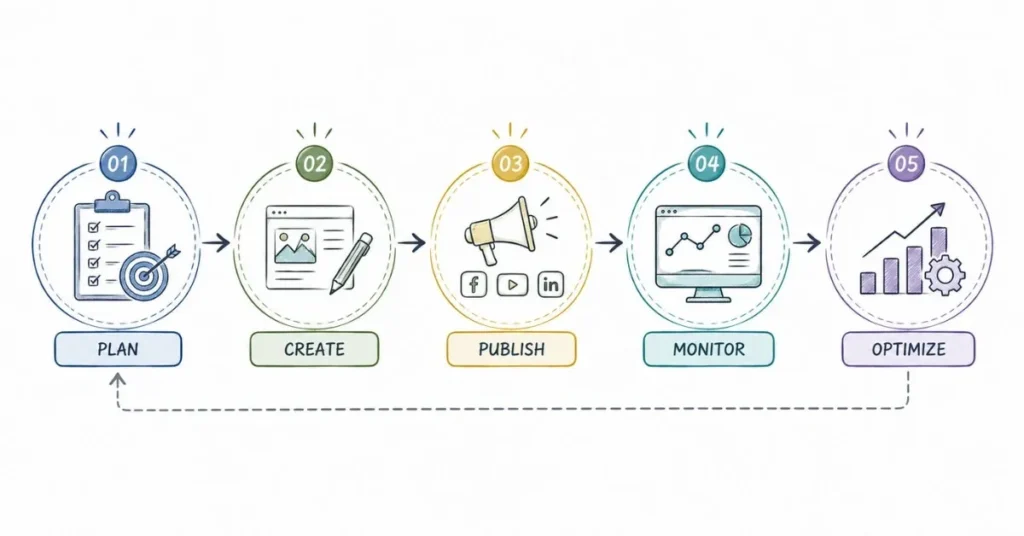
Beyond regular content, strategic campaigns around specific objectives, products, or themes amplify impact.
Campaign Types:
Product launch campaigns build anticipation before release, educate audiences about features and benefits, and drive initial sales or adoption.
Seasonal campaigns align with festivals, holidays, or seasons relevant to your audience (Diwali, New Year, monsoon season, exam season for students).
Awareness campaigns educate audiences about causes, issues, or industry changes.
Engagement campaigns prioritize community participation through challenges, contests, or collaborative content.
Conversion campaigns directly drive sales, sign-ups, or specific actions with clear calls-to-action.
Campaign Planning Framework:
- Define Campaign Objective: What specific outcome do you want? (Example: Generate 500 email subscribers for new course launch)
- Identify Target Audience: Who specifically needs to see this campaign? (Example: Working professionals aged 25-35 interested in career transitions)
- Develop Key Messages: What 2-3 main points must you communicate? (Example: Career transitions are possible at any stage; specific skills matter more than degrees; our course provides step-by-step roadmap)
- Plan Content Mix: What content pieces will you create across what timeframe? (Example: 4-week campaign with teaser content week 1, educational content weeks 2-3, conversion content week 4)
- Assign Resources: Who creates what, and when are deadlines? (Clear accountability prevents missed deliverables)
- Set Success Metrics: How will you measure whether the campaign succeeded? (Sign-ups, engagement rate, reach, conversions)
- Execute and Monitor: Launch according to plan while monitoring real-time performance and adjusting if needed
- 8. Analyze and Document: After campaigns conclude, analyze performance documenting what worked and learnings for future campaigns.
Multi-Platform Campaign Coordination:
Effective campaigns coordinate across platforms, adapting messaging to each while maintaining consistent themes. For example, a product launch might include YouTube video deep-dive on features, Instagram Reels showing quick use cases, LinkedIn post explaining business benefits, email newsletter to existing subscribers, and blog post providing comprehensive information.
Each platform plays a role in the broader campaign, meeting audiences where they are with format-appropriate content.
Maintaining Consistency Without Burnout
Consistency is crucial for social media success, but it’s also a primary cause of creator burnout. Strategic approaches sustain consistency long-term:
Start With Sustainable Frequency:
It’s better to publish two high-quality posts weekly consistently than attempt daily posting and burn out within weeks. Choose frequency you can genuinely maintain for months, not just when you’re maximally motivated.
You can always increase frequency later; establishing consistency first matters most.
Build Content Banks:
Maintain evergreen content banks you can publish anytime posts not tied to current events or specific dates. When you’re feeling creative or have extra time, create surplus content banking it for future low-energy periods.
This buffer prevents gaps when life gets busy or motivation dips
Repurpose Ruthlessly:
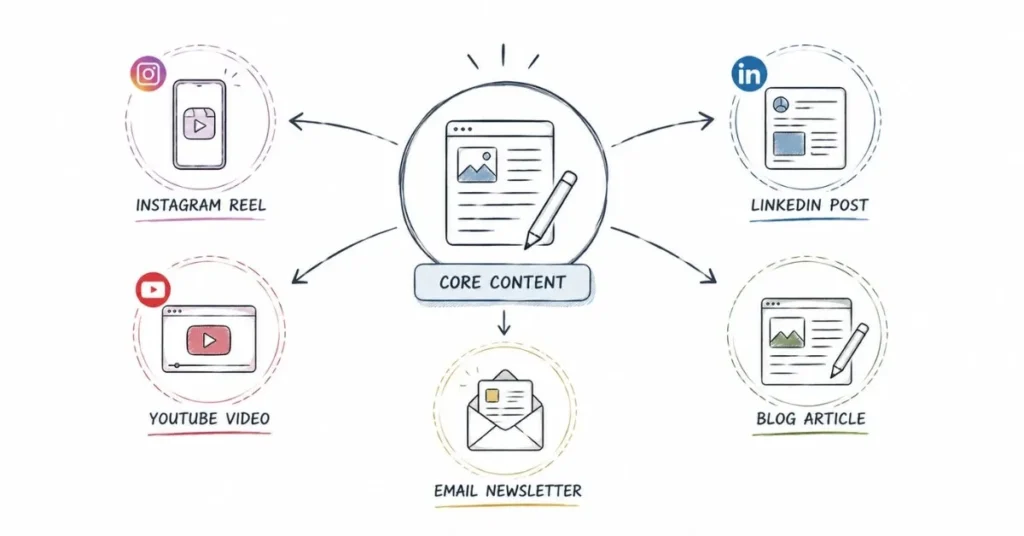
Extract maximum value from each piece of content by repurposing across formats and platforms. One YouTube video becomes multiple Instagram Reels, a LinkedIn article, email newsletter content, Twitter threads, and blog post. One podcast episode generates dozens of quote graphics, short video clips, and written posts. This approach multiplies content output without proportionally increasing effort.
Embrace Imperfection:
Perfect is the enemy of consistent. Publishing good content regularly outperforms occasionally publishing perfect content. Your audience prefers seeing your consistent imperfect work over radio silence as you pursue unrealistic perfection standards.
Schedule Rest Periods:
Plan breaks into your calendar whether one day weekly with no content obligations, or one week quarterly completely unplugged. Rest prevents burnout and often returns you to work with renewed creativity and energy.
Measuring Strategy Effectiveness
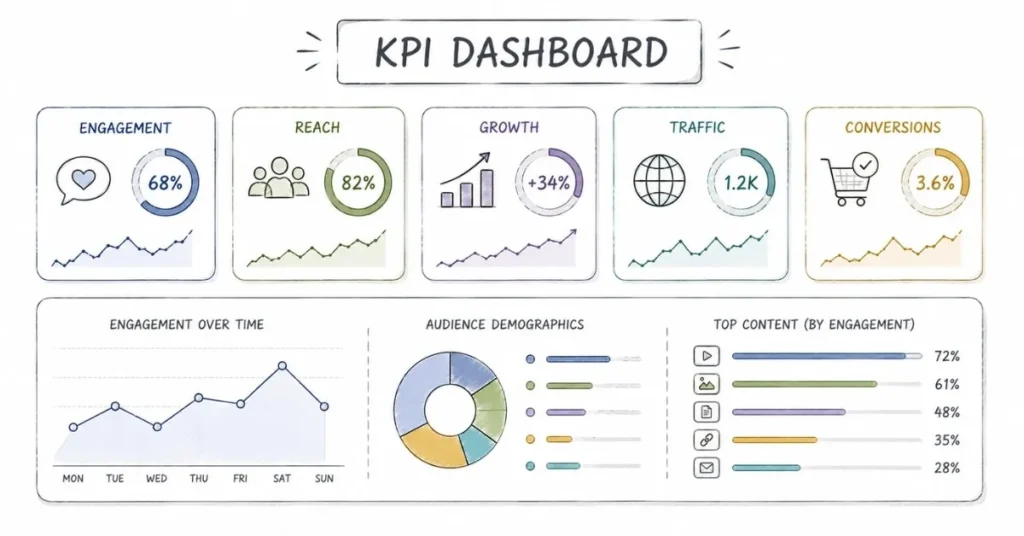
Strategy without measurement is just hoping. Track metrics proving whether your approach is working:
Engagement Metrics: Track likes, comments, shares, and saves (particularly important on Instagram). Calculate engagement rate (total engagement divided by followers or reach). Monitor conversation quality are comments meaningful discussions or just emoji spam?
Growth Metrics: Track follower/subscriber growth rate weekly or monthly. Measure reach and impressions showing how many people see your content. Monitor profile visits and external link clicks indicating interest beyond passive scrolling.
Business Metrics: Track website traffic from social referrals, leads or sales attributed to social media, email subscribers gained through social promotion, customer retention among engaged community members, and revenue directly generated through social channels.
Content Performance Patterns: Identify which content pillars generate strongest engagement, what formats and lengths work best, optimal posting times for your specific audience, topics that consistently perform versus underperform, and whether your content is improving over time.
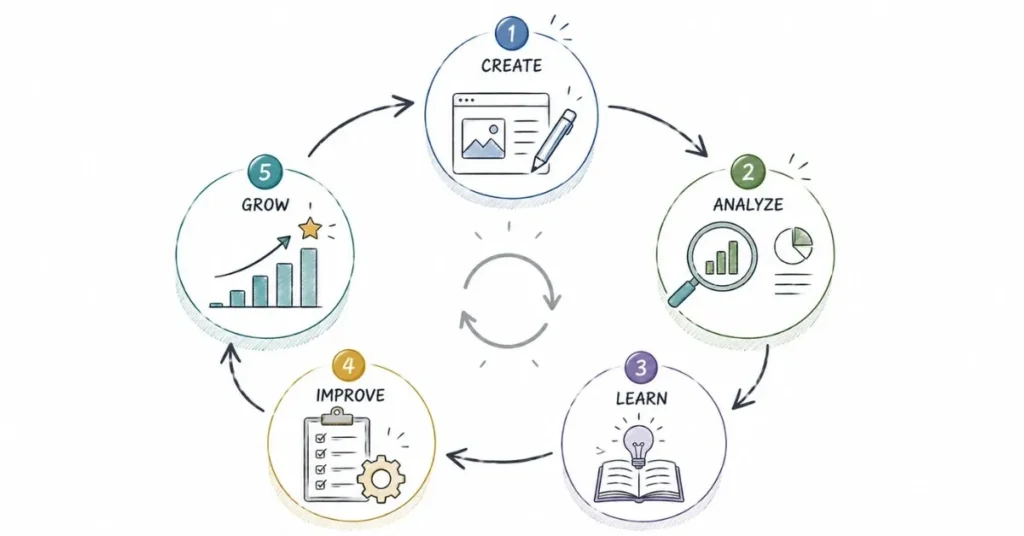
Monthly Strategy Reviews: Dedicate time monthly reviewing overall performance, identifying 2-3 insights from the data, determining 1-2 specific adjustments to test based on learnings, and documenting changes to track their impact. This continuous improvement cycle compounds over time, significantly improving results.
Common Content Strategy Mistakes
Avoid these pitfalls that undermine even well-intentioned strategies:
No Documented Strategy: Many operate with vague ideas rather than documented plans. Writing your strategy clarifies thinking, enables team alignment, and provides reference when making daily decisions.
Copying Competitors Without Adaptation: What works for others may not work for you given different audiences, resources, or positioning. Learn from competitors but adapt strategically rather than mimicking blindly.
Ignoring Data: Creating based purely on instinct rather than analyzing what actually resonates with your specific audience wastes effort producing content that doesn’t land.
Inconsistent Publishing: Sporadic content confuses audiences about when to expect from you and signals lack of commitment, reducing algorithmic visibility.
All Promotion, No Value: Constantly selling without providing genuine value trains audiences to ignore you. Lead with value, sales will follow.
Wrong Platform Priorities: Investing heavily in platforms where your target audience doesn’t exist or preferring platforms you personally enjoy over where your audience actually is.
No Content Variety: Publishing the same format or topic repeatedly bores audiences. Strategic variety maintains interest while staying focused.
Ignoring Community Feedback: Your audience tells you what they want through engagement patterns and comments ignoring these signals is strategic malpractice.
Content Strategy for Different Goals
Tailor your strategic approach to your specific objectives:
For Growing Audiences:
Prioritize shareable, valuable content that audiences want to send to friends. Collaborate with similar accounts cross-promoting to new audiences. Optimize for discoverability through platform search and recommendations. Engage actively with your target community beyond just posting. Post consistently at times when your audience is active.
For Driving Conversions:
Create content addressing objections and concerns about your offer. Use storytelling showcasing transformations and results. Include clear, compelling calls-to-action in appropriate content (not everything needs CTA). Build trust through educational content before asking for sales. Track attribution connecting content to actual conversions.
For Building Community:
Prioritize two-way conversations over one-way broadcasting. Create opportunities for member interactions (discussions, challenges, collaborations). Recognize and celebrate active community members. Share user-generated content with credit. Maintain consistent presence so community knows you’re reliably there.
For Thought Leadership:
Share unique perspectives and insights, not just generic advice. Demonstrate deep expertise through detailed, valuable content. Engage in industry conversations adding meaningful contributions. Be consistent over extended time thought leadership builds gradually. Take stands on issues important to your audience (thoughtfully).
Conclusion: Strategy as Your Competitive Advantage
In social media’s crowded, noisy landscape, strategy is your unfair advantage. While most accounts post randomly hoping something works, strategic thinking provides clarity about what to create, confidence it aligns with goals, consistency through structured planning, and continuous improvement through measurement and adaptation.
Developing content strategy doesn’t require expensive tools or specialized training it requires dedicated thinking time answering fundamental questions about objectives, audiences, and approaches. It demands discipline documenting plans and measuring results rather than just winging it daily.
Start developing your content strategy today by defining one clear objective you want to achieve, creating one detailed audience persona, identifying 3-5 content pillars you’ll focus on, and planning your next month’s content calendar. That strategic foundation will transform your social media from chaotic and exhausting to focused and effective.
Your strategy won’t be perfect initially no one’s is. But having an imperfect strategy you refine based on results vastly outperforms having no strategy at all. Begin where you are, document your approach, measure what happens, learn continuously, and adjust based on evidence. That process is strategy, and it separates social media professionals who thrive from those who merely survive.