
ANIMATION & VFX CAREER OPPORTUNITIES
Table of Contents
Introduction
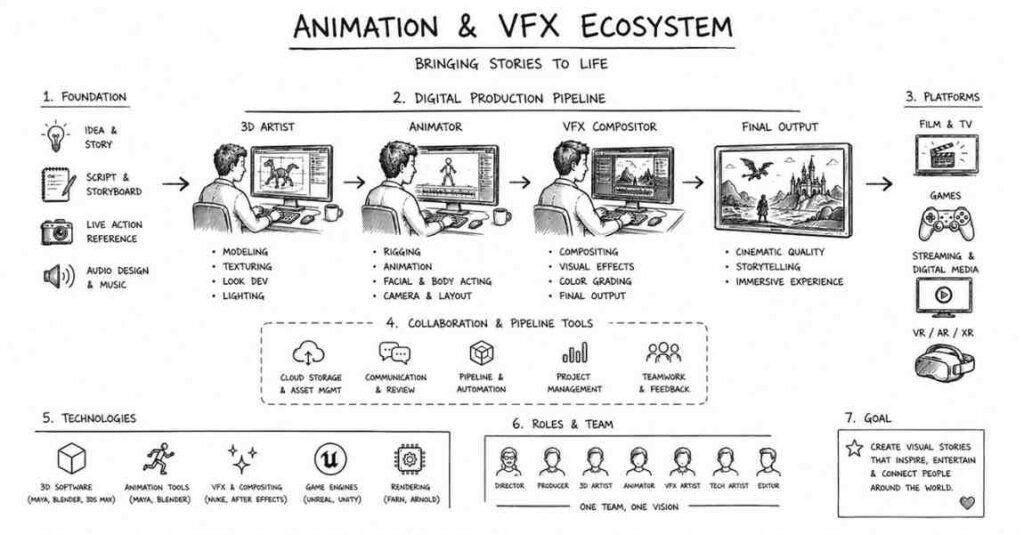
From the fantastical creatures in Baahubali to the realistic environments in RRR, from the superhero action in Brahmastra to the animated worlds of kids’ content on Disney+ Hotstar—visual effects and animation have become inseparable from modern storytelling. What once required massive Hollywood budgets now happens in studios across Bangalore, Mumbai, Hyderabad, and Chennai, with Indian VFX artists and animators working on both domestic blockbusters and international productions.
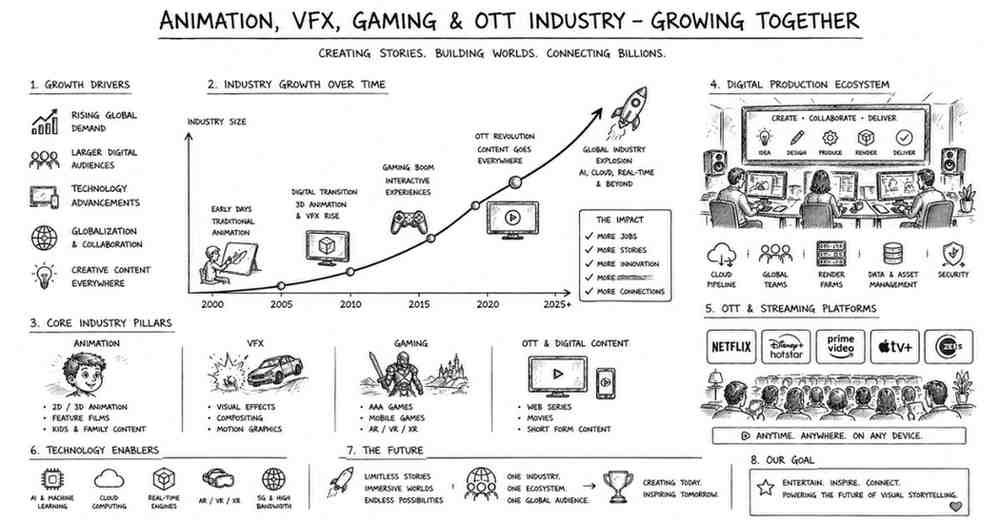
India’s animation, VFX, and gaming (AVGC) industry is experiencing explosive growth. The sector is projected to grow from $1.3 billion in 2023 to $2.2 billion by 2026, driven by OTT content production, big-budget Indian and foreign films, expanding virtual production methods, and India’s 40-60% cost advantage in these services globally. The government’s National AVGC-XR Mission with its “Create in India” focus further strengthens India’s positioning as a global hub for digital content creation.
This growth translates into substantial career opportunities. Entry-level VFX artists and animators earn ₹1.2-3 lakhs annually, mid-level professionals earn ₹5-10 lakhs, and senior specialists and supervisors command ₹12-20+ lakhs annually. VFX artists can earn ₹6-18 lakhs per year, game animators ₹6-15 lakhs, and motion graphics designers ₹4-10 lakhs. With experience, 3D animators earning ₹25,600 monthly on average can progress to lead positions earning ₹1+ lakh monthly. The highest-paid roles like VFX supervisors at major studios can exceed ₹20 lakhs annually.
This comprehensive guide explores animation and VFX careers across 2D and 3D animation, character animation, visual effects compositing, motion graphics, rigging and modeling, and supervisory roles. You’ll learn about required software skills, educational pathways, portfolio development, industry expectations, and strategies for building sustainable careers in this technically demanding but creatively rewarding field.
Understanding Animation & VFX Industry Landscape
The Expanding AVGC Sector
India’s animation, VFX, gaming, and comics (AVGC) sector has evolved from primarily serving international clients as an outsourcing destination to creating original Indian content for domestic and global audiences. This transformation creates opportunities across the value chain.
International project work: Indian studios continue working on Hollywood films, international games, and foreign television content, providing cost-effective, high-quality services. Studios like Red Chillies VFX, Prime Focus, Technicolor, and numerous Bangalore and Hyderabad-based facilities contribute to major international productions. This work provides stable employment, exposure to cutting-edge techniques, and competitive salaries.
Domestic film and OTT content: High-budget Indian films increasingly incorporate extensive VFX—from period epics requiring historical reconstructions to action films needing impossible stunts to sci-fi and fantasy projects creating entire worlds. OTT platforms like Netflix, Amazon Prime, Disney+ Hotstar producing original Indian content drive demand for animation and VFX across languages and genres.
Gaming industry: India’s gaming sector is booming with mobile gaming, PC/console games, and emerging cloud gaming creating massive demand for game artists, animators, and technical artists. Gaming animation differs from film animation—requiring real-time performance, interactive considerations, and different technical pipelines—but offers exciting opportunities for animators and artists.
Advertising and branded content: Commercials, digital advertising, product visualizations, and branded content require motion graphics, 3D visualization, and animation. This work provides steady project flow for studios and freelancers.
Architectural visualization and product design: Beyond entertainment, animation and 3D skills apply to architectural visualization, industrial design, automotive visualization, and product marketing—diversifying career options beyond film and games.
Key Industry Hubs in India
Bangalore has emerged as India’s animation and VFX capital, hosting major studios like Technicolor, DQ Entertainment, Lakshya Digital, and numerous boutique studios. The city’s tech ecosystem, talent pool from animation schools, and international connectivity make it ideal for AVGC companies.
Mumbai remains significant with studios like Red Chillies VFX, Prime Focus, and others serving Bollywood directly. Proximity to film production provides advantages for VFX studios working closely with filmmakers.
Hyderabad has grown as an animation and gaming hub with studios and production houses increasingly establishing operations.
Chennai and Pune host significant studios and animation schools feeding the industry with talent.
The geographic diversity means you can pursue animation and VFX careers from multiple cities rather than being limited to a single hub.
2D Animation Careers
2D Animator: Traditional Craft Meets Digital Tools
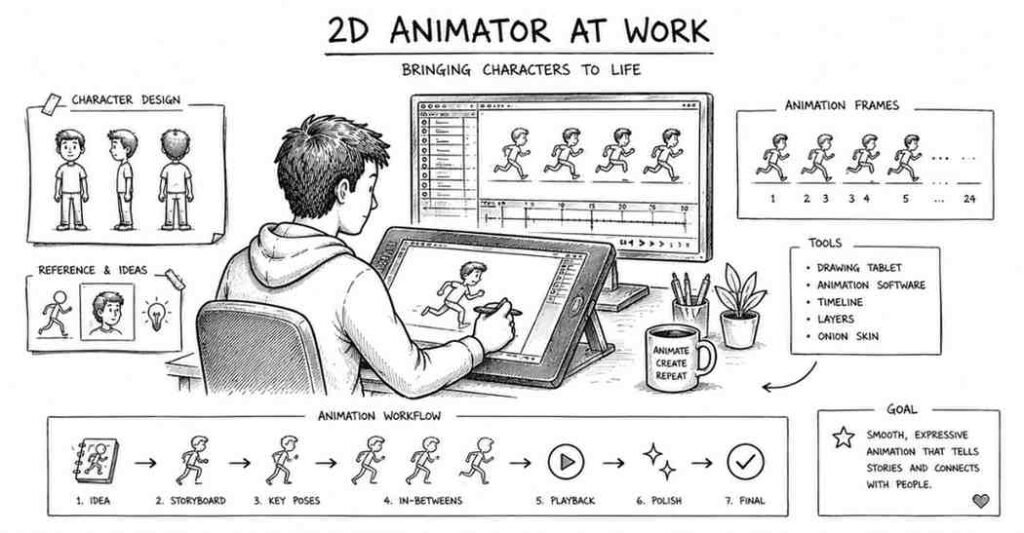
2D animators create animated sequences using traditional animation principles applied through digital tools, producing content for films, television, web series, games, and advertising.
What 2D animators do: They create character animations bringing drawings to life through motion, develop backgrounds and environments establishing scene settings, animate effects like fire, water, or magic, work from storyboards translating static boards into moving sequences, and time animations ensuring proper pacing and rhythm. 2D animation powers children’s content, explainer videos, motion graphics, and stylized storytelling where photorealism isn’t the goal.
Skills required: Understanding animation principles—timing, spacing, squash and stretch, anticipation, follow-through, and others—forms the foundation. Drawing skills provide basis for creating appealing characters and scenes. Software proficiency in tools like Toon Boom Harmony, Adobe Animate, or TV Paint enables digital animation. Storytelling sense helps you convey emotion and narrative through movement. Patience and attention to detail help you work through labor-intensive frame-by-frame or tweened animation.
Career path: Many 2D animators start as cleanup artists or in-betweeners working on animation sequences between key frames drawn by senior animators. With experience, you progress to key animator creating the main poses and movements, then lead animator supervising animation teams, potentially advancing to animation director overseeing entire projects.
Salary expectations: 2D animators in India earn an average of ₹3 lakhs annually. Entry-level positions start around ₹30,000 annually during internships, rising to ₹2.3 lakhs with 1-2 years experience, ₹3.5 lakhs with 2-4 years, and ₹4.7 lakhs with 5-7 years. Senior 2D animators earn ₹4.5 lakhs on average. Flash animators specializing in web animation earn similar ranges around ₹3 lakhs.
Motion Graphics Designer: Animation for Communication
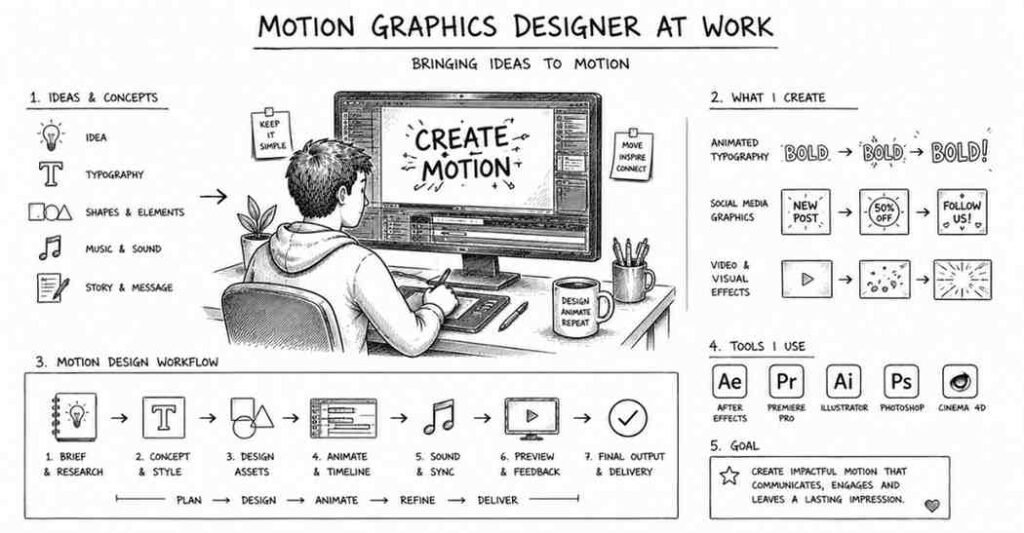
Motion graphics designers create animated graphics for videos, advertisements, user interfaces, title sequences, or explanatory content, combining design and animation to communicate messages visually.
What they do: They design animated logos and branding elements, create title sequences and lower thirds for videos, produce explainer animations simplifying complex concepts, develop social media animated content, create visual effects for live-action footage, and animate infographics making data engaging.
Motion graphics sits between graphic design and animation, requiring both aesthetic sensibility and animation skills. The work is less character-focused than traditional animation, more about communicating information or enhancing visual appeal.
Software skills: Adobe After Effects is the industry standard for motion graphics, often supplemented by Cinema 4D or Blender for 3D elements, Illustrator for vector graphics, and Premiere Pro for integration with video editing.
Applications: Motion graphics designers work for advertising agencies creating commercials, digital agencies producing social content, broadcast companies creating news graphics and channel branding, corporate video producers creating training or marketing content, and as freelancers serving diverse clients.
Salary expectations: Motion graphics designers earn ₹4-10 lakhs annually depending on experience and employer. Entry-level designers earn ₹3-5 lakhs while experienced professionals working at premium agencies or on major projects earn toward the higher end.
3D Animation & Modeling Careers
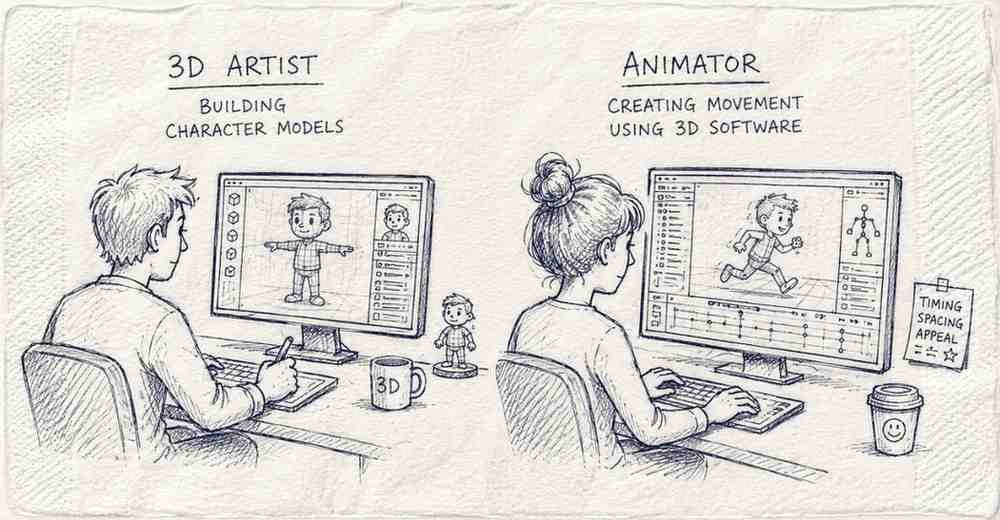
3D Modeler: Building Digital Worlds
3D modelers create three-dimensional digital assets—characters, environments, props, vehicles—that form the building blocks of 3D animation, VFX, and games.
Types of modeling: Character modelers create digital people, creatures, or stylized characters ensuring proper topology for animation. Environment modelers build landscapes, buildings, interiors, or natural settings. Hard surface modelers create mechanical objects, vehicles, weapons, or architectural elements. Organic modelers specialize in natural forms like plants, rocks, or terrain.
What 3D modelers do: They interpret concept art translating 2D designs into 3D assets, create base meshes establishing forms and proportions, add detail sculpting fine features or textures, create UV maps preparing models for texturing, optimize models ensuring they perform efficiently in pipelines, and collaborate with texture artists, riggers, and animators ensuring models serve downstream needs.
Software expertise: Maya and Blender are primary 3D animation software packages, while ZBrush excels at digital sculpting. 3ds Max is common in architectural visualization and game development. Substance Painter and Mari handle texturing.
Career progression: Junior modelers often start creating simple assets or props, progressing to more complex characters or environments. Senior modelers tackle hero characters or signature environments. Lead modelers supervise modeling teams and establish visual consistency.
Salary expectations: 3D modelers earn an average of ₹3 lakhs annually in India. The salary trajectory follows similar patterns to 2D animators—₹30,000 annually for internships, ₹2.3 lakhs with 1-2 years of experience, ₹3.5 lakhs with 2-4 years of experience, ₹4.7 lakhs with 5-7 years of experience, and ₹5.5 lakhs with 8-10 years of experience. Senior 3D positions can reach ₹7-10 lakhs with 11-15 years experience.
3D Animator: Bringing Characters to Life
3D animators create movement for 3D characters, creatures, vehicles, or cameras using keyframe animation, motion capture, or procedural techniques.
What 3D animators do: They animate characters performing actions, dialogue, or performances using rigged models, create creature animation bringing fantastical beings to life through believable movement, animate cameras planning virtual camera movements through scenes, develop physical simulations like cloth, hair, or destruction, and refine timing ensuring animation feels natural and emotionally resonant.
3D animation is highly technical while remaining deeply artistic. Understanding both the software and the principles of weight, timing, and performance separates good animators from great ones.
Specializations: Character animators focus on performance and acting. Technical animators develop tools, rigs, and pipelines supporting other animators. Creature animators specialize in non-human movement. Previs animators create rough animation blocking out sequences before final animation.
Skills required: Mastery of animation principles applied in 3D space. Software proficiency particularly in Maya’s animation tools. Understanding anatomy and movement. Acting skills to convey emotion through animated characters. Patience for the iterative process of refining animation. Technical problem-solving when rigs or pipelines present challenges.
Salary expectations: 3D animators earn similarly to 3D modelers, averaging ₹3 lakhs annually, with senior 3D animators reaching ₹6.7 lakhs average salary. Game animators specifically earn ₹6-15 lakhs annually due to the growing gaming industry. Major companies offer competitive packages—for instance, positions offering up to ₹15 lakhs per annum for experienced animators at leading studios.
Character Rigger: Creating Animation Controls
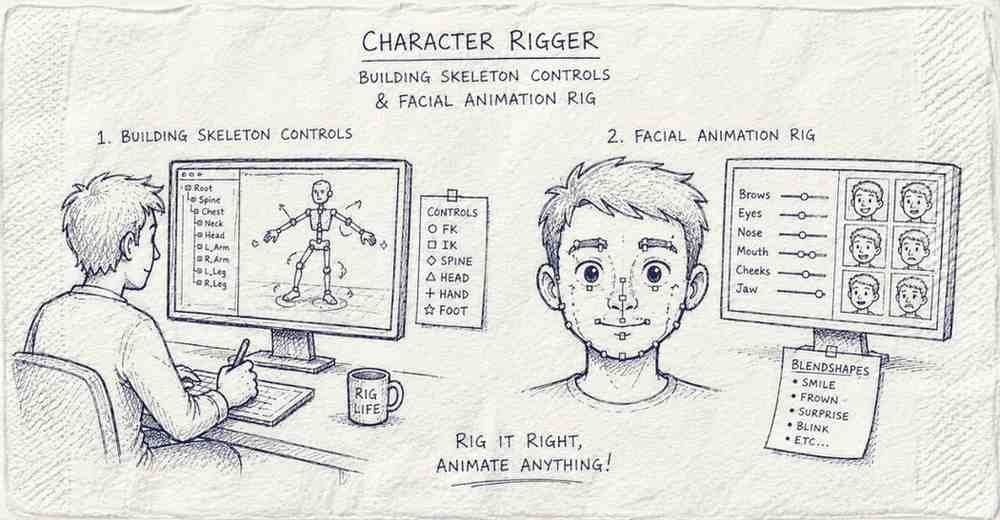
Riggers create the skeletal systems and controls that allow animators to move 3D models, essentially building the puppets animators will perform with.
What riggers do: They build skeletal structures defining how models deform, create control systems giving animators intuitive interfaces, develop facial rigs enabling emotional expressions, write scripts automating repetitive tasks, solve technical challenges ensuring rigs perform efficiently, and collaborate with modelers and animators ensuring rigs serve both technical and creative needs.
Rigging is highly technical, requiring programming skills alongside artistic understanding. Good rigs empower animators; bad rigs frustrate and limit them.
Technical skills: Maya rigging tools and Python scripting for automation. Understanding anatomy and deformation. Problem-solving figuring out how to achieve complex movements. Math skills particularly linear algebra for transforms.
Compensation: Riggers earn similar to or slightly above comparable modeling/animation roles due to technical specialization, typically ₹4-10 lakhs annually depending on experience, with senior technical directors and rigging leads earning ₹12-18 lakhs.
Visual Effects (VFX) Careers
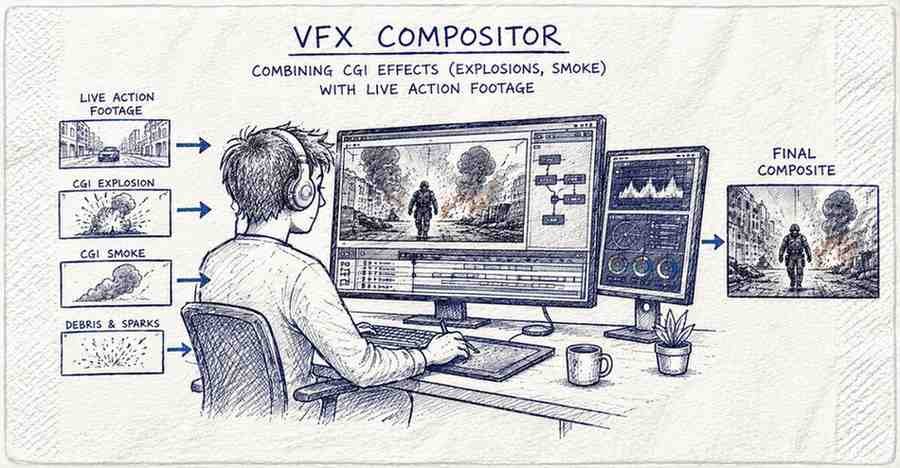
VFX Compositor: Combining Elements Seamlessly
Compositors combine multiple visual elements—live-action footage, 3D renders, matte paintings, effects—into final shots that appear seamless and cohesive.
What compositors do: They integrate CG elements with live-action footage matching lighting, color, and perspective, perform rotoscoping isolating elements by painting masks frame-by-frame, apply color grading ensuring visual consistency, add atmospheric effects like fog, dust, or god rays enhancing mood, remove unwanted elements like wires, markers, or modern objects from period pieces, and finalize shots for delivery meeting technical specifications.
Compositing is where VFX comes together. Compositors are problem-solvers making disparate elements feel like they were photographed together.
Software expertise: Nuke is the industry standard for high-end compositing, while After Effects serves for simpler or motion graphics-heavy work. Fusion and Flame are used in some pipelines.
Skills required: Strong eye for detail noticing mismatches others miss. Understanding photography, lighting, and color helping you match elements convincingly. Technical problem-solving figuring out how to achieve effects efficiently. Patience for tedious work like rotoscoping. Software mastery particularly node-based compositing in Nuke.
Career path: Junior compositors start with simpler shots—cleanups, basic composites, or rotoscoping. Mid-level compositors handle complex shots with multiple elements. Senior compositors tackle hero shots and supervise teams. Compositing leads or VFX supervisors oversee entire sequences or shows.
Salary expectations: VFX artists including compositors earn ₹6-18 lakhs per year, representing some of the highest-paid animation jobs in India. Entry-level VFX artists start at ₹1.2-3 lakhs annually. With 1-4 years experience, salaries rise to ₹3-4 lakhs. Mid-career VFX artists earn ₹5-10 lakhs, while senior specialists and supervisors command ₹12-20+ lakhs annually.
Roto Artist: Precision Isolation
Rotoscoping artists create masks isolating elements in footage, essential foundational work for compositing and VFX.
What they do: They paint frame-by-frame mattes separating foreground from background, create precision rotoscopes enabling compositors to isolate elements, track rotoscopes ensuring masks follow movement accurately, and clean up edges refining masks for seamless integration.
Rotoscoping is labor-intensive, detail-oriented work requiring patience and precision. While entry-level, excellent roto artists are valuable and good rotoscoping fundamentals benefit all VFX artists.
Tools: Nuke, Silhouette, and Mocha Pro are primary rotoscoping tools.
Salary: Roto artists earn entry-level VFX salaries, typically ₹1.2-2.5 lakhs annually, progressing to ₹3-5 lakhs with experience and potentially transitioning to compositing or other VFX specializations.
Matchmove/Tracking Artist: Bridging Real and Digital
Matchmove artists track camera movement in live-action footage, creating virtual cameras matching real-world camera motion enabling CG elements to integrate properly.
Responsibilities: They track camera movement analyzing footage to determine camera path, create 3D camera matching live-action camera, place witness markers or track features in footage, build rough 3D geometry approximating scene environment for lighting reference, and deliver tracking data to animation and VFX teams.
Matchmoving is technical work requiring spatial reasoning and attention to detail. Accurate tracking is foundational—poor tracking undermines everything built on it.
Software: PFTrack, 3D Equalizer, and Boujou are specialized tracking packages, while Maya and Blender include basic tracking tools.
Compensation: Matchmove artists earn ₹2-5 lakhs annually at entry to mid-levels, progressing to ₹6-10 lakhs with senior experience or transitioning to VFX supervision.
FX Artist: Creating Dynamic Simulations
FX artists create dynamic effects—fire, smoke, explosions, water, destruction—using simulation software that calculates physically plausible motion.
What they do: They simulate fire, smoke, and explosions for action sequences, create water effects from splashes to oceans, develop destruction sequences simulating buildings collapsing or objects breaking, simulate cloth movement for capes, flags, or clothing, and create particle effects like dust, sparks, or magical elements.
FX work is highly technical, requiring understanding physics, simulation software, and artistic direction to create effects that feel believable and support storytelling.
Software skills: Houdini is the industry leader for FX work due to procedural approach and powerful simulation tools. Maya’s fluid dynamics and nCloth, RealFlow for liquid simulation, and Blender’s physics tools also serve FX needs.
Salary expectations: FX artists fall within VFX salary ranges—₹4-8 lakhs for mid-level artists, ₹10-18 lakhs for senior FX artists or FX leads given the specialized technical skills required.
VFX Supervisor: Leading Visual Effects
VFX supervisors oversee all visual effects aspects of productions, from pre-production planning through final delivery.
What VFX supervisors do: They collaborate with directors during pre-production planning VFX approaches, create VFX budgets and schedules, supervise on-set data collection ensuring proper references and elements are captured, manage VFX teams coordinating multiple departments and artists, review work providing creative and technical feedback, communicate with clients or directors presenting work and incorporating feedback, solve problems when challenges arise, and ensure final delivery meeting quality standards and specifications.
VFX supervision requires both deep technical knowledge and creative judgment, plus leadership skills managing teams and client relationships.
Career path: VFX supervisors typically have 10-15+ years experience across multiple VFX disciplines, often starting as compositors or FX artists, progressing through senior artist and lead roles, before supervising entire projects.
Compensation: VFX supervisors command premium salaries—₹12-20+ lakhs annually at major studios, with senior supervisors at top facilities potentially earning ₹25-40 lakhs depending on project scale and studio.
Essential Software and Technical Skills
Core Software Packages
Maya (Autodesk) is the industry standard for 3D animation, modeling, rigging, and rendering in film and television. Comprehensive capabilities and extensive plugin ecosystem make it dominant in professional pipelines.
Blender is powerful open-source 3D software increasingly used professionally. Its zero cost makes it excellent for learning, while improving professional adoption creates job opportunities.
3ds Max (Autodesk) is common in gaming, architectural visualization, and some VFX pipelines, particularly in Europe and Asia.
Houdini (SideFX) excels at procedural modeling and effects simulation, industry-standard for complex FX work.
ZBrush (Maxon) dominates digital sculpting for detailed character and creature modeling.
Nuke (Foundry) is the compositing standard in high-end VFX, essential for serious compositing careers.
After Effects (Adobe) serves motion graphics, simpler compositing, and is widely used across industries.
Substance Painter/Designer (Adobe) handles texturing and material creation with procedural workflows.
Unreal Engine and Unity increasingly used for real-time rendering, virtual production, and game development.
Fundamental Skills Beyond Software
Artistic foundation: Understanding composition, color theory, lighting, and design principles applies regardless of tools or specialization. Traditional art skills—drawing, painting, sculpture—inform digital work.
Animation principles: The 12 principles of animation (timing, spacing, anticipation, follow-through, etc.) transcend 2D versus 3D or hand-drawn versus digital.
Photography and cinematography: Understanding cameras, lenses, lighting, and composition helps VFX artists create believable work matching photographic reality.
Anatomy and movement: Understanding how bodies move, muscle structure, and weight distribution creates more convincing character animation.
Problem-solving and technical thinking: Animation and VFX constantly present technical challenges requiring creative solutions. Resourcefulness and determination to figure things out separates professionals from hobbyists.
Educational Pathways
Formal Education Options
Animation and VFX degree programs: Three-year bachelor’s programs (B.Sc. Animation, BFA Animation) or four-year professional degrees provide comprehensive education. Top institutions include:
- Film and Television Institute of India (FTII), Pune
- National Institute of Design (NID), Ahmedabad
- Satyajit Ray Film & Television Institute (SRFTI), Kolkata
- Whistling Woods International, Mumbai
- Arena Animation (multiple centers)
- MAAC (Maya Academy of Advanced Cinematics) (multiple centers)
- Frameboxx Animation & Visual Effects
These programs teach software skills, artistic fundamentals, production pipelines, and provide portfolio development opportunities.
Specialized short courses: 6-12 month diploma or certificate programs focus on specific skills—3D modeling, VFX compositing, character animation. These suit working professionals upgrading skills or graduates seeking specialized training without full degree commitments.
Online learning platforms: Websites like Udemy, Coursera, Skillshare, Pluralsight, and Animation Mentor offer courses from beginner to advanced levels. YouTube provides free tutorials. These enable self-directed learning at your own pace and budget.
Self-Taught Pathways
Many successful animators and VFX artists are largely self-taught, particularly with free software like Blender making high-quality tools accessible. Success requires:
Structured learning: Following comprehensive online curricula rather than randomly watching tutorials ensures you build proper foundations.
Consistent practice: Daily or near-daily practice over months and years builds skills. Animation and VFX mastery requires thousands of hours.
Project completion: Finishing projects end-to-end—not abandoning when difficulties arise—teaches production realities and creates portfolio pieces.
Community engagement: Joining online forums, Discord servers, or local meetups provides feedback, motivation, and networking.
Replicating professional work: Studying professional animation or VFX and attempting to recreate effects or shots teaches techniques through reverse-engineering.
Building Your Portfolio and Demo Reel
What Makes Strong Portfolios
Quality over quantity: 8-10 excellent pieces outweigh 50 mediocre ones. Recruiters spend seconds per portfolio—lead with your absolute best work.
Specialization clarity: Make your focus obvious. Character animation reels should showcase performance. VFX compositing reels should demonstrate integration skills. Generalist portfolios confuse recruiters about your strengths.
Showing process: Include breakdowns showing your contribution. For VFX, show before/after or layer-by-layer build. For modeling, show wireframes, UV maps, and final renders. This demonstrates understanding beyond final polish.
Technical competence: Demonstrate clean topology on models, proper timing on animation, convincing integration on composites. Technical mistakes reveal inexperience regardless of artistic merit.
Variety within specialty: Character animators should show multiple emotions, body types, and performance types. Environment artists should show different settings and moods. Variety demonstrates versatility within your niche.
Professional presentation: Organized portfolio websites, clear demo reels under 2 minutes, readable text, professional quality. Presentation matters—sloppy presentation suggests sloppy work habits.
Creating Your First Portfolio Projects
Personal projects: Create original characters, animate original scenarios, or composite personal footage. This demonstrates initiative and passion beyond school assignments.
Fan art and studies: Recreating characters from games or films, animating popular characters, or reproducing professional VFX shots teaches skills while creating portfolio material. Clearly label these as studies.
Collaborative projects: Team with other artists, writers, or filmmakers on short films, game prototypes, or web series. Collaboration teaches production realities and creates more polished work than solo efforts.
Competitions and challenges: Enter animation challenges on forums, 11 Second Club for character animation, or VFX challenges on fxguide. These provide prompts and community feedback.
Student films and indie projects: Offer services to student filmmakers or independent productions. The experience and final product enhance portfolios even if work is unpaid.
Breaking Into the Industry
Entry-Level Positions and Internships
Junior artist roles: Studios hire junior modelers, animators, compositors, or roto artists who demonstrate basic competence and willingness to learn. These roles involve working on less complex shots under supervision while building skills.
Internships: Major studios offer internships providing exposure to professional pipelines and potential paths to employment. Apply through studio career pages or during campus placements if attending animation schools.
Freelancing platforms: Sites like Upwork, Fiverr, or specialized 3D marketplaces allow you to take small projects building experience, income, and portfolio pieces. Starting rates are low but provide stepping stones.
Generalist roles at small studios: Smaller studios or regional production houses often seek generalists handling multiple tasks. While less specialized than major studio roles, these provide comprehensive learning.
Where to Find Opportunities
Studio career pages: Major studios like Technicolor, Red Chillies VFX, Prime Focus, Lakshya Digital, and others list positions on their websites.
Job aggregators: Specialized sites like AnimationandVFXJobs.com aggregate opportunities. General platforms like LinkedIn, Indeed, and Internshala list animation and VFX openings.
Networking and referrals: Attend animation festivals, studio open houses, or industry meetups. Connect with alumni from your school working in the industry. Personal connections often lead to opportunities before public postings.
Remote international work: Some Indian artists work remotely for international studios leveraging time zone advantages and cost differentials. Sites like ArtStation jobs, Glassdoor, or studio-specific remote postings facilitate this.
Freelancing and Contract Work
Many animators and VFX artists work project-to-project as freelancers rather than full-time employees, particularly after building initial experience.
Advantages: Flexibility choosing projects, potential for higher hourly rates, variety working on different projects, and ability to work remotely or travel.
Challenges: Inconsistent income requiring financial planning, no benefits like health insurance or paid leave, constant marketing yourself to secure next projects, and isolation working independently.
Building freelance careers: Establish portfolio and testimonials through initial projects. Maintain professional online presence on ArtStation, LinkedIn, and personal websites. Join freelance platforms and communities. Deliver quality work reliably building reputation. Cultivate repeat clients reducing marketing burden.
Career Progression Paths
Individual Contributor Path
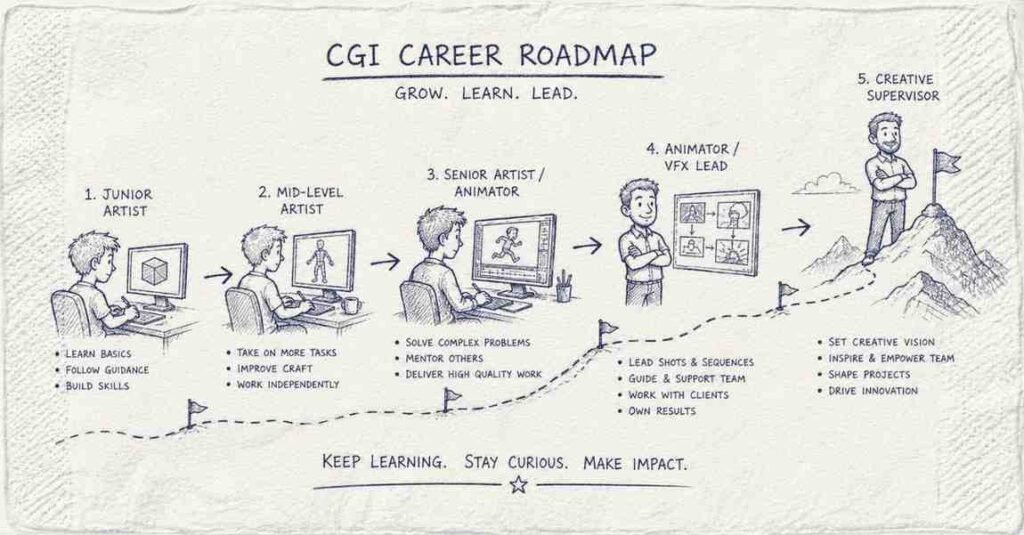
Junior artist → Mid-level artist → Senior artist → Principal/Master artist → Consulting artist
This path focuses on deepening craft, becoming recognized specialist whose work sets standards. Principal artists command premium rates, influence industry techniques, and sometimes teach or speak at conferences.
Leadership Path
Mid-level artist → Lead artist → VFX/Animation supervisor → VFX director/Creative director → Executive producer
Leadership paths involve managing teams, coordinating projects, liaising with clients, and making creative and strategic decisions beyond personal execution.
Specialized Technical Path
Artist → Technical artist → Pipeline developer → R&D engineer → Technical director
Technical paths focus on tools, automation, and infrastructure supporting artists. These roles require programming skills and deep software understanding but offer stable employment and good compensation.
Entrepreneurial Path
Freelancer → Boutique studio owner → Medium studio → Larger studio or service company
Some artists eventually establish their own studios, initially serving small clients and gradually growing. Entrepreneurship requires business skills beyond artistic ability but offers autonomy and potentially significant financial success.
Industry Challenges and Realities
Long Hours and Crunch
VFX and animation studios sometimes require long hours particularly approaching project deadlines. “Crunch periods” of 60-80 hour weeks occur. While improving with industry maturity, work-life balance can be challenging.
Job Security Variability
Project-based work means studios staff up during productions and potentially lay off between projects. Larger studios with diverse project pipelines offer more stability than smaller studios dependent on few clients.
Keeping Skills Current
Animation and VFX technology evolves rapidly. New software, techniques, and tools emerge constantly. Continuous learning throughout your career is necessary to remain competitive.
Global Competition
Indian artists compete with talent globally, particularly for remote work. Maintaining competitive skills and rates while networking effectively becomes important.
Rewards and Opportunities
Creative and Technical Satisfaction
Creating impossible visuals, bringing characters to life, or solving complex technical challenges provides deep satisfaction. The blend of art and technology appeals to those who enjoy both.
Seeing Your Work on Screen
Contributing to films, shows, or games millions experience creates pride. Credits on major productions boost careers and portfolios.
Growing Industry
India’s expanding animation and VFX sector means increasing opportunities, improving compensation, and growing recognition of Indian talent globally.arenaidr+1
Diverse Applications
Animation and VFX skills apply beyond entertainment—advertising, education, medical visualization, architecture, industrial design—providing career flexibility.
Remote Work Potential
Many animation and VFX tasks work remotely, offering geographic flexibility once you’re established. International opportunities increase with remote work normalization.
Conclusion
Animation and VFX careers in India offer technically challenging, creatively rewarding paths with strong growth prospects. With the sector projected to reach $2.2 billion by 2026 and India offering substantial cost advantages globally, opportunities continue expanding. Entry-level positions starting at ₹1.2-3 lakhs annually progress to mid-career salaries of ₹5-10 lakhs and senior roles commanding ₹12-20+ lakhs, with VFX supervisors and lead positions potentially exceeding ₹20 lakhs annually.aaft+2
Success requires combining artistic sensibility with technical proficiency, building strong portfolios demonstrating specialized skills, continuously learning as software and techniques evolve, and developing professional work habits around quality, deadlines, and collaboration. Whether you’re drawn to character animation bringing performances to life, environment modeling building digital worlds, VFX compositing seamlessly integrating elements, or technical direction solving pipeline challenges, animation and VFX offer fulfilling careers at the intersection of art and technology.
Start learning immediately with accessible tools like Blender or free trials of commercial software. Study professional work analytically understanding techniques. Practice consistently building skills through thousands of hours of deliberate work. Create portfolio pieces demonstrating your strongest abilities. Network within the community online and at events. The Indian animation and VFX industry needs talented, dedicated artists willing to master complex skills and deliver professional quality work. Your journey begins with a single model, animation, or composite—start creating today.