
Certifications & Professional Development
Table of Contents
1. Why Certifications Matter in Mechanical Engineering
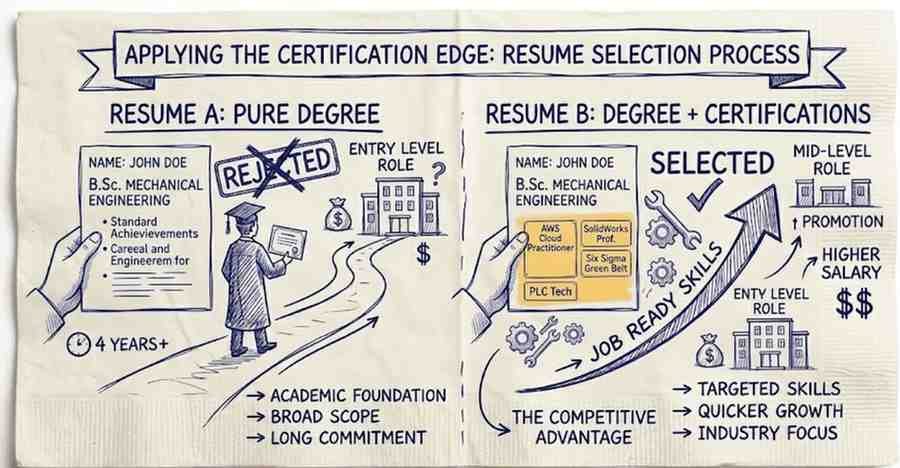
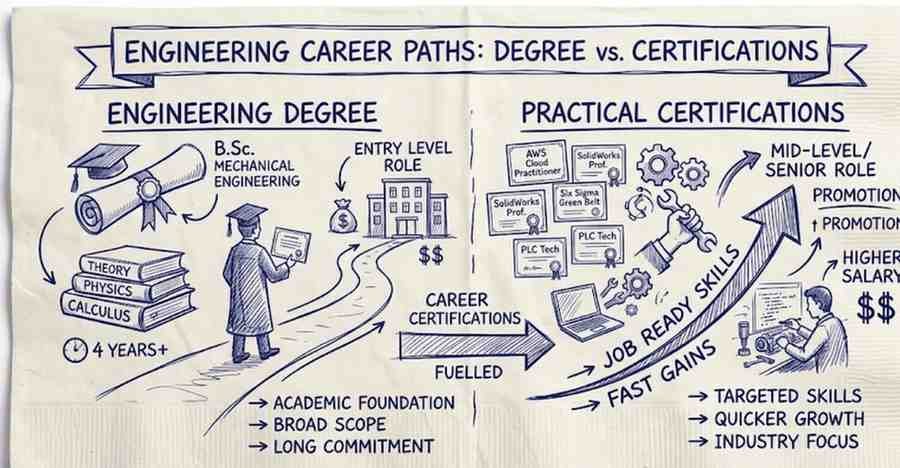
Your degree proves you studied mechanical engineering. Certifications prove you can do specific things employers need.
In a stack of 100 resumes with similar degrees and GPAs, certifications help you:
- Stand out immediately.
- Demonstrate initiative and continuous learning.
- Validate specific tool proficiency (CAD, FEA, PLC).
- Meet job requirements (many postings explicitly ask for certified professionals).
- Negotiate better salaries.
Think of certifications as “micro‑credentials” that complement your degree, not replace it.
2. CAD Software Certifications (Highest Priority for Most Engineers)
If you’re serious about design, CAD certification is almost mandatory.
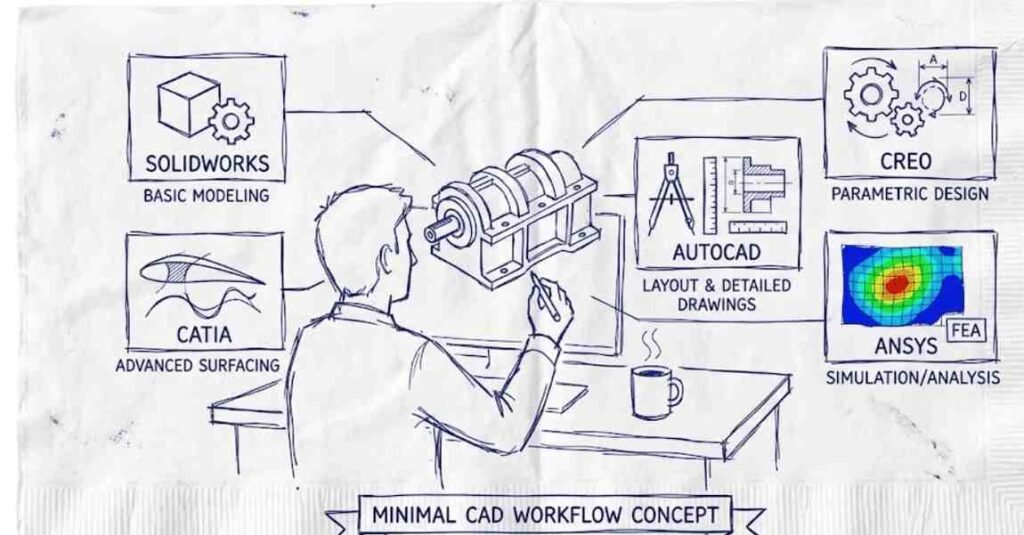
SolidWorks Certifications
CSWA (Certified SolidWorks Associate):
- Entry‑level exam testing basic part modeling, assemblies, and drawings.
- Duration: 3 hours, computer‑based.
- Cost: ~₹2,000–3,000 (varies by testing center).
- Value: Good for freshers; shows you know fundamentals.
CSWP (Certified SolidWorks Professional):
- Advanced exam covering complex parts, assemblies, configurations, and design changes.
- Duration: 5 hours.
- Cost: ~₹5,000–7,000.
- Value: Highly respected by employers; significantly improves resume weight.
Specialist Certifications:
- Surfacing, sheet metal, weldments, simulation (FEA), drawing tools.
- Each focuses on a specific domain.
- Value: Great if you’re specializing (e.g., sheet metal design, simulation work).
How to prepare:
- Official SolidWorks tutorials and practice exams.
- Online courses (Udemy, LinkedIn Learning).
- Hands‑on practice—model complex assemblies repeatedly.
AutoCAD Certifications
Autodesk Certified User (ACU):
- Basic proficiency in AutoCAD 2D drafting.
- Cost: ~₹3,000–5,000.
- Value: Good for entry‑level roles requiring drafting skills.
Autodesk Certified Professional (ACP):
- Advanced AutoCAD skills—complex drawings, productivity workflows.
- Cost: ~₹5,000–7,000.
Value: Recognized in MEP, construction, and manufacturing sectors.
CATIA Certifications
Offered by Dassault Systèmes or training partners.
CATIA V5 Associate/Professional:
- Tests part design, assembly, drafting, and surface modeling.
- Cost: ₹10,000–20,000 depending on level and provider.
Value: Essential if targeting automotive or aerospace; CATIA is industry‑standard there.
CREO (PTC) Certifications
PTC Certified Associate/Professional:
- Covers parametric modeling, assemblies, drawings.
- Cost: Variable by training partner (~₹8,000–15,000).
Value: Useful in industrial machinery, consumer products, medical devices.
ANSYS Certifications
ANSYS Certified User (Structural, Fluids, etc.):
- Tests ability to set up and solve basic simulations.
- Cost: ~₹10,000–20,000 (check ANSYS Learning Hub).
Value: Strong differentiator for CAE, R&D, and analysis roles.
3. Quality & Process Improvement Certifications
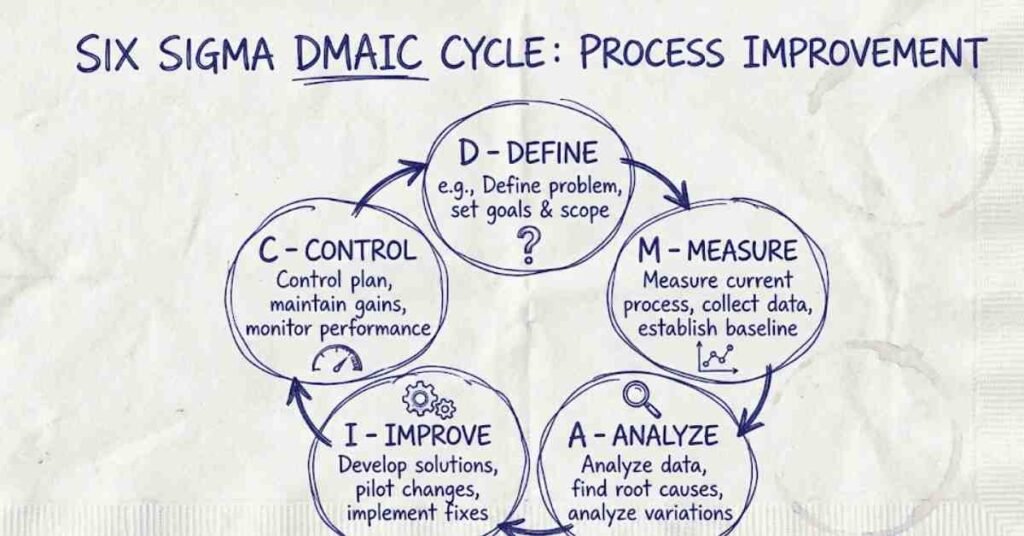
Six Sigma Yellow Belt
What it covers: Basics of Six Sigma philosophy, DMAIC methodology, basic statistics.
Duration: 1–2 weeks online or self‑paced.
Cost: ₹5,000–10,000 (varies by provider).
Value: Entry point into quality and continuous improvement; good for production/manufacturing roles.
Six Sigma Green Belt
What it covers: Leading process improvement projects, statistical tools, data analysis, project implementation.
Duration: 4–8 weeks, often requires a real project.
Cost: ₹15,000–30,000.
Value: Highly valued in manufacturing, quality, and operations roles; often leads to salary increments.
Providers: ASQ (American Society for Quality), KPMG, TÜV SÜD, various online platforms.
Six Sigma Black Belt
What it covers: Advanced statistical methods, leading large projects, mentoring Green Belts.
Duration: 3–6 months with project work.
Cost: ₹40,000–80,000+.
Value: Senior‑level credential; opens doors to quality manager, process excellence roles.
When to pursue: After 3–5 years of experience and completing Green Belt.
Add Your Heading Text Here
What it covers: Advanced statistical methods, leading large projects, mentoring Green Belts.
Duration: 3–6 months with project work.
Cost: ₹40,000–80,000+.
Value: Senior‑level credential; opens doors to quality manager, process excellence roles.
When to pursue: After 3–5 years of experience and completing Green Belt.
Lean Manufacturing Certifications
Various providers offer Lean certifications (sometimes bundled with Six Sigma as “Lean Six Sigma”).
Topics: 5S, Kaizen, Value Stream Mapping, waste elimination, continuous flow.
Value: Practical tools for shop floor improvement; excellent for production engineers.
4. Project Management Certifications
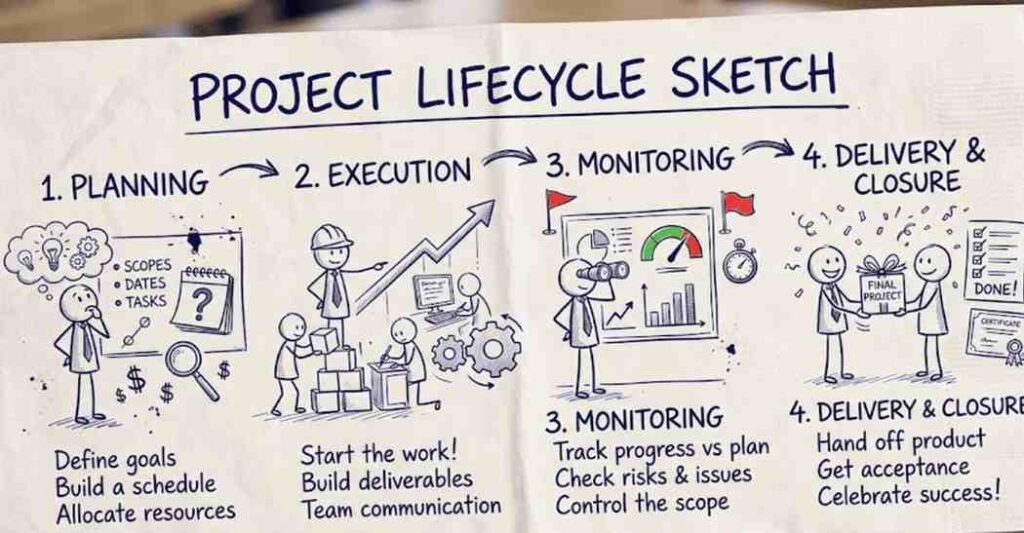
PMP (Project Management Professional)
Offered by: PMI (Project Management Institute).
Eligibility: 3–5 years of project management experience (depending on your degree).
What it covers: Project planning, execution, monitoring, risk management, stakeholder management.
Cost: ~₹20,000–25,000 (exam fee) + study materials.
Value: Gold‑standard for project managers across industries; useful if moving into leadership, project engineering, or consulting.
Preparation: 3–6 months of study; many engineers do it after 5–7 years of experience.
PRINCE2 (PRojects IN Controlled Environments)
What it is: Process‑driven project management methodology popular in Europe and some Indian MNCs.
Levels: Foundation, Practitioner.
Cost: ₹15,000–30,000 depending on level.
Value: Alternative or complement to PMP; lighter and more process‑focused.
5. Energy & HVAC Certifications
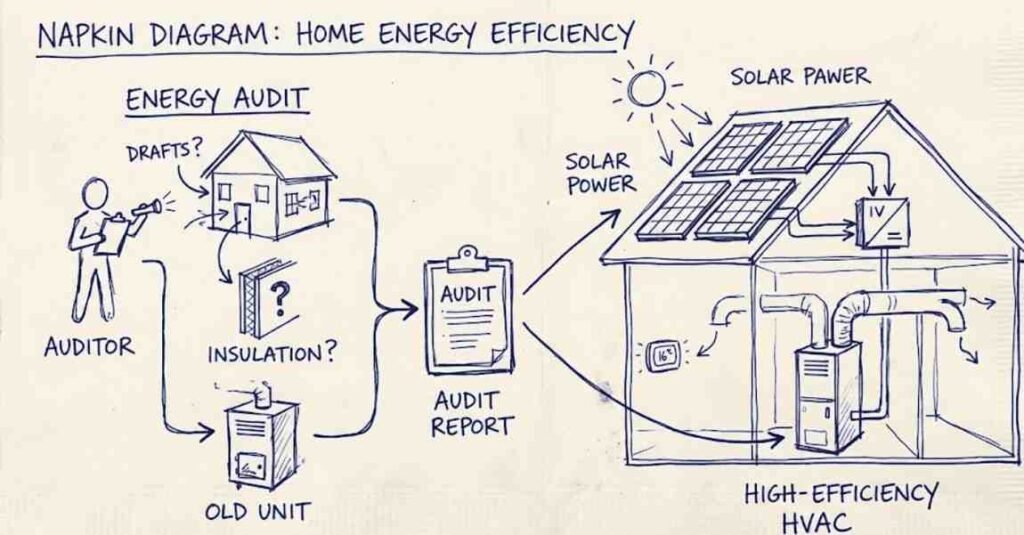
BEE Certified Energy Auditor / Energy Manager
Offered by: Bureau of Energy Efficiency (Government of India).
Eligibility: Engineering degree + relevant work experience (varies by level).
What it covers: Energy auditing, efficiency analysis, implementing energy‑saving measures.
Cost: ~₹5,000–10,000 for exam + preparation.
Value: Excellent for energy, HVAC, and industrial sectors; often required for energy manager roles.
LEED Green Associate / LEED AP
Offered by: U.S. Green Building Council (USGBC).
What it covers: Sustainable building design, energy efficiency, green building standards.
Cost: ~₹15,000–25,000 (exam + membership).
Value: Valuable in HVAC design, MEP consulting, and sustainable construction projects.
ISHRAE Certifications
Offered by: Indian Society of Heating, Refrigerating and Air Conditioning Engineers.
Levels: Various levels focusing on HVAC design, operations, and energy efficiency.
Value: Recognized in the HVAC industry in India; good for design and consulting roles.
6. Programming & Automation Certifications
Python for Engineering / Data Science
Platforms: Coursera, edX, Udemy, DataCamp.
Topics: Python basics, NumPy, Pandas, Matplotlib, Scikit‑learn.
Cost: ₹2,000–10,000 depending on depth.
Value: Increasingly important for automation, data analysis, and Industry 4.0 roles.
MATLAB Certification
Offered by: MathWorks (official) or training partners.
Topics: MATLAB programming, Simulink, toolboxes.
Cost: Variable; official courses can be expensive (₹20,000+).
Value: Strong in automotive, aerospace, control systems, and academic/research roles.
PLC Programming Certifications
Siemens Certified Automation Professional:
- Focuses on Siemens PLC platforms (Step 7, TIA Portal).
- Cost: ₹15,000–40,000 depending on level.
- Value: Highly valued in automation and manufacturing.
Rockwell Automation Certifications:
- For Allen‑Bradley PLCs (RSLogix, Studio 5000).
- Cost: Similar range.
- Value: Common in North American‑owned plants in India.
Where to learn: Authorized training centers, online courses, company‑sponsored training.
7. Additive Manufacturing / 3D Printing Certifications
Additive Manufacturing Certification (AMC):
- Offered by SME (Society of Manufacturing Engineers) or training providers.
- Topics: 3D printing processes, materials, design for additive manufacturing.
- Cost: ₹10,000–25,000.
Value: Growing field; useful in R&D, prototyping, tooling.
8. Emerging Technology Certifications
Robotics & AI for Engineers
Platforms: Coursera (e.g., Robot Operating System courses), Udacity Nanodegrees.
Topics: Robot kinematics, ROS (Robot Operating System), computer vision, sensor integration.
Cost: ₹10,000–50,000 depending on depth.
Value: Essential if pursuing robotics careers; combines mechanical + programming + AI.
IoT & Industry 4.0 Certifications
Various platforms (Coursera, edX, vendor‑specific like Siemens, AWS IoT).
Topics: IoT sensors, connectivity, cloud platforms, data analytics, smart manufacturing.
Cost: ₹5,000–30,000.
Value: Future‑oriented; aligns with smart factory trends.
9. Which Certifications Should YOU Prioritize?
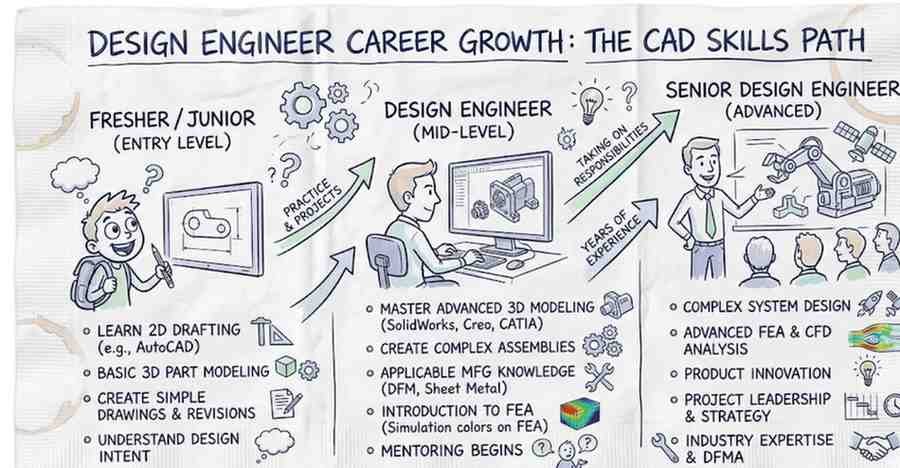
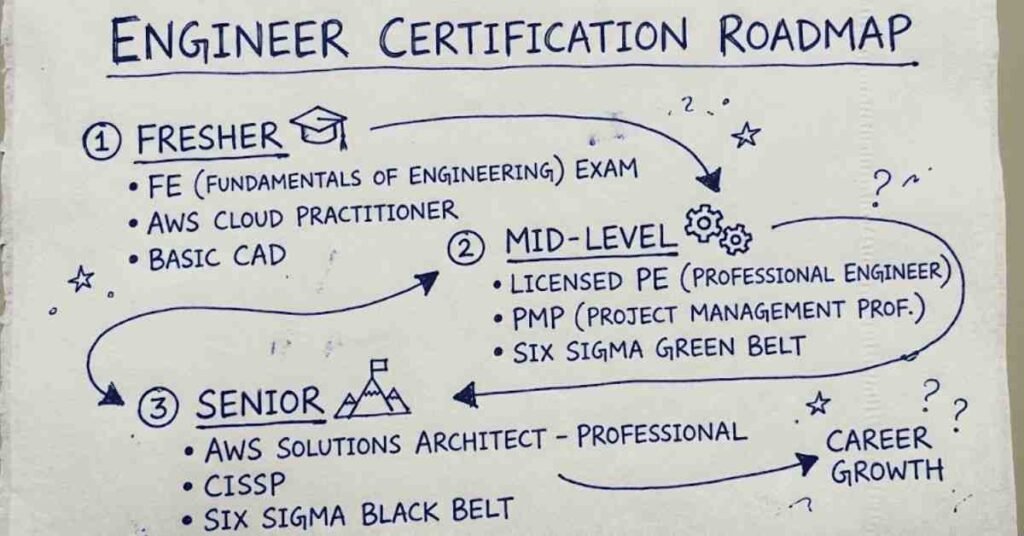
For Fresh Graduates (First 2 Years):
- One strong CAD certification (CSWA minimum, aim for CSWP if design‑focused).
- Six Sigma Yellow Belt (if interested in manufacturing/quality).
- Basic Python/programming course (future‑proofing).
For Mid‑Level Engineers (3–7 Years):
- Advanced CAD/CAE certifications matching your specialization (CATIA, ANSYS, etc.).
- Six Sigma Green Belt (especially if in production/quality).
- PLC or automation certifications (if in manufacturing/automation).
- Energy auditor or LEED (if in HVAC/energy sectors).
For Senior Engineers (8+ Years):
- Six Sigma Black Belt or PMP (if moving toward leadership).
- Industry‑specific advanced credentials (e.g., AWS Certified Solutions Architect if moving into IoT/smart systems).
- Management or business courses (e.g., executive MBA modules).
10. How to Choose Certification Providers
Official certifications: Always prefer manufacturer‑authorized (SolidWorks, Autodesk, Siemens, etc.).
Recognized bodies: ASQ for Six Sigma, PMI for PMP, BEE for energy auditors.
Online platforms: Coursera, edX, Udemy are fine for skill‑building courses, but ensure the certificate is recognized (verified certificates better than just completion certificates).
Beware of: Fly‑by‑night institutes offering “fake” certifications with impressive names but zero industry recognition. Always research the provider.
11. Return on Investment (ROI) of Certifications
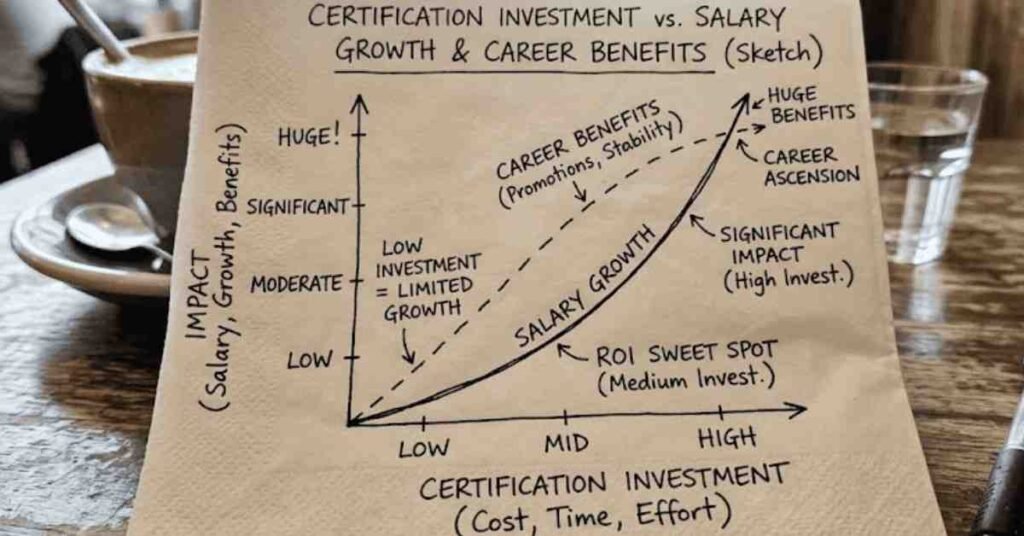
Certification costs: ₹5,000–80,000 depending on type.
Potential salary benefit:
- Entry‑level: ₹20,000–50,000 additional per year with strong certifications.
- Mid‑level: ₹1–3 LPA additional for specialized/advanced certifications.
- Senior‑level: Certifications like PMP or Black Belt can unlock ₹5–10 LPA higher roles.
Non‑monetary benefits:
- Faster promotions.
- Better project assignments.
- Increased confidence and competence.
- Networking through professional bodies.
Most certifications pay for themselves within 1–2 years through career benefits.
12. Employer‑Sponsored Certifications: Don't Miss Them
Many good companies sponsor employee training and certifications. Always:
- Ask during onboarding about training budgets.
- Propose certifications aligned with your role during appraisals.
- Take full advantage free certification + paid learning time is a huge benefit.
If your company doesn’t sponsor, invest in yourself. Certifications are one of the best career investments you can make.
13. Certifications vs Degree vs Experience: What Matters Most?
For your first job: Degree + CAD skills + projects.
For job switches (2–5 years): Experience + certifications + skills.
For senior roles (8+ years): Experience + leadership + strategic certifications (PMP, Black Belt).
Bottom line: Degrees get you in the door. Certifications prove specific skills. Experience shows you can deliver. You need all three for a strong career.