
EMERGING HOSPITALITY ROLES
Table of Contents
Emerging Hospitality Roles : Where the Industry is Heading
The Shifting Landscape of Hospitality Careers
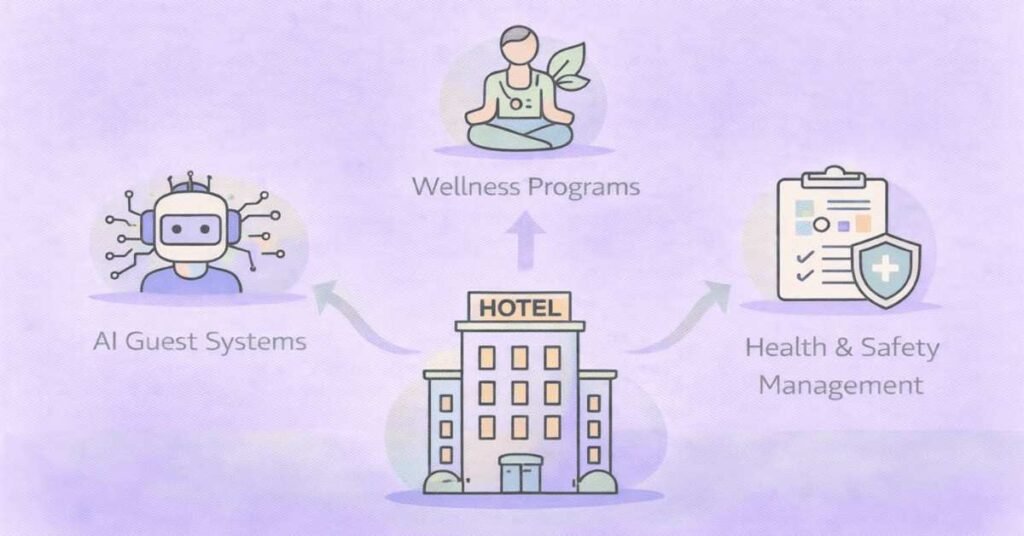
Hospitalit isn’t just about rooms and restaurants anymore. The industry is evolving rapidly in response to changing guest expectations, technological advancement, and global consciousness about sustainability. Wellness tourism is booming. Sustainability is becoming mandatory, not optional. Artificial intelligence is automating routine tasks while creating new roles. These shifts create exciting career opportunities that didn’t exist five years ago.
If you’re strategic about your hospitality career, understanding emerging roles helps you position yourself ahead of the curve. Professionals skilled in these emerging areas command premium salaries and enjoy strong job security—they’re solving problems the industry is just beginning to recognize.
Understanding the Forces Driving New Roles
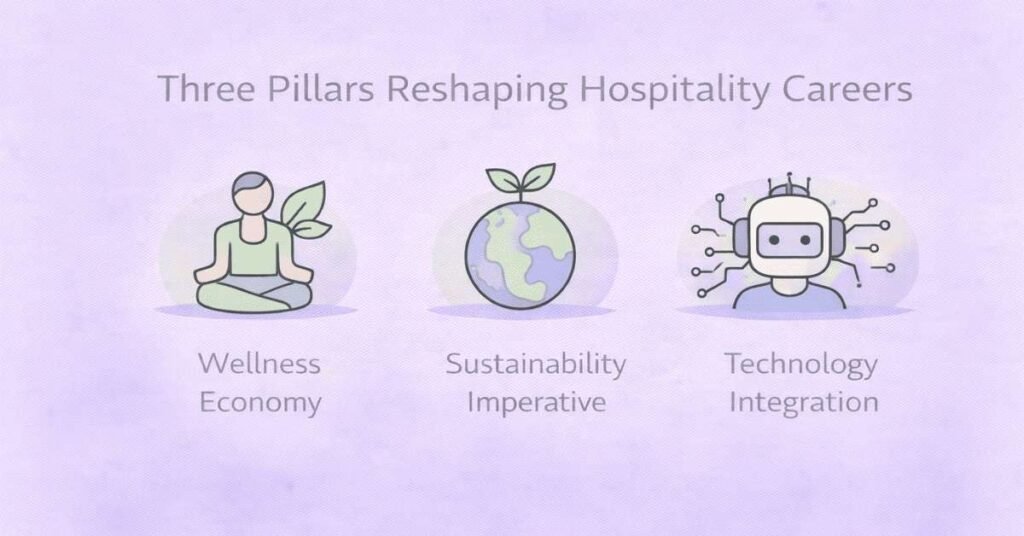
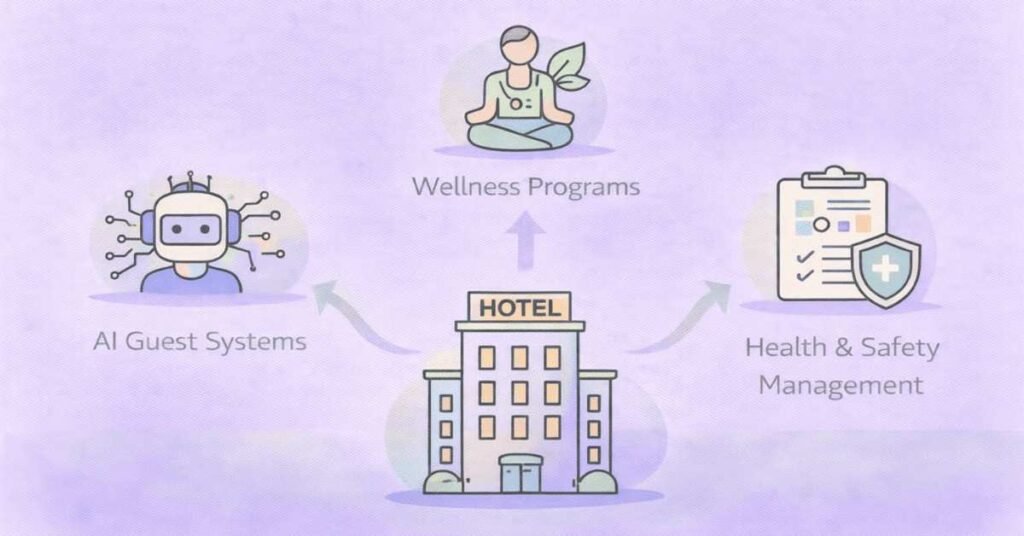
Three major forces are reshaping hospitality careers in 2025:
1. The Wellness Economy
Travelers increasingly seek health, relaxation, and self-improvement during trips. Hotels are responding by adding wellness amenities: yoga programs, meditation spaces, healthy cuisine options, spa services, and wellness coaching. This creates entirely new positions focused on wellness experiences.
2. Sustainability Imperative
Climate consciousness and sustainability expectations are transforming hospitality. Hotels must reduce carbon footprints, manage waste sustainably, use renewable energy, and ensure ethical sourcing. This creates roles for professionals managing these initiatives.
3. Technology Integration
AI chatbots, smart rooms, data analytics, and personalization algorithms are transforming guest experiences. Hotels need professionals who understand both hospitality and technology—people who can implement these systems thoughtfully.
Key Emerging Hospitality Roles
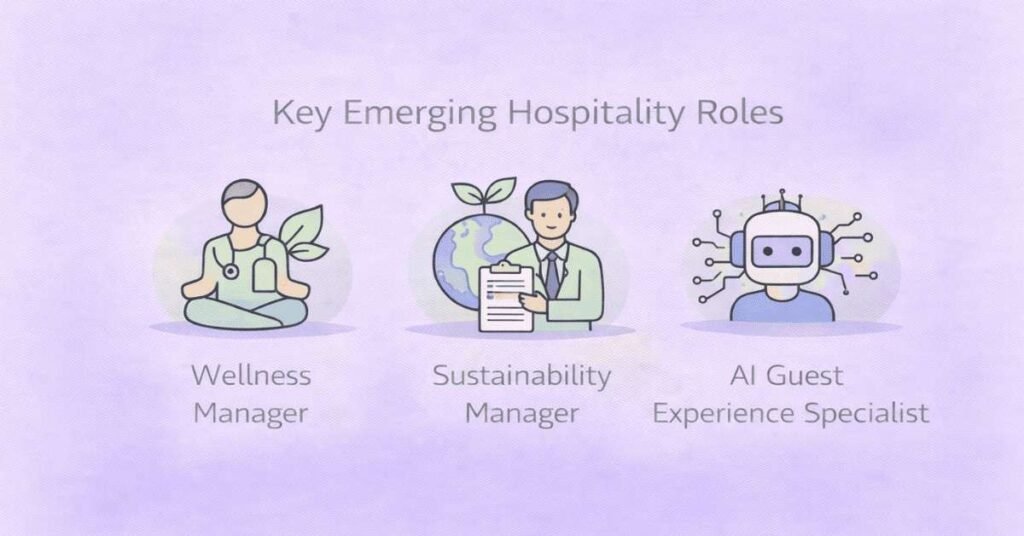
1. Wellness Coordinator/Wellness Manager
Who They Are:
Wellness Coordinators design and manage wellness programs that guests can participate in during their stay. They understand guest wellness needs and create experiences promoting physical, mental, and emotional well-being.
Responsibilities:
- Program Design – Creating yoga, meditation, fitness, nutrition, and spa programs
- Wellness Activities – Leading or organizing wellness sessions (yoga classes, meditation workshops, fitness training)
- Guest Consultation – Understanding individual wellness goals and preferences
- Vendor Management – Coordinating with yoga instructors, nutritionists, wellness coaches
- Wellness Menu Development – Creating spa and wellness service offerings
- Health & Safety – Ensuring all wellness activities meet safety standards
- Promotion – Marketing wellness programs to guests, increasing participation
- Data Collection – Tracking guest wellness preferences and satisfaction
Why It’s Growing:
The global wellness industry is worth over $4 trillion. Luxury resorts and wellness-focused properties increasingly offer comprehensive wellness programs. Guests expect properties to support their health journey during vacations.
Salary Range: INR 40,000 to 1,00,000 per month. Premium resorts focusing on wellness offer competitive salaries recognizing the role’s importance.
Certifications Valuable:
- Yoga Teacher Training (200+ hours)
- Wellness Coach Certification
- Nutrition and Health Coaching
- Meditation Teacher Training
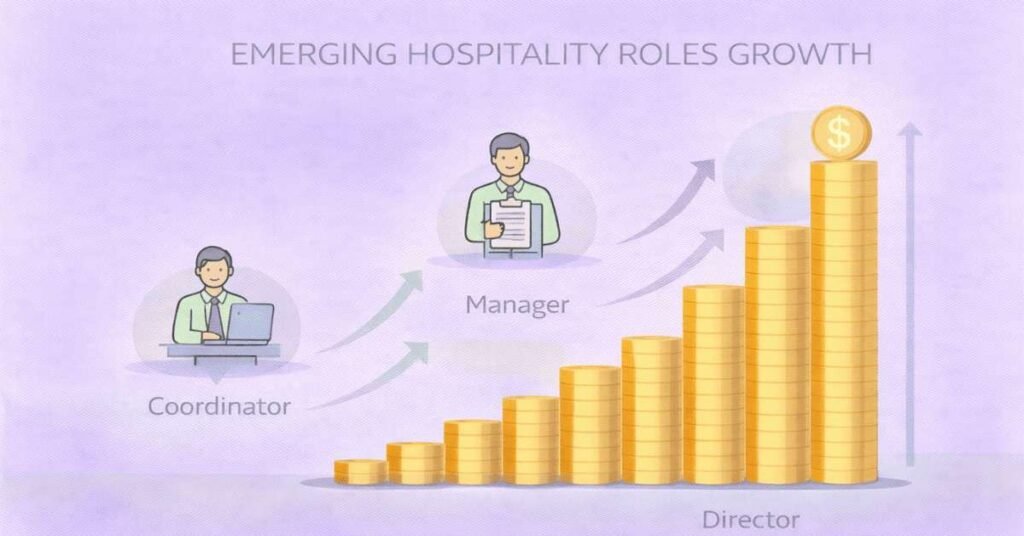
Growth Path: Wellness Coordinator → Wellness Manager → Director of Wellness & Spa
2. Sustainability Manager
Who They Are:
Sustainability Managers implement environmental and social responsibility initiatives. They reduce hotels’ carbon footprints, manage waste, ensure ethical labor practices, and measure sustainability metrics. This role combines environmental consciousness with business acumen.
Responsibilities:
- Carbon Management – Reducing energy consumption, switching to renewable energy sources
- Waste Management – Implementing recycling programs, reducing single-use plastics
- Water Conservation – Managing water usage efficiently
- Ethical Sourcing – Ensuring suppliers meet sustainability standards
- Staff Training – Educating staff on sustainability practices
- Guest Communication – Promoting sustainability initiatives to guests
- Compliance – Meeting environmental regulations and certifications (LEED, Green Key)
- Reporting & Metrics – Tracking sustainability KPIs and reporting progress
- Community Impact – Working with local communities on environmental initiatives
- Cost Analysis – Demonstrating ROI of sustainability initiatives
Why It’s Critical:
Sustainable hospitality isn’t just ethical—it’s good business. Eco-conscious travelers prefer sustainable hotels and willingly pay premium rates. Cost savings from efficiency often offset initial sustainability investments.
Salary Range: INR 50,000 to 1,50,000 per month. Hotels viewing sustainability as strategic investment rather than cost offer competitive compensation.
Required Skills:
- Environmental science or sustainability knowledge
- Data analysis for impact measurement
- Project management for implementation initiatives
- Communication for internal and external stakeholder engagement
- Business acumen for ROI demonstration
Growth Path: Sustainability Coordinator → Sustainability Manager → Head of Corporate Sustainability
3. AI/Guest Experience Specialist
Who They Are:
Guest Experience Specialists manage technology that personalizes guest experiences. They implement AI chatbots, smart room systems, personalization algorithms, and data analytics. They bridge hospitality and technology.
Responsibilities:
- Technology Implementation – Introducing AI, chatbots, smart room systems
- Personalization Strategy – Using guest data to customize experiences
- Chatbot Management – Training AI systems to handle guest inquiries, improving responses
- Data Analysis – Analyzing guest data to identify preferences and patterns
- System Optimization – Improving AI and technology systems based on guest feedback
- Staff Training – Teaching staff how to use technology effectively
- Guest Communication – Explaining technology benefits to guests, managing expectations
- Integration – Ensuring technology integrates seamlessly with human service
- Problem-Solving – Addressing technology failures, fallback protocols
Why It’s Emerging:
Post-pandemic, guests expect seamless technology. Smart rooms, AI-powered service requests, and personalized recommendations are now expected rather than novel. Hotels need professionals who can manage these systems intelligently.
Salary Range: INR 50,000 to 1,50,000 per month. Higher salaries for those with both hospitality and tech background.
Required Skills:
- Understanding of AI and data analytics
- Hospitality service mindset (technology serving guests, not replacing humanity)
- Proficiency with hotel technology systems (PMS, AI platforms)
- Data interpretation
- Problem-solving
Growth Path: Guest Experience Specialist → Technology Manager → Digital Innovation Manager
4. Health & Safety Manager
Who They Are:
Post-pandemic, health and safety have become paramount. Health & Safety Managers ensure properties meet sanitation standards, manage health protocols, and protect both guests and staff.
Responsibilities:
- Sanitation Protocols – Implementing and monitoring cleaning standards
- Health Compliance – Ensuring properties meet health department regulations
- Staff Health – Managing staff health screening, training on protocols
- Guest Health – Communicating health measures, managing health concerns
- Outbreak Response – Quick response protocols if health issues arise
- Preventive Measures – Implementing preventive health initiatives
- Documentation – Maintaining health and safety records
- Certification – Ensuring properties maintain health certifications
- Training – Educating staff on health and safety protocols
- Supplier Vetting – Ensuring suppliers meet health standards
Why It’s Important:
Guests prioritize safety and cleanliness. Properties with strong health protocols command guest loyalty and premium pricing. This role directly impacts both guest satisfaction and brand reputation.
Salary Range: INR 40,000 to 1,20,000 per month. Increasing as health consciousness remains priority.
Certifications:
- Health & Safety Professional (NEBOSH, IOSH)
- Food Safety Certification
- COVID-19 Safety Protocols
Growth Path: Health & Safety Coordinator → Health & Safety Manager → Director of Operations (with health focus)
5. Corporate Wellness Program Manager
Who They Are:
Hotels are creating corporate wellness programs for business travelers and companies holding wellness retreats. Corporate Wellness Managers design and manage these programs.
Responsibilities:
- Program Design – Creating customized wellness programs for corporate clients
- Wellness Retreat Planning – Designing multi-day corporate wellness events
- Vendor Coordination – Working with wellness experts, activity providers
- Measurement & ROI – Demonstrating wellness program impact on employee wellness
- Client Relationships – Building long-term relationships with corporate clients
- Content Creation – Developing wellness education materials
- Activity Coordination – Organizing wellness activities (meditation, fitness, nutrition workshops)
- Budget Management – Managing program budgets and resource allocation
Why It’s Growing:
Companies recognize employee wellness impacts productivity, reduces healthcare costs, and improves retention. Corporate wellness programs are increasingly important benefits, driving demand for wellness retreat experiences at hotels.
Salary Range: INR 50,000 to 1,50,000 per month. Growing as corporate wellness becomes priority.
Growth Path: Program Coordinator → Wellness Manager → Director of Corporate Programs
6. Data Analyst (Hospitality-Focused)
Who They Are:
Hotels generate enormous data on guest behavior, preferences, occupancy patterns, and operational efficiency. Data Analysts interpret this data to improve operations, marketing, and guest experiences.
Responsibilities:
- Guest Analysis – Analyzing booking patterns, guest preferences, behavior patterns
- Operational Efficiency – Identifying operational inefficiencies through data
- Revenue Analysis – Analyzing pricing, occupancy, RevPAR, identifying revenue opportunities
- Marketing Analytics – Measuring campaign effectiveness, ROI
- Predictive Modeling – Forecasting demand, occupancy, guest behavior
- Report Generation – Creating dashboards and reports for management
- Recommendations – Providing data-driven recommendations for improvement
- Technology Integration – Working with PMS, analytics tools, databases
Salary Range: INR 45,000 to 1,50,000+ per month. Higher for those with advanced analytics skills.
Required Skills:
- Excel and data visualization tools
- Understanding of hospitality metrics (ADR, RevPAR, occupancy)
- Basic SQL or Python for data manipulation
- Critical thinking and business acumen
Growth Path: Data Analyst → Senior Data Analyst → Business Intelligence Manager
Future-Ready Hospitality Skills
Beyond specific roles, professionals who develop these skills position themselves for emerging opportunities:
Digital Literacy & AI Understanding
- Proficiency with hospitality technology
- Understanding of AI capabilities and limitations
- Data interpretation skills
- Ability to implement technology thoughtfully
Sustainability Mindset
- Environmental consciousness
- Ethical business practices
- Long-term thinking beyond quarterly profits
- Understanding environmental regulations
Wellness Consciousness
- Knowledge of wellness trends
- Understanding guest wellness needs
- Ability to design experiences supporting well-being
- Mental health awareness
Adaptability & Continuous Learning
- Willingness to upskill as industry evolves
- Flexibility in role expectations
- Curiosity about new trends
- Growth mindset
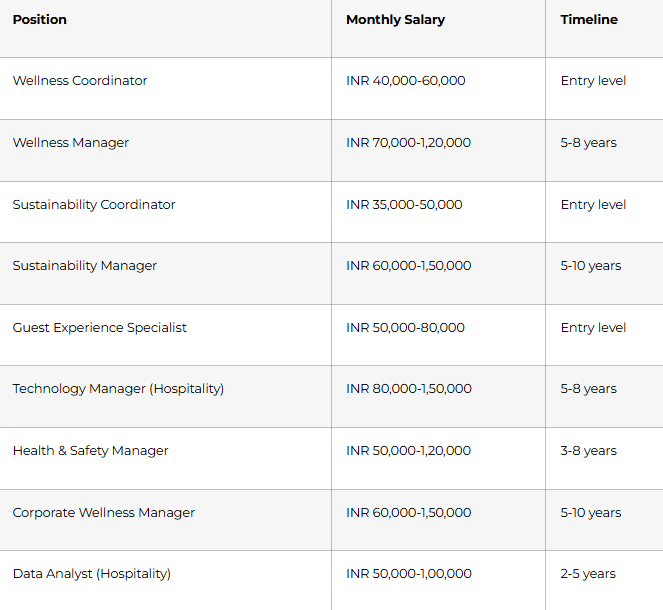
Emerging Role Salary Progression
Your Path Into Emerging Roles
Positioning Yourself for Wellness Careers
- Gain Wellness Certifications – Yoga, meditation, or wellness coaching credentials
- Combine with Hospitality Experience – Work in hospitality properties offering wellness
- Build Expertise – Deep knowledge of wellness trends and guest needs
- Create Portfolio – Documentation of wellness programs you’ve created
Entering Sustainability Careers
- Learn Environmental Science – Formal education or self-directed learning
- Understand Sustainability Certifications – LEED, Green Key, ISO 14001
- Develop Business Skills – Understand ROI, cost-benefit analysis
- Build Advocacy – Demonstrate genuine commitment to sustainability
Technology-Focused Emerging Roles
- Develop Tech Skills – Learn AI basics, data analytics, relevant programming
- Understand Hospitality Systems – Knowledge of PMS, hotel technology
- Balance Tech with Hospitality – Understand that technology serves guests, doesn’t replace them
- Stay Current – Continuously learn as technology evolves
Why Emerging Roles Are Your Competitive Advantage
Emerging roles offer several advantages:
- Less Competition – Fewer professionals have these skills, creating high demand
- Premium Compensation – Hotels value rare skills, offering competitive salaries
- Career Differentiation – Standing out in hospitality job market
- Job Security – These skills will be increasingly critical
- Meaningful Work – Contributing to sustainability, guest wellness, and positive change
- Future-Proofing – Positioning yourself for industry evolution
Key Insight: The Future is Specialized Hospitality
The days of generic hospitality careers are ending. Future opportunities belong to professionals who combine hospitality excellence with specialized expertise—wellness, sustainability, technology, health, or data. Invest time developing specialized skills alongside hospitality fundamentals, and you’ll be positioned for leadership roles in the evolving hospitality industry.