
Hotel Operations Manager Career Guide
Table of Contents
Hotel Operations & Management Career Path: Your Complete Guide
Why Hotel Operations Is Your Gateway to Hospitality Leadership
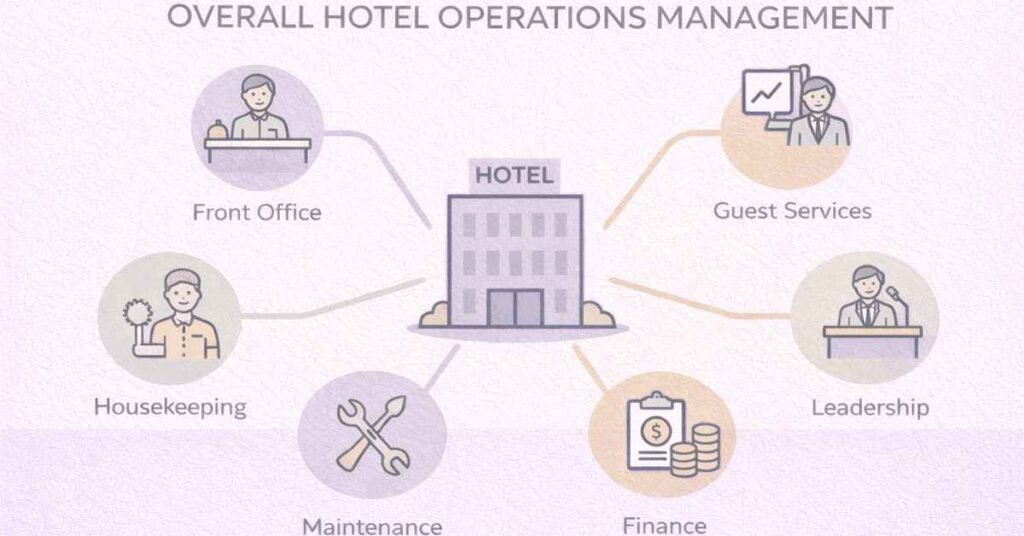
If you’re drawn to leadership, problem-solving, and creating seamless guest experiences, hotel operations might be your ideal career path. Unlike specific departments like F&B or housekeeping, operations managers are the “glue” holding everything together—coordinating multiple teams, managing budgets, ensuring guest satisfaction, and driving profitability. Think of it as conducting an orchestra where each department is an instrument, and your job is ensuring they create perfect harmony.
This role has transformed dramatically in 2025. Modern operations managers aren’t just supervising staff—they’re leveraging data analytics, managing AI-integrated systems, and strategically positioning hotels to remain competitive. If you enjoy variety, responsibility, and tangible impact, this career path offers exceptional growth potential.
Understanding the Hotel Operations Structure
a 3-star property or a luxury 5-star resort—operates through interconnected departments. The operations team is responsible for ensuring these departments function harmoniously.
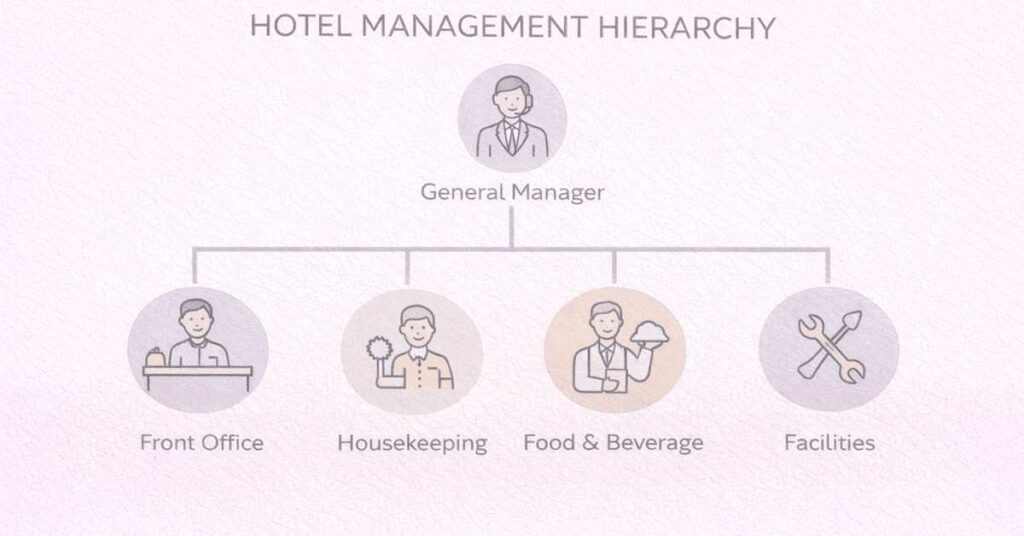
The Typical Hotel Hierarchy:
Think of it this way: The General Manager (GM) is the hotel’s CEO. They set the overall strategy and are accountable to ownership. Below the GM sits the Hotel Operations Manager (sometimes called Deputy GM or Operations Director), who focuses on day-to-day excellence. They coordinate with department heads who run Front Office, Housekeeping, F&B, Maintenance, and other functions.
In smaller hotels, the GM handles operations directly. In large chains or resort properties, there might be multiple assistant operations managers, each specializing in different areas.
Key Roles in Hotel Operations
1. Hotel General Manager (GM)
Who They Are:
The General Manager is the hotel’s top executive on property. They report to regional management or ownership and are ultimately responsible for everything—guest satisfaction, profitability, staff performance, and strategic growth.
Daily Responsibilities:
- Strategic Planning – Developing annual budgets, setting revenue targets, and planning property improvements
- Financial Management – Overseeing all revenue streams (rooms, F&B, events), controlling expenses, and achieving profit margins
- Guest Relations – Handling VIP guests, resolving significant complaints, and maintaining brand reputation
- Staff Leadership – Hiring senior managers, evaluating performance, and fostering company culture
- Revenue Optimization – Working with sales and revenue teams to maximize occupancy and average room rates
- Compliance & Safety – Ensuring the hotel meets all legal requirements, health standards, and safety regulations
- Community Relations – Representing the hotel in local business forums and partnerships
Salary Range: INR 1,00,000 to 5,00,000+ per month depending on hotel category and location. Premium 5-star properties in metros like Mumbai, Delhi, or Bangalore can offer packages exceeding INR 50 lakhs annually.
Career Path to GM: Typically requires 10-15 years of progressive hospitality experience, starting from entry-level roles and working through supervisory, management, and director positions.
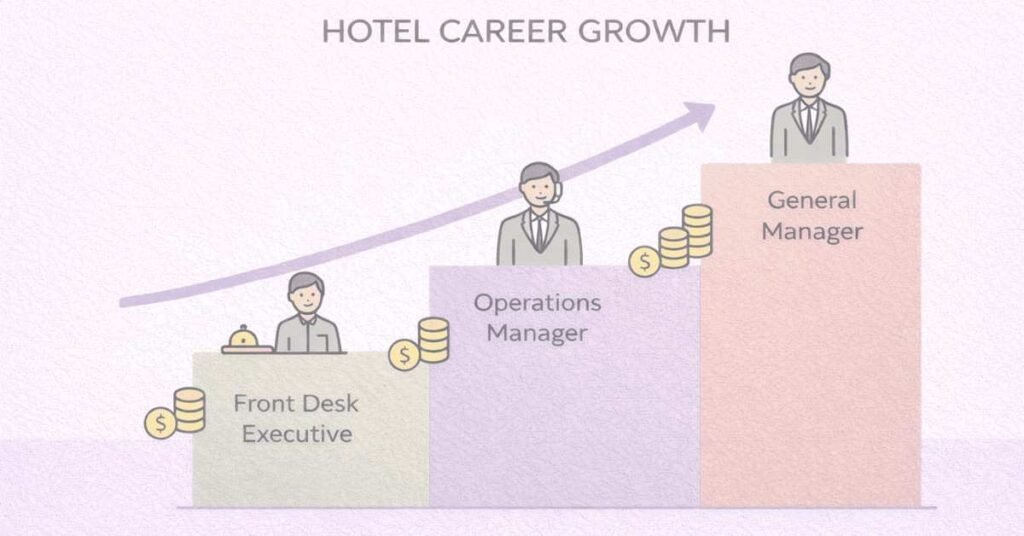
Real Example: A typical GM journey might look like: Front Desk Executive (2 years) → Shift Manager (3 years) → Assistant Manager (3 years) → Operations Manager (3 years) → General Manager.
2. Hotel Operations Manager/Deputy General Manager
Who They Are:
The Operations Manager is the GM’s right hand, handling the “how” while the GM handles the “why.” They manage daily operations across multiple departments and directly oversee quality standards, guest satisfaction, and departmental coordination.
Key Responsibilities:
- Department Coordination – Daily meetings with heads of Front Office, Housekeeping, Maintenance, and F&B to discuss operations
- Quality Assurance – Conducting property inspections, mystery shopper reviews, and guest feedback analysis
- Guest Experience Management – Handling escalated complaints and ensuring consistent service delivery
- Budget Monitoring – Tracking departmental expenses, identifying cost-saving opportunities without compromising quality
- Staff Supervision – Managing duty managers, ensuring adequate staffing during peak periods
- SOPs Implementation – Developing and ensuring all departments follow Standard Operating Procedures
- Safety & Compliance – Conducting fire drills, health inspections, and safety audits
Salary Range: INR 70,000 to 2,00,000 per month, averaging around INR 80,000-1,20,000 in mid-tier hotels and significantly higher in luxury properties.
Why This Role Matters: Operations Managers are often called “operational heroes” because they handle real-time problems. A guest’s room has a plumbing issue? An event’s catering went wrong? A staff member called in sick during peak hours? The Operations Manager solves these immediately while maintaining service standards.
Growth Path: Operations Manager → Director of Operations → General Manager
3. Front Office Manager
Who They Are:
The Front Office Manager oversees the hotel’s “welcome desk” and is often the first hospitality professional guests interact with. They manage the front desk team, reservations, guest services, and everything from check-in to check-out.
Daily Responsibilities:
- Team Leadership – Managing front desk executives, reservationists, and bell staff
- Guest Relations – Handling check-ins, room assignments, special requests, and guest problems
- Reservations Management – Coordinating room inventory, managing bookings, and optimizing occupancy
- Revenue Assistance – Upselling room upgrades, promoting services, and managing room rate strategies
- Shift Management – Planning staffing schedules, covering absences, and managing peak periods
- Complaint Resolution – Addressing guest complaints professionally and finding satisfactory solutions
- System Management – Using Property Management Systems (PMS) for reservations and guest information
- Daily Reporting – Providing operations reports on occupancy, revenue, and guest feedback
Salary Range: INR 30,000 to 60,000 per month for mid-level positions, with experienced Front Office Managers earning INR 80,000-1,50,000+ depending on property category. Average Front Office Manager salary in India is around INR 22,000 per month across all categories.indeed+1
Why This Role Is Crucial: First impressions matter. A warm, efficient front office sets the tone for the entire stay. Front Office Managers who excel often become Shift Managers and eventually Operations Managers.
Career Progression: Front Desk Executive → Senior Executive → Front Office Manager → Shift Manager → Operations Manager
4. Shift Manager/Duty Manager
Who They Are:
The Shift Manager is the hotel’s manager on duty during their assigned shift (morning, afternoon, or night). They represent the GM and Operations Manager when senior management isn’t present and make real-time decisions.
Key Responsibilities:
- On-Site Authority – Being the senior decision-maker during their shift
- Problem Resolution – Handling guest complaints, staff issues, and operational emergencies
- Quality Monitoring – Walking through the property, conducting inspections, ensuring standards
- Communication – Updating Operations Manager and GM on significant issues or events
- Security Oversight – Ensuring guest safety, managing emergency protocols
- Financial Accountability – Managing POS systems, handling guest billing issues, managing cash
- Staff Coordination – Ensuring adequate staffing, managing call-outs, scheduling
Salary Range: INR 40,000 to 80,000 per month depending on shift (night shift typically offers premium pay) and hotel category.
Why It’s Important: Night shift managers, for example, are often the only senior manager present. Their decisions directly impact guest safety and satisfaction. Competent shift managers prevent situations from escalating.
5. Executive Housekeeper/Director of Housekeeping
Who They Are:
The Executive Housekeeper is the head of housekeeping operations—the department responsible for room cleanliness, maintenance, and the overall appearance of the property. This role is more strategic than cleaning; it’s about efficiency, quality control, and team leadership.
Key Responsibilities:
- Team Management – Supervising housekeeping staff (can range from 20-100+ people depending on property size)
- Quality Standards – Establishing cleaning protocols, conducting room inspections, maintaining consistent quality
- Budget Management – Managing inventory of cleaning supplies, linens, uniforms; controlling expenses
- Training & Development – Training staff on cleaning procedures, safety protocols, and customer service
- Scheduling – Creating work schedules, managing absences, allocating staff efficiently
- Guest Relations – Responding to cleanliness complaints, ensuring prompt resolutions
- Maintenance Coordination – Working with maintenance team on necessary repairs or deep cleaning
- Compliance – Ensuring health, safety, and environmental regulations are met
Salary Range: INR 50,000 to 1,20,000 per month depending on property size and location. Executive housekeepers in premium 5-star properties earn significantly more.
Why It’s Critical: Cleanliness is non-negotiable in hospitality. An Executive Housekeeper ensuring spotless rooms prevents negative reviews, guest complaints, and lost repeat business. The housekeeping department often has the largest staff count, making this a significant management responsibility.
Career Path: Housekeeping Trainee → Senior Housekeeping Staff → Housekeeping Supervisor → Housekeeping Manager → Executive Housekeeper
6. Director of Facilities/Chief Engineer
Who They Are:
The Director of Facilities oversees the hotel’s physical infrastructure—everything from electrical systems to plumbing, HVAC, safety systems, and equipment maintenance. In hospitality, a broken air conditioner or non-functional elevator directly impacts guest satisfaction.
Key Responsibilities:
- Infrastructure Maintenance – Managing all physical systems (electrical, plumbing, HVAC, water supply)
- Preventive Maintenance – Regular inspections and servicing to prevent breakdowns
- Emergency Response – Rapid response to equipment failures or safety issues
- Budget Planning – Managing maintenance budgets and planning capital expenditures
- Safety Compliance – Ensuring electrical safety, fire systems, structural integrity
- Staff Management – Supervising maintenance technicians, electricians, and support staff
- Energy Efficiency – Implementing sustainable practices, reducing utility costs
- Guest Experience – Ensuring comfort (temperature, lighting, water pressure, etc.)
Salary Range: INR 50,000 to 1,50,000 per month depending on hotel complexity and size.
Why It’s Essential: Guests don’t think about air conditioning until it breaks. A well-maintained facility ensures every system runs seamlessly, contributing to positive guest experiences and operational efficiency.
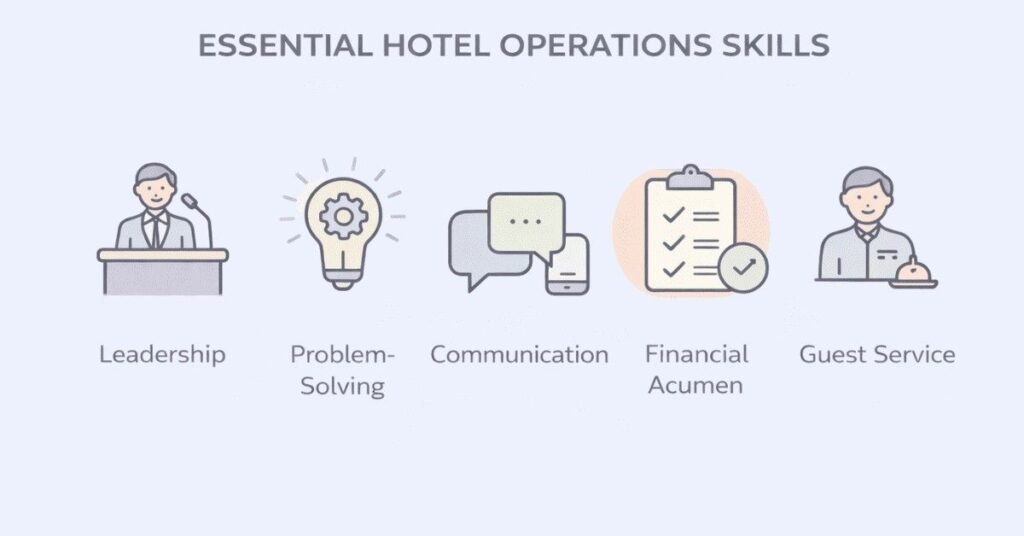
Essential Skills for Hotel Operations Professionals
Beyond job-specific knowledge, successful operations professionals possess these key competencies:
Leadership & Team Management
Hotel operations require leading diverse teams with varying skill levels. You need to:
- Motivate staff to maintain high standards despite repetitive work
- Make decisions that balance guest satisfaction with operational efficiency
- Handle conflicts professionally
- Create a positive work culture despite pressure during peak seasons
Practical Application: During a peak season, you might have multiple rooms with issues, staff absences, and guest complaints. Your leadership determines whether your team rises to the challenge or becomes stressed and error-prone.
Problem-Solving Under Pressure
solutions. You need to:
- Think quickly and find creative solutions
- Remain calm during crises
- Make decisions with incomplete information
- Learn from mistakes rapidly
Real Scenario: A major event guest arrives to find their booked suite isn’t ready due to a maintenance issue. You can’t cancel their reservation. You need to offer an alternative room, compensation, or solution within minutes.
Communication Across Departments
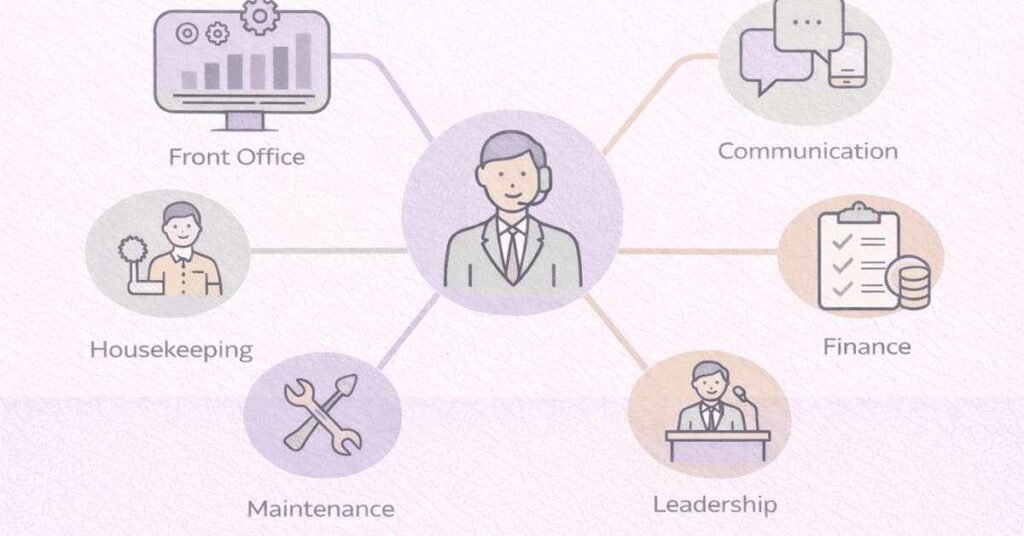
Operations managers are “bridges” between different departments. Essential communication skills include:
- Clear, professional communication with senior management
- Translating upper management directives to frontline staff
- Active listening to department heads’ concerns
- Providing feedback that motivates improvement
Financial Acumen
Understanding hospitality finances is critical:
- Budget planning and monitoring
- Revenue optimization (yield management)
- Cost control without sacrificing quality
- Understanding financial reports and KPIs
Why It Matters: A small decision (like reducing housekeeping staff) might save costs initially but harm guest satisfaction, leading to lower ratings and reduced bookings—ultimately decreasing revenue.
Technical/Digital Literacy
Modern hotels rely on technology. You should be comfortable with:
- Property Management Systems (PMS) like Opera, Fidelio
- Data analytics and reporting dashboards
- Email and communication platforms
- Basic cybersecurity awareness
Guest Service Mindset
Operations managers set the tone for service quality. They must understand:
- Guest expectations and preferences
- Service recovery techniques
- Quality standards and consistency
- Creating memorable experiences
Salary Progression in Hotel Operations
Here’s how earnings grow as you advance:
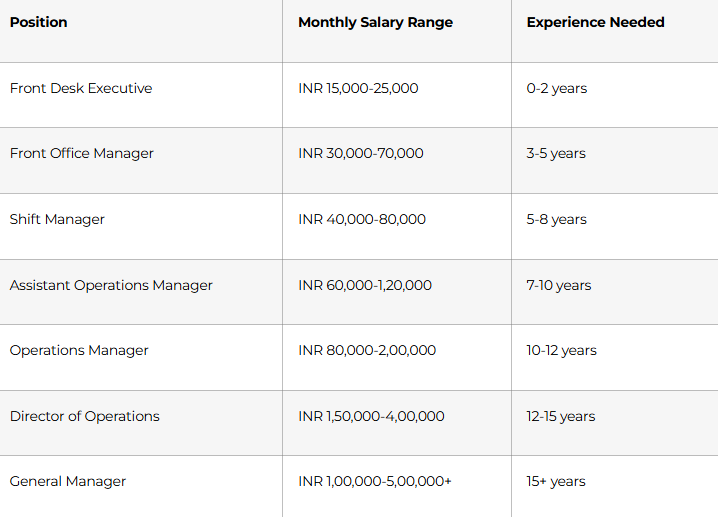
Key Insight: Each promotion typically brings 40-60% salary increase. Strong performers accelerate this timeline through merit-based promotions.
Your Path Forward: Getting Into Hotel Operations
Step 1: Start With Front Office
Most successful operations managers start at the front office. Why? Because:
- You learn guest interaction skills
- You understand the PMS systems
- You experience every department’s challenges
- You build interpersonal relationships across the property
Entry Point: Apply for Front Desk Executive positions. Salary: INR 15,000-20,000/month. Within 6-12 months of strong performance, you’ll be eligible for promotion.
Step 2: Move to Supervisory Role
After 2-3 years, aim for Senior Executive or Supervisor positions. This is where you begin managing others and understanding operational challenges beyond your individual role.
Step 3: Formal Education
Consider pursuing a Hotel Management diploma or degree while working. Many successful managers combine:
- Practical experience (primary)
- Formal education (supporting credential)
This combination is highly valued by hotels.
Step 4: Seek Shift Manager Position
Becoming a Shift Manager (usually after 5-8 years) is the gateway to operations management. This role gives you exposure to all departments and decision-making authority.
Step 5: Target Operations Manager Role
With Shift Manager experience and demonstrated leadership, you’re ready for Assistant Operations Manager, eventually advancing to Operations Manager.