
Industry-Specific HR Questions
Table of Contents
Blog Content
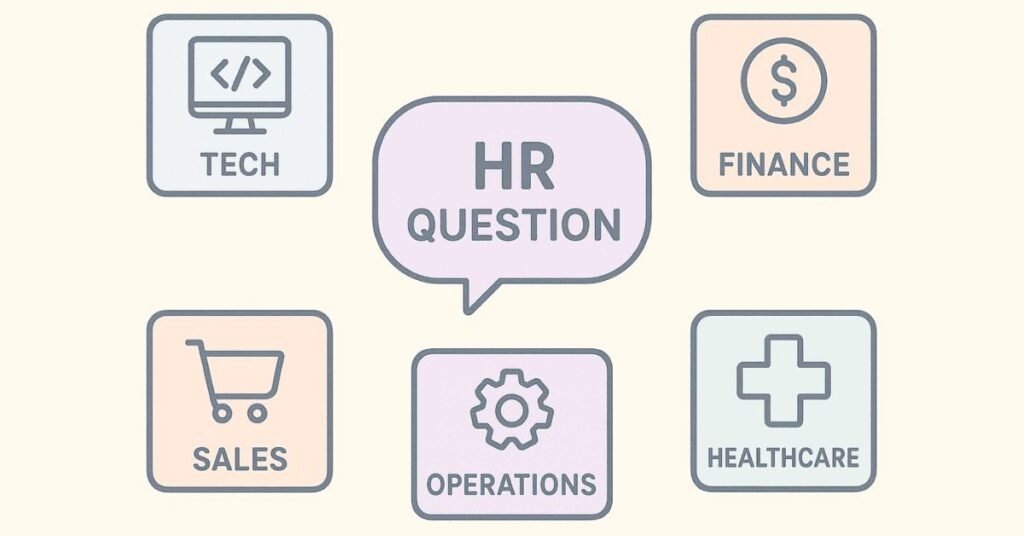
Here’s something most candidates don’t realize: while HR interview fundamentals are the same across industries, the specific questions you’ll be asked vary significantly based on your sector.
An HR interview for a software developer is different from an HR interview for a financial analyst, which is different from an HR interview for a sales representative. Why? Because each industry values different skills, handles different challenges, and prioritizes different competencies.
In this section, we’ll break down industry-specific HR interview questions by sector. By the time you finish reading this, you’ll know exactly what to expect and how to answer confidently in your industry.
Industry 1: IT and Technology Sector
The tech industry values innovation, problem-solving, continuous learning, and adaptability. HR professionals in tech want to understand your technical curiosity and your ability to work in fast-paced environments.
Question 1.1: "Tell me about a technical challenge you solved. What was your approach?"
Why They Ask This:
In tech, you’re expected to solve complex problems regularly. HR wants to see your problem-solving methodology, not just that you can solve problems.
The Winning Answer:
“In my previous role as a frontend developer at a fintech startup, we had a serious issue: our web application was loading slowly for users with slower internet connections. This was causing customer complaints and affecting our conversion rates.
Instead of just accepting slow loading times, I dug into what was causing it. Using Chrome DevTools, I discovered that we were loading large image files without optimization and our JavaScript bundle was larger than necessary.
Here’s what I did:
Step 1: I implemented image compression and lazy loading for images that weren’t immediately visible on the page. This reduced initial page load by 40%.
Step 2: I analyzed our JavaScript code and found redundant libraries we weren’t using. By removing them and implementing code splitting, I reduced our bundle size by 35%.
Step 3: I set up performance monitoring to track loading times continuously and established benchmarks to prevent regression.
Result: Page load time decreased from 4.2 seconds to 1.8 seconds. Our mobile conversion rate increased by 28% within the first month. I also created documentation for the team so everyone understood the changes and could apply similar optimization techniques to future projects.”
Why This Works:
- Shows systematic problem-solving
- Demonstrates technical knowledge
- Has measurable results
- Shows you care about user experience
- Proves you can improve team practices
Question 1.2: "How do you stay updated with new technologies and trends in your field?"
Why They Ask This:
Tech changes rapidly. Companies need people who are genuinely interested in learning and staying current, not people who learned something 5 years ago and stopped.
The Winning Answer:
“Technology evolves constantly, so staying updated is non-negotiable for me. Here’s what I do:
Regular Learning:
I follow tech blogs like Dev.to, CSS-Tricks, and Medium publications focused on my specialty. I spend about 3-4 hours per week reading and learning about new frameworks, tools, and best practices.
Hands-On Experimentation:
I don’t just read about new technologies—I build small projects with them. For example, when React 18 was released with concurrent rendering features, I built a practice project to understand how it works in real-world scenarios.
Community Engagement:
I’m active in developer communities. I attend local tech meetups once a month and participate in online forums like Stack Overflow where I both ask questions and help others. This helps me understand not just what’s new, but why it matters.
Professional Certifications:
Last year, I completed a certification in cloud architecture because I wanted to deepen my understanding of AWS, which is critical for our industry.
Sharing Knowledge:
I believe the best way to learn is to teach. I write blog posts about technologies I’m learning and occasionally speak at team knowledge-sharing sessions. This reinforces my learning and helps the entire team stay current.
Real Example:
When AI and machine learning started becoming more relevant to web development, I took an online course and built a chatbot project. This knowledge directly helped our company when we were evaluating AI integration options.”
Why This Works:
- Shows proactive learning mindset
- Demonstrates multiple learning channels
- Proves you apply learning practically
- Shows commitment to continuous improvement
- Indicates you’re valuable for team growth

Question 1.3: "How do you approach working in an Agile environment?"
Why They Ask This:
Most tech companies use Agile methodology. They want to know if you understand it and can work effectively within it.
The Winning Answer:
“I’ve worked in Agile environments for 4 years and genuinely appreciate the methodology. Here’s my understanding and approach:
Understanding Agile Principles:
Agile is about delivering value incrementally, being flexible to change, and maintaining close collaboration with the team. It’s not about moving fast without direction—it’s about being smart and collaborative about how we move.
Sprint Planning and Execution:
In sprint planning, I help estimate stories realistically and raise concerns early if I see challenges. During the sprint, I focus on completing stories to the ‘Definition of Done’ rather than just coding features.
Daily Standups:
I see standups as crucial communication. I’m honest about blockers. If I’m stuck, I mention it immediately so the team can help, rather than struggling alone for days.
Retrospectives:
Retrospectives are where real improvement happens. I actively participate and share both what’s working and what we could improve. I believe in psychological safety—if people don’t speak up in retros, the team never improves.
Flexibility:
One of Agile’s core strengths is adapting to change. When requirements shift mid-sprint because of market needs or customer feedback, I understand that’s the point of Agile. I’m not frustrated by changes; I see them as necessary.
Real Example:
In a previous project, mid-sprint we discovered that our approach to a feature wouldn’t work with the new API we were integrating with. Instead of rigidly sticking to the sprint plan, our team discussed it in the standup, pivoted quickly, and refactored our approach. This agility probably saved us from a month-long problem discovery later.”
Why This Works:
- Shows you actually understand Agile, not just the buzzword
- Demonstrates collaborative mindset
- Proves you’re flexible and adaptable
- Shows you value team communication
- Indicates you embrace continuous improvement
Question 1.4: "Tell me about a time when you had to work with non-technical stakeholders. How did you handle it?"
Why They Ask This:
Technical skills alone don’t make you valuable. Companies need people who can bridge the gap between tech and business. This tests your communication skills and whether you can explain complex concepts simply.
The Winning Answer:
“This happens regularly in my role, and I actually enjoy it because it requires a different skill set.
The Situation:
Our company was planning a major feature redesign. Our product manager wanted to add AI-powered recommendations to our application. Our CEO was excited about the business potential but didn’t understand the technical complexity. The sales team wanted to promise customers this feature within 2 months, but I knew technically it would take 4 months.
My Approach:
Step 1 – Understand Their Perspective First:
Before jumping to explain the technical constraints, I asked questions: ‘Why is this feature important to our customers? What business outcome are we hoping for? What timeline do we need for competitive reasons?’
Step 2 – Translate Tech to Business Language:
Instead of saying ‘Machine learning models require large datasets and significant computational resources,’ I said: ‘For AI recommendations to work well, we need historical data showing what customers liked. Building that model and testing it takes about 4 months. If we rush it, the recommendations will be poor and customers will disable the feature, which defeats the purpose.’
Step 3 – Propose a Solution:
Instead of just saying ‘no,’ I proposed: ‘We can deliver a basic version in 2 months that works for popular products, then expand it over the next 2 months. This way, customers get value quickly, and we build the full solution properly.’
Step 4 – Create Visual Understanding:
I created a simple diagram showing how the feature works and the time needed for each component. Visuals help non-technical people understand better than explanations alone.
Result:
The team agreed to the 2-month initial release with expanded features later. Sales could promise a real timeline and deliver. The feature launched on schedule and customers were happy.”
Why This Works:
- Shows empathy for non-technical perspectives
- Demonstrates communication skills
- Proves you can solve problems collaboratively
- Shows business acumen, not just technical skills
Indicates you’re valuable beyond just coding

Industry 2: Finance and Banking Sector
Finance and banking value precision, regulatory compliance, risk management, and attention to detail. These industries are heavily regulated, so HR asks questions about your understanding of compliance and ethical practices

Question 2.1: "How do you ensure accuracy and attention to detail in your work?"
Why They Ask This:
In finance, a small mistake can have massive consequences. A decimal point error in a transaction could cost thousands. HR wants to know your systems for preventing errors.
The Winning Answer:
“In finance, accuracy isn’t optional—it’s fundamental. Here’s how I ensure precision in my work:
Double-Check Systems:
Every report or transaction I complete goes through a verification process. I create formulas with built-in checks. For example, in Excel, I use SUM formulas to verify totals automatically rather than relying on manual counting.
Structured Processes:
I follow standardized procedures for everything. When I was working on quarterly reconciliations, I created a checklist with specific steps to follow every single time. This removes the possibility of skipping a critical step.
Independent Review:
For high-stakes work, I always have a colleague review my work before submission. This isn’t about not trusting myself—it’s about catching human error that both of us might miss independently.
Technology Leverage:
I use tools like Tableau and Power BI to visualize data. When numbers are visualized, anomalies or errors become immediately obvious. If something looks wrong visually, I investigate before moving forward.
Continuous Audit Trail:
I maintain detailed audit trails showing exactly what I did, when I did it, and why. This helps if there are ever questions about decisions or if errors need to be traced back to their source.
Real Example:
Last year, I was responsible for consolidating financial data from 5 different sources for a quarterly report. Instead of manually copying data, I built a verification system where:
- Numbers were imported from each source automatically
- Discrepancies were flagged if any number fell outside expected ranges
- Each component was verified independently before consolidation
This system caught an error where one subsidiary had submitted data in a different currency format. The automated check caught it immediately, and we corrected it before the report went to regulators. That one catch could have created serious compliance issues.”
Why This Works:
- Shows systematic approach to preventing errors
- Demonstrates regulatory awareness
- Proves you use technology effectively
- Shows humility (everyone needs review)
Indicates professionalism and responsibility

Question 2.2: "Describe a time when you had to deal with conflicting compliance requirements. How did you navigate it?"
Why They Ask This:
Financial services operate in complex regulatory environments. Different regulations sometimes create conflicts. They want to see your problem-solving approach to navigating these complexities.
The Winning Answer:
“Regulatory compliance is one of the most challenging aspects of finance because requirements can sometimes seem contradictory.
The Situation:
At my previous bank, we had a compliance requirement from the RBI about consumer data privacy. Simultaneously, the CBI (for anti-money laundering purposes) required us to maintain detailed customer transaction histories for 7 years.
The challenge: These two requirements seemed to conflict. Privacy regulations wanted us to delete data after a certain period, while AML regulations wanted us to keep everything longer.
My Approach:
Step 1 – Deep Understanding:
I carefully read both regulations, not just the summaries. I discovered that the privacy regulation had an exception clause: ‘Data must be retained as long as required by law.’
Step 2 – Consultation:
I reached out to our compliance officer and the legal department to confirm my interpretation. I didn’t assume I understood correctly—I asked experts.
Step 3 – Create a System:
Based on the guidance, I helped develop a data retention policy that:
- Deleted non-critical consumer data after the privacy regulation timeframe
- Maintained transaction and KYC data for the full 7 years as required by AML regulations
- Separated data types with different retention schedules
Step 4 – Documentation:
I documented the reasoning behind our approach with references to specific regulations. This documentation proved essential if regulators ever questioned our practices.
Result:
Our approach satisfied both requirements. Audits confirmed compliance with both regulations. More importantly, this framework helped us navigate future regulatory changes more smoothly.”
Why This Works:
- Shows you don’t panic when faced with complexity
- Demonstrates regulatory knowledge
- Proves you seek guidance from experts
- Shows documentation discipline
- Indicates you create sustainable solutions
Question 2.3: "Why is risk management important, and how have you contributed to it in your previous roles?"
Why They Ask This:
Risk management is central to banking. They want people who understand that preventing problems is better than dealing with them afterward.
The Winning Answer:
“Risk management isn’t just about following rules—it’s about protecting the organization and customers. Here’s my understanding and contribution:
What Risk Management Means:
Risk management is about identifying potential problems before they happen and implementing safeguards. In banking, risks range from credit risk (customers not repaying loans) to operational risk (system failures) to compliance risk (violating regulations).
My Contributions:
In Credit Analysis:
When I was analyzing loan applications, I looked beyond just credit scores. I analyzed debt-to-income ratios, employment stability, and industry trends. By catching risky applications early, we avoided problem loans that would have become expensive later.
In Process Improvement:
I identified that our month-end reconciliation process had a risk: if a key person was absent, reconciliations would be delayed or done incorrectly. I documented the entire process and cross-trained a colleague. This reduced the single-point-of-failure risk.
In Technology Risk:
When our department was implementing a new system, I helped identify that we didn’t have a backup system if this one failed. I proposed and helped implement a disaster recovery plan.
Real Example:
In my current role, I noticed that a particular customer’s transaction patterns had changed significantly—they went from typical business transactions to suddenly transferring large amounts internationally. My pattern recognition caught what could have been a money laundering risk. I flagged it to our compliance team, and it turned out to be a legitimate business expansion, but catching it early showed we have proper controls.”
Why This Works:
- Shows you think proactively about problems
- Demonstrates you understand banking context
- Proves you contribute beyond your job description
- Shows you care about organizational safety
- Indicates maturity and responsibility
Industry 3: Sales and Marketing
Sales and marketing value creativity, communication, results orientation, and resilience. These industries are driven by metrics and targets, so HR asks about your ability to meet goals and handle rejection.

Question 3.1: "Tell me about a time when you didn't meet a sales target. How did you respond?"
Why They Ask This:
Missing targets happens in sales. How you respond shows whether you give up or learn from failure. HR wants people who are resilient and analytical about failure.
The Winning Answer:
“In Q2 of 2024, I was responsible for hitting a target of 15 new enterprise clients for our SaaS platform. By mid-quarter, I’d only closed 6 deals—well behind pace.
My Initial Reaction:
Instead of panicking or making excuses, I took a systematic approach to understand what was wrong.
My Analysis:
I reviewed every opportunity in my pipeline:
- Which deals did I win? (Why did those work?)
- Which deals did I lose? (What caused the loss?)
- Which deals were stuck? (What was blocking them?)
I discovered a pattern: I was losing deals to a specific competitor who had a feature we didn’t have yet. They were also cheaper. Essentially, I was competing on the wrong factors.
My Response:
Pivot Strategy: Instead of chasing every opportunity, I focused on the 5 deals where our unique value proposition mattered most—companies that needed our specific integrations and long-term support. These were higher-value deals but had longer sales cycles.
Extended Outreach: I reached out to prospects I’d been courting but hadn’t closed to understand their objections better. One told me they were planning to decide in July. I worked with product to see if we could offer a feature preview to this prospect. We did, and it moved the needle.
Team Collaboration: I talked to our best salespeople. One suggested I focus more on ROI conversations rather than feature comparisons. This was a game-changer in how I presented the solution.
Real Action: Instead of hoping targets would be met, I extended the closing timeline and started qualifying deals more strictly. I’d rather close 10 high-quality deals than 15 mediocre ones.
Result:
I ended Q2 with 10 new enterprise clients—short of the 15 target, but with higher lifetime value than expected. More importantly, Q3 was strong because I’d laid groundwork for more deals. By end of year, I surpassed annual targets.
What I Learned:
Missing targets taught me that quality matters more than quantity, and that understanding why deals fail is more valuable than making excuses. This approach changed how I manage my pipeline and has made me more successful overall.”
Why This Works:
- Shows resilience and learning mindset
- Demonstrates analytical approach to failure
- Proves you take responsibility
- Shows strategic thinking
- Indicates you improve based on experience
Question 3.2: "How do you stay motivated when facing constant rejection?"
Why They Ask This:
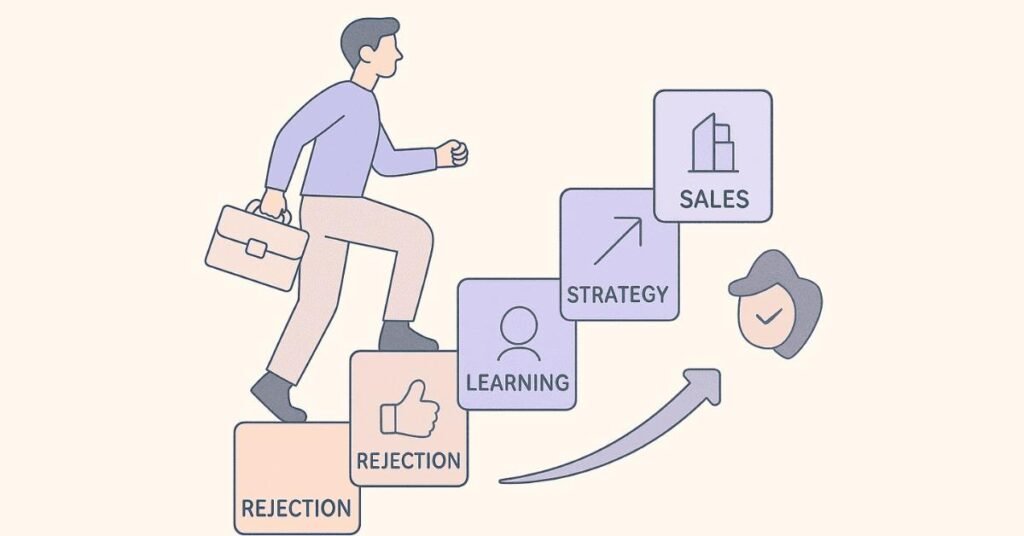
Sales involves a lot of ‘no’s before you get ‘yes’s. They want people who don’t get demoralized by rejection.
The Winning Answer:
“Rejection is part of sales, and honestly, I’ve learned to see it differently than most people.
Reframing Rejection:
First, I don’t see rejection as personal. When someone says ‘no’ to a product or service, they’re not rejecting me—they’re saying it’s not right for them right now. This mindset protects my confidence.
Numbers Game Mentality:
I know my conversion rates. If I convert 1 out of 5 qualified prospects, then I know I need 50 conversations to close 10 deals. Each ‘no’ isn’t a failure—it’s progress toward a ‘yes.’ This removes the emotional sting.
Curiosity Over Rejection:
Instead of being discouraged by ‘no,’ I get curious: ‘Why are they saying no? What would need to be different for this to be a ‘yes’?’ Often, ‘no’ now becomes ‘maybe later,’ and sometimes it turns into a ‘yes’ with adjusted terms.
Celebrating Wins:
I track wins, not rejections. Every deal closed, every call scheduled, every objection overcome—I keep a record of these. When I’m having a tough day, I review my wins and remember why this work matters.
Real Example:
Last quarter, I was targeting enterprise companies in a new industry vertical. My first 12 outreach attempts all resulted in rejections. Rather than seeing this as failure, I analyzed the 12 rejections. I noticed that prospects who were directors (as opposed to managers) were more receptive. I also noticed that companies that had recently received funding were more likely to invest in solutions like ours.
I adjusted my targeting to focus on recently-funded companies and contacted only director-level decision makers. My conversion rate immediately jumped from near-zero to 30%.
Motivation Source:
My motivation comes from knowing that every conversation, every rejection, every learning brings me closer to success. Rejection isn’t the opposite of success—it’s part of the path toward success.”
Why This Works:
- Shows emotional intelligence
- Demonstrates data-driven mindset
- Proves you learn from failure
- Indicates resilience
- Shows you focus on process, not just outcomes
Question 3.3: "How do you balance long-term relationship building with short-term sales targets?"
Why They Ask This:
Good sales isn’t just about closing deals today—it’s about building relationships that create deals tomorrow. They want to know if you can play both games.
The Winning Answer:
“This is actually one of my favorite aspects of sales because it’s where strategic thinking and immediate results come together.
My Approach:
Segment Your Pipeline:
I don’t treat all prospects the same. Some are ready to buy now (focus on closing). Others are long-term opportunities (focus on relationship building). Some aren’t ready or not qualified (move them to nurture or archive).
For today’s targets, I focus on the ‘ready to buy’ segment. I work hard to close these. But simultaneously, I’m nurturing the long-term relationships.
Long-Term Relationship Activities (That Don’t Hurt Short-Term Goals):
- Sending relevant articles or insights to prospects
- Checking in with past prospects who said ‘not now’
- Inviting prospects to webinars or events
- Connecting prospects with useful resources even if they’re not ready to buy
These activities take minimal time but keep relationships warm.
Real Example:
Three years ago, I was speaking with a prospect at a large company. They weren’t ready to buy, but I liked the relationship. Instead of abandoning them, I:
- Added them to my email insights list (5 minutes per month)
- Connected them with a useful industry resource (once)
- Checked in briefly quarterly to see how things were going
Two years later, there was a budget change at their company and they were suddenly ready to buy. Because I’d maintained the relationship, I was their first call. That single deal was worth $500,000 in annual revenue.
Balancing Act:
I allocate my time 70/30: 70% on immediate opportunities that will close this quarter, 30% on relationship nurturing. This ensures I hit my short-term targets while building a pipeline for long-term success.
Why This Works:
- Shows strategic thinking
- Demonstrates patience and long-term vision
- Proves you can balance competing priorities
- Indicates you understand the full sales cycle
- Shows you build sustainable business, not just one-off deals”
Why This Comprehensive Answer Works:
- It shows maturity in sales philosophy
- It includes a powerful real example
- It demonstrates both short-term and long-term thinking
- It shows you’ve reflected deeply on sales strategy
Industry 4: Operations and Logistics
Operations and logistics value efficiency, problem-solving, and attention to systems and processes. These industries run on optimization and continuous improvement.

Question 4.1: "Tell me about a process you improved. How did you measure the improvement?"
Why They Ask This:
In operations, improvement is constant. They want people who don’t just accept ‘how things are done’ but constantly look for optimization.
The Winning Answer:
“Process improvement is something I’m passionate about because I see waste as an opportunity.
The Process:
In my previous role at a logistics company, I was managing the order fulfillment process. Orders would come in, get processed by our team, then handed to the warehouse for packing and shipping.
The Problem:
The average order took 48 hours from receipt to shipment. This was standard in our industry, but I noticed significant variance—some orders shipped in 24 hours while others took 72 hours. I wanted to understand why.
My Analysis:
I tracked orders for two weeks, documenting:
- Time to initial processing
- Time in warehouse queue
- Time for packing
- Time for label generation and handoff
I discovered the bottleneck: 60% of delay happened in the initial processing step. Some orders were processed immediately while others sat for hours. Why?
I discovered that orders for our three biggest customers were prioritized (they had dedicated staff). Orders for smaller customers went to a general queue where they waited for availability.
The Solution (With Measurement System):
Before Improvement:
- Average fulfillment time: 48 hours
- Order variance: 24-72 hours
- Customer satisfaction: 78%
- Warehouse idle time: 15% (staff waiting for orders)
What I Did:
- Implemented a batch-processing system where orders were processed in batches every 2 hours instead of as they arrived (paradoxically, this reduced total wait time)
- Created automated order categorization so urgent orders flagged themselves
- Set up a queue management system so warehouse knew which orders were coming next
After Improvement (Measured After 30 Days):
- Average fulfillment time: 24 hours (50% improvement)
- Order variance: 22-30 hours (much more consistent)
- Customer satisfaction: 92%
- Warehouse idle time: 3%
Financial Impact:
- Reduced processing labor by 12 hours per week (more efficient batch processing)
- Reduced customer complaints by 35%
- Reduced inventory carrying costs by $50,000 annually (faster turnover)
How I Measured:
- Built a dashboard in Tableau showing real-time fulfillment times
- Set up automated alerts if an order exceeded 30 hours
- Tracked customer satisfaction through survey scores
- Monitored labor productivity weekly
Ongoing Improvement:
Six months later, we had reduced fulfillment time to 20 hours on average because we kept testing small improvements based on the data.”
Why This Works:
- Shows specific process improvement methodology
- Includes detailed before/after metrics
- Demonstrates data-driven approach
- Shows business impact (financial)
- Proves you create sustainable improvements
Indicates you measure what matters
Question 4.2: "How do you handle unexpected disruptions in operations? Give me an example."
Why They Ask This:
Disruptions happen—supply chain delays, equipment failures, staffing issues. They want people who can think on their feet and solve problems.
The Winning Answer:
“In operations, disruptions are inevitable. What matters is how quickly you respond and adapt.
The Disruption:
Last year, our primary warehouse unexpectedly had a system failure on a Friday afternoon—our entire inventory management system went down. We had orders to ship, inventory to track, and no visibility into stock levels.
My Immediate Response (First 30 minutes):
Step 1 – Situation Assessment:
I immediately called a meeting with warehouse managers, IT, and the operations team. I asked: ‘How long until the system is back? What inventory do we have visibility into manually? Which orders are already packed and ready to ship?’
Step 2 – Stabilization:
While IT worked on system recovery, I made these decisions:
- Orders for items we had on-hand got expedited to shipping manually
- Orders requiring inventory picks were placed on hold with customer notification
- I pulled our previous day’s inventory reports to estimate stock levels
Step 3 – Communication:
I personally contacted our 5 largest customers to explain the situation and give timelines. Transparency prevented panic.
My Strategy (Hours 1-6):
- We manually processed orders using backup systems and manual records
- Our team worked to verify inventory physically for high-demand items
- I coordinated with our secondary warehouse to temporarily fulfill orders they could handle
Result (By Monday):
- 85% of Friday’s orders shipped Saturday despite the outage
- 15% were shipped by Tuesday
- We experienced zero customer refunds or cancellations
- The system came back online Saturday morning at 6 AM
Aftermath:
This disaster revealed a critical vulnerability. I recommended and led the implementation of:
- A backup inventory management system
- Automated inventory backups every 4 hours
- Manual backup procedures for future outages
Why This Example Works:
- Shows you don’t panic under pressure
- Demonstrates decision-making authority
- Proves you communicate transparently
- Shows you learn from disruptions
- Indicates you prevent future problems”
Why This Works:
- Real crisis situation shows leadership
- Demonstrates quick thinking
- Shows customer focus
- Proves you create sustainable solutions
Indicates you understand business impact
Industry 5: Healthcare and Education
Healthcare and education value compassion, continuous learning, attention to quality, and commitment to mission. These are mission-driven industries where people work because they care about outcomes.

Question 5.1: "Tell me about a time when you had to balance institutional policies with what was best for the patient/student."
Why They Ask This:
Healthcare and education are about people. They want staff who care enough to question policies when necessary, but wisely and within proper channels.
The Winning Answer:
“This is one of the ethical challenges these industries face, and I take it seriously.
The Situation:
I was working in a hospital setting as part of the patient care team. We had a strict ‘visiting hours’ policy: 7 PM to 9 PM only. A patient admitted with a serious condition asked if his elderly mother could visit outside these hours because her health made evening travel difficult.
The policy said ‘no exceptions.’ But I saw that this rigid policy might harm the patient’s recovery by preventing family support at a critical time.
My Approach (Respecting Hierarchy):
Step 1 – Understand the Policy Reason:
I first asked my supervisor why the policy existed. I learned it was to protect patients’ rest and maintain nursing workflow.
Step 2 – Propose an Exception with Safeguards:
Instead of just breaking the rules, I went to my supervisor and said: ‘I understand the policy reasons. This specific situation might benefit from an exception. Could we allow his mother to visit from 3-4 PM, during our quieter afternoon shift, so the patient doesn’t miss a recovery opportunity but we maintain workflow?’
Step 3 – Document and Monitor:
My supervisor approved the exception. I documented it and monitored to ensure it wasn’t disrupting care. It wasn’t.
Learning:
This experience taught me that good policies serve people, not the reverse. The best approach isn’t to ignore policies—it’s to understand them deeply enough to work within them or propose thoughtful exceptions.
Result:
The patient had supportive family visits during recovery, and the nursing team maintained workflow. Later, management reviewed this situation and updated the policy to include ‘exceptions for medical or compassionate reasons with supervisor approval.'”
Why This Works:
- Shows you understand policy reasons
- Demonstrates respect for hierarchy
- Proves you advocate thoughtfully
- Shows commitment to patient/student welfare
Indicates you work within systems, not against them
Question 5.2: "How do you stay compassionate and prevent burnout, especially in challenging situations?"
Why They Ask This:
Healthcare and education burnout is real. They want staff who care about their emotional wellbeing so they can sustain their compassion long-term.
The Winning Answer:
“Burnout is real in healthcare and education, and I’m intentional about preventing it.
Understanding Burnout:
I’ve seen talented colleagues leave because they got burned out—they cared so much they forgot to care for themselves. I’ve learned that sustainable compassion requires boundaries and self-care.
My Strategies:
Setting Boundaries:
I finish my work within work hours when possible. I don’t check emails after 6 PM except for emergencies. This sounds simple, but it prevents the constant drain of always being ‘on.’
Emotional Processing:
After difficult situations, I process them. If a student struggled significantly or if a patient situation was challenging, I talk about it with colleagues or a mentor. Keeping difficult emotions bottled up leads to burnout. Sharing helps.
Finding Meaning in Small Wins:
I deliberately notice and celebrate small improvements. When a struggling student shows progress, I pause and acknowledge that. When a patient improves, I allow myself to feel that success. These small moments sustain motivation through difficult times.
Physical Self-Care:
I exercise regularly (3x per week), which is scientifically proven to improve mood and resilience. I also prioritize sleep.
Professional Development:
I take courses or attend workshops on topics I’m passionate about. Learning feels energizing rather than like work.
Real Example:
Early in my career, I’d take home student struggles or patient setbacks emotionally. I’d lie awake at night thinking about them. After 18 months, I was showing signs of burnout.
My mentor sat me down and said: ‘You care deeply, which is good. But you need to care for yourself equally.’ She helped me understand that:
- I cannot fix every problem
- Some struggles are students’/patients’ journeys to navigate
- My job is to provide support and resources, not to solve everything
- Taking care of myself isn’t selfish—it’s necessary to be effective
Now:
I’m much more intentional. When I leave work, I mentally close the chapter. I do my best work during work hours, then I rest. This approach has actually made me MORE effective because I’m not running on fumes.
Result:
I’ve sustained my passion for education/healthcare for 7 years without burning out. I’m as enthusiastic now as when I started.”
Why This Works:
- Shows self-awareness
- Demonstrates you understand burnout reality
- Proves you have sustainable practices
- Indicates you prioritize both compassion AND health
Shows maturity and wisdom
Question 5.3: "Tell me about continuing education you've pursued. How have you applied it?"
Why They Ask This:
Healthcare and education are fields that require constant learning. Standards change, research evolves, best practices improve. They want people committed to staying current.
The Winning Answer:
“Continuous learning isn’t optional in my field—it’s a responsibility to the people I serve.
My Learning Approach:
Formal Education:
I’m pursuing a certification in [specific area] through an accredited program. I’ve completed 60 of 100 hours. I study approximately 5 hours per week.
Professional Development:
I attend quarterly continuing education workshops. This year, I attended a 2-day workshop on [latest teaching methodology in education / latest diagnostic techniques in healthcare]. The investment in my development is an investment in my students’/patients’ outcomes.
Peer Learning:
I have a journal club with colleagues where we discuss recent research. We meet monthly and each person brings one relevant article. This keeps me informed AND creates community.
Application of Learning:
Example 1 – Classroom Application:
The workshop I attended introduced new teaching methodologies for [specific learning challenge]. I adapted these techniques for my struggling students. Three students who previously scored C’s now score B’s. That’s the point—learning only matters if it improves outcomes.
Example 2 – Patient Care Application:
I learned about a new approach to [specific healthcare situation]. I consulted with my supervisor about implementing it for appropriate patients. We piloted it with 5 patients, and outcomes improved significantly. Now other teams are interested in adopting it.
Why This Matters:
The field evolves because research continues. If I stopped learning 5 years ago, I’d be using outdated approaches with today’s students/patients. That’s not acceptable.
Real Commitment:
I invest my own money in learning when institutional budgets don’t cover it, because my growth is that important to me. This year alone, I’ve spent $1,200 on courses and conferences.”
Why This Works:
- Shows commitment to excellence
- Demonstrates you stay current
- Proves you apply learning practically
- Indicates you measure impact
- Shows deep investment in your profession
Quick Industry Reference Table

How to Prepare for Industry-Specific Questions
- Research Your Specific Industry:
- What are the current trends and challenges?
- What skills does your industry value most?
- What are the key metrics that matter?
- Identify Industry-Specific Stories:
- Think of accomplishments that demonstrate industry-relevant values
- Prepare 3-5 stories that could apply to industry questions
- Learn Industry Language:
- What terminology do professionals in your industry use?
- What acronyms or concepts matter?
- Can you speak authentically about industry issues?
- Understand Industry Challenges:
- What keeps industry leaders up at night?
- What problems is your industry currently solving?
- How does your experience contribute to these solutions?
- Practice with Industry Context:
- If possible, do a mock interview with someone in your industry
- Practice explaining your work using industry terminology
Get feedback on whether your answers sound authentic
Industry-Specific Interview Preparation Checklist
Before your industry-specific HR interview:
- ✓ Research 3-5 recent industry trends
- ✓ Prepare 3-5 stories demonstrating industry-relevant values
- ✓ Learn and practice using industry terminology
- ✓ Research the company’s specific position in the industry
- ✓ Understand current industry challenges and regulations
- ✓ Prepare industry-specific questions to ask the interviewer
- ✓ Do a mock interview with someone from your industry if possible
✓ Review this section and mark questions most likely for your industry