
15 Must-Have Supply Chain Skills for Career Success
Table of Contents
Introduction: Skills vs Degrees—What Actually Gets You Hired

I’ve reviewed hundreds of supply chain resumes during my career. Here’s what I’ve noticed: The degree from a prestigious institution might get you the interview, but it’s your demonstrable skills that get you the job offer and determine how fast you advance.
A candidate with average academics but strong Excel skills, supply chain software knowledge, and proven problem-solving abilities will consistently outperform someone with top grades but no practical capabilities. Why? Because supply chain management is fundamentally about execution—analyzing data, coordinating people, optimizing processes, and solving problems daily.
In 2026, with India’s supply chain sector growing at 11.12% annually and technology transforming how we work, the skills landscape is evolving rapidly. Some traditional skills remain essential while new capabilities are becoming non-negotiable. This guide breaks down exactly which skills matter most and how to develop them systematically.
The Two Pillars: Technical Skills and Soft Skills
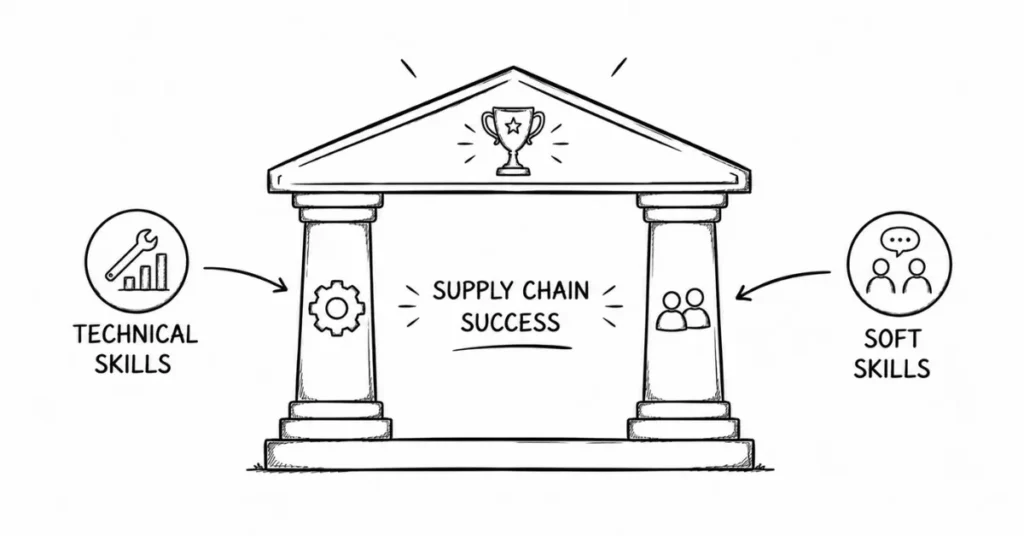
Supply chain success requires balancing two skill categories:
Technical Skills (Hard Skills):
- Teachable and measurable
- Learned through courses, practice, and experience
- Examples: Excel, SAP, data analysis, forecasting methods
- Gets you interviews and initial credibility
Soft Skills (Interpersonal Skills):
- Character and behavior-based
- Developed through experience and self-awareness
- Examples: Communication, leadership, problem-solving
- Gets you promotions and determines long-term success
The mistake many professionals make is over-indexing on one category. Technical wizards who can’t communicate fail to advance. Great communicators without technical foundation lack credibility. You need both.
PART 1: ESSENTIAL TECHNICAL SKILLS
1. Advanced Microsoft Excel
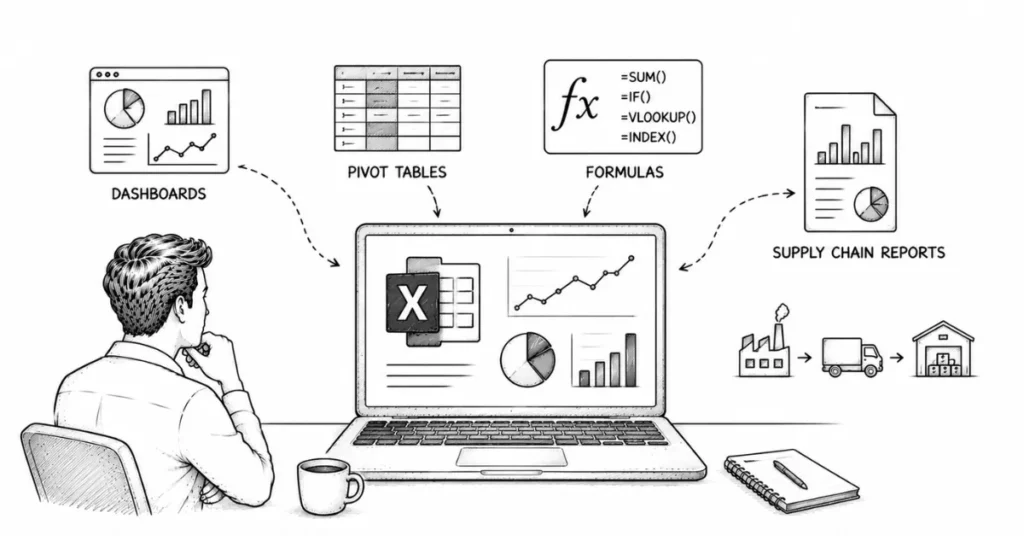
Why It Matters:
Excel is the universal language of supply chain management. From entry-level analysts to senior managers, everyone uses Excel daily for data analysis, reporting, and decision-making.
What “Advanced” Actually Means:
Basic (Expected at entry-level):
- Formulas: SUM, AVERAGE, COUNT, IF
- Basic formatting and charts
- Sorting and filtering data
- Simple formulas and cell references
Intermediate (Essential for analyst roles):
- Pivot Tables and Pivot Charts
- VLOOKUP and HLOOKUP
- Conditional formatting
- Data validation
- Basic macros and recording
- Multiple worksheets management
- Charts and visualization
Advanced (Differentiates you):
- INDEX-MATCH combinations
- Array formulas
- Advanced pivot table techniques
- Power Query for data transformation
- Power Pivot for large datasets
- VBA programming for automation
- Statistical functions for analysis
- Scenario modeling and What-If analysis
- Dashboard creation
Real Applications:
- Inventory analysis identifying slow-moving items
- Supplier performance scorecards
- Demand forecasting and trend analysis
- Cost analysis and variance reports
- KPI dashboards for management
- Schedule optimization and capacity planning
How to Develop:
- Online courses: Udemy, Coursera, LinkedIn Learning (₹1,000-3,000)
- YouTube: Free tutorials on specific functions
- Practice: Download supply chain datasets and practice analyses
- Challenge yourself: Automate repetitive tasks at work
- Time investment: 2-3 months of consistent practice reaching advanced level
Career Impact:
Strong Excel skills can increase your starting salary by ₹50,000-1 lakh. They’re non-negotiable for analyst roles and expected even at senior levels for quick analysis.
2. ERP Systems (SAP, Oracle, Microsoft Dynamics)
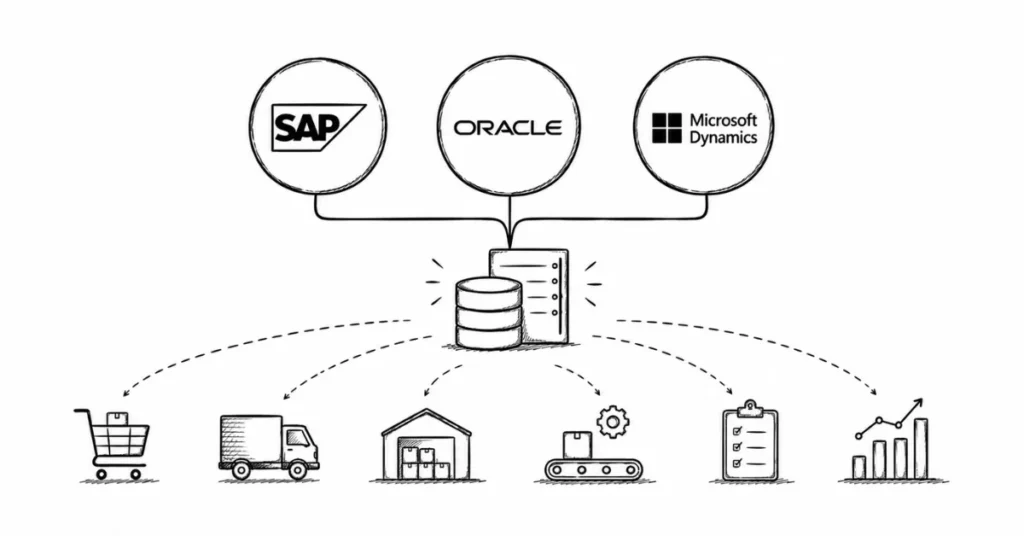
Why It Matters:
Enterprise Resource Planning systems are the digital backbone of modern supply chains. SAP alone is used by most large Indian and multinational companies.
Key ERP Modules for Supply Chain:
SAP (Most Common in India):
- MM (Material Management): Procurement, inventory management, master data
- SD (Sales & Distribution): Order processing, delivery, billing
- PP (Production Planning): Manufacturing, MRP, capacity planning
- WM (Warehouse Management): Warehouse operations and inventory
- IM (Inventory Management): Stock tracking and valuation
- APO (Advanced Planning & Optimization): Supply chain planning
- IBP (Integrated Business Planning): Modern cloud-based planning
Oracle (Second Most Common):
- Oracle SCM Cloud
- Oracle NetSuite (popular for mid-size companies)
- Similar modules to SAP with different interfaces
Microsoft Dynamics 365:
- Growing in popularity for mid-sized companies
- Supply Chain Management module
- More user-friendly interface than SAP
What You Need to Know:
Entry-Level:
- Navigation and basic transactions
- Understanding module structure
- Data entry and retrieval
- Running standard reports
- Master data concepts
Mid-Level:
- Configuring workflows
- Custom reporting
- Understanding integration between modules
- Process optimization using ERP
- Training others on system usage
Senior-Level:
- System selection and implementation oversight
- Process design leveraging ERP capabilities
- Change management during implementations
- Vendor management and licensing
- Strategic planning around ERP roadmap
How to Develop:
Ideal Path:
- On-the-job training (best way—companies train employees)
- Company-sponsored training programs
- ERP implementation projects (volunteer even if extra work)
Alternative Paths:
- Training institutes: ₹15,000-50,000 for module courses
- SAP Learning Hub: Official online access (~$1,500/year)
- OpenSAP: Free online courses on SAP technologies
- Trial systems: Some ERP vendors offer practice systems
- YouTube tutorials: Basic navigation and concepts
Reality Check:
Deep ERP expertise typically comes from years of on-the-job usage, not short courses. Entry-level understanding is sufficient initially—depth develops through work experience.
Career Premium:
SAP expertise can add ₹1-2 lakhs to your compensation package. Implementation project experience is especially valuable. Many consultants charge ₹2,000-5,000/day for SAP expertise.
3. Data Analysis and Visualization
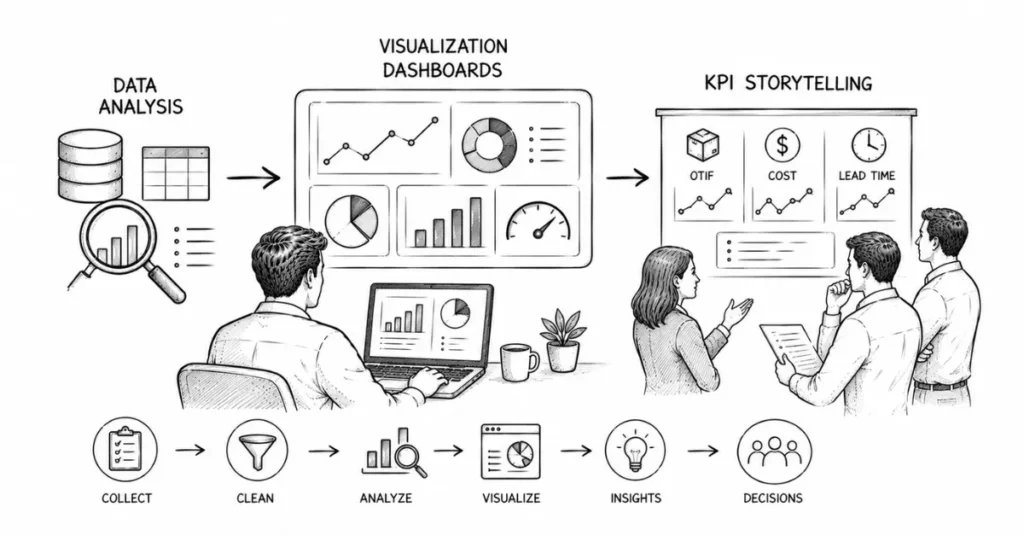
Why It Matters:
Supply chains generate massive data. Converting this data into insights that drive decisions is increasingly critical.
Essential Capabilities:
Data Analysis:
- Statistical thinking and hypothesis testing
- Identifying trends, patterns, anomalies
- Root cause analysis using data
- Correlation vs causation understanding
- Predictive analytics basics
Data Visualization:
- Creating compelling charts that tell stories
- Dashboard design principles
- Choosing appropriate visualization types
- Color theory and design basics
- Interactive visualizations
Tools to Know:
Must-Have:
- Excel: Charts, pivot tables, conditional formatting
- PowerPoint: Presenting data-driven stories
Strong Advantage:
- Tableau: Leading visualization platform (easier than Power BI initially)
- Power BI: Microsoft’s analytics platform (integrates well with Microsoft ecosystem)
- Google Data Studio: Free, good for basic dashboards
Emerging/Advanced:
- Python libraries: Pandas for analysis, Matplotlib/Seaborn for visualization
- R: Statistical programming, strong visualization
- SQL: Querying databases directly for large datasets
Practical Applications:
- Creating supply chain KPI dashboards
- Inventory analysis revealing optimization opportunities
- Supplier performance visualizations
- Delivery performance tracking
- Cost analysis identifying savings opportunities
- Forecast accuracy monitoring
How to Develop:
- Online courses: Data analysis and visualization specializations (₹5,000-15,000)
- Tableau Public: Free version for learning
- Practice projects: Create dashboards from public datasets
- At work: Volunteer to create reports and dashboards
- Inspiration: Follow data visualization experts on LinkedIn
Time Investment:
3-4 months of consistent learning and practice for strong proficiency.
4. Forecasting and Demand Planning
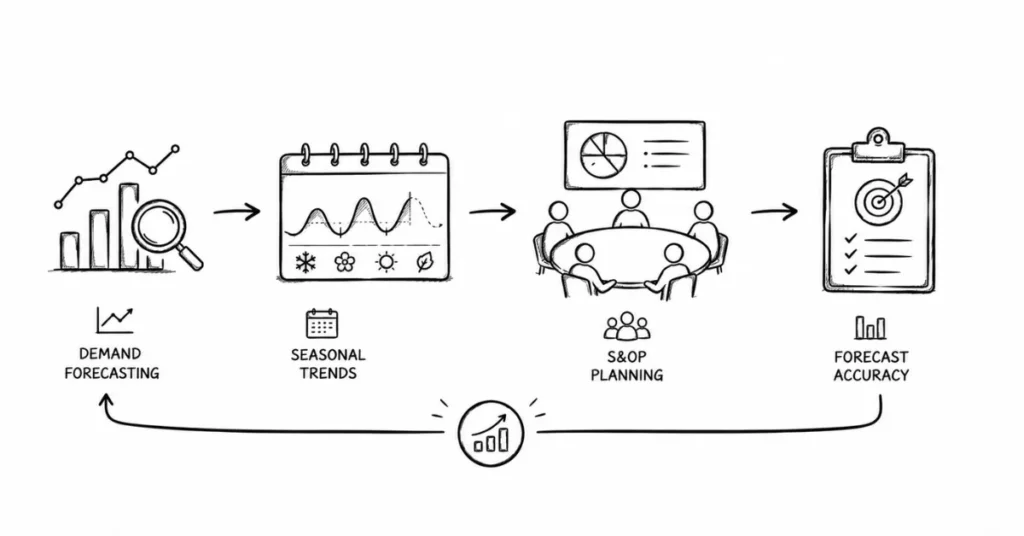
Why It Matters:
Accurate demand forecasts drive inventory, production, and procurement decisions. Forecast errors cost companies millions in excess inventory or stockouts.
Key Concepts to Understand:
Statistical Methods:
- Moving averages
- Exponential smoothing
- Trend analysis
- Seasonality and cyclicality
- Regression analysis
- Time series forecasting
Business Judgment:
- Incorporating promotional impacts
- New product forecasting
- Adjusting for market intelligence
- Balancing statistical forecasts with business input
- Understanding forecast bias
Forecast Accuracy:
- MAPE (Mean Absolute Percentage Error)
- Bias measurement
- Forecast value added (FVA)
- Understanding “good enough” accuracy
S&OP Process:
- Monthly planning cycle
- Consensus forecasting
- Balancing demand and supply
- Financial integration
Tools and Software:
- Excel for basic forecasting
- Specialized software (SAP IBP, Kinaxis, Blue Yonder, o9)
- Statistical software (R, Python) for advanced methods
How to Develop:
- Statistics courses: Understanding forecasting mathematics
- Supply chain planning courses: Business context
- Practice: Forecast anything (sales, traffic, weather) and track accuracy
- On-the-job: Request forecasting responsibilities
- Mentorship: Learn from experienced demand planners
Career Value:
Demand planning is among the top 5 sought-after supply chain skills in India. Professionals who can demonstrate improved forecast accuracy (e.g., “Improved forecast accuracy from 72% to 84% resulting in ₹3 crore inventory reduction”) are highly valued.
5. Inventory Management Principles
Why It Matters:
Inventory represents significant working capital. Too much ties up cash; too little causes stockouts. Optimization directly impacts profitability.
Key Concepts:
Fundamental Metrics:
- Inventory turnover ratio
- Days of inventory
- Fill rate and service levels
- Stockout frequency
- Dead stock percentage
Ordering Methods:
- Economic Order Quantity (EOQ)
- Reorder point calculations
- Safety stock determination
- Min-Max systems
- Periodic vs continuous review
Advanced Concepts:
- ABC analysis (Pareto principle application)
- XYZ analysis (variability classification)
- Multi-echelon inventory optimization
- Vendor-managed inventory (VMI)
- Just-in-Time (JIT) principles
Cost Understanding:
- Holding costs (storage, insurance, obsolescence, opportunity cost)
- Ordering costs (admin, transportation, receiving)
- Stockout costs (lost sales, emergency procurement)
- Total cost optimization
How to Develop:
- APICS CPIM: Comprehensive coverage of inventory management
- Online courses: Inventory management fundamentals
- Books: Classic texts like “Inventory Management Explained”
- Practice: Calculate EOQ, safety stock for real products
- Simulation: Use Excel to model different policies
Application:
Understanding these principles allows you to optimize inventory policies, reducing costs while maintaining service levels. This is core supply chain value creation.
6. Supply Chain Analytics and AI Basics
Why It Matters:
AI and machine learning are transforming supply chains—from demand forecasting to route optimization to predictive maintenance. You don’t need to be a data scientist, but understanding basics is increasingly important.
What You Should Understand:
Conceptual Understanding:
- What AI and machine learning mean practically
- Types of problems AI solves (prediction, optimization, classification)
- Limitations of AI (not magic, needs good data)
- When to use AI vs traditional methods
- Ethical considerations and bias in algorithms
Supply Chain Applications:
- Demand forecasting using machine learning
- Route optimization algorithms
- Predictive maintenance of equipment
- Inventory optimization
- Supplier risk prediction
- Quality control through image recognition
- Chatbots for customer service
Basic Technical Literacy:
- Understanding how algorithms learn from data
- Importance of data quality
- Training vs testing data
- Overfitting and model validation
- Interpreting model outputs
How to Develop:
- Intro courses: “AI for Everyone” on Coursera (free/₹3,000)
- Supply chain specific: Courses on AI in supply chain management
- Reading: Articles on AI applications in logistics and operations
- Webinars: Many companies (SAP, IBM, Microsoft) offer free webinars
- Experimentation: Play with tools like ChatGPT to understand capabilities
Career Positioning:
You’re not becoming a data scientist, but AI-aware supply chain professionals who can bridge business needs and technical possibilities are increasingly valuable. This understanding helps you leverage technology effectively and communicate with technical teams.
7. Negotiation and Contract Management

Why It Matters:
Particularly crucial for procurement and logistics roles—good negotiation saves millions. Poor negotiation costs millions.
Negotiation Skills:
Preparation:
- Understanding your BATNA (Best Alternative to Negotiated Agreement)
- Researching market rates and alternatives
- Understanding supplier’s position and constraints
- Defining walk-away points
- Identifying potential trade-offs beyond price
Execution:
- Building rapport and trust
- Active listening and questioning
- Presenting data to support positions
- Creating win-win scenarios
- Handling objections professionally
- Closing techniques
Psychology:
- Understanding cognitive biases
- Anchoring effects
- Reciprocity principles
- Patience and timing
Contract Management:
- Understanding basic contract terms
- SLAs (Service Level Agreements)
- Payment terms and their financial impact
- Risk allocation clauses
- Termination conditions
- Intellectual property considerations
- Force majeure and liability
How to Develop:
- Books: “Getting to Yes” and “Never Split the Difference” (classics)
- Courses: Negotiation courses on Coursera, LinkedIn Learning
- Practice: Role-play negotiations with colleagues
- Observation: Shadow experienced negotiators
- Reflection: Analyze your negotiations—what worked, what didn’t
- Real practice: Request involvement in supplier negotiations
Application:
Even early in your career, look for negotiation opportunities—negotiating with vendors, internal stakeholders, or even job offers. This skill compounds tremendously over time.
PART 2: ESSENTIAL SOFT SKILLS
8. Problem-Solving and Critical Thinking
Why It Matters:
Supply chains face constant disruptions—delays, quality issues, demand spikes, supplier problems. Your ability to think through problems logically and find creative solutions is what separates good from great professionals.
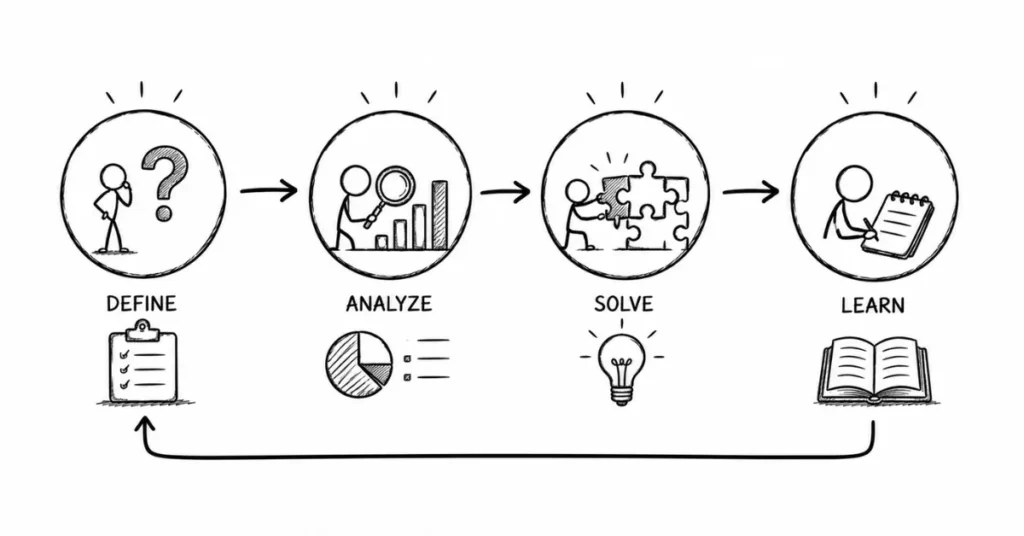
Problem-Solving Framework:
Define the Problem:
- What exactly is wrong? (Be specific)
- What is the impact? (Quantify if possible)
- What is the root cause vs symptoms?
- What constraints exist?
Analyze:
- Gather relevant data
- Identify patterns and trends
- Use tools like 5 Whys, Fishbone diagrams
- Consider multiple perspectives
- Challenge assumptions
Generate Solutions:
- Brainstorm multiple options
- Evaluate pros/cons of each
- Consider short-term vs long-term implications
- Assess feasibility and resources required
Implement and Learn:
- Choose best option and execute
- Monitor results
- Adjust based on feedback
- Document learnings for future
Critical Thinking:
- Questioning assumptions
- Distinguishing facts from opinions
- Recognizing bias (your own and others’)
- Evaluating evidence quality
- Considering alternative explanations
How to Develop:
- Practice: Work through supply chain case studies
- Methodology: Learn structured problem-solving (Six Sigma, DMAIC)
- Reflection: After solving problems, analyze your process
- Diverse inputs: Seek perspectives from different stakeholders
- Curiosity: Always ask “why” and “what if”
Career Impact:
Senior leaders are fundamentally problem-solvers. Your track record of solving increasingly complex problems is what prepares you for leadership.
9. Communication (Written and Verbal)
Why It Matters:
The best analysis means nothing if you can’t communicate it effectively. You’ll write emails, create presentations, conduct meetings, and present to senior management—communication permeates everything.
Written Communication:
Emails:
- Clear subject lines
- Concise yet complete content
- Professional tone
- Appropriate level of detail
- Call-to-action clarity
- Proofreading (errors damage credibility)
Reports:
- Executive summary upfront (busy leaders read this first)
- Logical structure and flow
- Data visualization supporting narrative
- Clear recommendations
- Anticipating questions
Documentation:
- Standard Operating Procedures (SOPs)
- Process documentation
- Meeting minutes
- Project updates
Verbal Communication:
Presentations:
- Clear narrative arc (problem → analysis → recommendation)
- Slide design simplicity (less text, more visuals)
- Anticipating questions
- Confidence and pacing
- Engaging audience
Meetings:
- Preparation and agenda setting
- Facilitation skills
- Active listening
- Conflict management
- Driving to decisions vs endless discussion
One-on-One:
- Active listening
- Asking good questions
- Tailoring message to audience
- Reading body language
- Building rapport
Cross-Cultural:
Increasingly important in global supply chains—understanding communication style differences across cultures.
How to Develop:
- Writing: Write regularly (LinkedIn posts, internal documents), get feedback
- Speaking: Join Toastmasters or similar organizations
- Observation: Study great communicators
- Practice: Volunteer for presentations
- Feedback: Ask trusted colleagues for honest assessment
- Reading: Read well-written business publications (HBR, McKinsey Quarterly)
Time Investment:
Communication improvement is career-long, but focused effort for 6 months can yield noticeable improvement.
10. Leadership and People Management
Why It Matters:
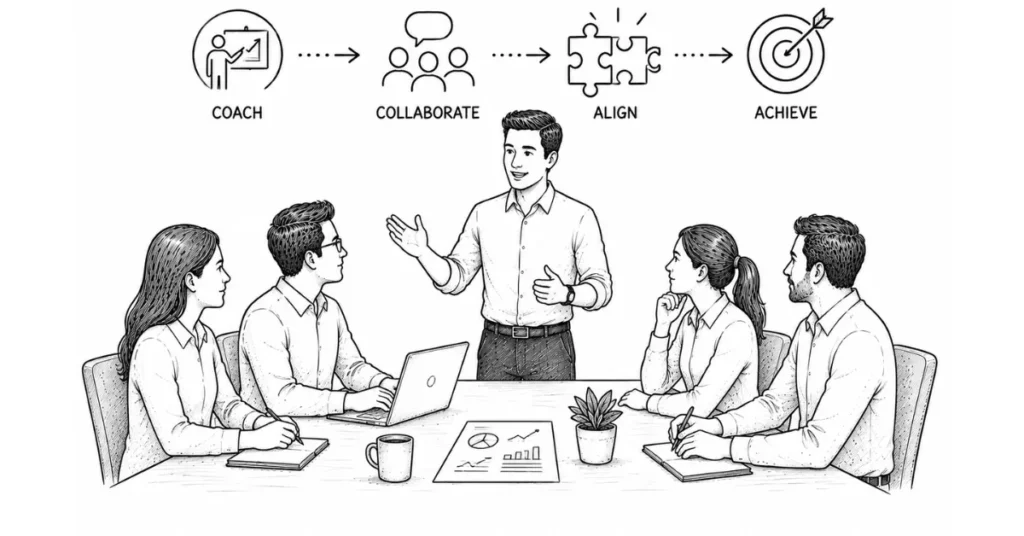
As you advance, technical skills matter less; leadership matters more. Your success depends on motivating others, building teams, and creating environment where people excel.
Core Leadership Capabilities:
Setting Direction:
- Creating compelling vision
- Setting clear goals and expectations
- Prioritizing effectively
- Making decisions with incomplete information
Building Teams:
- Hiring and selection judgment
- Recognizing and leveraging strengths
- Building complementary teams
- Creating psychological safety
Developing People:
- Coaching and mentoring
- Providing constructive feedback
- Creating growth opportunities
- Succession planning
Motivating:
- Understanding individual motivations
- Recognition and appreciation
- Connecting work to meaning
- Maintaining morale through challenges
Managing Performance:
- Setting measurable goals
- Regular feedback (not just annual reviews)
- Addressing underperformance promptly
- Rewarding excellence appropriately
Leading Change:
- Building buy-in and coalition
- Managing resistance
- Communication throughout change
- Celebrating wins
How to Develop:
- Early career: Lead small projects, mentor interns
- Courses: Leadership development programs
- Reading: Leadership classics (e.g., “The Five Dysfunctions of a Team”)
- Mentorship: Learn from great (and poor) leaders you’ve experienced
- Reflection: Regularly assess your leadership effectiveness
- Feedback: Seek 360-degree feedback
Reality:
Leadership development is lifelong. Great leaders never stop learning and growing.
11. Adaptability and Resilience
Why It Matters:
Supply chains are inherently unpredictable. COVID-19 demonstrated this dramatically—demand patterns changed overnight, supply routes disrupted, and entire business models had to pivot. Professionals who adapt quickly thrive; those who resist change struggle.
What Adaptability Looks Like:
Embracing Change:
- Viewing change as opportunity, not threat
- Learning new technologies and processes quickly
- Adjusting strategies when circumstances change
- Remaining effective during organizational restructuring
- Pivoting when initial approaches don’t work
Continuous Learning:
- Staying current with industry trends
- Learning new tools and methodologies
- Seeking feedback and acting on it
- Reading industry publications regularly
- Attending webinars and conferences
- Being comfortable with “I don’t know, but I’ll learn”
Handling Ambiguity:
- Making decisions with incomplete information
- Comfortable with uncertainty
- Testing and iterating rather than waiting for perfection
- Managing stress during unclear situations
Resilience Under Pressure:
- Maintaining performance during crises
- Recovering from setbacks quickly
- Managing stress healthily
- Supporting team morale during difficult times
- Learning from failures rather than being defeated by them
Real-World Applications:
- When ERP systems upgrade, quickly learning new interfaces
- When company acquires another business, integrating supply chains smoothly
- When supplier fails, rapidly finding alternatives
- When demand unexpectedly spikes, managing shortage situations
- When automation changes your role, acquiring new skills proactively
How to Develop:
Mindset Shifts:
- Reframe challenges as learning opportunities
- Practice viewing situations from multiple perspectives
- Develop growth mindset (abilities can be developed) vs fixed mindset
- Build self-awareness of your stress responses
Practical Steps:
- Deliberate discomfort: Regularly try new things outside comfort zone
- Scenario planning: Think through “what if” situations mentally
- Stress management: Develop healthy coping mechanisms (exercise, meditation, hobbies)
- Support network: Build relationships you can lean on during tough times
- Reflection practice: Journal about challenges and how you handled them
Career Impact:
Adaptability is the meta-skill determining long-term success. Industries transform, technologies evolve, companies reorganize—professionals who adapt survive and thrive. Those who resist become obsolete.
Indian Context:
India’s rapid economic transformation means change is constant. E-commerce disrupting retail, GST changing distribution networks, digital payments transforming logistics—adaptable professionals capitalize on these changes while others struggle.
12. Cross-Functional Collaboration
Why It Matters:
Supply chain doesn’t operate in isolation—it touches sales, finance, manufacturing, quality, IT, and customer service. Success requires working effectively across these boundaries.
Understanding Other Functions:
Sales/Commercial:
- Their priority: Revenue growth and customer satisfaction
- Typical tension: They want inventory available; you want to minimize inventory
- Collaboration: Balancing service levels with cost constraints
Finance:
- Their priority: Cash flow, profitability, working capital
- Typical tension: They want low inventory; you need safety stock
- Collaboration: Optimizing cash-to-cash cycle together
Manufacturing/Operations:
- Their priority: Production efficiency and equipment utilization
- Typical tension: They want long production runs; you need flexibility for demand changes
- Collaboration: Balancing efficiency with responsiveness
Quality:
- Their priority: Product quality and compliance
- Typical tension: They want extensive testing; you need speed
- Collaboration: Building quality into processes without slowing operations
IT:
- Their priority: System stability, security, standardization
- Typical tension: They want stability; you need new capabilities quickly
- Collaboration: Prioritizing technology investments with clear business cases
Key Collaboration Skills:
Understanding Perspectives:
- Learning what metrics other functions are measured on
- Understanding their constraints and pressures
- Speaking their language (finance: ROI, EBITDA; sales: revenue, market share)
Win-Win Problem Solving:
- Finding solutions benefiting multiple functions
- Making trade-offs transparent
- Avoiding zero-sum thinking
- Building trust through consistent delivery
Influence Without Authority:
- Persuading colleagues you don’t manage
- Building coalitions of support
- Using data and logic effectively
- Building personal relationships
Conflict Resolution:
- Addressing disagreements professionally
- Focusing on interests, not positions
- Escalating appropriately when necessary
- Finding creative compromises
How to Develop:
- Rotations: Seek temporary assignments in other functions
- Shadowing: Spend time with colleagues in other departments
- Coffee chats: Regular informal conversations with cross-functional partners
- Joint projects: Volunteer for initiatives involving multiple functions
- Empathy practice: Regularly ask “What does success look like from their perspective?”
Career Advantage:
Senior supply chain leaders invariably have strong cross-functional relationships. Your ability to align diverse stakeholders around common goals becomes increasingly important as you advance.
13. Attention to Detail and Process Orientation
Why It Matters:
Small errors in supply chains cascade into major problems. Wrong quantities, incorrect addresses, missed delivery dates, data entry mistakes—attention to detail prevents costly mistakes.
What This Means:
Thoroughness:
- Double-checking critical information
- Catching errors before they propagate
- Reading contracts carefully
- Verifying data accuracy
- Following procedures correctly
Quality Consciousness:
- Taking pride in work accuracy
- Not accepting “good enough” when excellence is possible
- Building in quality checks
- Creating systems preventing errors
Process Discipline:
- Following established procedures consistently
- Documenting processes clearly
- Maintaining accurate records
- Updating documentation when processes change
- Creating checklists for complex tasks
Systems Thinking:
- Understanding how pieces connect
- Anticipating downstream impacts of decisions
- Recognizing patterns and anomalies
- Identifying root causes, not just symptoms
Balancing Act:
- Being detail-oriented without getting lost in minutiae
- Knowing when perfection matters vs good enough suffices
- Managing time effectively despite thoroughness
- Delegating detail work appropriately as you advance
How to Develop:
Habits and Practices:
- Checklists: Create and use checklists for recurring tasks
- Review time: Build in time for reviewing work before submitting
- Peer review: Have colleagues check important work
- Learn from errors: When mistakes happen, understand why and prevent recurrence
- Documentation: Maintain clear records and notes
Mindset:
- Pride in craftsmanship and quality
- Understanding that details matter
- Recognition that prevention is easier than correction
- Viewing thoroughness as professionalism
Career Reality:
Early career, attention to detail builds trust—managers give increasing responsibility to those who get details right consistently. Later career, you build systems and teams ensuring organizational attention to detail.
14. Time Management and Prioritization
Why It Matters:
Supply chain roles are demanding—multiple projects, urgent issues, regular responsibilities, unexpected crises. Without effective time management, you’ll constantly feel overwhelmed and underperforming.
Core Capabilities:
Prioritization Frameworks:
Eisenhower Matrix:
- Urgent + Important: Do immediately (supplier crisis, system outage)
- Important, Not Urgent: Schedule time (strategic planning, relationship building)
- Urgent, Not Important: Delegate or minimize (many meetings, some emails)
- Neither: Eliminate (busy work, excessive reporting)
Impact vs Effort:
- Prioritize high-impact, low-effort activities
- Question high-effort, low-impact activities
- Batch low-impact necessities efficiently
Time Management Techniques:
Time Blocking:
- Schedule focused work time for important projects
- Protect time from meeting creep
- Batch similar tasks (email processing, phone calls)
- Schedule strategic thinking time
Meeting Management:
- Question whether meetings are necessary
- Prepare agendas and objectives
- Start and end on time
- Document decisions and actions
- Say no to non-essential meetings
Email Management:
- Process email at specific times (not constantly)
- Use folders and filters
- Respond briefly; be comfortable with short replies
- Unsubscribe from unnecessary emails
- Touch emails once when possible (read → act → archive)
Delegation:
- Identify tasks others can do
- Delegate with clear expectations
- Trust team members
- Focus your time on highest-value activities
Managing Interruptions:
- Designate “office hours” for questions
- Use “do not disturb” for focused work
- Address urgent issues immediately; defer others
- Train colleagues on what constitutes “urgent”
How to Develop:
- Audit current time use: Track time for one week
- Identify time wasters: What activities consume time without proportional value?
- Experiment: Try different techniques; keep what works
- Tools: Calendar blocking, task management apps (Todoist, Asana, Trello)
- Regular review: Weekly review of priorities and time allocation
Reality Check:
Perfect time management doesn’t exist. Unexpected issues arise. The goal is maximizing time spent on high-impact activities while maintaining responsiveness to urgent needs.
Career Impact:
Professionals who manage time well accomplish more, advance faster, and avoid burnout. Those who don’t stay perpetually busy without proportional results.
15. Business Acumen and Commercial Awareness
Why It Matters:
Supply chain exists to enable business success. Understanding how businesses make money, competitive dynamics, and financial implications of decisions elevates you from technician to strategic partner.
What Business Acumen Means:
Financial Understanding:
Income Statement:
- Revenue (top line)
- Gross margin (revenue minus cost of goods sold)
- Operating expenses
- EBITDA and net profit (bottom line)
- How supply chain impacts each line
Balance Sheet:
- Assets (including inventory)
- Liabilities (including payables)
- Working capital (current assets – current liabilities)
- How inventory and payment terms affect balance sheet
Cash Flow:
- Cash-to-cash cycle
- How inventory and payment terms affect cash
- Why profitable companies sometimes have cash problems
- Supply chain’s role in cash generation
Key Metrics:
- Gross margin percentage
- Operating margin
- Return on assets (ROA)
- Inventory as percentage of sales
- Days payable outstanding (DPO)
Strategic Understanding:
Competitive Positioning:
- How does your company compete? (Cost leadership? Differentiation? Niche?)
- What’s your unique value proposition?
- Who are main competitors?
- Market trends affecting your industry
Supply Chain’s Strategic Role:
- How supply chain enables competitive advantage
- Cost vs service trade-offs aligned with strategy
- Investments that strengthen competitive position
- Risks that could undermine strategy
Customer Understanding:
- Who are your customers? (End consumers? Businesses? Both?)
- What do they value? (Price? Speed? Quality? Variety?)
- How are preferences changing?
- How does supply chain impact customer satisfaction?
Industry Dynamics:
- Regulatory environment and changes
- Technology disruptions
- Economic factors affecting business
- Supply and demand trends
- Geopolitical factors for global companies
Commercial Skills:
Business Case Development:
- Calculating ROI on investments
- Payback period analysis
- NPV (Net Present Value) basics
- Total cost of ownership calculations
- Making financially sound recommendations
Trade-off Analysis:
- Understanding cost vs service trade-offs
- Quantifying benefits and costs
- Presenting options with implications clearly
- Recommending optimal choices based on strategy
Stakeholder Management:
- Understanding what senior leaders care about
- Framing supply chain topics in business terms
- Connecting supply chain decisions to business outcomes
- Managing expectations appropriately
How to Develop:
Financial Literacy:
- Courses: “Finance for Non-Financial Managers” (Coursera, local programs)
- Reading: Your company’s annual report and investor presentations
- Practice: Calculate financial metrics for your business unit
- Mentorship: Ask finance colleagues to explain reports
Industry Knowledge:
- Publications: Industry trade journals, business newspapers (Economic Times, Business Standard)
- Competitor analysis: Study competitors’ strategies and supply chains
- Conferences: Attend industry events
- Networking: Conversations with sales, marketing, strategy colleagues
Strategic Thinking:
- Reading: Business strategy books and case studies
- MBA courses: Strategy, marketing, finance if pursuing degree
- Observation: Pay attention in leadership meetings about strategic discussions
- Questions: Ask leaders about strategic priorities and how supply chain fits
Application Examples:
Scenario 1 – Inventory Decision:
- Technician approach: “We should reduce inventory to improve turnover.”
- Business acumen approach: “Reducing inventory from 60 to 45 days will free ₹5 crore in working capital, improving our cash position while maintaining 95% service levels. However, if we reduce to 30 days, service levels drop to 88%, risking ₹8 crore in lost sales. I recommend 45 days as the optimal balance.”
Scenario 2 – Supplier Decision:
- Technician approach: “Supplier A is 5% cheaper, so we should switch.”
- Business acumen approach: “Supplier A offers 5% cost savings (₹50 lakhs annually), but their 8-week lead time vs current 4 weeks requires doubling safety stock (₹80 lakhs investment). Net impact is negative. However, if we can negotiate shorter lead times or adjust production planning, this becomes viable.”
Career Trajectory:
Technical competence gets you to mid-level. Business acumen gets you to senior leadership. CSCOs and VPs are fundamentally business leaders who happen to specialize in supply chain—they think about business performance, not just operational metrics.
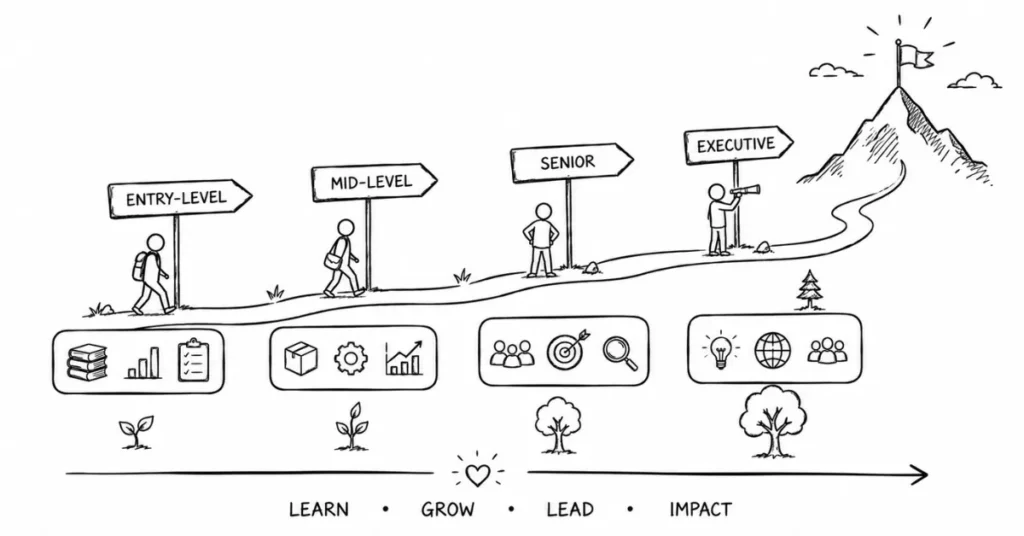
Skill Development Roadmap by Career Stage
Entry-Level (Years 0-3): Foundation Building
Priority Technical Skills:
- Advanced Excel (non-negotiable)
- Basic ERP navigatio
- Data analysis fundamentals
- Understanding inventory and forecasting basics
Priority Soft Skills:
- Communication (especially written)
- Attention to detail
- Time management
- Basic problem-solving
Development Focus: Building foundational capabilities and learning how supply chains actually work in practice.
Mid-Level (Years 3-8): Specialization and Leadership Development
Priority Technical Skills:
- Deep ERP expertise in your specialization
- Advanced forecasting/analytics for your domain
- Beginning to understand AI/automation implications
- Process improvement methodologies (Six Sigma)
Priority Soft Skills:
- Leadership and people management
- Cross-functional collaboration
- Negotiation (especially procurement/logistics)
- Business acumen development
Development Focus: Becoming expert in your specialization while building leadership capabilities.
Senior Level (Years 8-15): Strategic Leadership
Priority Technical Skills:
- Technology strategy and implementation oversight
- Advanced analytics and AI strategic understanding
- Financial modeling and business case development
- Industry expertise and best practices
Priority Soft Skills:
- Strategic thinking and vision setting
- Change management at scale
- Executive influence and stakeholder management
- Talent development and succession planning
Development Focus: Transitioning from technical expert to strategic leader who enables business success.
Executive Level (Years 15+): Enterprise Leadership
Priority:
- Business strategy and competitive positioning
- Board-level communication
- Organizational transformation
- Industry thought leadership
- Talent and culture development
- Financial acumen at enterprise level
Development Focus: Leading at enterprise level, shaping organizational direction, building sustainable competitive advantage.
Creating Your Personal Development Plan
Step 1: Self-Assessment
- Which skills are your strengths?
- Which are development areas?
- Which matter most for your target roles?
Step 2: Prioritize
- Choose 2-3 skills to focus on (not 15 simultaneously)
- Select mix of technical and soft skills
- Consider what will have highest career impact
Step 3: Create Learning Plan
- Specific courses, books, or practices for each skill
- Timeline and milestones
- Resources required (time, money)
- How you’ll practice and apply learning
Step 4: Apply and Practice
- Seek opportunities at work using new skills
- Volunteer for projects requiring skill development
- Practice deliberately with feedback
- Track your progress
Step 5: Measure Progress
- Quarterly review of development
- Seek feedback from managers and colleagues
- Adjust plan based on results
- Celebrate improvements
The 80/20 Rule for Skill Development
If you’re overwhelmed by the list of 15 skills, focus on these critical few that drive disproportionate career impact:
For Entry-Level Success:
- Advanced Excel (universal requirement)
- Communication skills (written and verbal)
- Attention to detail (builds trust)
For Mid-Level Advancement:
- Leadership and people management (enables progression)
- Business acumen (elevates you from technician)
- Cross-functional collaboration (multiplies impact)
For Senior Leadership:
- Strategic thinking (see the big picture)
- Change management (drive transformation)
- Executive influence (align stakeholders)
Master these core skills for your stage, and you’ll outperform most peers. Add others as time and opportunity permit.
Final Thoughts: Skills as Your Career Insurance
In uncertain times, your skills are the most secure investment you can make. Degrees get you started, but skills sustain and advance your career. Companies restructure, industries transform, technologies disrupt—but professionals with strong, current skills always find opportunities.
The Indian supply chain sector’s 11.12% annual growth and increasing technology adoption create tremendous opportunities for skilled professionals. But growth also means competition. Those who continuously develop relevant capabilities will thrive; those who stagnate will struggle.
The good news? Every skill on this list is learnable. You don’t need to be naturally gifted. You need commitment, consistent practice, and willingness to step outside your comfort zone. Dedicate 5-10 hours weekly to skill development, and in a year, you’ll be dramatically more capable and valuable.
Your career is a long game. Invest in yourself consistently, and the compounding returns—in compensation, opportunities, and satisfaction—will far exceed any other investment you’ll make.
Start today. Choose one skill. Take one small action. Your future self will thank you.